

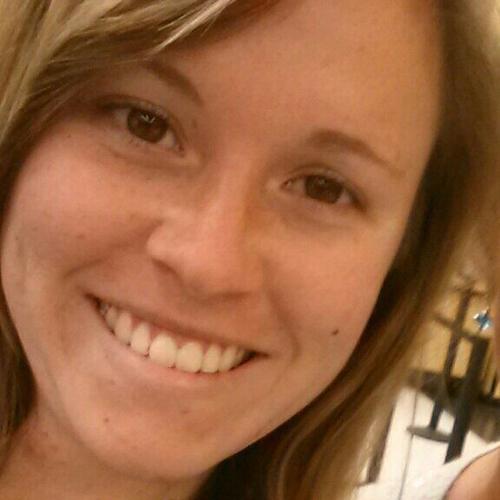

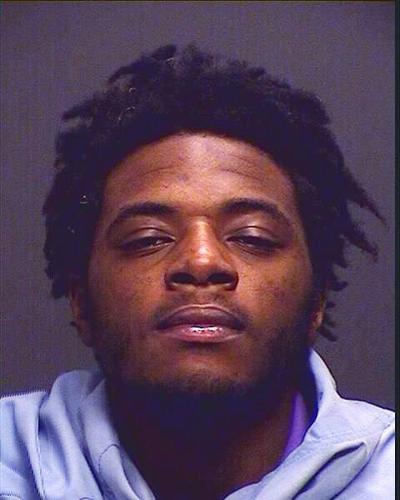


Cassandra Yates’ family could breathe easier when police arrested her husband who had a gun that, as a felon, he wasn’t allowed to have.
“We were all relieved that he was back in jail and wouldn’t be a problem,” says Cassandra’s grandmother, Ann Shaylor.
King Yates had a history of escalating violence against Cassandra when Tucson police pulled over his BMW last November and an officer spotted a gun wedged in the center console, records show.
But jail wouldn’t hold him for long. Despite Yates’ lengthy criminal record, his bond was set at $1,100. Four days after his arrest, Cassandra bailed him out.
Two weeks later, police say, Yates shot and killed her. She was 24 years old, had recently adopted a Chihuahua and was about to start college at Tucson’s Southwest University of Visual Arts.
In the two years leading up to Cassandra’s death, court records show, law enforcement had contact with King Yates seven times.
Seven missed opportunities, her grieving grandparents believe, for the system to lock him away. Seven times the system should have protected her, they say — even though, like many victims of domestic violence, she wouldn’t protect herself.
Meeting King Yates
Ann and Fred Shaylor adopted their granddaughter Cassandra when she was 15 months old.
She loved the outdoors, and spent a good deal of her childhood hiking trails and climbing rocks in Sedona.
After her family moved to Tucson when she was 17, Cassandra quickly made friends and joined a tournament soccer league.
She wasn’t sure what she wanted to do when she graduated from high school, but Cassandra had recently found her passion: design.
“She discovered she had a real talent for interior decorating,” Shaylor says. “Everybody liked the way she decorated her apartment, so she went and signed up with a Pell Grant for design school.”
The Shaylors saw Cassandra frequently and spoke to her nearly every day — even after she met King Yates through a friend who used to date him.
From the start, Yates had control over Cassandra, Shaylor says.
The Shaylors tried to intervene, but Cassandra wasn’t ready to leave.
Yates’ troubled history
Records from the Tucson Police Department, Pima County Superior Court, Tucson City Court, the Pima County Sheriff’s Department and the Arizona Department of Corrections provide a timeline of the four years leading up to Cassandra’s Nov. 20, 2016 death.
In 2012, King Yates’ former girlfriend, who is also the mother of his child, was granted a restraining order against him. Later that year, he was convicted of felony drug charges and violated the terms of his probation. He was sent to prison in November 2013, and had two violations for harassment and disorderly conduct.
In January 2014, Yates was arrested on misdemeanor domestic violence charges, accused of hitting his former girlfriend in the face and cutting her with a butter knife. He pleaded guilty to misdemeanor assault and paid a $378 fine.
He married Cassandra in September 2014 and, in November, was arrested after police say he smashed his former girlfriend’s windshield with a rock and chased her and their child while threatening to go inside and get a gun.
Later that month, King Yates’ sister called police after seeing him slap Cassandra in the face. She told police that after she called 911, Yates said, “Well, I should just shoot her.”
When Cassandra tried to leave the apartment, Yates pulled her back in by her hair, records show. When police arrived, Cassandra said Yates didn’t hit her and she felt safe with him. Officers spoke with the Police Department’s domestic violence supervisor, who said he didn’t feel there was probable cause for an arrest based only on Yates’ sister’s statement.
Two weeks later, Yates was arrested on suspicion of assault after showing up at the Shaylors’ home while Cassandra was there, arguing with her and refusing to leave. Fred Shaylor called 911 while Yates confronted Cassandra and Ann, blocking them from entering the home.
Yates fled and, when police arrived, Cassandra told them that while Yates had done nothing to her, “he made a mistake by coming to the house.”
He was arrested later and charged with disorderly conduct, trespassing and assault.
In January 2015, a hotel clerk called Tucson police to report that he saw Yates and Cassandra fighting in the lobby, and that Yates pushed her several times. The clerk told police he called 911 after Cassandra jumped behind the counter and asked for help, but she left with Yates before police arrived. The clerk was able to identify Yates from his state ID card in the hotel’s registry, but it’s unclear whether he was ever arrested in connection with the incident.
In March 2015, a nurse at a local hospital called police after Yates was admitted after complaining he’d been poisoned.
The nurse said Cassandra seemed scared and Yates wouldn’t let her leave his side, so when she got a moment, she asked Cassandra if she was afraid of her husband. Cassandra said Yates had been abusing her for about a year and revealed bruises on her arms and legs, the nurse told police.
Cassandra told the nurse that Yates had become paranoid that someone was trying to kill him that morning and had threatened to kill Cassandra before punching her several times.
Police interviewed Yates, who denied hurting Cassandra and said she told him another man hit her. He also told police that he had been diagnosed with paranoia.
He was arrested and charged with domestic violence assault.
Several of these charges were still pending when Cassandra was killed.
Neck sliced
The most recent incident took place in May 2015, when sheriff’s deputies were called to a local hospital for reports of an assault with a deadly weapon after Cassandra was stabbed in the neck.
At first, she told them she been sleeping in the car while her husband was driving and woke up after feeling a sharp pain.
“She realized that she was stabbed in the neck and she was bleeding and her husband was holding a knife in his hand,” the sheriff’s report says.
She told detectives that she began screaming and crying for Yates to take her to the hospital, and that he pulled over to get rid of the knife before dropping her off at TMC, telling her to call him when she was done.
She told police that Yates had previously been petitioned to University Physicians Healthcare Hospital at Kino Campus for mental health treatment and was not supposed to be released until he was ordered to take medication, but he ended up leaving without a court order for medication. She admitted to police that Yates used methamphetamine to try to stay awake because he was so paranoid that someone would try to kill him.
The next day Cassandra confirmed details of her story and agreed to help police to try to elicit a confession from Yates, the report shows. He apologized during a phone call, but when she brought up him stabbing her in the neck, he said he didn’t know what she was talking about and told her that he knew she had him on speakerphone, the report shows.
Detectives contacted the Emerge Center Against Domestic Abuse and left Cassandra, who promised to schedule a counseling session. It’s unclear if she ever did.
Several days later, Cassandra called Pima County sheriff’s Deputy Ryan Inglett, who was working the case, and said that she had begun to “remember more” about the incident, the report shows. She said her husband had been cutting something in the car and his hand slipped, slicing her neck.
“She advised me she believes it was an accident,” Inglett wrote in his report. “I confronted Ms. Yates about the fact that she told us she was asleep and woke up with the injury. She replied she was up and down the entire time and remembers that.”
Inglett referred the case to the Pima County Attorney’s Office for prosecution, but the office declined to prosecute.
“Cases are declined for charging by this office based on only one standard, and that is whether there is a reasonable likelihood of success at trial,” says Deputy County Attorney Jonathan Mosher, who is prosecuting the case against Yates. “So if the evidence is insufficient in any case, it will be declined at a charging meeting with law enforcement.”
Dead on kitchen floor
The night of Nov. 20, 2016, less than two months before she was set to begin design college, Cassandra and Yates were alone in the kitchen of a friend’s apartment. The friend had left the room to make a phone call, police reports show.
The friend told detectives she heard a loud bang and returned to the kitchen to find Cassandra dead on the floor, with a gunshot wound.
“Do you know how long she’s been trying to kill me?” Yates asked the woman, reports show.
He wiped the gun with a kitchen towel and deleted information from the woman’s phone, which he had used earlier, before donning a ski mask and leaving, police reports show.
The next day, police responding to reports of suspicious activity found Yates sleeping inside an empty apartment a few miles away from where Cassandra was killed.
They located a Glock 27 at the scene, which was consistent with the .40-caliber bullet casing found at the scene of Cassandra’s death.
When arrested two weeks before for a Glock 23 found in the BMW, Yates admitted that, as a convicted felon, he wasn’t supposed to have it. But he denied knowing anything about the weapon and said he wasn’t driving the car, records show.
Pretrial Services, an agency that makes bond recommendations to the courts, did not recommend a high bond but did say Yates should not be released on his own recognizance. Pima County Magistrate Jeffrey Klotz set Yates’ bond at $1,100 and he was out of jail within three days.
In addition to first-degree murder charges in connection with Cassandra’s death, Yates also faces a first-degree murder charge in the April death of his cellmate in the Pima County jail.
Brandon Roth, who was in jail for a nonviolent property crime, was found dead in his cell and a battery-filled sock was found in Yates’ possessions.
The Pima County Medical Examiner ruled that Roth’s death was the result of asphyxiation, but also noted severe blunt-force trauma to Roth’s head and face.
The County Attorney’s Office is considering whether to seek the death penalty against Yates, who is now being held in jail on a $3.1 million bond.
Course of action
Tucson police Sgt. Mark Dana says his department had known of Yates for years.
“He’d had contact with police quite frequently,” Dana says.
When police arrested Yates in March 2015, Cassandra would have been given information about victims rights, about how the judicial system works and about resources available in Pima County.
Since March 2015 — the last time Yates was arrested — there have been some changes in how TPD handles domestic-violence cases.
“In the domestic-violence unit, we understand that police aren’t always welcome or wanted,” says Lt. Colin King, special victims unit supervisor. “We’ve learned over time that the cycle of violence is unique.”
The victim sometimes wants to speak to police but fears making the situation worse.
“Officers understand that dynamic and are sensitive to it,” King says.
TPD has partnered with local groups, such as Emerge Center for Domestic Abuse and the Southern Arizona AIDS Foundation, which works mostly with victims in the LGBTQ community, King says.
“We always encourage people to call 911 or 88-CRIME,” King says. “We’re very sensitive to the fact that for that particular victim, in their mind it might make things worse to contact police, but there’s other resources and other methods to get help.”
While orders of protection are one tool women can use to remove themselves from a domestic-violence situation, other resources are available, says Ruth Glenn, executive director of the National Center Against Domestic Violence.
“Often times, when a victim steps forward to get a protection order, she gets fearful and drops the temporary and it never becomes a full protection order,” she says.
Even if a victim seeks refuge with relatives or goes to a shelter, neither action is a permanent remedy to the potential danger, Glenn says.
“If she goes to shelter, she can probably be there for a while. But how long and then how adamant or escalated is the perpetrator when she finally does leave?” Glenn says. “The same is true with protection orders. It’s a known fact that when a perpetrator is finally served with a protection order, it really escalates their behavior.”
Because the first 48 hours after a victim leaves an abuser are often the most dangerous, a victim has to decide if it’s worth risking their life to leave or if that risk is lessened by staying, Glenn says.
“We encourage them to be safe, whether it’s getting a protection order, going to a shelter if it’s going to family or friends. The victim is the best judge of when it’s safe to do that,” she says.
Since victims are often fearful to even call the police, Glenn encourages witnesses to be aware and even if they can’t directly intervene, make an anonymous call to authorities.
“I think our society, whether a first responder, bystander or someone who’s providing direct assistance to a victim, is that we understand that at all times, she’s in a dangerous place,” Glenn says. “We’re all doing what we can, given the particular circumstances, to make sure she’s safe.”
Firearms and domestic violence are closely intertwined, Glenn says. Between 1990 and 2008, more than two-thirds of spouse and ex-spouse homicide victims were killed by guns, statistics from the U.S. Department of Justice show.
The Protecting Domestic Violence and Stalking Victims Act, or H.R. 2670, would bar convicted stalkers and people under temporary restraining orders from buying guns, and would expand the definition of “intimate partner” to include people in a dating relationship.
The bill was introduced to the U.S. House of Representatives in May and referred to subcommittee earlier this week.
“Two too many”
Cassandra’s dog, Princey, now lives with the Shaylors and has become a gentle reminder of Cassandra’s kind spirit and love for life.
Ann Shaylor believes that Cassandra’s death could have been prevented, and that laws surrounding domestic violence could be part of the problem.
“I think that the police do the best they can, and often the person doesn’t press charges, basically because they’re scared to,” Shaylor says. “I think they need to be taken more seriously because these situations can result in death.”
Less than 24 hours after Cassandra’s death, 29-year-old Roxanne Ortiz was stabbed to death in the parking lot of a north-side convenience store.
Ortiz’s boyfriend, 25-year-old Chet Maley, is facing first-degree murder and kidnapping charges in connection with her death.
“There were two killed in one day,” Shaylor says. “That’s two too many.”

