

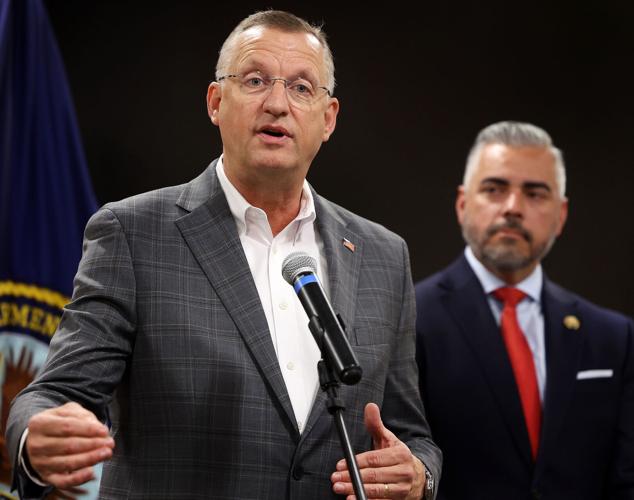

Cutting 15% of the staff at the U.S. Department of Veterans Affairs is a “goal,” not a guarantee, according to VA Secretary Doug Collins.
During a visit to the Tucson VA Medical Center on Monday, the Trump cabinet member said cuts and efficiency improvements at the department are still under review and no specific numbers have been reached, despite reports to the contrary.
Collins has been on the job for about 80 days now, and he said he has spent about 50% of that time “basically fighting back against innuendo and rumor about what’s going on at the VA by those who think that they know what’s going on at the VA without actually putting the time in to see where we’ve been.”
But the former four-term Republican congressman from Georgia made it clear that reductions are coming to the department.
“We have approximately 470,000 employees. That’s larger than the active-duty Army. But over the last 10 years, we’ve been struggling. … Certain parts of our system — our hospitals, our disability claims and even our cemeteries — have had issues that we’re not working on as we should,” he said. “So maybe there’s a better question to be asked: With the money and resources we have, could it be spent better?”
Collins took questions from local reporters after touring the sprawling, coral-colored campus on South Sixth Avenue, where he met with veterans and staff members.
“One of the reasons that I come to these hospitals is to hear directly from the staff here, directly from the leadership on what they need and what they’re getting or not getting,” he said during the brief press conference. “Sometimes there’s a disconnect between what comes in from the field and what gets to the central office.”
Collins was joined at the hospital by Tucson Republican Rep. Juan Ciscomani, who stood at his side but didn’t speak as Collins addressed the media.
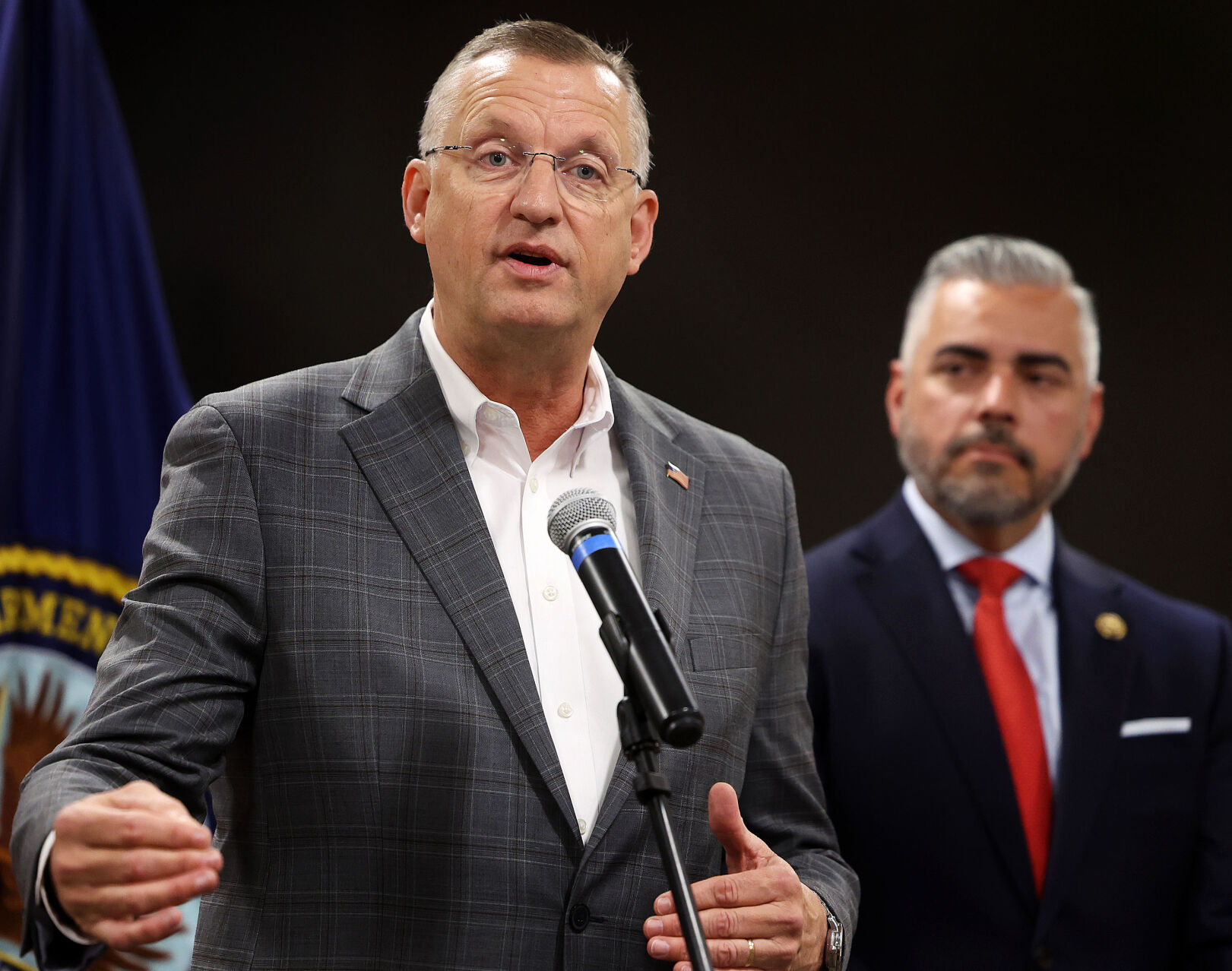
Doug Collins, Department of Veterans Affairs secretary, left, answers questions after taking a tour and meeting with staff at the Tucson VA Medical Center, 3601 S. Sixth Ave. Tucson Republican Rep. Juan Ciscomani looks on.
The secretary said the goal of a 15% cut to the VA workforce is meant to force real change within the organization. Otherwise, he said, agency bureaucrats “would not look hardly anywhere. They would just sort of move the deck chairs, so to speak, on the ship.”
The department has added more than 100,000 employees and seen its budget grow by almost $200 billion in recent years, but its performance metrics have not changed, Collins said. “We still see wait times. The average days to completion of our disability claims has climbed back over 130 days. That’s happened in light of all the money and all the people that we’ve put at it.”
Though “nobody’s been terminated yet,” he said, the administration is looking at whether the agency is overstaffed in areas not directly involved in the delivery of care to veterans, the processing of disability claims and other essential services.
“I’m not getting rid of any doctors and therapists,” Collins said, but some veterans are almost certain to lose their jobs at the VA, just as they will at other agencies under the administration’s planned workforce reductions. It’s simply unavoidable, he said, since veterans make up about 30% of the federal workforce.
Some firings have already occurred.
According to court records, the VA dismissed some 1,683 staff members as part of the massive purge of probationary workers across the government in February. Two federal judges later ordered those employees to be reinstated, but those rulings are now on hold pending review by a federal appeals court.
The VA hospital in Tucson has been the scene of protests in recent weeks from demonstrators angry about the looming budget and staff reductions and how they might impact services for veterans.

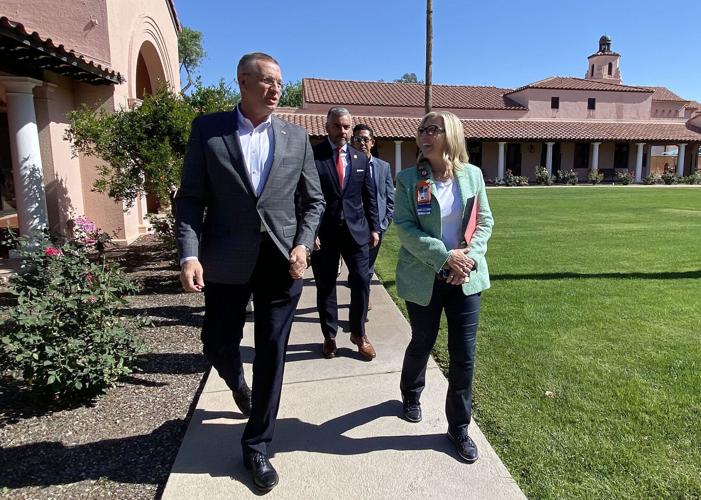
Veterans Affairs Secretary Doug Collins, left, and U.S. Rep. Juan Ciscomani tour the Tucson VA Medical Center on Monday with VA Southern Arizona Health Care Director Jennifer Gutowski.
On Monday, a handful of people stood at the entrance to the hospital on Sixth Avenue holding signs opposing cuts to the VA.
In addition to trimming staff and costs, the secretary said he is focused on tackling the issues of suicide and homelessness among veterans. Despite almost $3 billion spent on direct care and preventative measures over the past five years or so, there has not been a significant change in the suicide rate among former service members, he said.
“Nowhere else in the world would we accept that kind of spending and not see a different result,” said Collins, who still serves as a colonel and a chaplain in the Air Force Reserve, according to his online biography. “We’ve gotta think differently about how we’re going to do this.”
Three local VA employees and a volunteer were recognized for their service at the start of Monday’s press conference. Collins shook their hands, posed for pictures with them and presented each with a commemorative secretarial challenge coin.
He said the Tucson hospital is “doing a great job” overall, but it faces the same challenges as other VA facilities when it comes to recruiting and retaining doctors and other key staff members.
“We have some special needs that we’re going to have to look at on pay, salary and compensation, but also how we actually make a workforce that is accountable,” Collins said. “Good people will not work where they feel like bad things are tolerated. And across the system — not specifically Tucson, but across the system — there’s been that perception.”

