



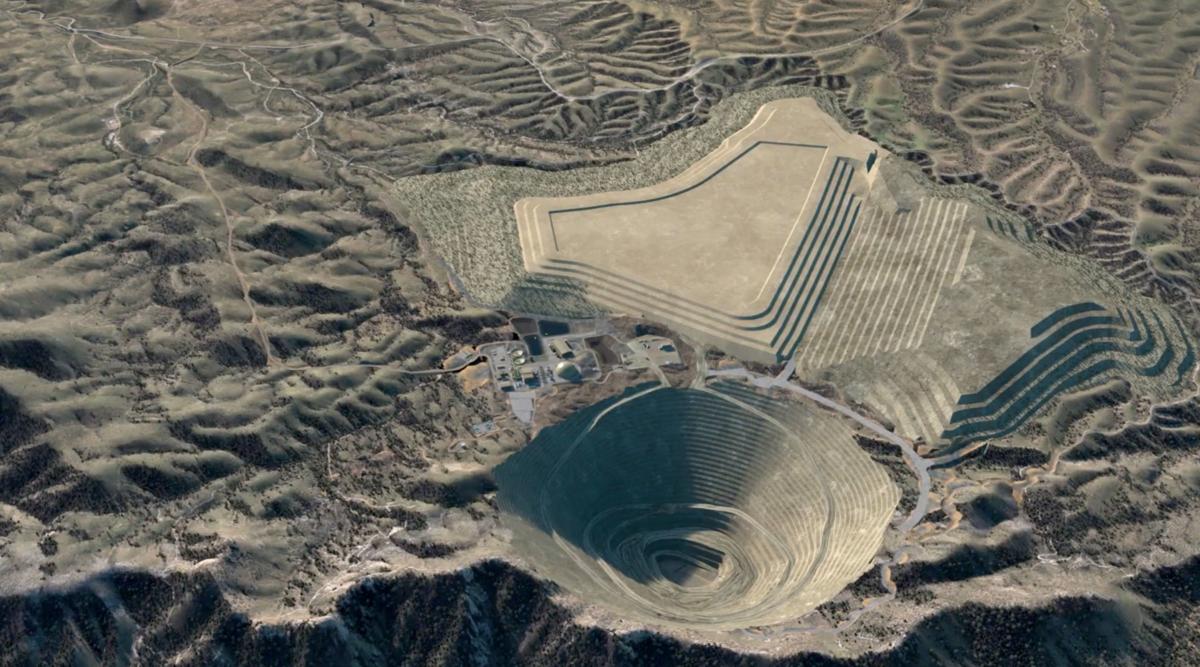
The Rosemont Mine mitigation plan will compensate for the mine’s damage to washes. The public interest will be served by the copper production. There is no practical alternative way to mine this deposit. Historic sites will be damaged, but agencies plan to mitigate that.
Most of all, many of the mine impacts that most concern Rosemont’s opponents aren’t any of our business, legally speaking.
These comments came from the U.S. Army Corps of Engineers in its recent decision granting the last permit needed for the open-pit mine to be built in the Santa Rita Mountains south of Tucson.
The Corps’ March 8 decision to approve the Clean Water Act permit was a clear-cut victory for the $1.9 billion project, following 12 years of environmental reviews.
Virtually every concern raised by opponents — and by other agencies’ scientists — was rejected or ruled legally irrelevant.
Now, Hudbay Minerals Inc., based in Toronto, can start land-clearing once the U.S. Forest Service approves a final Rosemont mining plan, which could come in as soon as a month.
The Corps’ findings will be challenged in the federal lawsuits opponents vow to file, however.
“All of the Corps’ conclusions contradict what its own experts, as well as those with the Environmental Protection Agency, Pima County and other agencies have said for years — this mine will devastate the waters and lands of the Santa Rita Mountains,” said Gayle Hartmann, president of the opposition group Save the Scenic Santa Ritas.
“Its assertions of ‘no significant impact’ flies in the face of overwhelming evidence to the contrary,” she said.
Hudbay, though, points out that the company has spent more than $100 million since 2007 on Rosemont’s overall permitting process involving 17 government agencies, more than 1,000 studies, tens of thousands of documents and more than 43,000 public comments submitted and reviewed by various agencies.
Here are four key takeaways from the Army Corps’ final decision and points opponents say they expect to raise in lawsuits:
1. The agency limited its own analysis.
The most sweeping issue is the Corps’ limit on how broadly it could evaluate the mine’s impacts.
Generally, it concluded it could legally consider only impacts caused by “clearing, grubbing and grading” of 37 acres of federally regulated washes where the mine will be built — not mine construction or operations.
That leaves out many impacts that have caused widespread concern, led by what will happen to wells and creeks from groundwater pumping for the open pit. Others include impacts from the disposal of waste rock and tailings, as well as water contamination.
The Corps could consider other impacts as part of its broader review of whether the mine is in the public interest. Even then, it primarily concentrated on washes.
But the agency’s view appears to have changed significantly over the years.
When the Corps published a 2011 public notice of the mine’s permit application, it said impacts on the washes would include blasting and excavation for the open pit, and land excavation to store waste rock and mine tailings.
When the Corps published its decision this month, however, it said, “The effects of the proposed operations of the mine, including full excavation of the mine pit, are not within the Corps’ purview” under the Clean Water Act permit guidelines.
The discharges of waste rock and tailings also won’t be regulated by the permit, the Corps ruled.
One reason those impacts won’t be looked at is that the washes will be filled by the company by the time the mine goes into operation. If the washes are filled, the Corps’ said its authority over them is gone.
The Corps appears to have narrowed its focus since the agency’s lower-level Los Angeles District recommended against the permit in July 2016. The agency said in its final decision that it had “refined” the L.A. office’s scope “to more accurately define the limit of the Corps’ authority.”
Opponents called the Corps’ position “sleight of hand.”
“The Corps now refuses to look at any of the impacts from the mine itself, especially the permanent pollution from mine facilities and dewatering of the aquifer,” said Hartmann.
Corps Brig. Gen. Peter Helmingler, who signed the decision, “can wash his hands of any obligation” to review the pit, waste rock and tailings’ impacts, added Stu Gillespie, an attorney representing the Tohono O’Odham, Pascua Yaqui and Hopi tribes.
“They granted a grading and filling permit to Rosemont to eliminate washes, so Rosemont doesn’t have to look at anything else,” he said.
Hartmann’s group and the three tribes have separate, ongoing lawsuits against the Forest Service’s approval of the mine and plan to sue the Corps as well.
2. The agency liked the company’s latest mitigation plan.
A key reason the Corps cited for overturning the L.A. office’s recommendation was a changed Hudbay mitigation plan, the fifth since 2011, to compensate for impacts on washes.
The newest plan, from 2017, would re-establish, rehabilitate, enhance and preserve sections of Sonoita Creek and its tributaries, ponds and buffer areas on the 1,200-acre Sonoita Creek Ranch that Hudbay owns in Santa Cruz County.
Lying 12.5 miles south of the mine site, the ranch is part of a 1,580-acre mitigation package, including preservation of the neighboring Rail X Ranch.
Hudbay says this work will reduce erosion and improve adjoining riparian habitat. The company will have to monitor the plan’s effectiveness for up to 15 years, under one of many conditions the Corps imposed.
The mitigation plan is adequate “to ensure no net loss of aquatic resource functions and services,” the Corps concluded.
Opponents will rely partly on 26 pages of highly critical EPA comments on this plan, from November 2017.
The EPA faulted the plan because the ranch lies outside the Cienega Creek watershed it says the mine will damage. The EPA also said the mitigation plan lacks compelling ecological justification and that there’s great risk that many of the planned measures won’t work.
The Corps reviewed EPA’s and many other parties’ comments on the mitigation plan before OK’ing it. It said concerns about the project’s impacts on Cienega Creek lie outside the scope of this analysis and that Hudbay couldn’t find any suitable mitigation sites inside that watershed.
This limit on the Corps’ analysis is the mitigation plan’s biggest problem, tribal attorney Gillespie said.
“The corps has wholly overlooked the secondary impacts of the mine — they’re not mitigating impacts of waste rock and tailings and groundwater drawdown,” he said.
3. The mine will be in the public interest, the agency concluded.
The Corps’ public interest review, required for issuance of Clean Water Act permits, came out positive overall.
First, it said the mining of copper and other minerals there such as molybdenum would further objectives of Arizona and the United States.
“Copper is a necessary part of many of the products used throughout the world, such as appliances and electronic equipment,” the Corps said.
Besides the public need for these minerals and their byproducts, there’s also the mine’s economic benefits, “including increased jobs and tax revenues at the local, state, and national level,” the Corps said.
It found “negligible or neutral effects on fish and wildlife values, shore erosion, water supply and conservation and water quality,” after accounting for mitigation.
It predicted “temporary detrimental effects” on land conservation, dark skies, astronomy, traffic, air quality, noise and safety, and permanent negative effects on aesthetics, historic properties and recreation.
“Beneficial effects were seen on economics, wetlands, and flood hazards, and both positives and negatives were seen on the needs and welfare of the people.”
4. Tribal cultural sites will be damaged but with compensations, the agency found.
The Corps acknowledged the mine will have a detrimental effect on historic properties including tribal cultural sites from clearing, grubbing and grading.
But it said those effects will be mitigated through an agreement signed by the Corps, the Forest Service, the State Historic Preservation Office and the federal Advisory Council on Historic Preservation. The Sonoita Creek Ranch mitigation plan will also compensate for these damages, the Corps said.
Last September, Corps officials, including Helmlinger, met with leaders of the O’odham, Pascua Yaqui and Hopi tribes at the mine site to hear their concerns, the Rosemont decision said.
The agreement contains 11 mitigation measures. It will let tribes visit the mine site a week before construction starts to collect culturally and medically significant plants, and to perform ceremonies there.
Hudbay has agreed to include culturally important plants in the seed mixture for its reclamation. Hudbay will also let tribes collect plants from its land conservation areas outside the mine site. Tribal members can also conduct ceremonies on those conservation lands and forest lands on the mine site.
These measures are totally inadequate, tribal attorney Gillespie said. The mine’s final environmental impact statement found the project will destroy, damage or bury 82 historic properties and negatively impact three historic properties and 30 prehistoric properties containing human remains.
Gillespie noted that when the Anamax Mining Co. investigated the Rosemont area in the 1970s for a possible mine — which it later abandoned — its officials removed the remains of 200 burials.
“One of our overarching concerns here is that Hudbay is going to rush in there and do just the same thing, when it’s still unclear if they can legally develop this mine,” Gillespie said.

