



The federal government issued the final permit Friday allowing the Rosemont Mine to be built despite written EPA warnings that the mine will pollute surface water and shrink, if not dry up, two nationally important streams.
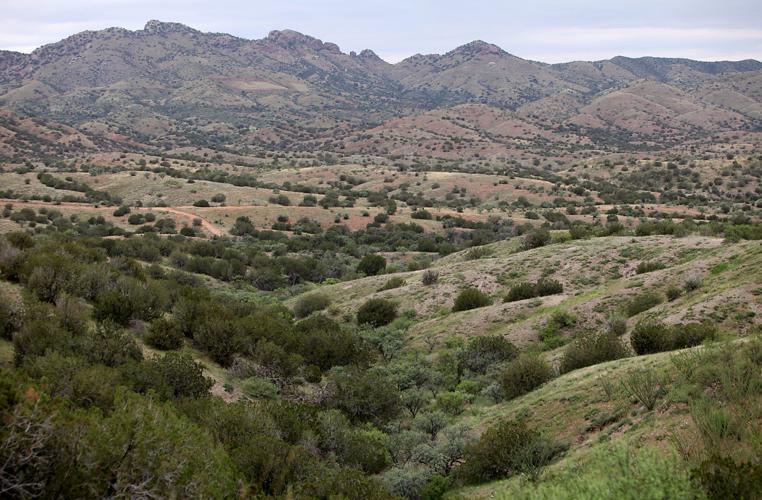
In its most recent memos on the mine, obtained by the Arizona Daily Star and not previously reported, the U.S. Environmental Protection Agency said Rosemont’s construction will destroy or reduce the size of wetlands, pools and springs, will damage Cienega Creek and Davidson Canyon, and destroy or shrink riparian areas.
The EPA’s regional office also warned that the mine’s cutoff of stormwater flows into neighboring streams and its groundwater pumping will significantly degrade federally regulated water bodies.
The impacts will be contrary to the goals of the federal Clean Water Act, the EPA said, strongly implying the act itself would be violated.
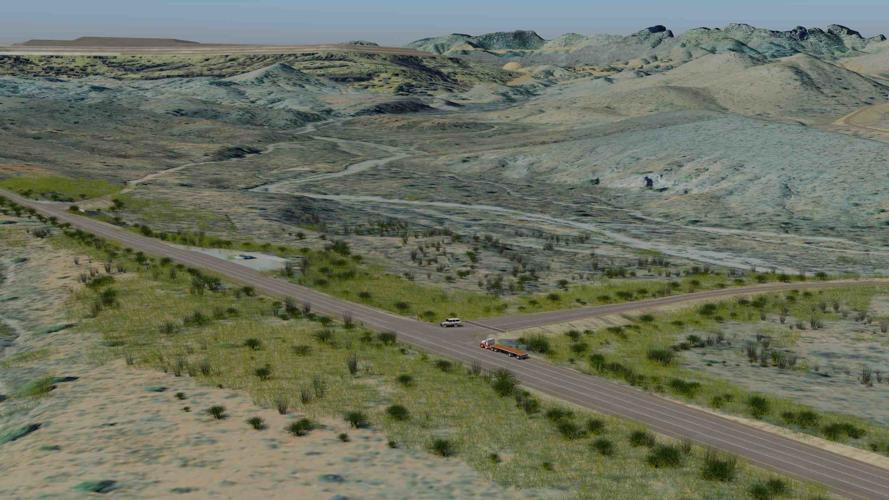
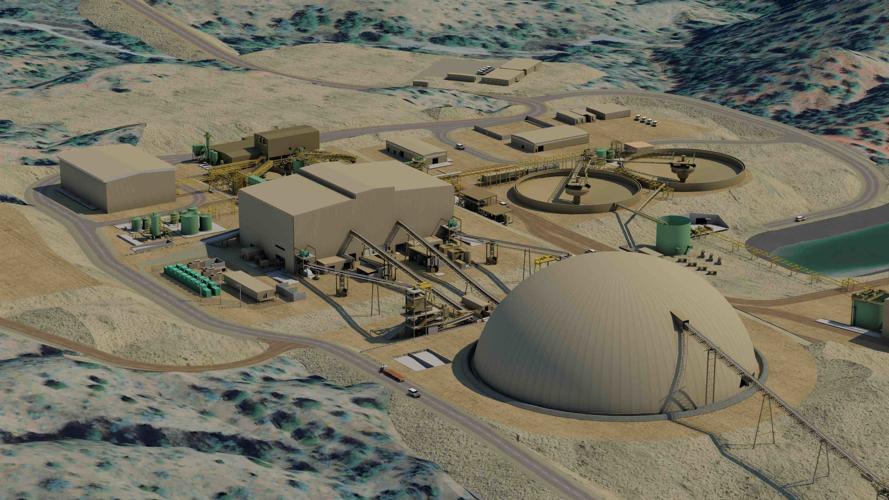
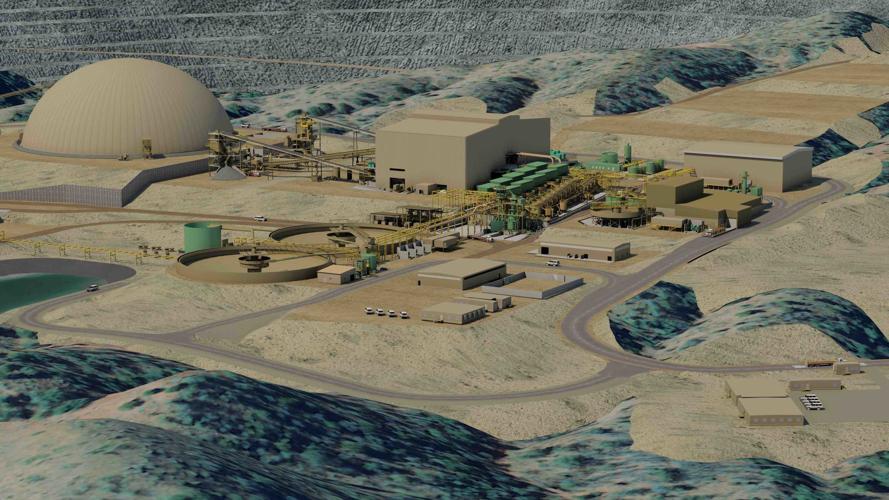
Yet, the Army Corps of Engineers issued the mine’s Clean Water Act permit Friday — the last of many federal and state permits needed to allow a Canadian company to dig a half-mile deep, mile-wide open pit in the Santa Rita Mountains southeast of Tucson.
Hudbay Minerals Inc., the Toronto-based company that proposes the mine, strongly criticized the EPA’s conclusions in its own letters to the Army Corps. It accused the EPA of exaggerating the mine’s impacts on surface water and groundwater, particularly the pollution threat.
When the Corps issued the permit, it generally agreed with Hudbay that the mine probably won’t pollute streams.
It also agreed with Hudbay that some of the EPA’s other concerns lie outside the Corps’ legal jurisdiction. These particularly include the longstanding issue of how lowering the aquifer under the mine to create the open pit will affect Cienega Creek.
And the Corps agreed with Hudbay’s view that the mine’s planned mitigation measures will prevent a reduction in stormwater flows into neighboring streams.
“Regionally rare” waters are at risk, EPA says
The Star recently obtained the EPA’s comments and Hudbay’s responses from the Army Corps through the Freedom of Information Act.
The Clean Water Act permit will allow Hudbay to place dredged and fill materials into a number of washes at the mine site to make the mine’s construction possible.
Under federal guidelines used to carry out the act, discharges of dredged or fill material into streams can’t be allowed if they will cause or contribute to significant degradation of federally regulated water bodies, the EPA said in its memos. That’s precisely what the agency says Rosemont’s construction will do.
The two EPA memos, written in November 2017, are the most recent of eight reports, letters and memos the agency has written critical of the $1.9 billion mine project since 2012.
“The Rosemont Mine will degrade and destroy waters in the Cienega Creek watershed containing regionally rare, largely intact mosaics of some of the highest quality stream and wetland ecosystems in Arizona,” the EPA concluded in one memo. “These environmental consequences are substantial and unacceptable.”
For years during the Obama administration, the EPA’s regional office said it considered Rosemont a logical project to be elevated for additional review by the EPA and the Army Corps’ Washington, D.C., staffs. But on Feb. 28, the EPA’s regional administrator, Mike Stoker, told a lawyer for tribes opposed to the mine that the agency didn’t plan to elevate the case to Washington.
Asked by the Star to explain that decision, the EPA replied Friday in an email that “based on the revised permit” details, its regional administrator “exercised his discretion not to elevate.”
“Highly speculative,” Hudbay counters
Hudbay said the impacts forecast by the EPA were “highly speculative” and based in part on U.S. Forest Service and U.S. Fish and Wildlife Service reports that substantially overstated problems the mine would cause.
In reports written in February 2018, Hudbay accused the EPA of misrepresenting or exaggerating findings of the other agencies and of overstating the ecological value of washes radiating from the mine site.
Hudbay also accused the EPA of failing to acknowledge mitigation measures that the company designed to forestall the impacts the EPA predicted — measures that filled 100 pages in the Forest Service’s final Rosemont environmental impact statement.
The company also said a separate set of mitigation measures that include buying a 1,500-acre ranch along Sonoita Creek in Santa Cruz County will compensate for the mine impacts.
Details of the EPA’s findings and Hudbay’s and the Corps’ rebuttals:
1. Impacts of groundwater drawdown.
To create and maintain the mine’s open pit, Hudbay will have to withdraw groundwater from the aquifer underlying the mine site throughout the mine’s 20-year life.
The EPA, like the Forest Service, admits the computerized groundwater models that agencies have used to predict these withdrawals’ impacts on neighboring streams can’t determine how severe they’ll be. That’s because the expected decline in the aquifer from groundwater removal likely will be less than the five-foot minimum needed to make accurate predictions, the agencies say.
But even small changes in groundwater levels will have “profound adverse effects” on surface water flows and the shallow aquifer directly underneath, EPA’s memo says. One reason is that wet areas of many Southwestern aquatic habitats, including those around Cienega Creek, are shallow and susceptible to drying from small changes in surface water depths due to declining aquifers, the EPA says.
“The vulnerability of springs, seeps, stream flows, wetlands and riparian areas in the study area to groundwater drawdown is great,” the EPA said. “These aquatic habitats are regionally rare, small in area and fragmented, and are currently shrinking in response to the ongoing drought.”
Again citing Forest Service reports, the EPA warned that the mine would, over time, change three miles of Empire Gulch, 20 miles of Cienega Creek and one mile of Gardner Canyon from intermittent or perennial streams to ephemeral ones that carry water mainly during floods. These impacts are more certain to occur at Empire Gulch than at the other streams, the EPA memo says.
In its response, Hudbay says EPA’s reasoning is flawed, as are the reports upon which it relied.
The groundwater models used to make predictions upon which EPA relied found the mine’s impacts across the entire Cienega Creek Basin are likely to be small and won’t occur until far in the future, Hudbay says. But these analyses are so otherwise flawed that they greatly overstate impacts, the company says.
The company accuses the Forest Service of conducting a “simplistic” analysis to learn the worst possible impacts. The service inappropriately assumed that one foot of groundwater drawdown will trigger a one-foot reduction in Cienega Creek streamflow, for example, the company said.
The agencies’ findings “ignore the dynamic interactions between precipitation, stormwater runoff, recharge, evapotranspiration, temperature, bedrock groundwater, alluvial groundwater and natural trends that influence streamflow,” wrote Hudbay’s consultant, Westland Resources.
2. Scope of analysis.
The Army Corps’ 83-page Rosemont permit decision released Friday didn’t look at this issue. It said the impacts of lowering the water table were outside the scope of the issues it is legally authorized to review under federal guidelines for considering permits.
First, that’s because the activity the Corps can control — the discharge of fill and dredged material into washes on the mine site — will be finished before Hudbay digs out the mine pit, 2,900 feet deep, the decision said.
Similarly, while the mine’s waste rock and tailings will be dumped into much of the area where Hudbay discharges the dredged and fill material, the discharges will be the result of land clearing on the site — not from putting waste rock on it. So the mine’s operations, like the tailings and waste rock disposal, also can’t be analyzed for the Corps permit, the agency said.
Stu Gillespie, an attorney for three Indian tribes who oppose the mine, sharply criticized the Corps’ view.
“What they are saying is that Hudbay is going to fill these washes ... eliminate those washes, but at the same time, saying we have no obligation to regulate the activities that will occur on top of those washes,” he said.
“It’s almost an invitation to developers to do whatever they want, and the Corps will turn a blind eye,” said Gillespie, who said he expects the Tohono O’Odham and two other tribes will raise the issue in an upcoming lawsuit challenging the permit.
3. Water pollution.
The mine will convert washes such as Barrel Canyon at the head of the Cienega Creek Basin into pollution sources, the EPA said. Heavy metals will run off the mine and degrade the quality of Cienega and Davidson Canyon downstream, it said.
In general, the water quality of the expected mine runoff is worse than the quality of creeks downstream, the EPA said. While the Forest Service has speculated that the mine’s contamination load will slacken as it travels downstream, the EPA disagreed.
“In fact, contaminated mine runoff is additive, increasing concentrations of heavy metals to existing downstream waters and worsening water quality,” it said.
Based on the EPA’s analysis of water quality data, “stormwater runoff from the mine’s waste rock and soil cover contaminated with lead, mercury, molybdenum, selenium, silver, sodium and sulfate will degrade the water quality of Barrel Canyon, Davidson Canyon and Cienega Creek,” the agency said.
The state calls Davidson and Cienega “Outstanding Arizona Waters” that legally can’t be polluted.
But the EPA’s warnings aren’t supported by findings from the Arizona Department of Environmental Quality, Hudbay said. ADEQ has certified that if Rosemont sticks to the various conditions and mitigation measures the state has imposed, the mine “will not cause or contribute to exceedances of surface water quality standards,” Hudbay said.
Nor will it degrade Davidson or Cienega’s water quality, ADEQ concluded.
The EPA’s “speculative” warnings also don’t recognize requirements of ADEQ’s formal pollution discharge permitting system, Hudbay added. It requires the mine to meet conditions of a general industrial permit, containing specific standards for what’s discharged and monitoring requirements.
Hudbay also noted that the Forest Service’s Rosemont environmental impact statement predicted that the water quality in runoff from the mine’s tailings and waste rock isn’t expected to degrade the quality of surface water downstream. The Forest Service predicted dissolved silver is the only metal for which runoff would exceed water-quality standards, and ADEQ foresaw little likelihood of that happening.
In the Corps’ decision Friday, it said downstream pollution can be prevented by requirements it will place in its permit for Hudbay to conduct the best possible management of pollution risks, do erosion control and comply with state requirements. Also, because the mine site occupies only 13 percent of the entire Davidson Canyon watershed, “it is not appropriate” to assume a direct link between runoff from the site and Davidson’s water quality, the Corps said.
4. Surface water reductions.
The mine’s presence will reduce stormwater discharges into Barrel and Davidson Canyon and Cienega Creek, causing huge problems for trees, shrubs and wildlife living downstream, the EPA said.
The causes will be the direct fill of washes on the mine site and modification of stormwater flows by the construction of basins and diversions designed to retain, slow or convey storm water around mine areas, the EPA said.
During the mine’s 20- to 25-year life, it will slash stormwater runoff by more than 30 to 40 percent, which will reduce streamflow by at least 7 to 10 percent at the confluence of Davidson and Cienega, EPA said, based on Forest Service estimates.
“Even small statistical changes in low-water surface flows of a few percent will cause or contribute to significant degradation of the aquatic ecosystem through loss of aquatic habitat and declines in water quality,” the EPA said.
The cutoff of stormwater at the mine site can also reduce shallow, underground water flows into the creeks, the EPA said.
Those reduced flows will in turn decrease the size and depth of existing pools in the two creeks, significantly reducing the amount of surface water available for fish and insects, including the endangered Gila chub and Gila topminnow at the Cienega-Davidson confluence, the EPA said.
Hudbay, however, says the estimated 30 to 40 percent streamflow reduction was merely an extrapolation of data done by a Forest Service consultant. While EPA believes the Forest Service’s predictions of stormwater runoff were too low, Hudbay says it has documented that the predictions are too high.
It also says its planned mitigation measures, which include removal of four downstream livestock watering tanks from the site, “will more than offset any reductions in downstream flows.”
The Army Corps’ decision Friday agreed with Hudbay, saying the Corps has determined the removal of the tanks is needed to compensate for potential loss of streamflow due to the mine.
The Corps also noted that the mine site covers only 13 percent of the entire watershed feeding Davidson Canyon downstream. Because of that, “it is not appropriate to infer a direct correlation” between mine runoff and Davidson Canyon’s water quality, the Corps said.

