




Tucson officials are thinking outside the box when it comes to devising ways to use the $95 million from the federal CARES Act that the city received to help overcome steep revenue losses due to the pandemic.
That’s because that money — exactly $95,634,512 — cannot be used for revenue replacement, only for coronavirus-related expenditures incurred by the city.
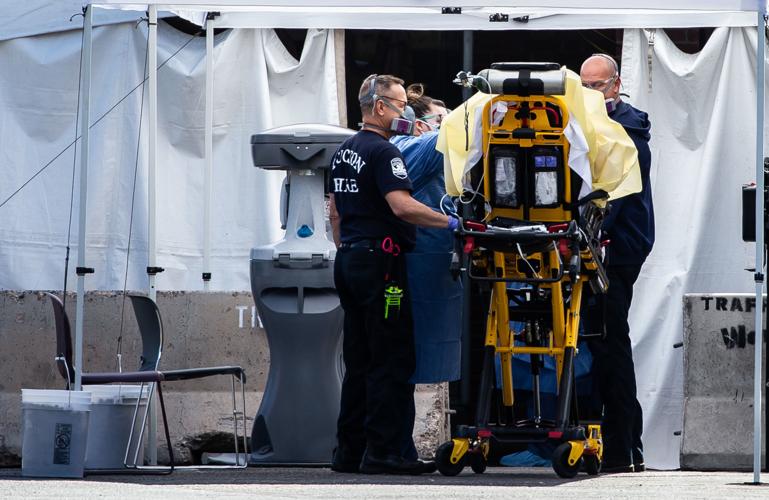
That includes expenses like acquiring medical and protective supplies; improving telework capabilities for employees; providing paid sick and family leave to employees; and caring for homeless individuals, according to a memo sent to Tucson City Council members this month that was obtained by the Star.
“Myself and city manager have had to be very clear with our council about let’s not start getting giddy about $95 million because it is not permissible to use it as revenue replacement,” said Tucson Mayor Regina Romero.
That revenue replacement is ultimately important for the city, which has lost a yet-to-determined amount of revenue, mainly from a drop in sales taxes prompted by the closure of local businesses to help slow the spread of the coronavirus.
Romero, along with Gov. Doug Ducey, issued a proclamation closing many of those businesses, and the CARES Act restrictions have her concerned because those revenue losses will deplete the city’s general fund, which is used to pay for things like emergency services.
“It does not answer the question for us, or help alleviate the concern we have, regarding the near future and how COVID-19 is going to affect our budget,” she said of the federal money.
“We don’t have an answer of how we are going to continue providing those services when the money that we use to pay these emergency service workers is dwindling.”
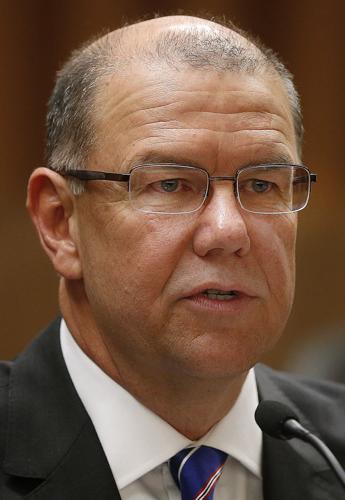
City Manager Michael Ortega said the CARES Act restrictions have already created a “ton of grief” because he cannot use them for items that were already budgeted in the city’s $1.56 billion annual forecast.
He cited the example of having to move employees into new roles, such as answering the city’s COVID-19 hotline or working in the city’s pandemic emergency operations center.
He said he can’t use the CARES Act money to help pay for their salaries because that was technically already part of the annual budget.
No help if expenses were budgeted
“The way that the language works, those dollars were already budgeted. On the surface, that seems to make sense. Except that the dollars that are coming in to fund those budget expenses are no longer coming in because of the COVID pandemic,” he said.
“In essence, it has to be absolutely related to the COVID pandemic. The lack of revenue replacement causes us a ton of grief because I can’t provide the services to even deal with the COVID pandemic because they were already budgeted and I don’t have enough to pay for them.”
Ortega said he doesn’t have a strict estimate of how much the city has spent on those costs because it’s fluid.
He’s directed the heads of all the city’s service departments to keep track of expenses related to COVID-19 in an effort to seek as much reimbursement as possible.
For instance, they’ve spent upwards of $2 million on beefing up employees’ abilities to work from home.
They’ve also been approved to spend a total of $1.6 million on hotels, two for homeless members of the community and one for city employees who may have been exposed to the coronavirus.
Then there are undetermined additional costs as the city aids small businesses negatively impacted by the closures, housing navigators for people who were displaced as a result of the fallout of the virus, and additional personal protective equipment, like masks and gloves, for emergency responders.
“We’re trying to maximize those reimbursements, because those costs are just continuing to pile up,” Ortega said. “Those are additional costs that we didn’t anticipate that we’re going to ask for reimbursement for.”
Members of the City Council, too, expressed frustration about the limitations on the money, but said they’re urging the city to get creative.
Councilman Steve Kozachik said he’d like to see money be used for grants to small companies to reimburse the costs of business interruption caused by required closures, which was included in the list of permissible uses of the federal funds.
He’s asked small businesses to calculate the exact losses they’ve incurred as a result of the coronavirus so they can actually quantify how the pandemic has impacted them.
“We’re all after the same thing. We don’t want to see businesses tank. We don’t want to see nonprofits tank. We need to be creative within the boundaries they’ve given us,” he said.
Councilman Paul Durham said he’d like to see that CARES Act money help Tucsonans avoid evictions, access rapid rehousing when necessary, and provide a direct lifeline to nonprofits, small businesses and households.
He’d also like to see it used to reimburse personal protective equipment costs.
“Increased dollars to protect households from evictions is going to be critical,” Durham said. “We already have over 400 evictions that have been postponed because of the governor’s executive order.
“That order is limited only to those who have experienced a loss of income due to COVID-19 and they will likely move forward in late June.”
He acknowledged that there is a lot of need and that the CARES Act money won’t be enough to overcome that need on its own.
Romero said she wants some of that money to be used for her We Are One/Somos Uno Resiliency Fund that is aimed at helping small businesses, nonprofits, workers and families.
Funds might pay for extra sick leave
She said she’s also hoping the funds can cover extra paid sick leave for employees that was established as part of her emergency proclamations.
“That is something that we’re keeping track of and that we can use from the funds as well,” she said.
For Ortega, he said he doesn’t have an estimate on how much of the $95 million he’ll be able to use, but that he’s hoping to soften up the restrictions as much as possible.
He dismissed the notion that the CARES Act was billed as a lifeline for local governments, but rather that it was a lifeline for “communities on a bigger scale.”
But he said those communities are functions of the services provided by their local governments.
“It’s great to have the money in the bank, but if we can’t access it for the fundamental services that our residents need, it really makes it tough on us,” he said.
Photos for April 23: Tucson gets by during Coronavirus Pandemic
Tucson, coronavirus
Updated
Erika Munoz, owner of Seis Kitchen, hands over a bag of meals to Michael Gallagher Carondelet, a registered nurse at St. Joseph's Hospital, to distribute to other nurses and hospital workers, on April 23, 2020. The donation was made in conjunction with A+C (Athletes/Artists+Causes) Foundation's “Project Frontline.” In two deliveries, 400 meals (200 poc chuck chicken and 200 puerco verde burritos) will be given to medical personnel at Carondelet St. Joseph’s Hospital. The particular donation was made possible by the Houston Astros' Pitching Coach Brent Strom, who lives in Tucson.
Tucson, coronavirus
Updated
Hospital workers wheel in carts full of catered meals donated by Seis Kitchen to Carondelet St. Joseph's Hospital, on April 23, 2020. The donation was made in conjunction with A+C (Athletes/Artists+Causes) Foundation's “Project Frontline.” In two deliveries, 400 meals (200 poc chuck chicken and 200 puerco verde burritos) will be given to medical personnel at Carondelet St. Joseph’s Hospital. The particular donation was made possible by the Houston Astros' Pitching Coach Brent Strom, who lives in Tucson.
Tucson, coronavirus
Updated
Kristi Hall, a sixth grade teacher at Desert Sky Middle School, participates in planning a lesson with a fellow teacher on Zoom, at her home on April 17, 2020. Schools in the Vail School District are supposed to open in July due to their year-round school calendar. Plans are being made for the possibility of students returning to the physical classroom.
Tucson, coronavirus
Updated
Bry Kelley, a warehouse assistant, places a pallet filled with food down next to other items donated to the Community Food Bank of Southern Arizona on on April 21, 2020. Forty-one thousand pounds of flour, pasta and canned goods were donated by The Church of Jesus Christ of Latter-day Saints. The donation is part of an ongoing global effort by the church to address immediate needs of people and orgainzations due to the coronavirus disease (COVID-19) pandemic.
Tucson, coronavirus
Updated
A pallet of food is placed down next to other items donated to the Community Food Bank of Southern Arizona on on April 21, 2020. Forty-one thousand pounds of flour, pasta and canned goods were donated by The Church of Jesus Christ of Latter-day Saints. The donation is part of an ongoing global effort by the church to address immediate needs of people and orgainzations due to the coronavirus disease (COVID-19) pandemic.
Tucson, coronavirus
Updated
Christian Bergman, 4th year University of Arizona medical student, takes the temperature of a patient outside the Z Mansion, 288 N. Church Ave., in Tucson, Ariz., on April 19, 2020. Medical students from the University of Arizona and other universities volunteer to help the homeless population with the growing concerns of Coronavirus Disease (COVID-19) within the homeless population. “This is a vulnerable population in our community; they can’t defend themselves in a society already running short on supplies and resources,” said Bergman. Medical students and medical personal help by giving out food, drinks with electrolytes and masks to the homeless. Those who are sick, medically impaired or have been exposed to those with COVID-19 are isolated outdoors in tents on the property. As of Sunday April 19, there were 13 individuals whom are isolated in tents.
Tucson, coronavirus
Updated
Lekha Chesnick, 1st year medical student at Burrell College of Osteopathic Medicine, talks with a homeless man (whom choose to not give his name) outside of the Z Mansion, 288 N. Church Ave., in Tucson, Ariz., on April 19, 2020. Medical students from the University of Arizona and other universities volunteer to help the homeless population with the growing concerns of Coronavirus Disease (COVID-19) within the homeless population. Medical students and medical personal help by giving out food, drinks with electrolytes and masks to the homeless. Those who are sick, medically impaired or have been exposed to those with COVID-19 are isolated outdoors in tents on the property. As of Sunday April 19, there were 13 individuals whom are isolated in tents.
Tucson, coronavirus
Updated
Christian Bergman, 4th year University of Arizona medical student, checks on a patient outside the Z Mansion, 288 N. Church Ave., in Tucson, Ariz., on April 19, 2020. Medical students from the University of Arizona and other universities volunteer to help the homeless population with the growing concerns of Coronavirus Disease (COVID-19) within the homeless population. “This is a vulnerable population in our community; they can’t defend themselves in a society already running short on supplies and resources,” said Bergman. Medical students and medical personal help by giving out food, drinks with electrolytes and masks to the homeless. Those who are sick, medically impaired or have been exposed to those with COVID-19 are isolated outdoors in tents on the property. As of Sunday April 19, there were 13 individuals whom are isolated in tents.
Tucson, coronavirus
Updated
Elliott Dumont, owner of Roadrunner Bicycles, 6177 E. Broadway Blvd., works on a customer's bike on April 22, 2020. The coronavirus disease (COVID-19) has not slowed down bike shops. With many people at home, they are bringing bicycles for repairs and buying new ones for exercise. Dumont says he's booked out till the first week of May for tuneups on bikes.
Tucson, coronavirus
Updated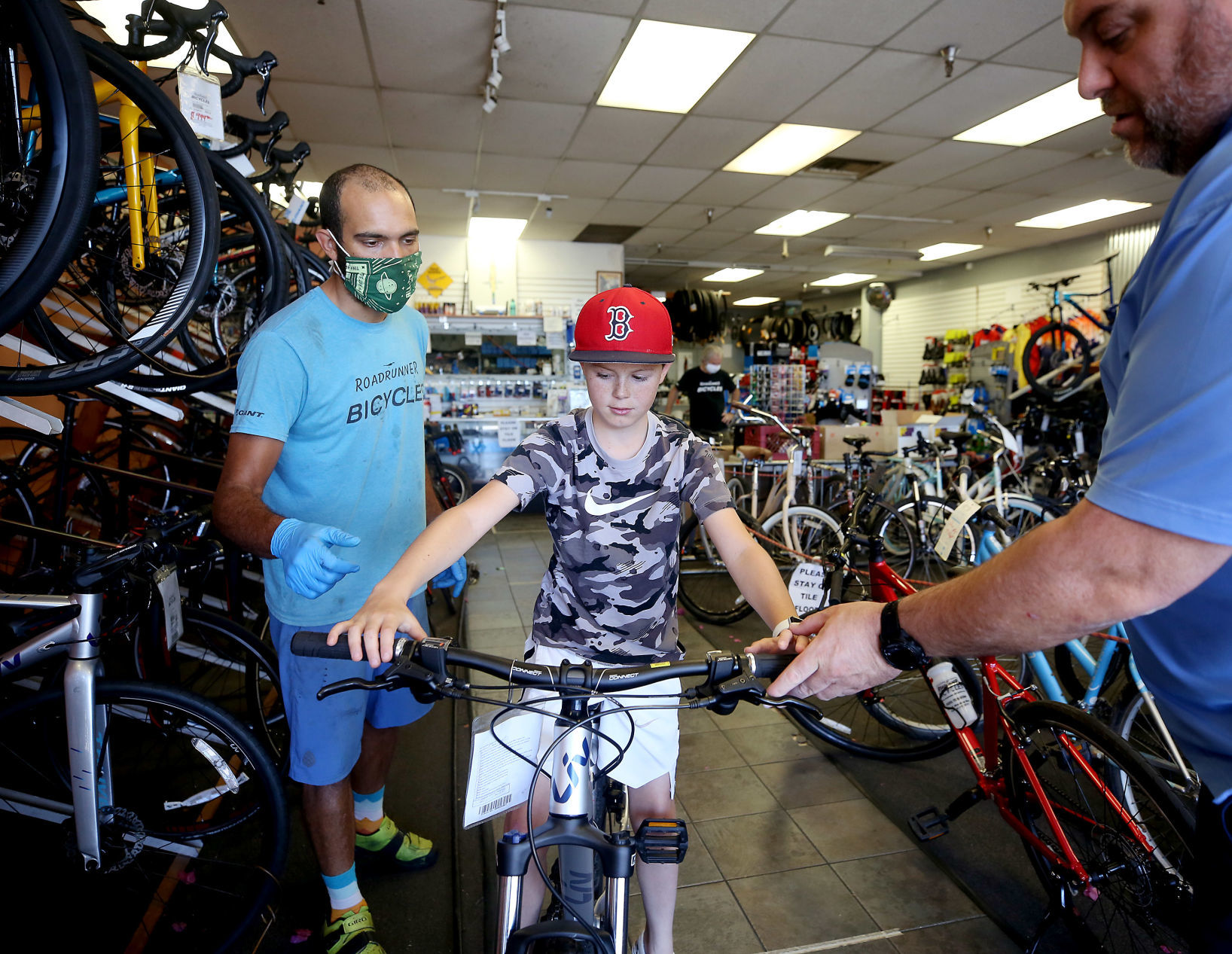
Elliot DuMont, owner of Roadrunner Bicycles, 6177 E. Broadway Blvd., far left, helps Ethan Sasz, far right, and his son, Evan, 10, with a mountain bike purchase on April 22, 2020. The coronavirus disease (COVID-19) has not slowed down bike shops. With many people at home, they are bringing bicycles for repairs and buying new ones for exercise. Dumont says he's booked out till the first week of May for tuneups on bikes.
Tucson, coronavirus
Updated
Marcella Montoya waits in her vehicle as general manger David Kessler brings out her order, as Bear Canyon Pizza serving their customers despite COVID-19 restrictions, April 22, 2020, Tucson, Ariz.
Tucson, coronavirus
Updated
Kitchen manger Koa Hoffmann tosses dough while working up a crust for a call-in order as he and few others keep cooking at Bear Canyon Pizza despite COVID-19 restrictions, April 22, 2020, Tucson, Ariz.
Tucson, coronavirus
Updated
Alvaro Enciso, a local artist, works in one of his studios at his home on April 9, 2020. Every Tuesday Enciso travels into the Sonoran desert to post crosses where migrants have died after crossing illegally over the U.S./Mexico border as part of a project he's titled Donde Mueren Los Suenos / Where Dreams Die. With the outbreak of the coronavirus disease his six year project is on hold and instead he works on other artwork at home.
Tucson, coronavirus
Updated
Dolly Spalding works on a pen and ink drawing in her apartment at the Redondo Tower Apartments on April 7, 2020. During her quarantine, Spalding has been creating drawings of all the Greek goddesses. She is collaborating with Emlyn Boyle, an artist from Ireland, and plans to publish a book with Boyle's writings.

