



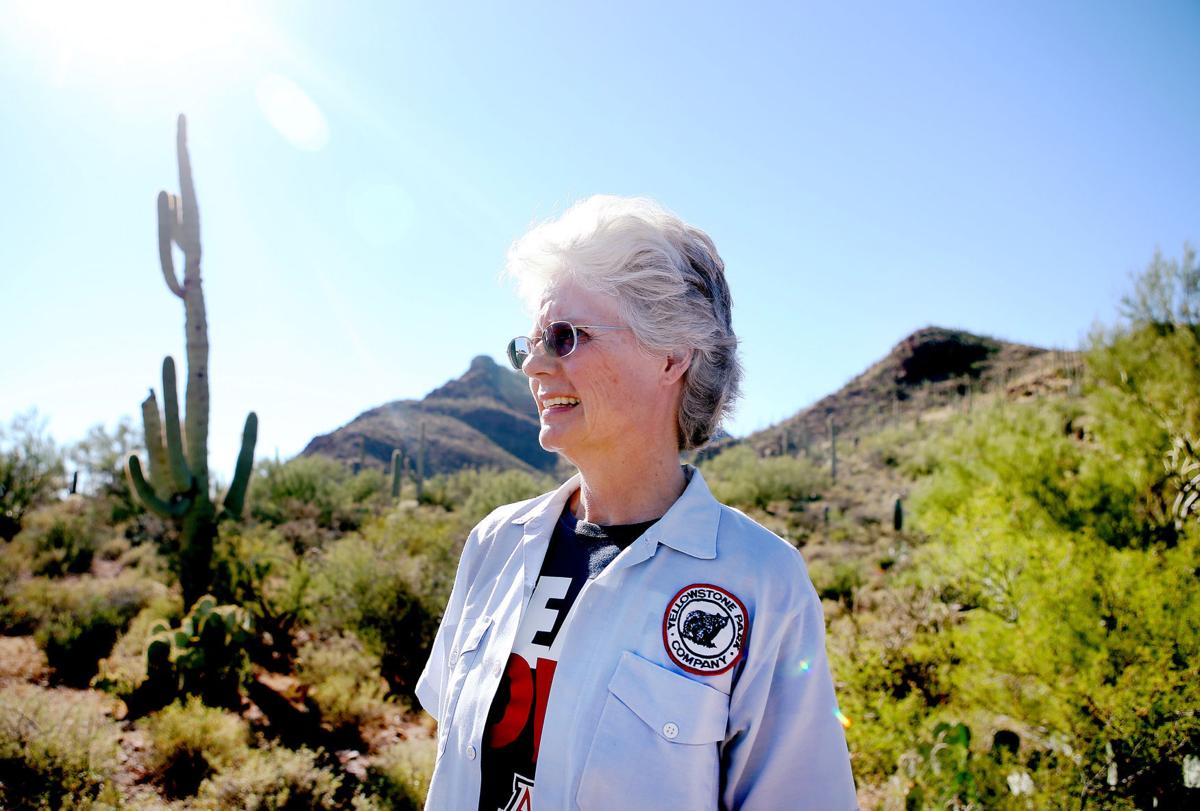
A precious parcel of land — 65 scenic, saguaro-studded acres teeming with wildlife — is now part of Tucson Mountain Park thanks to the generosity of Tucsonan Martha Hawes.
Hawes, a University of Arizona professor specializing in plant pathology, donated the desert parcel to Pima County for inclusion in the park west of Tucson “because there’s nothing so important as saving at least part of the planet” from development.
She said she and her late husband, fellow scientist Hans Van Etten, had planned on donating the property — southwest of West 36th Street and South La Cholla Boulevard — to the county since buying the land, building a house and moving there in 2003.
“As a child, I had a dream about looking out and seeing a field being paved,” Hawes said. “I don’t want them paving this field” of desert landscapes around the house.
County was approached
more than 10 years ago
“Martha is a truly wonderful lady,” said Steve Anderson, planning division manager for Pima County Natural Resources, Parks and Recreation. “She and her husband came to me more than 10 years ago with an altruistic intent to make a lasting donation for the conservation of their land and the betterment of Tucson Mountain Park.
“And they really followed through,” Anderson said. “These donations happen periodically and it’s a wonderful thing. This helps us expand our parks and trails system and provide a public benefit for everyone.”
Previous donors have deeded land to expand trails around the Sweetwater Preserve, Ventana Canyon and Redington Pass.
The agreement between Hawes and the county allows her to remain in the house on the property for the remainder of her life, Anderson said.
EXQUISITE DESERT, variety of animals
Asked to describe the landscape of the 65 acres surrounding her home, Hawes, said, “It’s the desert being desert.”
“I’ve studied plant roots for my whole career, and I still don’t understand how desert plants do it,” she said. “It’s a miracle every day to be out here.”
“Out here” includes slopes and ridges of volcanic rock, prickly forests of saguaros and several other types of cactus, and a sort of who’s who of desert animal life.
Hawes and her late husband have photographed many of the birds and animals in the area and the house is decorated with colorful wildlife pictures.
Among the animals in the photo collection are a kit fox, javelinas, deer, rattlesnakes and birds including a cactus wren, a Cooper’s hawk and several kinds of hummingbirds.
No immediate plan
to build trails
Anderson said there are no immediate plans for building trails on the newly acquired parkland. But a trailhead near the western end of West 36th Street could eventually serve as a starting point for those who might want to trek carefully cross-country into the area.
There are no definite plans for Hawes’ house when she is no longer living there.
“About the only thing we would use it for would be environmental education,” Anderson said.

