

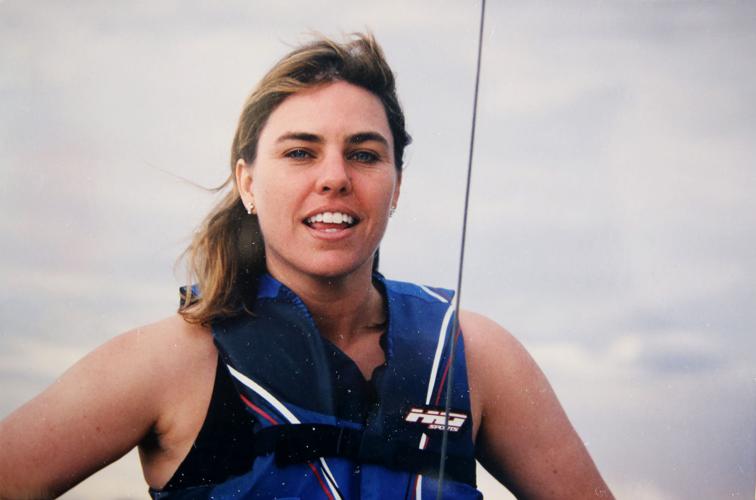
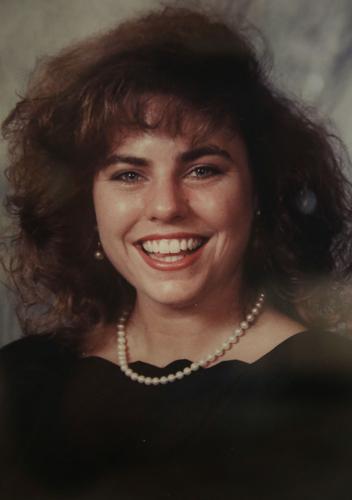


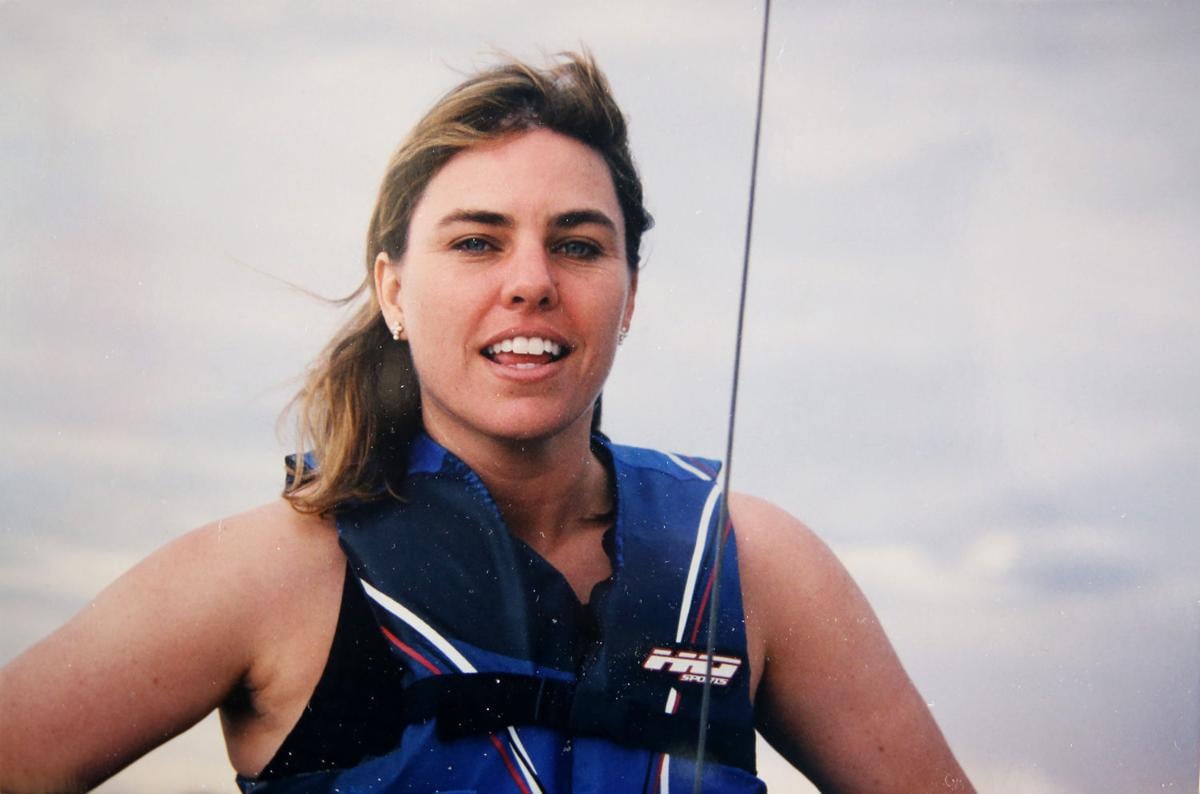
The relaxed smiles in a 2005 Minarik family photo taken in Hawaii were, in retrospect, the calm before a storm of illness to come.
Mary Kay Minarik Bush chose Hawaii in part because she knew that her middle child, Beth Minarik, liked the beach. Mary Kay wanted a place the whole family could enjoy.
Somewhere deep in the back of her mind, Mary Kay suspected something might be wrong with Beth, who had recently moved back to Tucson from Denver.
Her daughter hadn’t given a reason for moving home after just two years in Colorado, where she’d relocated to be closer to friends. By all accounts, she’d loved it there. She lived downtown, rode her bike everywhere and had a good job teaching high school.
“I think she came back from Denver because she thought something was wrong,” her mother said. “She had to have felt it.”
But it wasn’t evident on the Hawaii trip, which Mary Kay paid for. After her husband Smitty Minarik died of Alzheimer’s disease at the age of 51, she was able to get the family’s finances on track, selling some of the real estate that Smitty’s father had left to them.
Smitty’s mother had died in a sanitarium in Phoenix at the age of 46. It’s now assumed she had Alzheimer’s disease, too.
The disease is rampant in the Minarik family. Anyone whose parent had the mutation that causes early onset familial Alzheimer’s disease has a 50-50 chance of having it, too. And virtually everyone with the mutation will get dementia, usually in their 40s.
In the worst possible roll of genetic dice, all three of Mary Kay and Smitty’s three children inherited the mutation.
Gingerbread homes and warm memories
Born in 1963, the middle of the three Minarik children, Beth was the first to get sick — and the first to die.
She was self-confident, romantic and a daddy’s girl. When she bought a house on Tucson’s east side, she found the gate code easy to remember because it was 3335. Like her dad, she saw the number three as a way to say ‘I love you.’ And five was for the Minariks — Mary Kay, Smitty, Cheryl, Beth and Steve.
She loved to have her nieces over for ‘girls nights’ sleepovers at her house, where every Christmas she’d made a gingerbread house that was the definition of sophisticated perfection.
“She was my favorite aunt,” Krista Baril Buelna said. “She was all glamour.” Always physically fit, Beth was a competitive swimmer who showed her strength in her favorite event — the butterfly.
When she became a teacher, she helped a group of students from Pueblo High School fundraise and then took them to Greece, “to take them out of their comfort zone,” she told her family. She started a swim team at Pueblo when she found out the low-income school didn’t have one. When several students said they were interested but couldn’t swim, she taught them how.
She also taught at Tucson High and Doolen Middle School.
Desperate search leADS to neurologist
A few months after the family returned from Hawaii, Beth’s duties at Tucson High switched from teaching physical education to teaching health, a position that required more paperwork. That’s when things began to unravel.
“She asked me to help her correct papers and she opened her car trunk and these tests were all over the place,” her mother said. “She told me she was hearing comments that they were going to fire her.”
Beth had become forgetful. Then she accused a close friend of stealing her purse and called the police. It was increasingly apparent something was wrong.
Administrators at Tucson High placed Beth on ‘assignment to home’ and referred her to a doctor. The first evaluation did not go well — and neither did subsequent doctor’s visits.
“I remember a lot of fights,” Mary Kay said.
Beth started carrying a butcher knife in her purse and put a lock on her bedroom door. Desperate for help, Mary Kay contacted the Pima Council on Aging, and officials there connected her with a nurse at Tucson Medical Center.
The nurse told her the person she needed to see was University of Arizona neurologist Dr. Geoffrey L. Ahern. By that time, genetic testing for mutations that cause hereditary Alzheimer’s was available.
On March 1, 2006, a blood test confirmed Beth had a disease-causing mutation. For the first time, the Minarik family’s gene mutation was identified — Presenilin 1, codon 173, nucleotide position 519, DNA variant 1, with a specific amino acid change from leucine to phenylalanine.
Ahern gave Beth a diagnosis: autosomal dominant Alzheimer’s disease from a Presenilin 1 (PSEN1) mutation. She was 42 years old.
In cases like this, “the genetic code is misspelled,” said Dr. Pierre Tariot, a geriatric psychiatrist who is director of the Banner Alzheimer’s Institute in Phoenix. “If have a mutation such as this, you are virtually certain to experience early-onset Alzheimer’s disease.”
A weeping woman walks the streets
Like her dad, Beth never talked about Alzheimer’s disease. But unlike him, she did not implicitly trust Mary Kay. Sometimes she turned her frustration on her mother.
She lived on her own for a few years, but eventually failed to pay her mortgage and other bills, and would put random household items in her car and drive around Tucson. When Mary Kay offered to build her daughter a casita on her property, Beth agreed and helped design it. But on the day she was supposed to move in, she locked herself in her house.
“She never accepted being in the casita and would not let me sell her house and it was a really good market. But I couldn’t sell it without power of attorney,” Mary Kay said.
Beth starting having panic attacks and got lost frequently. She stopped putting sheets on her bed and began sleeping on a bare mattress on the floor. Mary Kay went over one day and there was blood all over the mattress and the house. Beth’s disease was affecting her ability to use feminine hygiene products for her periods.
The neighbors called Mary Kay to say Beth was walking up and down the streets of her gated community, crying. She threatened a neighbor and then scared her mother so badly that Mary Kay locked herself in a room and called Mark and Cheryl for help.
“young and strong” and disruptive
Mary Kay contacted a lawyer, who advised her that since Beth was a danger to herself and others, her mother needed to act. Mary Kay called police, got a neighbor to assure Beth that she’d look after her Weimeraner, Tango, and had Beth admitted to the psychiatric unit at Banner University Medical Center South, then called Kino Hospital.
Mary Kay got conservatorship and power of attorney so that she could sell Beth’s house and handle her finances and medical care.
Beth lived with her after getting out of the hospital, but she grew combative. Her beloved niece Krista, living with Mary Kay part time while her husband worked in Ajo, became fearful of Beth.
That’s when Terri Waldman got involved. Waldman at the time was executive director of Pacifica, a 70-bed assisted-living memory care facility comprising five cottages with 14 people in each one. Since Beth was younger than most people with Alzheimer’s disease, a lot of facilities wouldn’t take her. Waldman said she would.
“It was a risk because she was young and strong,” said Waldman, who is now the geropsych director at Tucson Medical Center. “I felt we could manage her with a team approach — we contracted with a geriatric psychiatrist — to find the best and safest environment for her.”
Beth did well at Pacifica, but her youth posed a challenge.
“She would go in and out of the cottages slamming the doors and running very fast. The average age was 77 so to have a 48-year-old yelling loudly and slamming doors — it was not hurting anybody but most people would want to stop it,” Waldman said.
She stayed for 3½ years at a cost of more than $200,000 — $5,000 a month plus prescriptions and diapers.
By the time Mary Kay tried to get her daughter long-term-care insurance, her symptoms had progressed and Beth was denied. Mary Kay was able to pay for Beth’s care with a combination of Beth’s disability and Social Security payments, her savings and proceeds from the sale of her house.
Eventually, Beth began having trouble walking and feeding herself. One day she could do neither. She needed a wheelchair and soon began sliding out of it. At that point, Mary Kay put a hospital bed in her guest room and brought Beth home.
Beth lived for another month. In her final days, she had a seizure and fluid began building up in her lungs. She could no longer make eye contact.
“The person we cared for wasn’t there anymore,” Mary Kay said. “Her body was just doing what it automatically does — it was breathing as long as it could.”
Beth died on April 1, 2014. She was 50.
By then, Beth’s siblings Steve and Cheryl had both been diagnosed with Alzheimer’s disease.

