


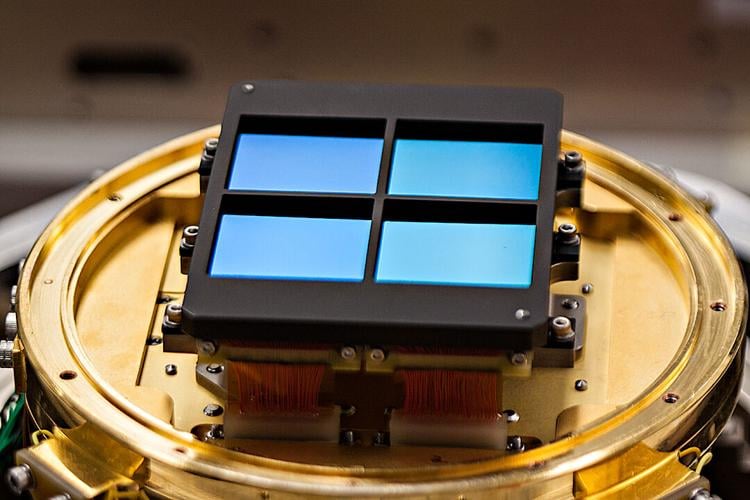

NASA’s James Webb Space Telescope has powered up its instruments, including two crucial infrared cameras that were designed by married astronomers from the University of Arizona.
The space agency confirmed the last of the successful power-up procedures Monday, setting the stage for the first light to be let into the $10 billion telescope within the next week or so.
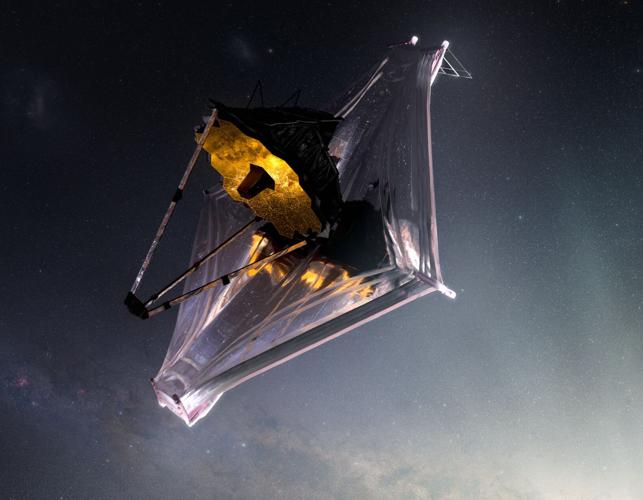
Webb was launched from a South American spaceport on Christmas Day, and then underwent a series of complicated maneuvers to deploy the solar panels that help power it, the thin shield that protects it from the sun and its 21.3-foot diameter mirror, which is actually made up of 18 separate segments that unfolded in space.
On Jan. 24, the spacecraft reached its final destination — an orbital point known as the 2nd Lagrange point, about 1 million miles away — where it will circle the sun on a track that will keep in line with Earth.

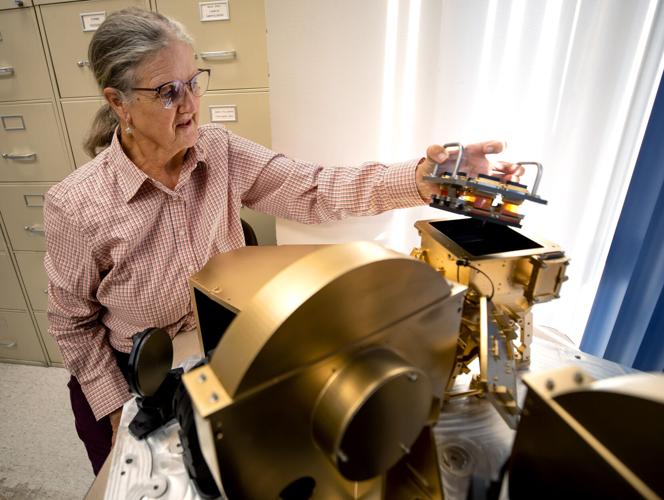
University of Arizona astronomy professor Marcia Rieke shows off a replica of the Near Infrared Camera she helped design for NASA’s new James Webb Space Telescope during an interview at UA’s Steward Observatory in December.
NASA announced Webb’s arrival in orbit around the sun with a Twitter post that began: “Home, home on Lagrange!”
One of the last instruments to be switched on was the telescope’s primary camera — the Near Infrared Camera, or NIRCam — which was built by a team led by UA Regents professor of astronomy Marcia Rieke.
Her husband, George Rieke, also a regents professor of astronomy, is the science team lead and one of the designers for Webb’s Mid-Infrared Instrument, also known as MIRI.
The Riekes’ instruments will allow Webb to see farther than ever before, collecting data on the atmospheres of planets in other solar systems and light from some of the first objects formed after the Big Bang.
First, though, Webb’s operations team will spend several months carefully aligning the telescope’s mirror by pointing it at a nondescript star known as HD84406 and using NIRCam to bring it into perfect focus.
Since the mirror segments are not working in tandem yet, the alignment will start with 18 random, blurry points of light that will gradually become a sharp image of a single star.
NIRCam is being used for the process, because it picks up the most detail and is the most sensitive to misalignment.

Artist conception of the James Webb Space Telescope.
“These first photos mean that we finally get starlight moving through the system and detected by NIRCam,” said Marcia Rieke in a written statement. “NIRCam has not been turned on since before launch; this will prove the launch didn’t introduce issues for how it can work.”
The UA’s outsized involvement in NASA’s next generation space telescope is expected to pay dividends to researchers at the university. The space agency has allotted 13% of Webb’s total observing time to UA researchers, the most of any astronomy center in the world.
NASA has not yet announced where it will point Webb, probably sometime this summer, for the first image that will be shared with the public.
But if everything goes according to plan, expect that first picture to be spectacular.
Photos: Kitt Peak National Observatory - crown jewel of U.S. observatories
Kitt Peak National Observatory
Updated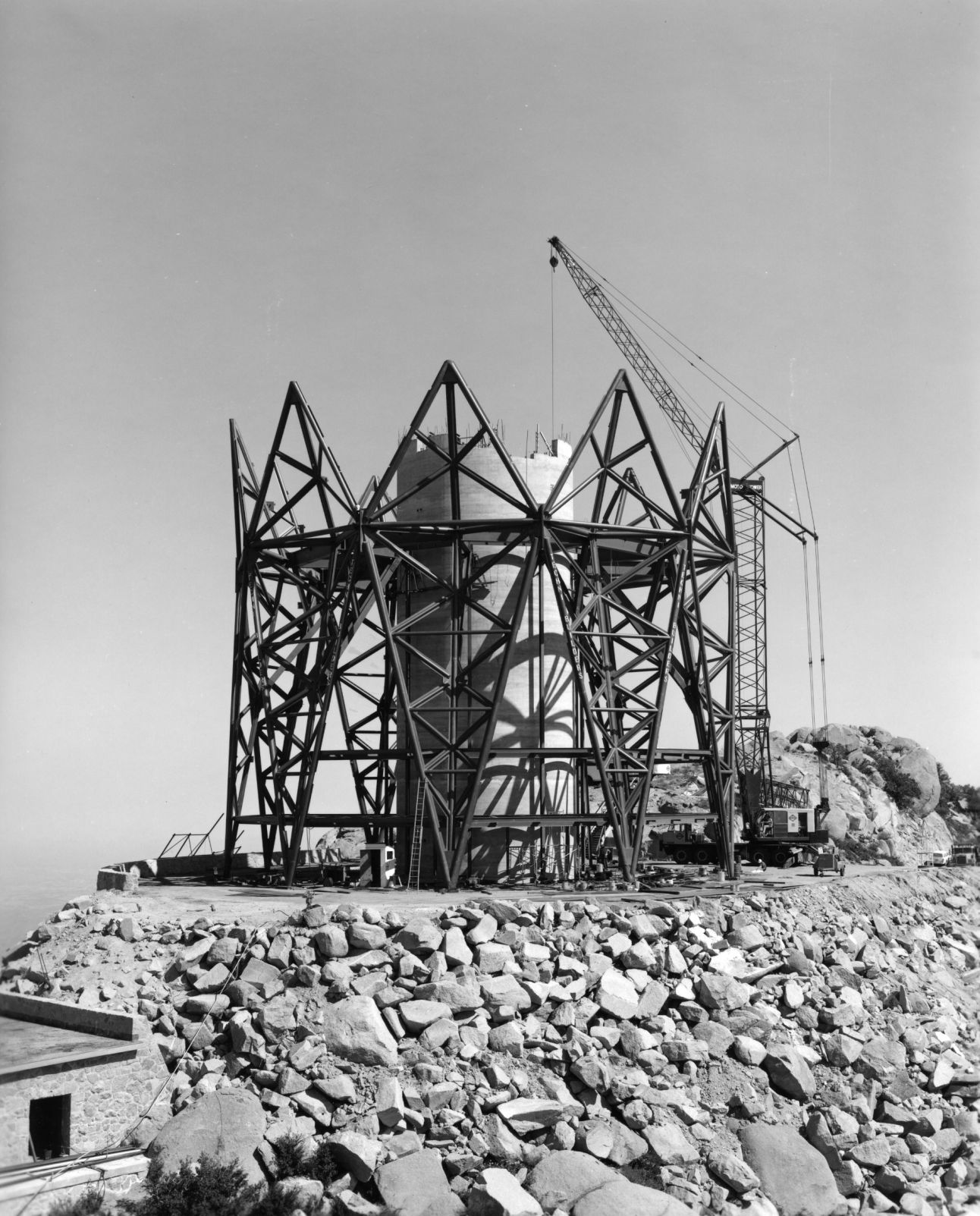
The 4-Meter Mayall optical telescope under construction at Kitt Peak National Observatory in September, 1967.
Nicholas U. Mayall 4-meter Telescope, KPNO, 1969
Updated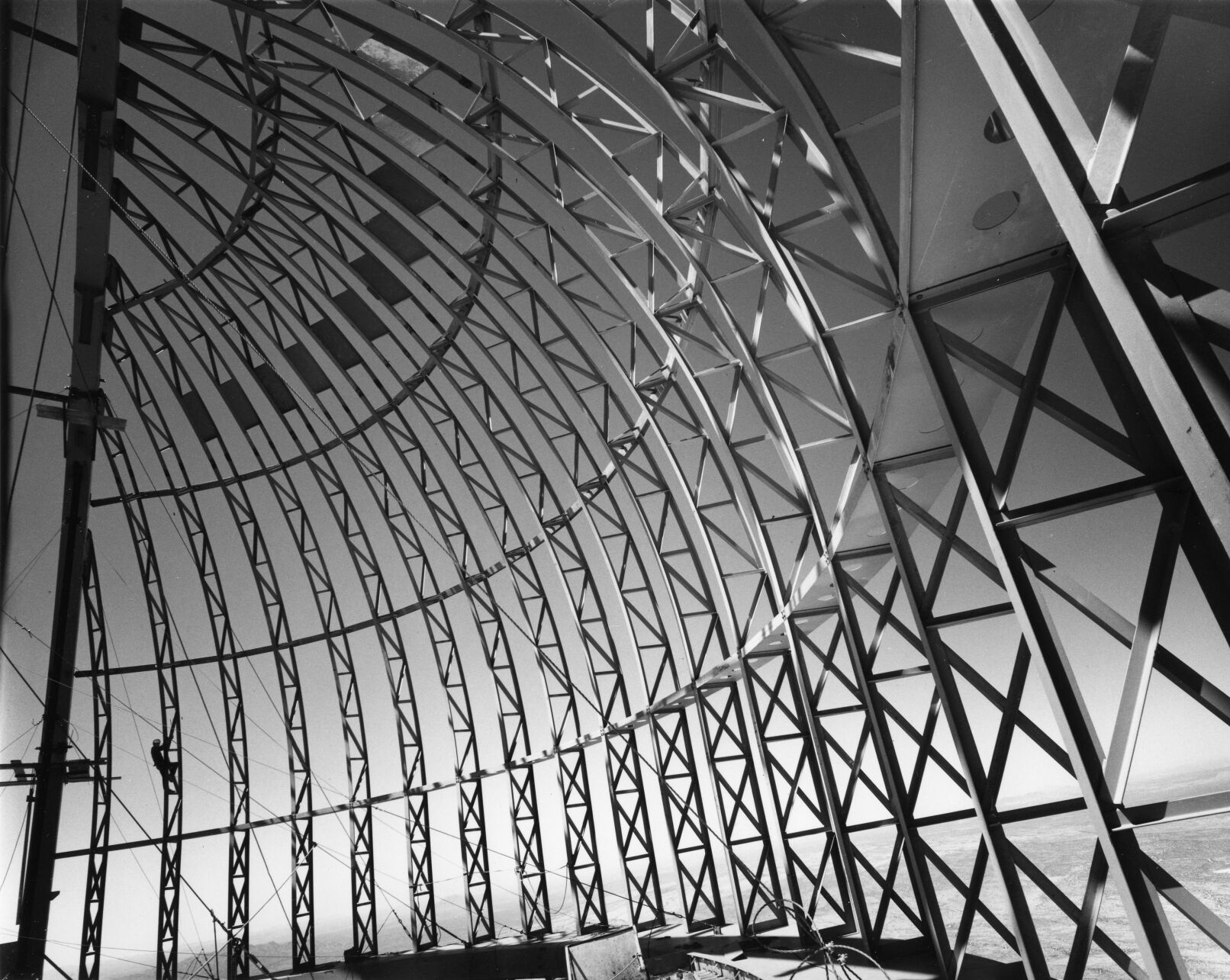
Nicholas U. Mayall 4-meter Telescope under construction at Kitt Peak National Observatory in 1969.
Kitt Peak National Observatory
Updated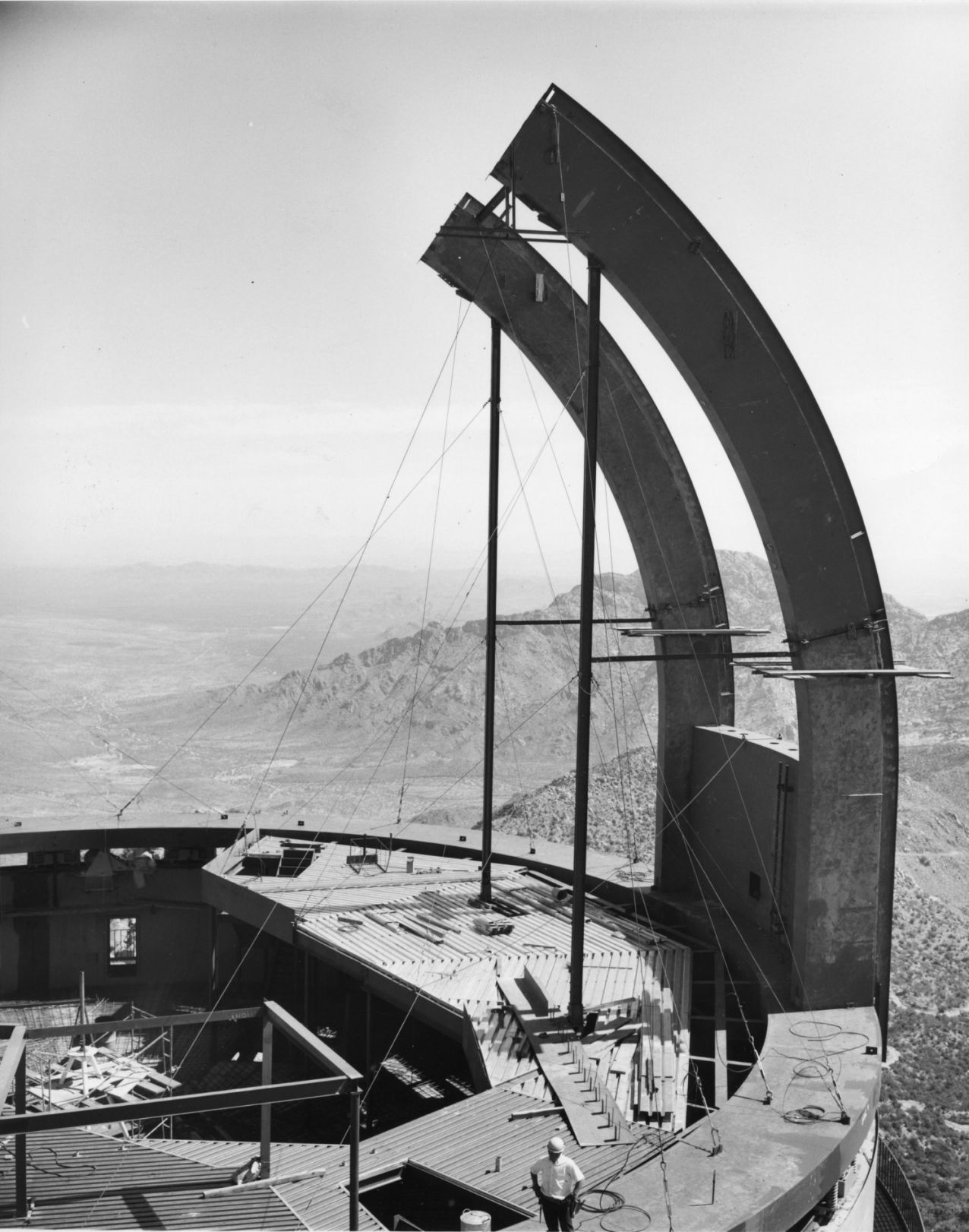
Construction of the 500-ton dome the 4-meter (158 inch) Nicholas U. Mayall Telescope at Kitt Peak National Observatory in 1968.
Nicholas U. Mayall 4-meter Telescope, KPNO, 1969
Updated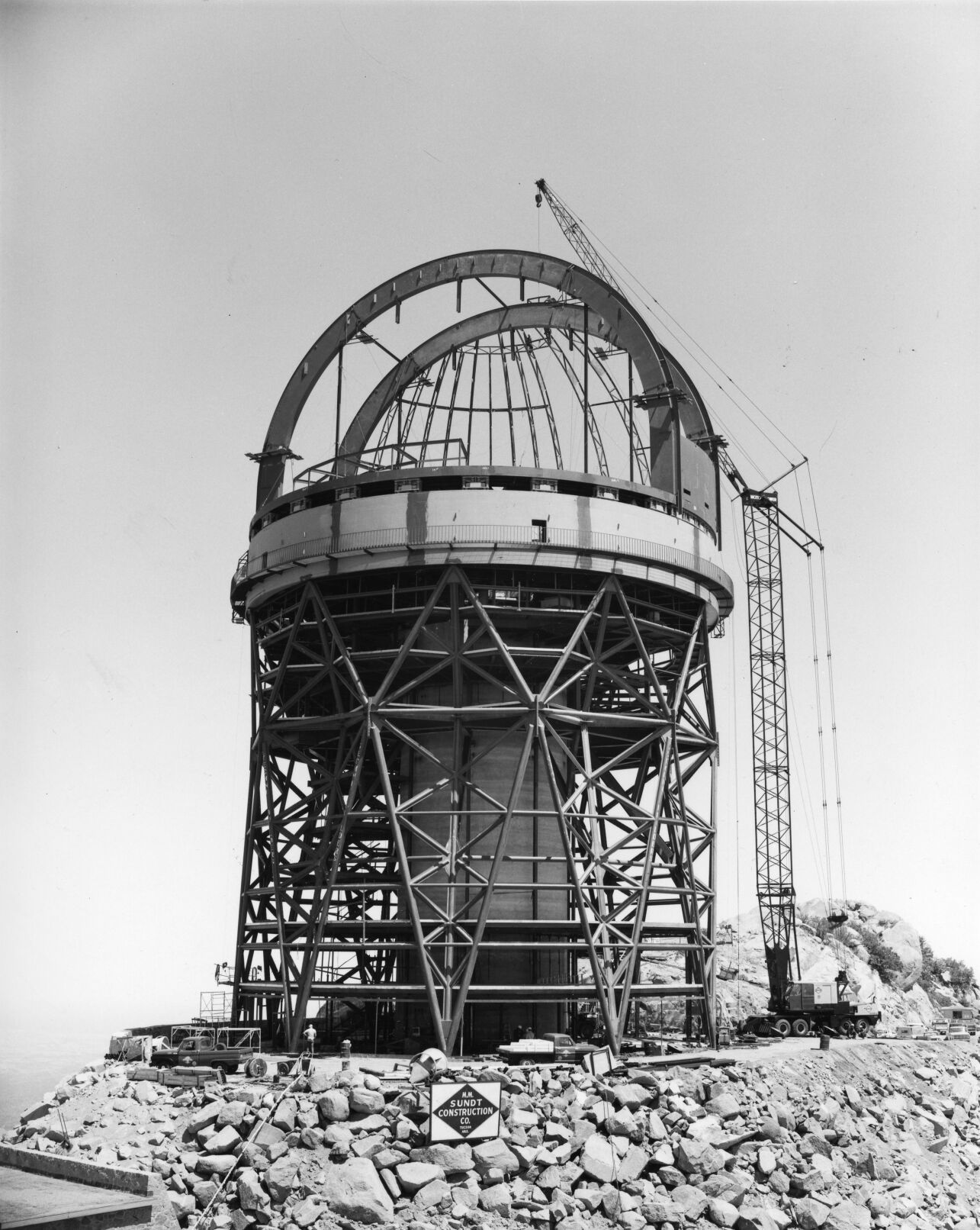
Nicholas U. Mayall 4-meter Telescope under construction at Kitt Peak National Observatory in 1969.
Nicholas U. Mayall 4-meter Telescope, KPNO, 1969
Updated
Nicholas U. Mayall 4-meter Telescope under construction at Kitt Peak National Observatory in 1969.
Mayall Telescope
Updated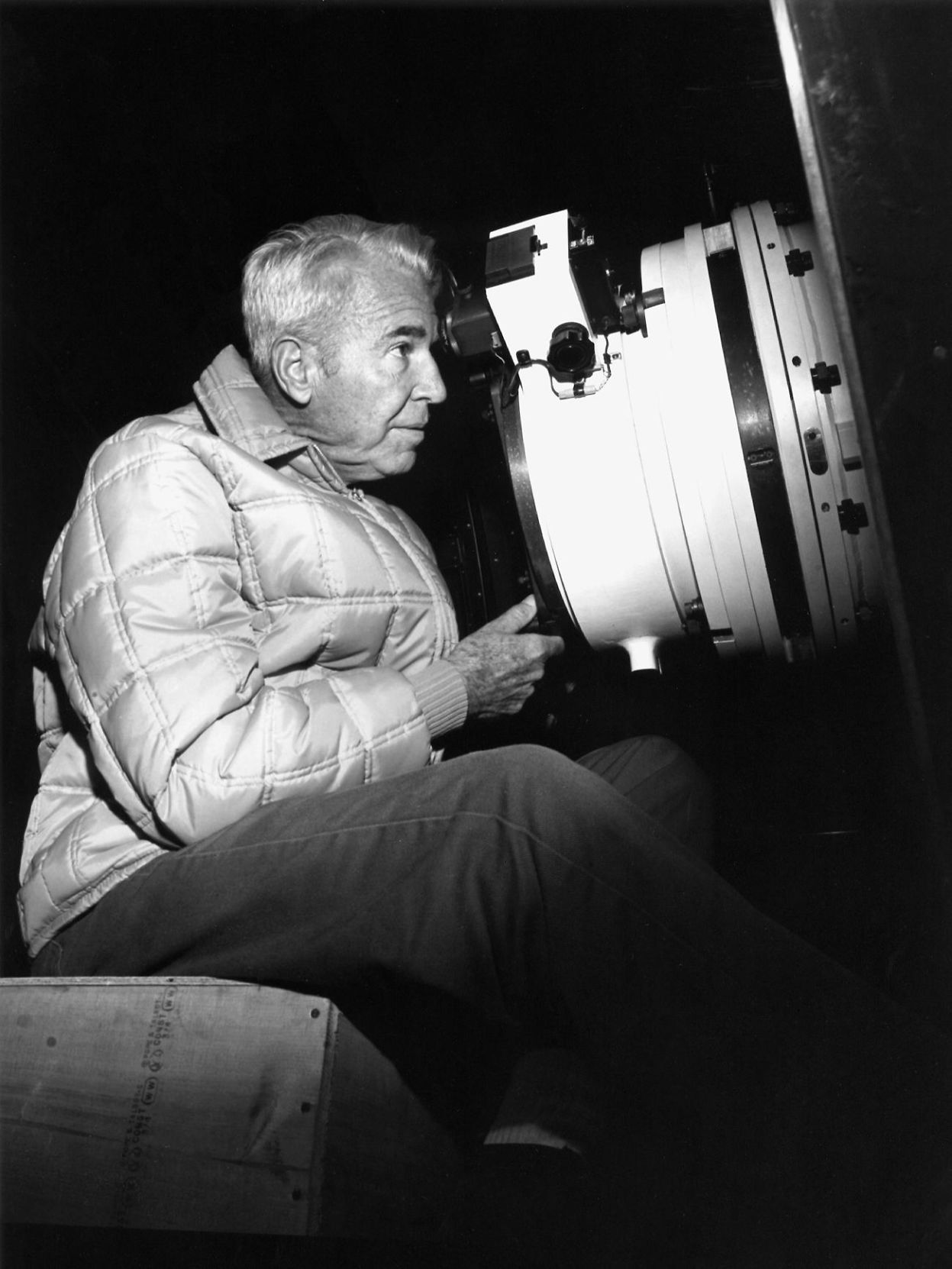
Dr. Nicholas U. Mayall, Director of the Kitt Peak National Observatory from 1960 to 1971, is seen here observing at the prime focus of the 4-meter telescope on 2 March, 1973. After Dr Mayall’s retirement, the telescope was rededicated on 20 June, 1973, as the Nicholas U. Mayall telescope.
Kitt Peak National Observatory
Updated
Technicians at Kitt Peak National Observatory's Cherry Ave. shops on the University of Arizona campus, look over the steel cell upon which the 80-inch mirror will be mounted. The Pyrex mirror "blank" from Corning, N.Y., took more than two years to polish.
Kitt Peak National Observatory
Updated
The massive 4-Meter Mayall telescope during dedication at Kitt Peak National Observatory in June, 1973. At the time, it was the world's second-largest optical telescope.
KPNO, lightning, 1998
Updated
Lightning atop Kitt Peak, looking to the north-west, with the Mayall 4-meter telescope silhouetted against the stormy sky. Taken by Adam Block in July 1998. This picture was a twenty second exposure using Fuji 800 film with a 50mm camera lens.
Mayall Telescope
Updated
Star trails over the Mayall 4-meter Telescope, Kitt Peak National Observatory.
Bok Telescope, KPNO, 1969
Updated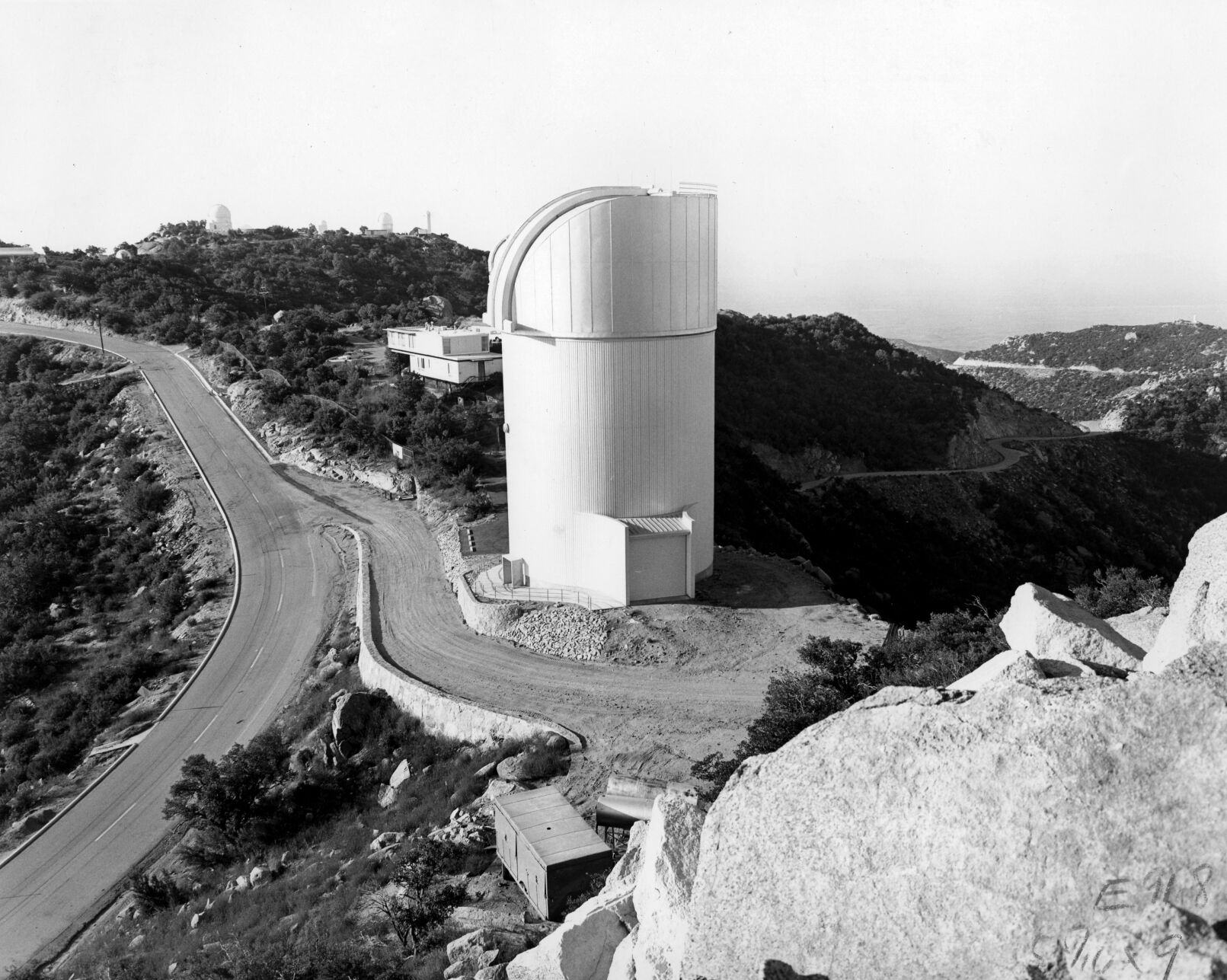
The 2.3 M Bok Telescope operated by the University of Arizona Steward Observatory at Kitt Peak National Observatory, shown after completion in 1969.
Bok Telescope on Kitt Peak National Observatory
Updated
The Bok Telescope (front) on Kitt Peak National Observatory, AZ..
Southwest view of McMath-Pierce Solar Telescope during construction
Updated
Southwest view of the McMath-Pierce Solar Telescope during construction, 27 February 1961.
Kitt Peak National Observatory
Updated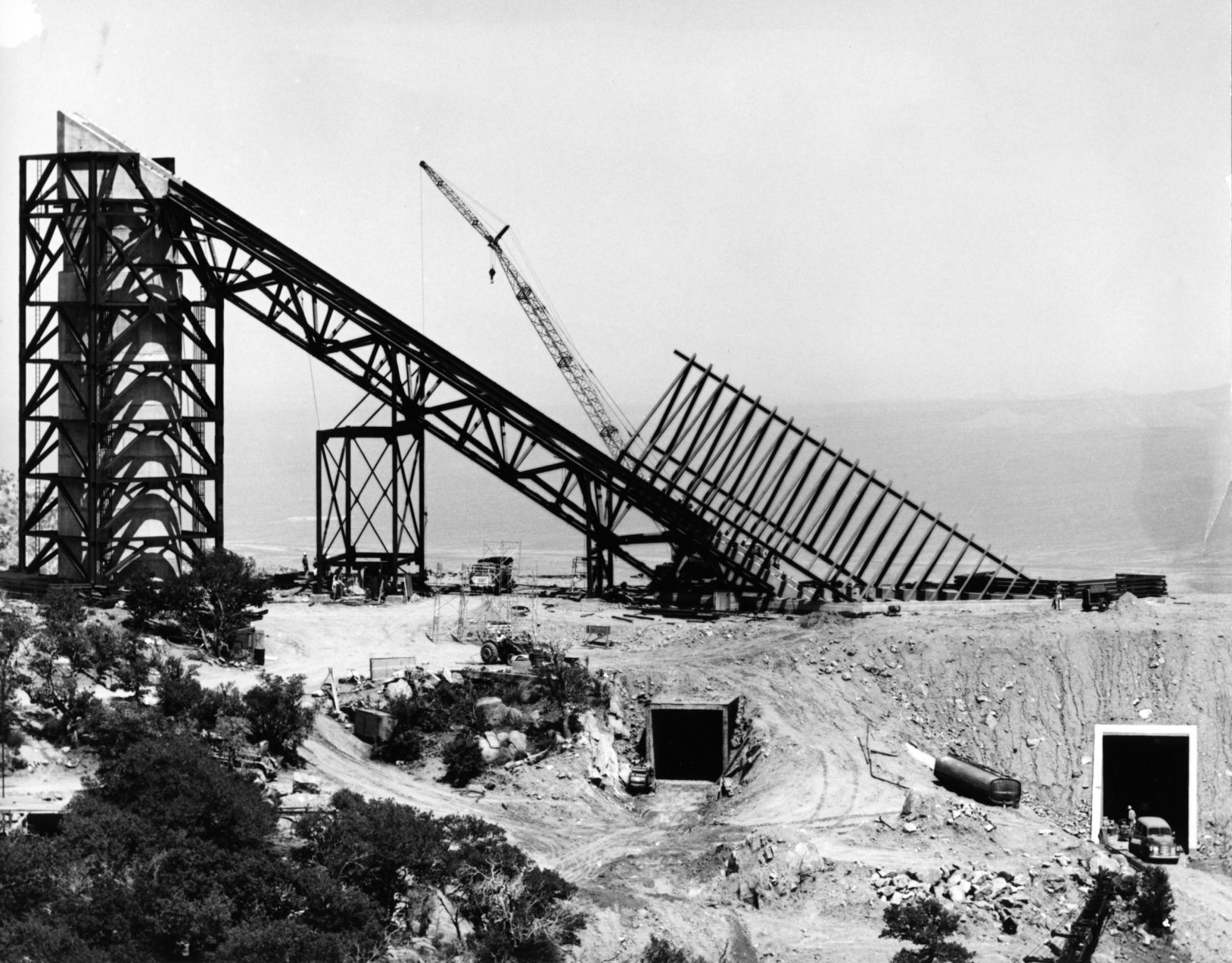
The McMath Solar Telescope under construction at Kitt Peak National Observatory in 1957.
Kitt Peak National Observatory
Updated
The McMath Solar Telescope under construction at Kitt Peak National Observatory in 1957.
Kitt Peak National Observatory
Updated
A 1972 architectural rendering of the vertical housing of the Synoptic Optical Long-term Investigations of the Sun at Kitt Peak National Observatory
Kitt Peak National Observatory
Updated
The McMath-Pierce Solar Telescope at Kitt Peak National Observatory nearing completion in 1962.
Kitt Peak National Observatory
Updated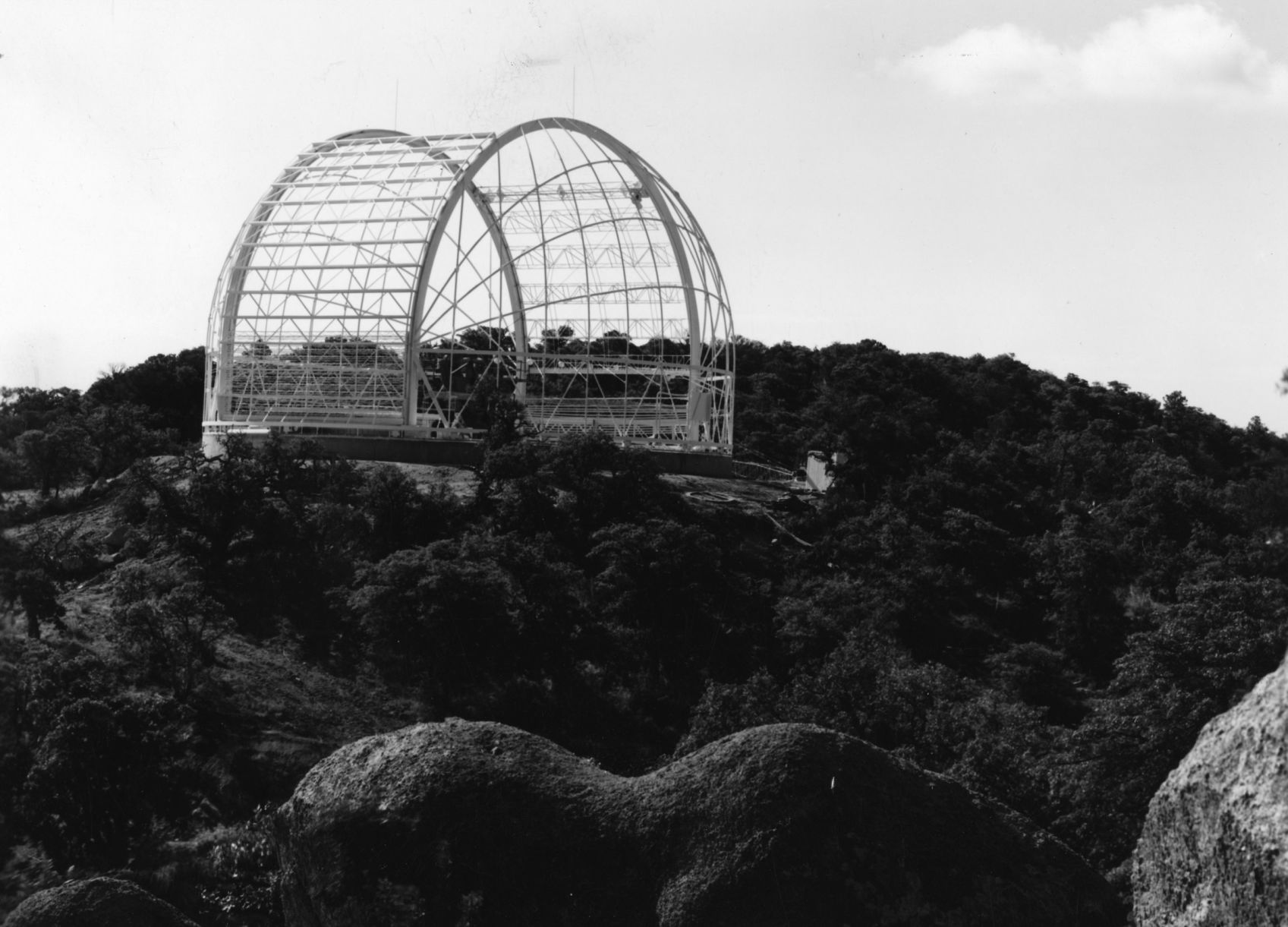
The skeleton for the 55-foot-tall dome of the 36-foot radio telescope under construction at Kitt Peak National Observatory in 1966.
Kitt Peak National Observatory
Updated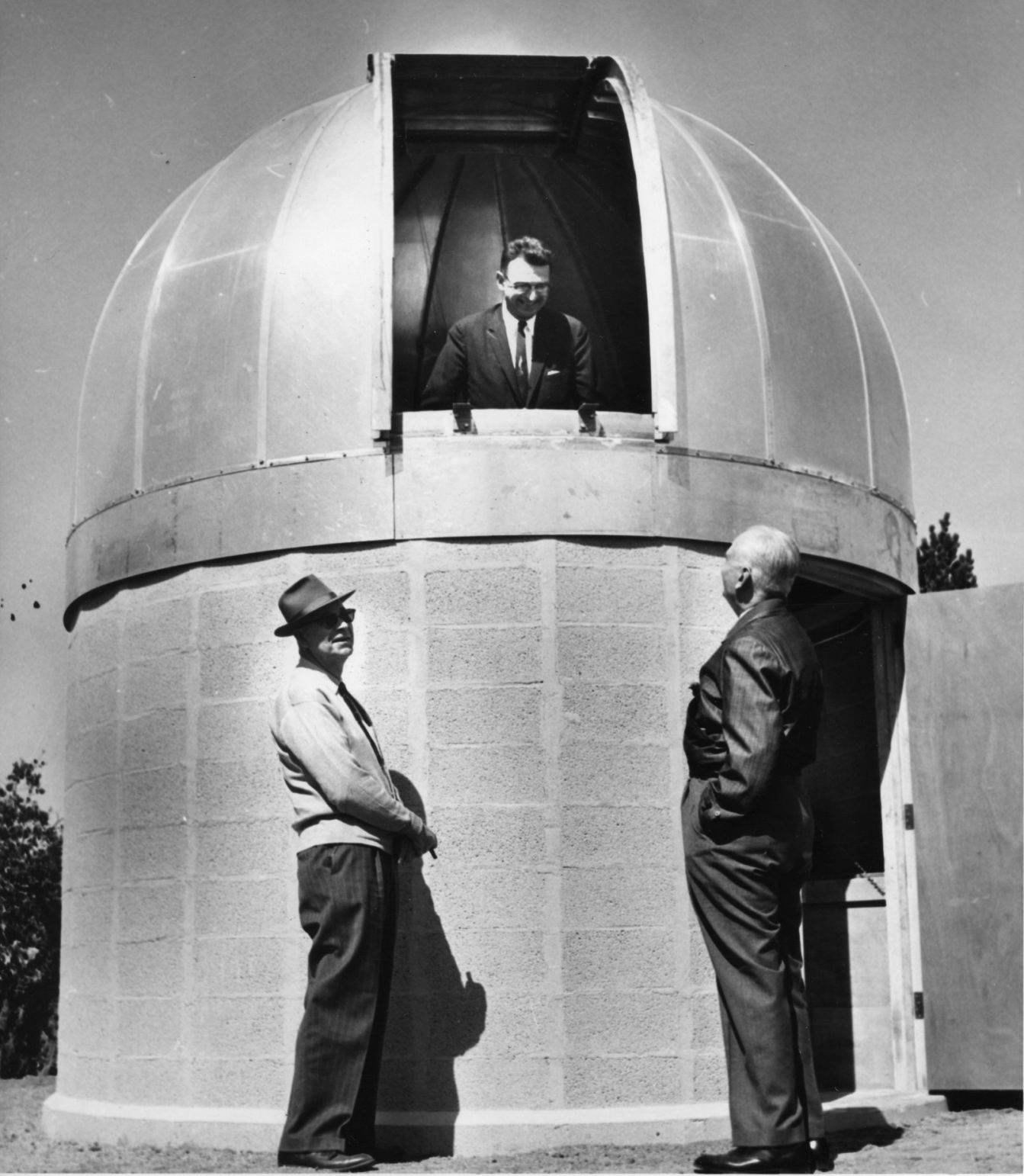
The smallest telescope – a 16-inch – at Kitt Peak National Observatory, ca. 1960.
Kitt Peak National Observatory
Updated
The 36-foot National Radio Astronomy Observatory telescope inside side its vinyl-coated nylon dome at Kitt Peak National Observatory in 1969.
Kitt Peak National Observatory
Updated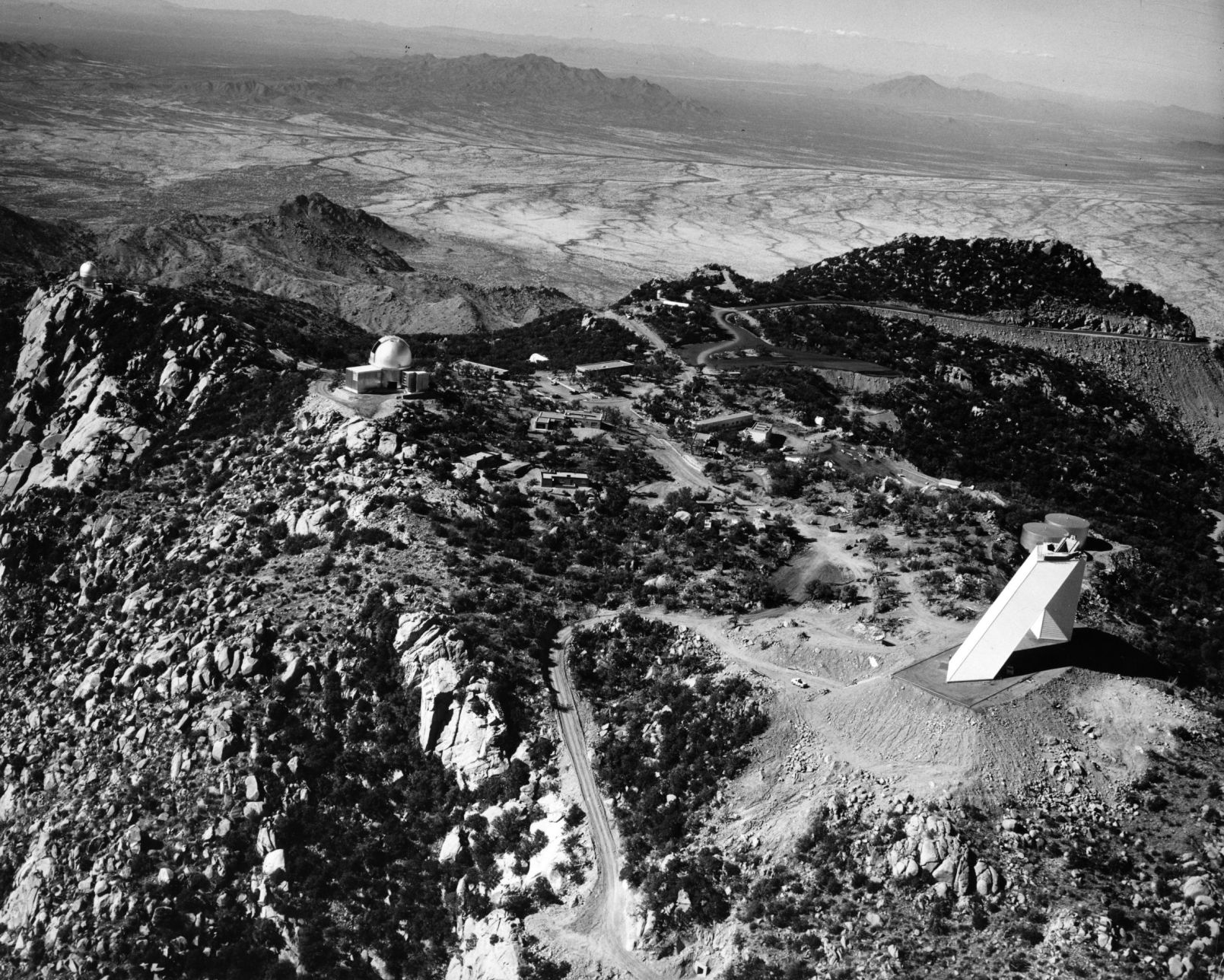
The McMath Solar telescope on its perch at Kitt Peak National Observatory, ca. 1962.
Kitt Peak National Observatory
Updated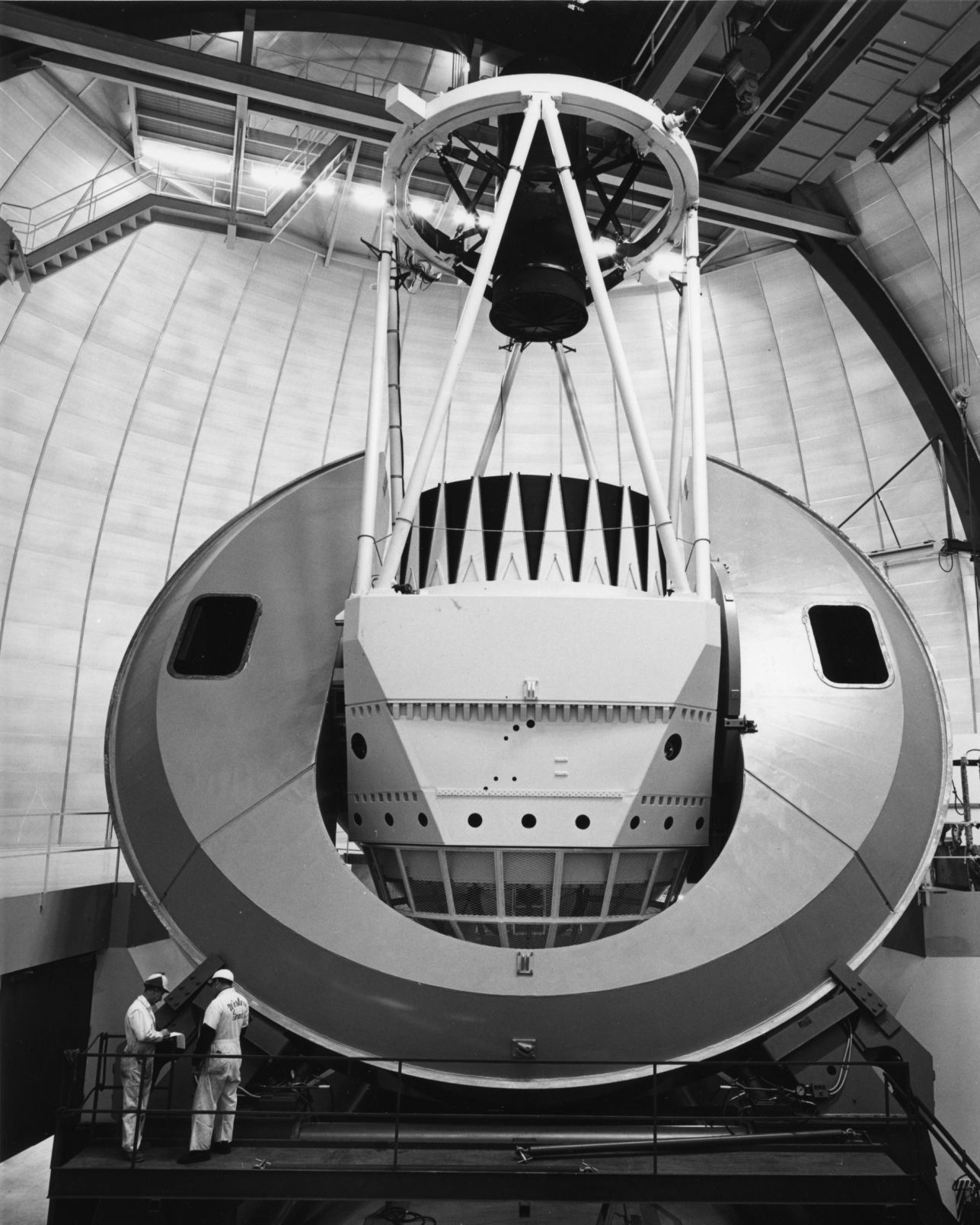
The horseshoe-shaped yolk housing in the 4-Meter Mayall Telescope at Kitt Peak National Observatory in 1973.
Kitt Peak National Observatory
Updated
Dr. Bart Bok stands beneath the 90-inch, 100-ton telescope destined for Kitt Peak National Observatory in 1968. Bok was the head of the department of astronomy at the University of Arizona and director of Steward Observatory.
Kitt Peak National Observatory
Updated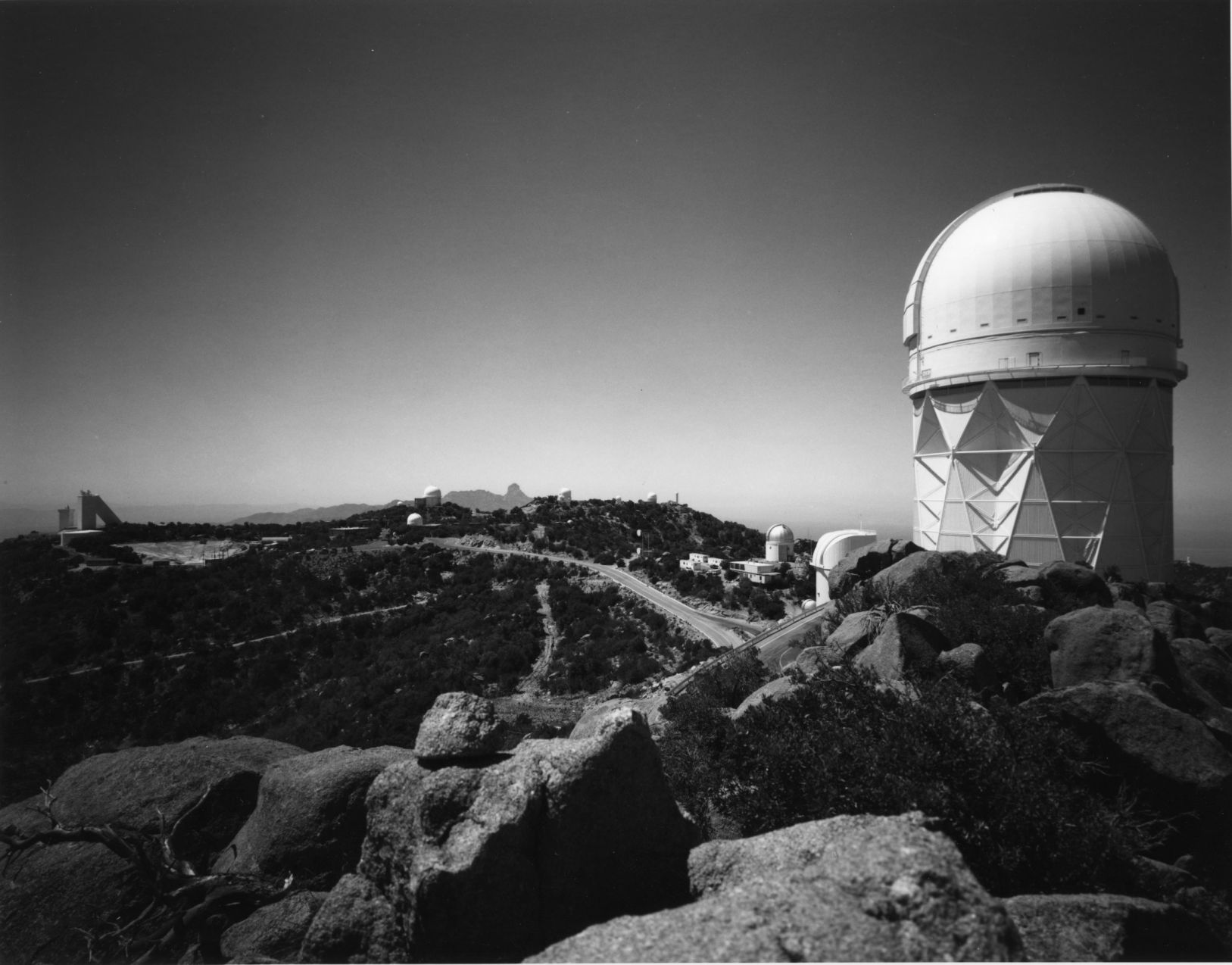
The 4-meter Mayall Telescope, left, at Kitt Peak National Observatory in 1975.
Kitt Peak National Observatory
Updated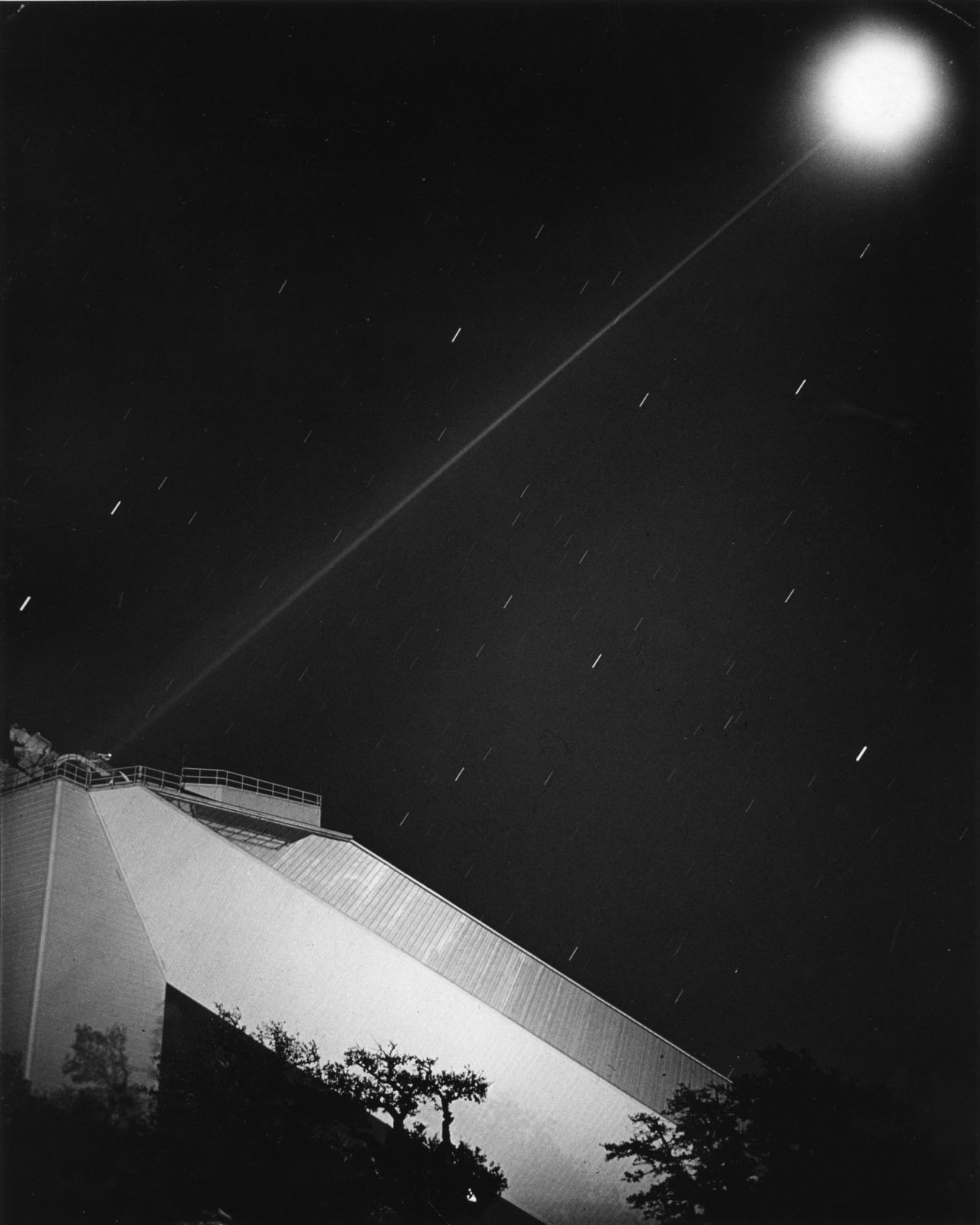
A laser beam from the McMath Solar Telescope at Kitt Peak National Observatory targets the moon in July, 1971.
Kitt Peak National Observatory
Updated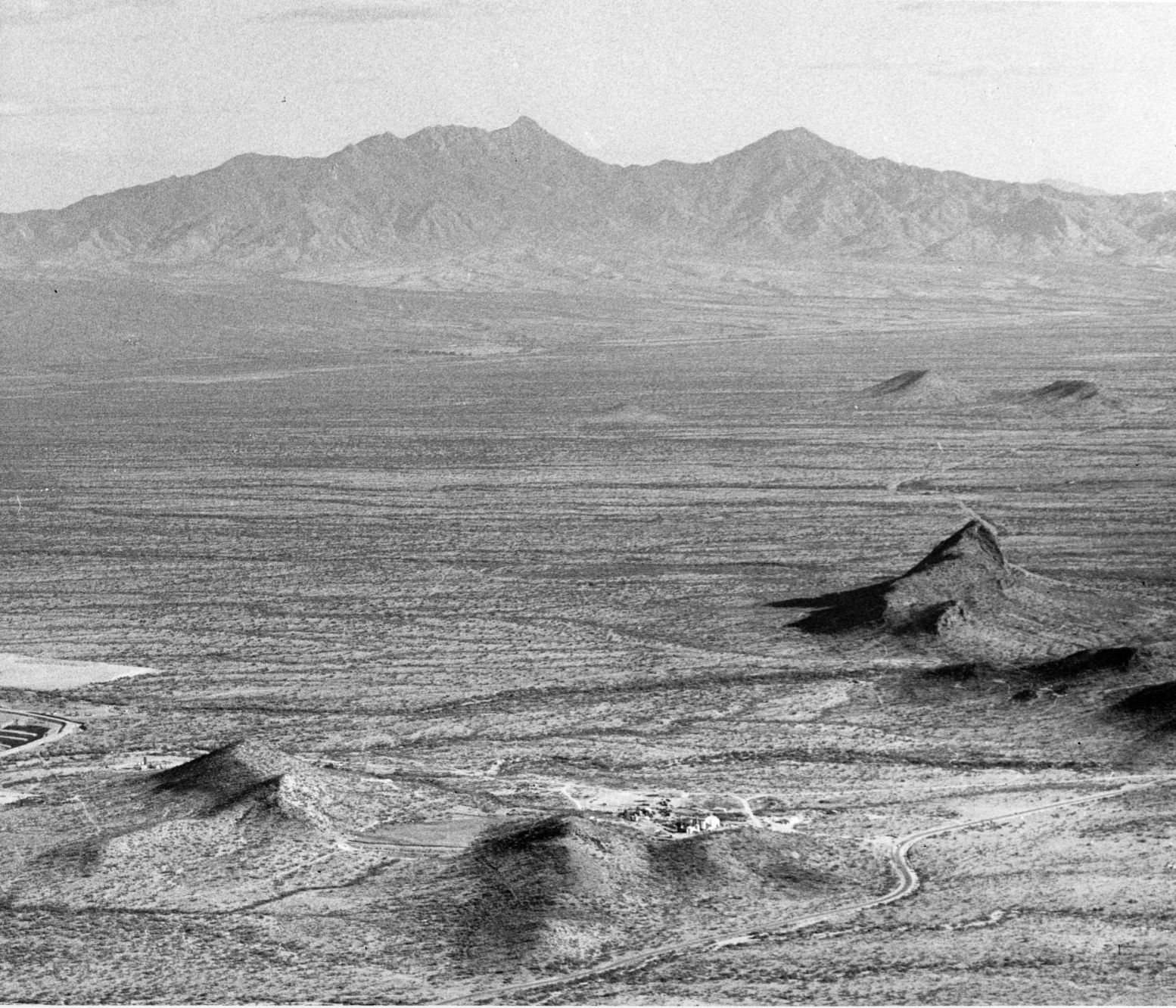
The valley floor below Kitt Peak National Observatory, ca. 1960
Kitt Peak National Observatory
Updated
The McMath Solar Telescope flanked by snow that fell on Kitt Peak National Observatory in February, 1966,
Kitt Peak National Observatory
Updated
A 10.5-ton fork is lifted into place at the 3.5 Meter WIYN telescope at Kitt Peak National Observatory in May, 1992. The fork holds a center section that includes the mirror, which was added later that year.
Kitt Peak National Observatory
Updated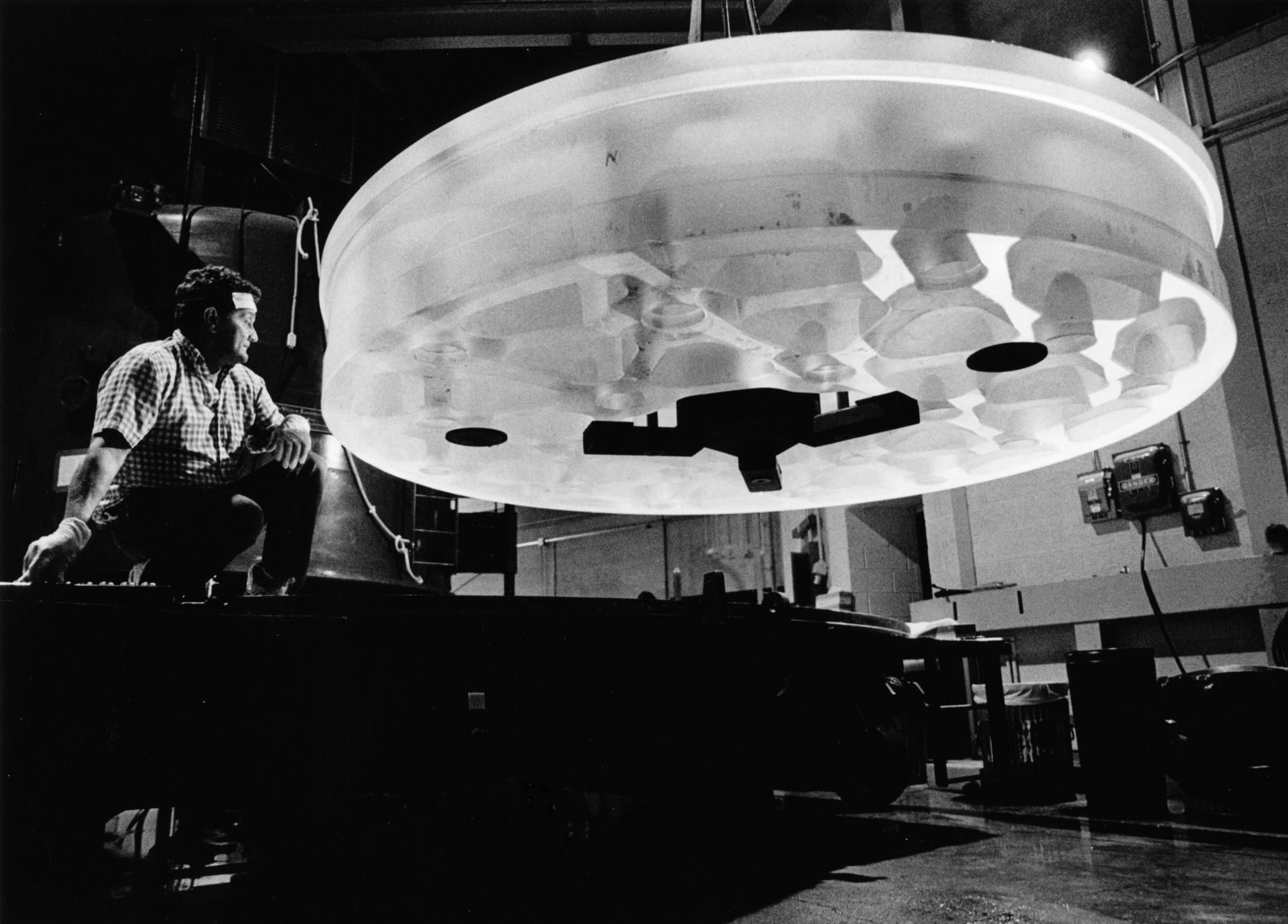
Jon Settlemyre watches the quart mirror from the 2.1 Meter telescope lowered onto a platform on an realuminizing chamber at Kitt Peak National Observatory in 1992. It was transferred to the Mayall Telescope building where the old coatings were stripped off and new ones reapplied.
Kitt Peak National Observatory
Updated
The lights of Tucson as seen from Kitt Peak National Observatory in 1959 (top) and 1980 (bottom).
Kitt Peak National Observatory
Updated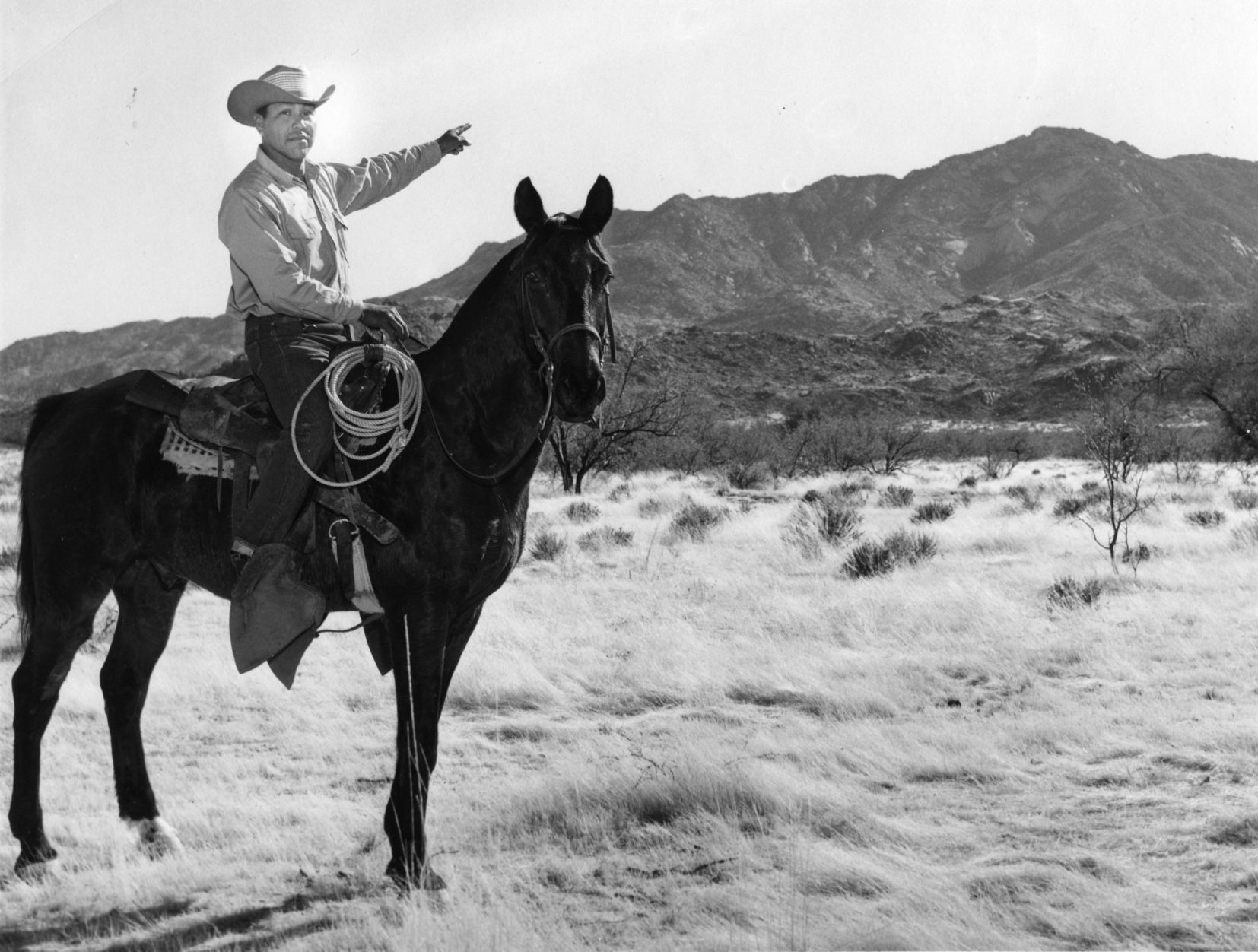
Roman Chavez, vice-chairman of the Papago (now Tohono O'Odham) Tribal Council, points at Kitt Peak in the Quinlan Mountains west of Tucson in 1956, during site and lease discussions for the observatory.
Kitt Peak National Observatory, 1959
Updated
Aerial photo of Kitt Peak on Jan 31, 1959. looking west solar telescope pad at bottom center of the picture.
Building the road to Kitt Peak National Observatory
Updated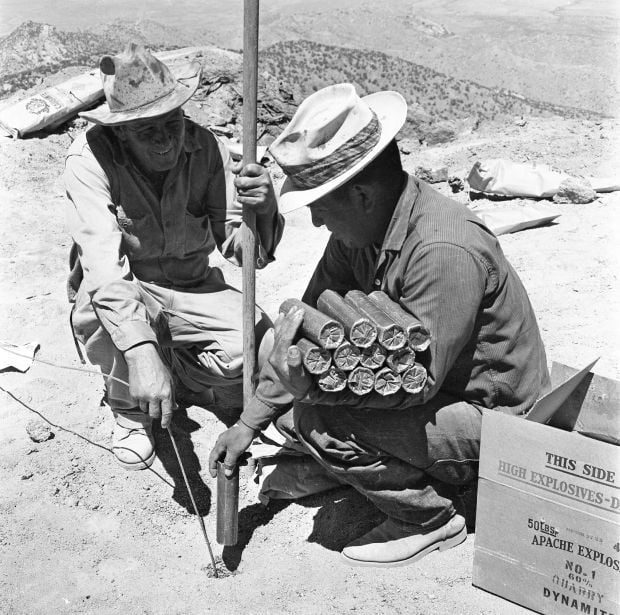
Building the road to Kitt Peak National Observatory in May, 1960: Workers slip explosives into holes to blast away rock.
Building the road to Kitt Peak National Observatory
Updated
Building the road to Kitt Peak National Observatory in May, 1960: A jackhammer operator pounds away at the rock face.
Building the road to Kitt Peak National Observatory
Updated
Building the road to Kitt Peak National Observatory in May, 1960: Bulldozers operate on treacherous, unstable material blasted from the the face of the mountain.
Building the road to Kitt Peak National Observatory
Updated
Building the road to Kitt Peak National Observatory in May, 1960: A truck eases down the early primitive road from near the top. The first telescope on the mountain, the 36-inch, can be seen in the background.
Building the road to Kitt Peak National Observatory
Updated
Building the road to Kitt Peak National Observatory in May, 1960: A dozer operator tackles tree stumps and rock.
Snow in Tucson
Updated
Snow and ice clinging to the telescope structure at Kitt Peak National Observatory west of Tucson on March 3, 1964.
Snow in Tucson
Updated
Snow and ice at Kitt Peak National Observatory on March 3, 1964.
Kitt Peak National Observatory
Updated
Actuators on the back of the telescope can make minute adjustments in the shape of the mirror surface of the WIYN Telescope, a 3.5 m meter telescope operated by a consortium of University of Wisconsin-Madison, Indiana University, Yale University and the National Astronomy Observatory. It is located west of Tucson, AZ.Photo taken Wednesday, October 23, 2013.
Kitt Peak National Observatory
Updated
A view from the Nicholas U. Mayall Telescope of some of the other telescopes at Kitt Peak National Observatory west of Tucson, AZ. The tall telescope at left is The McMath-Pierce Solar Telescope. Top center is The 2.1-meter Telescope and at right is The WIYN Telescope. Photo taken Wednesday, October 23, 2013.
Kitt Peak National Observatory
Updated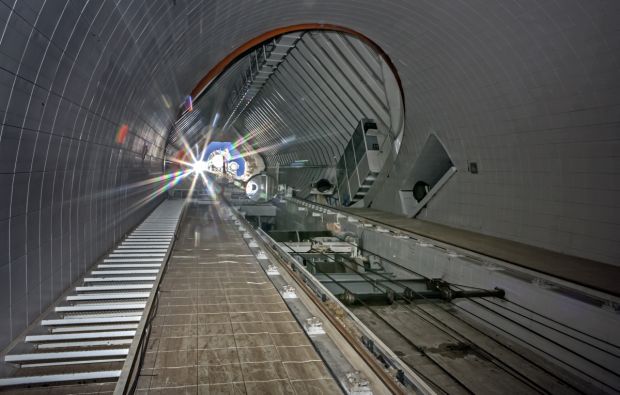
Seen from inside the 780 ft. linear optical tunnel of Kitt Peak National Observatory's McMath-Pierce Solar Telescope, sunlight is reflected from the three mirror heliostat, through a series of mirrors in the tunnel to the observation room where is it analyzed with spectrographs. McMath-Pierce Solar Telescope, built in 1962, west of Tucson, AZ., is the largest solar telescope in the world. Photo taken Wednesday, October 23, 2013.
Kitt Peak National Observatory
Updated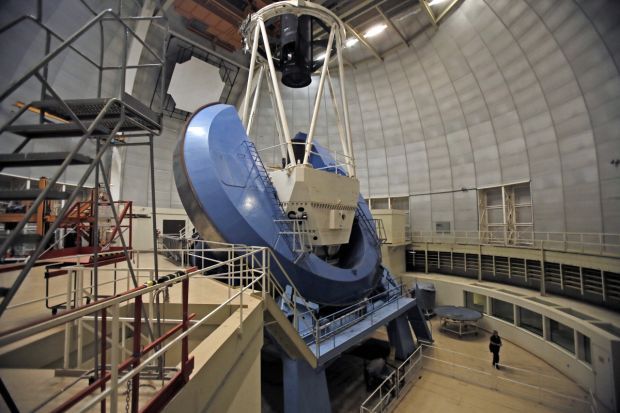
Lori Allen, left, Director of Kitt Peak National Observatory, is dwarfed by the Nicholas U. Mayhall 4-meter Telescope at Kitt Peak National Observatory west of Tucson, AZ. . Photo taken Wednesday, October 23, 2013.
Kitt Peak National Observatory
Updated
Matt Penn, Solar Astronomer with National Solar Observatory, discusses telescopes in the observation room of Kitt Peak National Observatory's McMath-Pierce Solar Telescope, built in 1962, the largest solar telescope in the world west of Tucson, AZ. Photo taken Wednesday, October 23, 2013.
Kitt Peak National Observatory
Updated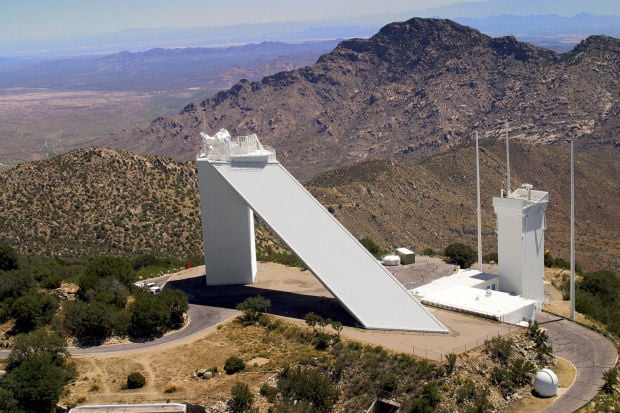
The McMath-Pierce Telescope on Kitt Peak since 1962, LEFT, and the SOLIS (Synoptic Optical Long-term Investigations of the Sun) at right..
Kitt Peak National Observatory
Updated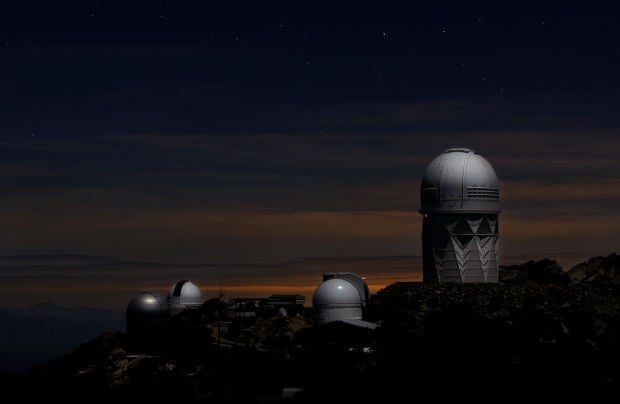
The orange glow of light pollution from Phoenix and Casa Grande lights the skies north of the SARA 0.9 meter, left, the Spacewatch 0.9 meter, the CWRU Burrel Schmidt 0.6 meter, the Steward Observatory's Bok 2.3 meter and the KPNO Mayall 4 meter telescopes at Kitt Peak National Observatory in 2010.
Kitt Peak National Observatory
Updated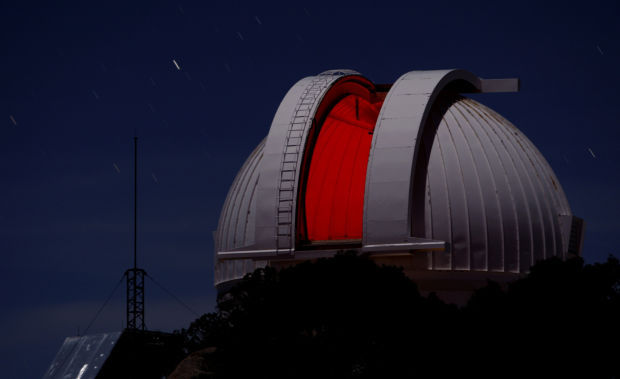
The dim glow of saftey lights shines out of the door of the WIYN 0.9 meter telescope where a tour group is using the instrument at Kitt Peak National Observatory in 2010.
Kitt Peak National Observatory
Updated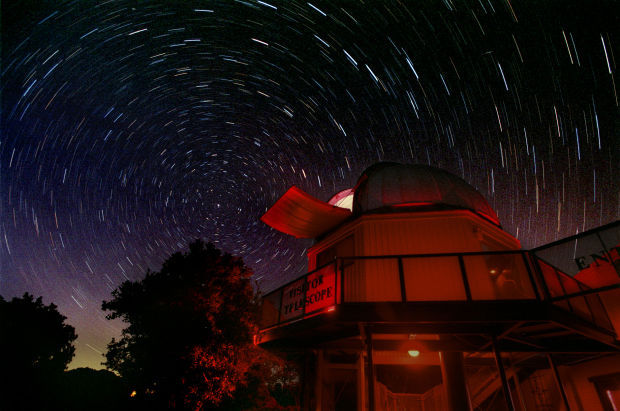
Stars swirl around the North Star, just to the left of the Kitt Peak observatory, in a 40-minute exposure.
Kitt Peak National Observatory
Updated
Bob Martino, standing at left, talks to astronomy enthusiasts about some of the stars that are visible at sunset as they listen to him at the 16 inch telescope with its roll-off roof at the top of Kitt Peak National Observatory in 2009. At upper left is the 4-meter Mayall telescope with the city lights of Three Points, AZ at the upper right.
Kitt Peak National Observatory
Updated
Some of the many observatories at Kitt Peak National Observatory.
Kitt Peak National Observatory
Updated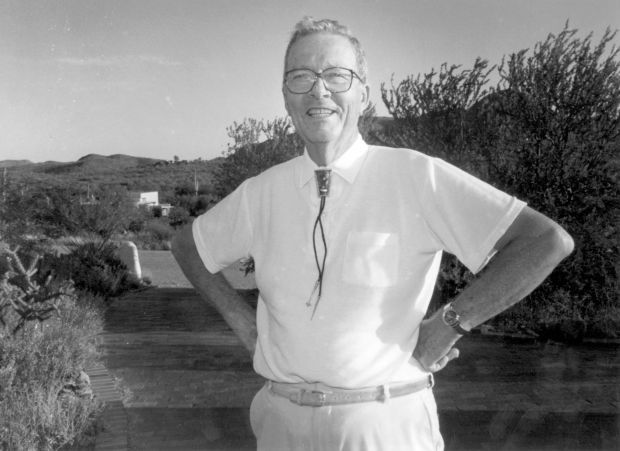
Aden B. Meinel, First director of Kitt Peak Observatory, photographed in 1993.
Kitt Peak National Observatory
Updated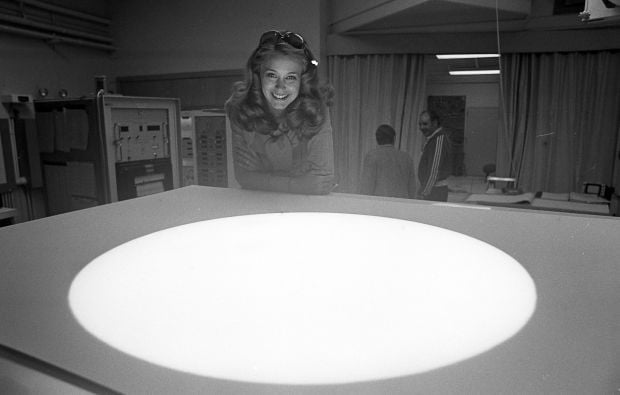
Jane Pauley surveys Kitt Peak's solar telescope in 1978.
Contreras Fire, Kitt Peak National Observatory, 2022
Updated
Kitt Peak National Observatory after the Contreras Fire.
Contreras Fire, Kitt Peak National Observatory, 2022
Updated
Kitt Peak National Observatory after the Contreras Fire. The Nicholas U. Mayall 4-meter Telescope is visible on the ridge on the left hand side of the image.

