


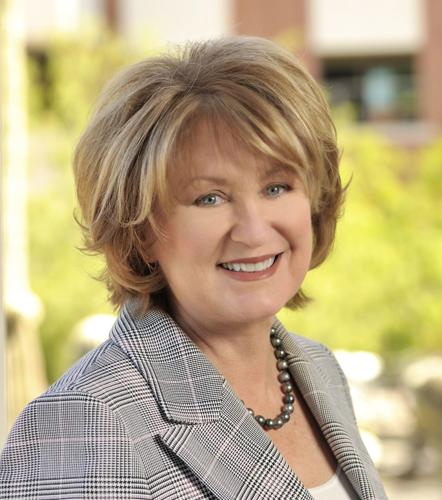
Former UA President Ann Weaver Hart was awarded $25,000 in extra pay this week by the Arizona Board of Regents for board-approved goals she met before she announced her resignation in June 2016.
Those goals were developing a communications strategy for the Banner Health-UA partnership and shoring up the role of the UA Honors College.
The money is on top of Hart’s presidential base pay of $475,000 that she will continue to receive until her contract expires in June 2018.
The board has not yet approved current University of Arizona President Robert Robbins’ goals, but plans to soon.
Robbins, who took the UA helm in June, was not eligible for any of the extra pay for state university presidents the board approved Wednesday during a meeting in Tempe.
Arizona State University’s Michael Crow and Northern Arizona University’s Rita Cheng were also awarded the $25,000 of what the board calls “at-risk compensation” as incentive for meeting goals tailored to each president’s strategic plan.
Cheng was awarded an additional $180,000 for meeting three-year goals.
In an unusual move, the regents voted 4-3 to decline an additional $15,000 per president, including for Board of Regents President Eileen Klein. The presidents failed to meet goals outlined by the regents’ enterprise executive committee, said Bill Ridenour, the board’s chairman.
The state’s university presidents were tasked by the executive committee with preparing a quality assurance report, with a focus on general education. In it, they were to define quality in academics, outline the processes used to assure quality and a means of measuring quality in each institution.
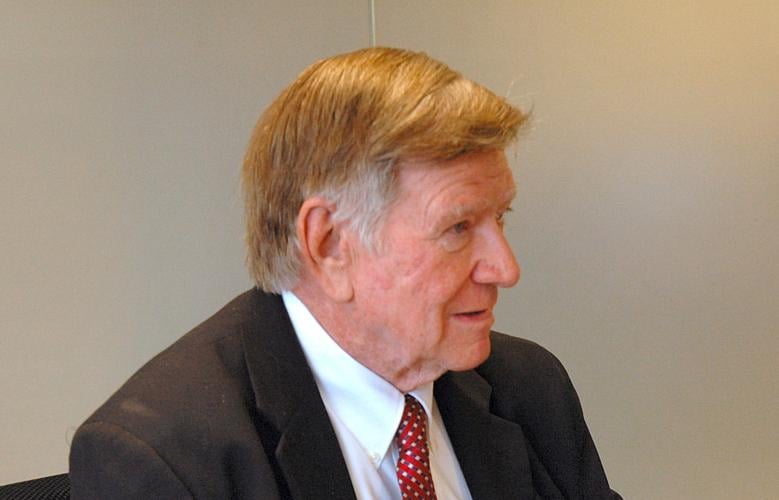
“We were to get a report and some of the regents did not feel the report was what they requested,” Ridenour said.
Hart’s absence from the process was at least partially to blame, he said, but the major reason for the dissenting vote was that “the board felt it was too broken up in terms of how we assess quality. … We wanted everyone to get together to come up with standard measurements, uniform over three universities.”
The one- and three-year goals for presidents individually are metric driven —for example, reaching a certain number of STEM degrees awarded or a number of returning second-year students.
Executive committee goals, on the other hand, are measured by quality, he said, “but we still declined it.”
The board does not consider these periodic rewards bonuses, the chairman said.
“These goals are really stretch goals. We just don’t put in goals we know they can meet. We put in goals hoping to drive certain numbers in the universities,” Ridenour said.
The board justifies separating these tasks from salaries because the incentive is meant to help push each president’s strategic plan forward.
“They may or may not get these monies based on performance,” Ridenour said.
Ridenour acknowledged that meeting these goals “does depend on a lot of moving parts” throughout the universities and not just work done by the presidents, but said “it’s the president’s overall responsibility to make sure the departments under him are meeting goals.”
After Hart’s presidential contract expires, she will return to the UA as a professor in the college of education, where she will be paid as much as the highest paid faculty member, estimated to be about $130,000 annually, and will take a year-long sabbatical.
Taxpayers are paying the bulk of two UA presidential salaries in the meantime: Robbins’ contract pays him $988,000 a year in salary and benefits, $200,000 of which comes from a UA Foundation endowment for presidential leadership.

