



Tucson residents could soon see their trash used in local construction projects as part of a pilot program through City Councilman Steve Kozachik’s office.
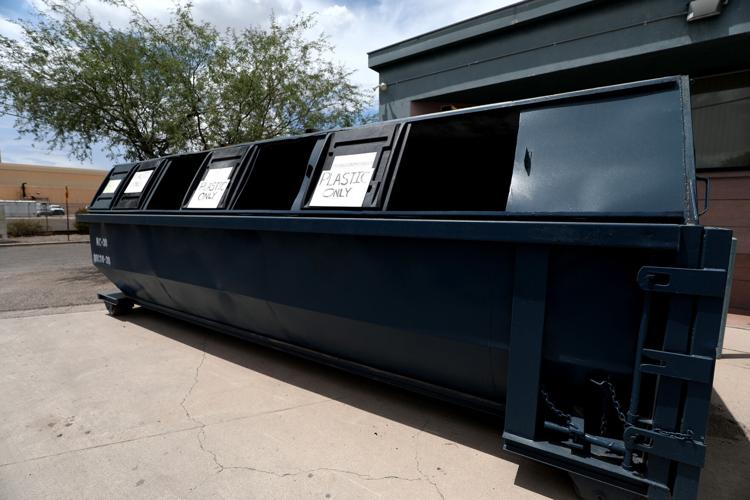
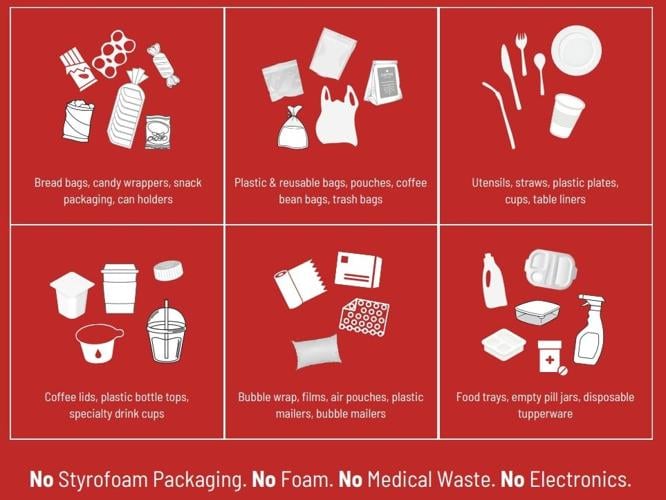
Kozachik is collecting plastic products that can’t be recycled in the city’s blue bins — such as plastic bags, plastic utensils and bubble wrap — in a roll-off container behind his ward office at 3202 E. First St. He plans to turn that plastic into construction-grade blocks for local projects.
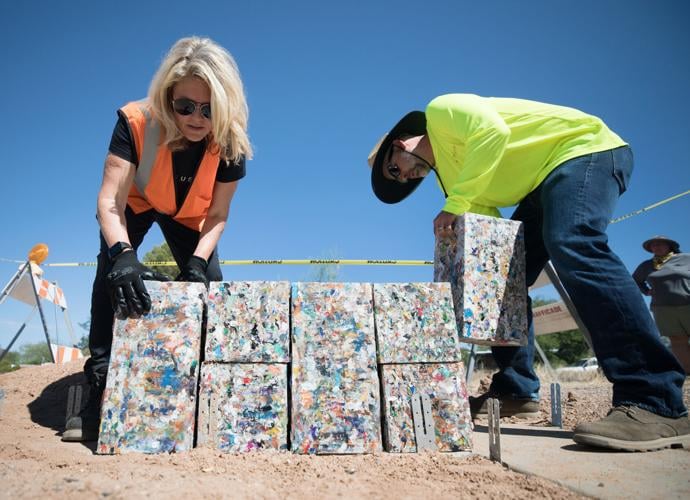
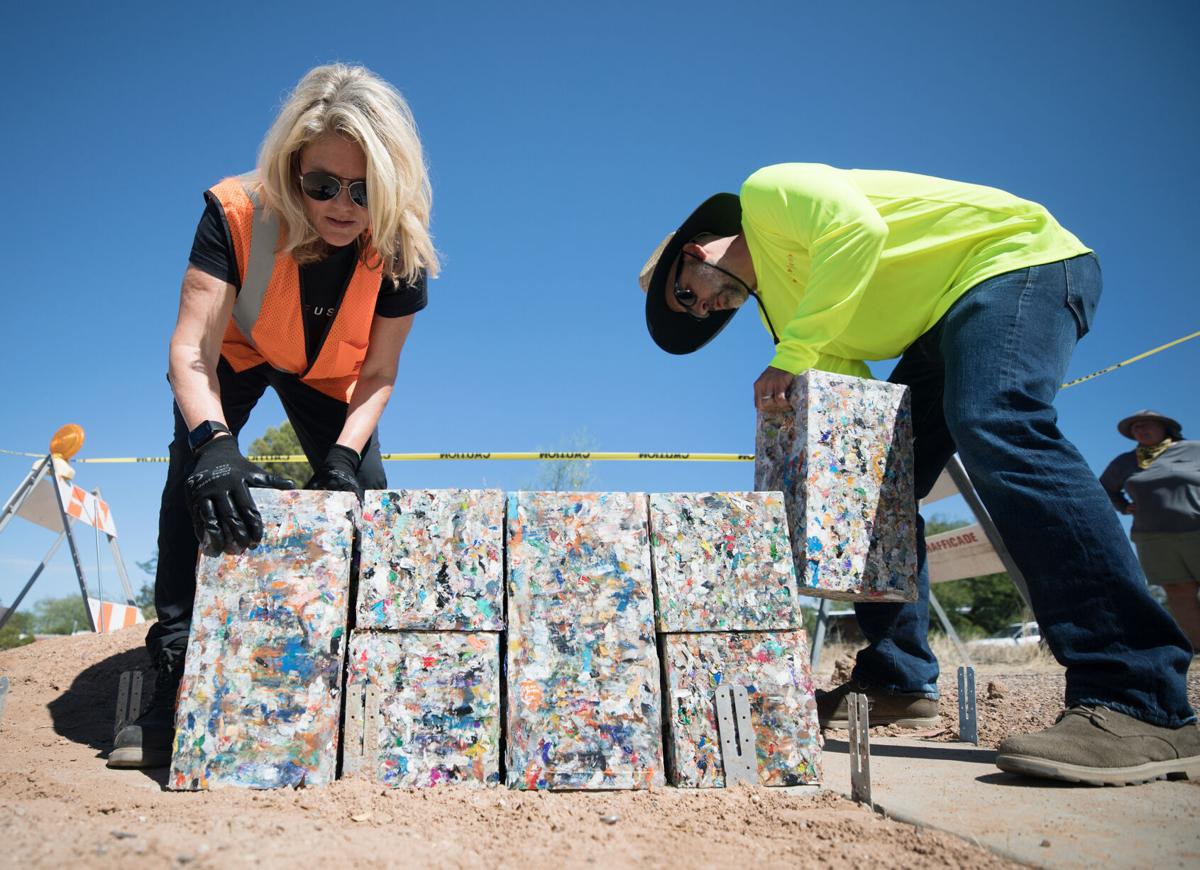
The councilman has long advocated for the city to partner with the start-up company ByFusion, which creates blocks from unrecyclable plastics. The company places plastics into a patented machine that uses steam and compression to churn out 22-pound blocks that fit together with interlocking pegs.

Collection site at the City of Tucson city council ward office at 3202 E. First St. for non-recyclable plastics to be turned into construction blocks through the ByFusion program.
Kozachik said plastics should be bagged to simplify the baling process, and items like cardboard, cans and recyclable plastics should still be recycled with the city. The Ward 6 office has bags available for people to collect their nonrecyclable plastics.
The materials will be sent to local sustainable landscape company Tank’s Green Stuff for baling, shipped to ByFusion’s facility in Gardena, California, to be compressed into blocks, then shipped back to Tucson for local use. Kozachik estimates the city will receive about 1,500 blocks per ton of plastic.
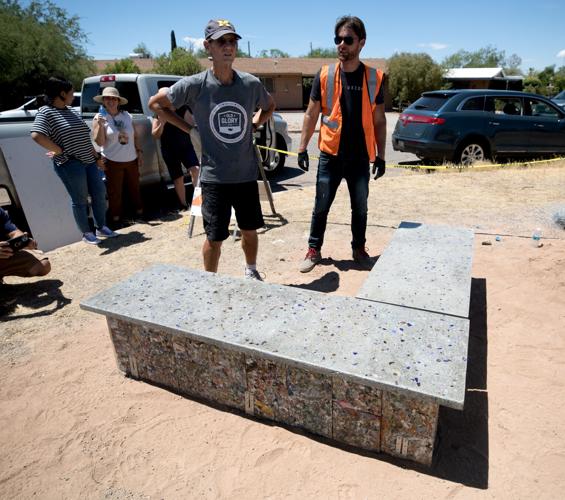
The councilmember spearheaded Arizona’s first construction project using the recycled blocks for a bench in the San Gabriel neighborhood and hopes to use them in future projects under Proposition 407. He said the blocks could be used to build ramadas, benches and trash bin enclosures as part of the $225-million bond package voters approved in 2018 for city park amenities.
According to Kozachik, “back of the napkin” estimates put the plastic collection pilot project at about $40,000, which he’ll pay for with dollars from his ward-specific budget. The councilman paid about $10,000 for the San Gabriel bench.
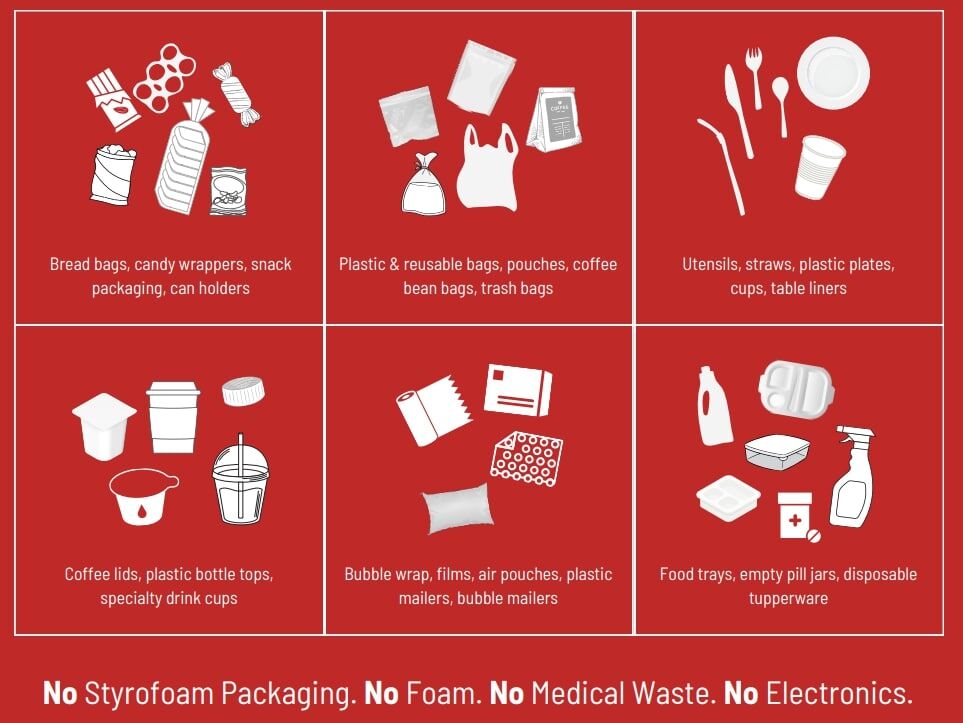
Steve Kozachik, Ward 6 city councilman, is collecting nonrecyclable plastics at his ward office at 3202 E. 1st St. Plastics should be bagged and can include items like plastic utensils, snack packaging and plastic bags.
ByFusion’s future in Tucson
Now, Kozachik plans to run the plastic collection project through his ward office until the end of the year to see “how much the community has bought into this.” The effort will not only further the city’s sustainability goals, Kozachik said, but could save the city money.
Of all the materials Tucson residents put in their recycling bins, about 30% aren’t recycled due to contamination, according to the city’s Environmental and General Services Department. Tucson paid the Republic Services Material Recover Facility, which processes Tucson’s recyclables, $314,085 for contaminated waste in fiscal year 2021, and $278,295 in contamination fees last fiscal year.
“It’ll number one, help divert contamination from the (material recover facility). Secondly, it will not impact our contract with Republic Services,” Kozachik said. “We’re already going out and buying masonry block. We don’t need to buy masonry blocks anymore. We can use these plastic blocks and do the same thing, and just save money and be environmentally responsible.”

Tucson City Council member Steve Kozachik set up a collection site at his ward office for non-recyclable plastics to be turned into construction blocks through the ByFusion.
Carlos De La Torre, director of Tucson’s Environmental and General Services Department, said his department will be looking closely at the pilot project but is skeptical of its impact on furthering Tucson’s zero waste goals.
He said nonrecyclable plastics make up a small percentage of the waste the city generates, and the majority of contamination found in recycling bins is from other trash like diapers and food waste.

Tucson councilmember Steve Kozachik, left, stands by the new bench in the San Gabriel neighborhood. The blocks for the bench are made of plastics considered un-recyclable by standard recycling plants.
“In terms of the overall waste composition, it’s not a significant amount of waste by ton of what we’re trying to do,” he said. “So I’m not saying that’s not important, I’m just saying if our goal is really to maximize and really divert as much waste as possible, those types of products or utensils, straws and stuff like that, really don’t represent a significant percentage of the waste diversion goal.”
De La Torre said the environmental department studied the city’s potential use of ByFusion blocks last summer. Based on “limited information,” the department found the blocks can be used for smaller projects, but not “traditional building material.” As far as officially implementing the blocks into a city program, De La Torre said “we’re not there yet.”
It’s not the first time Kozachik has taken a sustainability effort into his own hands with hopes the city will follow suit. The councilman started his own glass crushing pilot program in 2019 and asked people to drop off their glass bottles to be turned into a sand-like material.
The San Gabriel neighborhood received a new bench in a median. Councilmember Steve Kozachik is pushing the city to use blocks made from plastic in future construction projects. The 22-pound blocks are made of plastics considered unrecyclable by standard recycling plants, such as plastic grocery bags, bubble wrap or products contaminated by food waste. The blocks are made by a L.A. based startup, ByFusion. This is their first project in Tucson. Video by: Mamta Popat, Arizona Daily Star
The city stopped collecting glass in its recycling program in February 2021, instead directing residents to drop glass products off at collection bins across the city for local reuse.
“It’s my hope that the city will, in the same way that they agreed to expand the glass program citywide, that they’ll put multiple distribution points for the plastics citywide as well,” Kozachik said.
De La Torre said the environmental department will take a close look at the program’s success at the end of the year.
“There’s gonna be a full evaluation of that pilot program. And then probably we will provide that information to the council to be able to say, is that something that the city should move forward and deploy that citywide?” he said.

The Tucson City Council approved a new special exception process allowing utilities to avoid undergrounding transmission lines in certain conditions.

About 190 households among the 1,500 housing units the city owns are behind in rent and risk eviction. Notices are expected to go out in September.
The internet access points went up on June 27 with 50 more hot spots planned for mid-July as part of the county's digital expansion initiative.

