



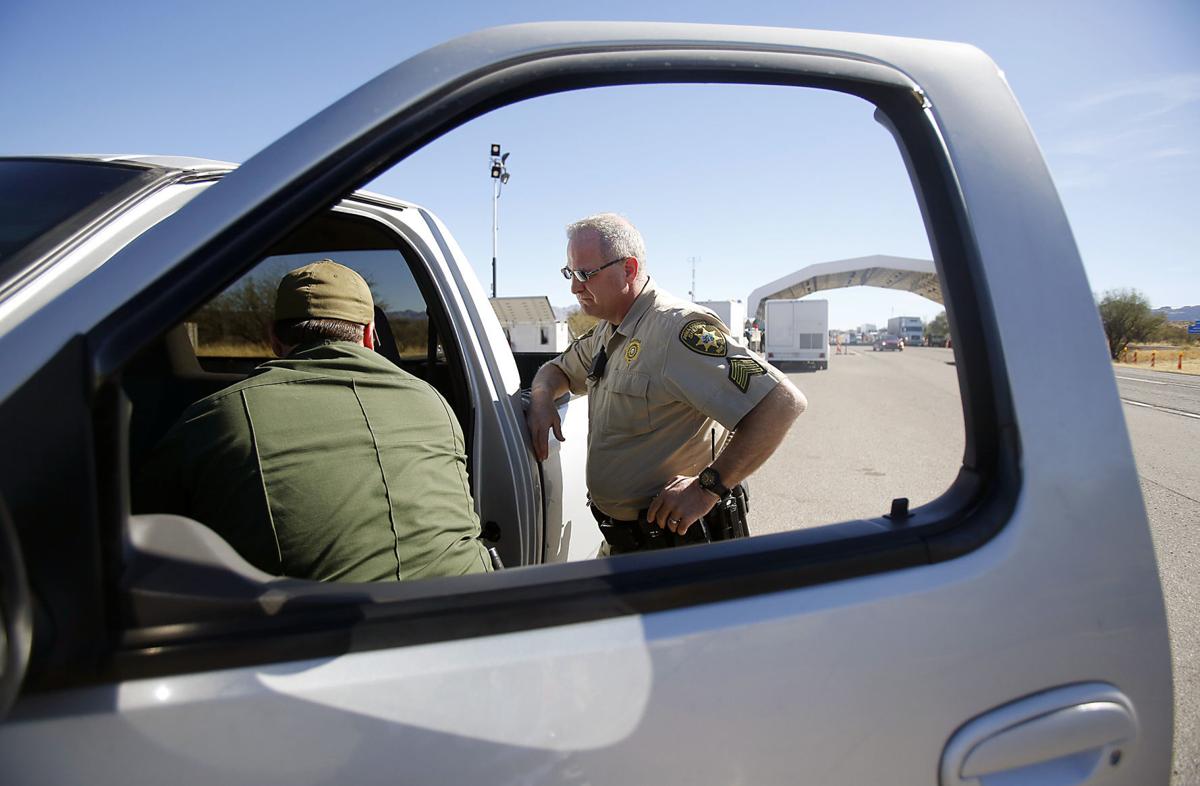
The Pima County Board of Supervisors apparently will accept a $1.4 million border-security grant after all, despite rejecting it earlier this week.
Supervisor Ramón Valadez, who sided with his fellow Democrats in the 3-2 board majority Tuesday in rejecting the federal grant, said Friday that he will change his vote.
“It wasn’t clear to me what those monies were being used for,” he said, adding he has since gotten more information from the county’s sheriff. The Operation Stonegarden grant — meant to improve border security by having local law enforcement agencies and the U.S. Border Patrol work together — helps cover overtime pay for sheriff’s deputies and equipment used for border security.
The county has accepted the funds since 2004. Tuesday is believed to have been the first time any jurisdiction in Arizona had rejected the money.
Democratic Supervisor Richard Elías brought up the issue during Tuesday’s meeting, saying he didn’t want to see further militarization of the border or to have sheriff’s deputies enforcing federal immigration law.
Supervisor Sharon Bronson, also a Democrat, had concerns about the cost of accepting the grant and what it could mean for the county’s retirement obligations, because overtime pay earned by deputies increases the pensions they’re due.
County Administrator Chuck Huckelberry said every dollar of overtime requires the county to pay an additional 67 cents into the state retirement fund on behalf of a deputy.
After a few minutes, the board voted to reject the grant, with Republicans Steve Christy and Ally Miller dissenting.
The following day, Pima County Sheriff Mark Napier sent Valadez a memo explaining what the money is used for in the hopes that the board “will revisit the issue and reconsider its position on the matter.”
Napier explained that $237,967 of the money would help upgrade a video downlink system that is mounted on Sheriff’s Department aircraft, which allows the livestreaming of video from the aircraft back to the department’s administration building, the emergency operations center and deputies on the ground.
He said the deployments under Stonegarden are revenue-neutral for the county and the department.
In addition to being reassured that deputies are not primary enforcers of immigration laws, Valadez said there was also a benefit to more rural areas of the county, where a deputy working a Stonegarden shift is able to more quickly respond to a situation.
“Part of the issue was that the description of the grant wasn’t particularly clear,” Valadez said.
Under the program’s goals/predicted outcomes, the grant reads: “Missions include preventing terrorism and enhancing security; managing our borders; administering immigration laws; securing cyberspace; and ensuring disaster resilience.”
That is what initially concerned Valadez, he said, especially under the Trump administration. “There’s a new administration in Washington and obviously they have a very different view of immigration enforcement that makes me wonder how that shakes down on the street.”
But Valadez has now asked the board to reconsider the grant at its next meeting, on Feb. 20.
Huckelberry, however, still wants more information for the board. In a memo Thursday, he asked Napier to specify how the overtime allocation is paid, whether it pays for full benefits and to identify the law enforcement services being provided with the grant and how “they are exclusively related to law enforcement for individuals who break State laws and are not for the purpose of border immigration enforcement.”
In 2017, Napier said, deputies were deployed 400 times, conducted nearly 5,000 traffic stops and made 312 misdemeanor and 164 felony arrests under the Stonegarden grant. They also helped seize 4,281 pounds of marijuana, 81 pounds of methamphetamine and 91 pounds of cocaine.
During that time, they also turned over 110 people illegally in the country to the Border Patrol, according to the department’s quarterly reports.
After seeing Napier’s memo, Bronson said she still has some concerns.
“Not that I’m not going to consider it, but I need transparency, accountability and metrics,” she said. “What’s the benefit and cost, we need to consider that.”
Even though the board had approved the grant multiple times before, “We probably should have been paying more attention,” Bronson said.
Tuesday’s rejection of the grant was praised by the American Immigration Lawyers Association, which wrote a thank-you letter to the board.
“As practitioners, we have seen Operation Stonegarden used as means for apprehending noncriminal immigrants for minor or nonexistent traffic offenses,” the group wrote. “Time and again our clients tell of joint operations between the Pima County Sheriff and the Border Patrol to stop motorists for the sole purpose of inquiring about their immigration status.”
Rachael Wilson, a local immigration attorney, said she has three clients who were stopped for failing to stop at a stop sign, for an improper turn and for driving over a white line. The three said they were stopped by a deputy flashing the patrol vehicle’s lights, but when they pulled over they were approached by a Border Patrol agent who asked about their immigration status. None of her clients were cited, she said, nor did they interact with the sheriff’s deputy during the stops.
“The reason why the Border Patrol cares so deeply about maintaining Stonegarden is because by inviting a local law enforcement agency such as the sheriff to work in joint operations, suddenly the Border Patrol has the benefit of the hundreds of local traffic laws that only local police have the authority to enforce,” said Billy Peard, a Tucson-based ACLU attorney.
But Napier said the money helps deputies do things they otherwise wouldn’t be able to do.
The county shares 125 miles of border with Mexico, and parts of it fall under one of the busiest drug-trafficking corridors, marijuana seizures show.
In fiscal 2017, the Border Patrol Tucson Sector seized nearly 400,000 pounds of marijuana, the most of any sector, although it is down from more than 700,000 pounds seized the previous year.
In his memo, Napier said the county had benefited from more than $3.3. million in federal dollars to fund operations, particularly in rural and remote areas, along with more than $700,000 in equipment purchases, most of which it wouldn’t have been able to buy without the grant.

