




When writer Grace Flandrau left part of her fortune to the University of Arizona in 1971, the roughly $800,000 gift gave John Schaefer flashbacks.

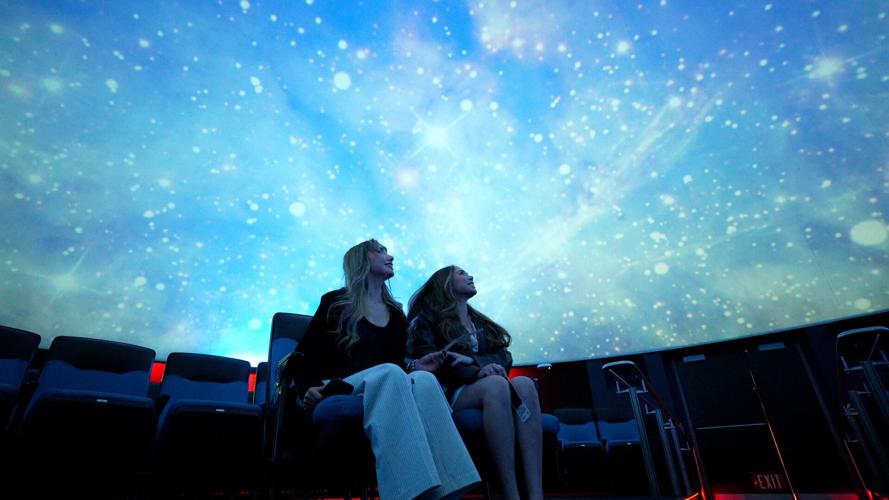
Two visitors to the Flandrau Science Center and Planetarium watch a show in the domed theater on the University of Arizona Mall.
The university’s then-president said he thought back to his childhood in New York City, and he knew exactly how Flandrau’s donation should be spent.
“As kids in grammar school, we went to Hayden Planetarium two or three times,” Schaefer told the Star in an interview earlier this year. “The shows we saw about the stars and the sky got me hooked on science.”
A planetarium in the Old Pueblo seemed like the perfect way to do the same for local students, all while providing a showcase for the university’s groundbreaking work in space.
“We were becoming pretty darned good in astronomy,” Schaefer said.
Saturday marks the 50th anniversary of the Flandrau Science Center and Planetarium, which opened on the U of A Mall on Dec. 13, 1975.

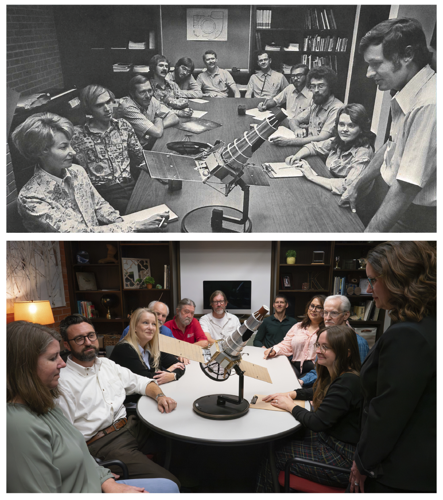
The Flandrau staff then and now: The top photo was taken sometime around the year it opened in 1975. The bottom photo is from a few weeks ago in the same room with the same model of Ranger 7 and the same Dik Castle, the exhibits technician in the red shirt.
Flandrau will celebrate the milestone with a day of free admission to its cosmic shows and exhibits, including a special display on the history of Arizona’s first planetarium. Visitors can also get a sneak peak at the preview gallery for “Mysteries of the Cosmos,” a new astronomy exhibit set to open in the spring.
The anniversary event, funded by the Tucson-based Armstrong McDonald Foundation, runs from 10 a.m. to 5 p.m. Saturday at 1601 East University Blvd.
“This is a big milestone for us, and we couldn’t be more excited to celebrate with the community,” said Kellee Campbell, executive director of Flandrau.
It all began with Grace Flandrau, a wealthy heiress who made her name as an author and journalist in her native Minnesota in the early 1900s.
For decades, she traveled the world and wrote newspaper and magazine articles, short stories and several novels. Then she started visiting Tucson for her health in the early 1940s and eventually bought a home near the Arizona Inn.
Flandrau died in Connecticut in 1971 at the age of 85, leaving behind an estate valued at more than $8 million. She never got to see how her gift to the U of A was put to use.

Grace Flandrau, benefactor and namesake of the University of Arizona's Flandrau Science Center and Planetarium, made her name as a writer and journalist in her native Minnesota.
The bequest, worth about $6.4 million in today’s dollars, was “given with the understanding that the university president would use it to benefit the institution,” Schaefer wrote in his memoir, “A Chance to Make a Difference,” published in October. “I chose to use it to build a planetarium.”
The concept was developed by him, U of A vice president A. Richard Kassander and Astronomy Department head Ray Weymann, among others.
“That was my first big project,” Schaefer told the Star.
Instead of a traditional groundbreaking ceremony with shovels, the university president decided to science it up 1974-style. He donned a lab coat and a hard hat, stood behind a fake laser cannon and pressed a button that caused a balloon filled with acetylene to explode into a fireball.
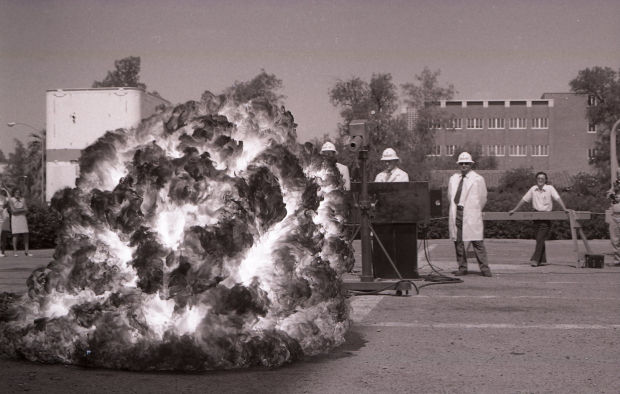
In 1974, a fireball took the place of the traditional shovel during groundbreaking for the University of Arizona's new Grace Flandrau Memorial Planetarium at North Cherry Ave. and campus mall. The science fiction ceremony, complete with a space age (but not working) laser, was staged to emphasize the contributions the new facility will make to the public's understanding of science. UA President John P. Schaefer pressed the button that ignited an acetylene filled balloon into the fireball that "broke" bround for the new building.
In his memoir, Schaefer describes what it took to navigate through fundraising challenges, design changes and ballooning costs. At one point, Congressman Mo Udall was called on for help, after the university learned that the special planetarium projector it had ordered from Germany would be slapped with a huge import levy.
“Our pleas to the federal government were heard and the import fees were waived,” Schaefer wrote.
By the time the planetarium opened in late 1975, of course, the U of A was already a national leader in the celestial sciences, thanks to the Astronomy Department, the Optical Sciences Center, Steward Observatory and the Lunar and Planetary Laboratory, which helped map the moon so NASA could land six Apollo spacecraft there.
In the 50 years since the planetarium opened, the university has continued to play a major role in some of astronomy’s greatest achievements: sending rovers and orbiters to Mars, bringing back samples from an asteroid, capturing the first image of a black hole, launching the most powerful space telescope ever built and painstakingly crafting giant mirrors for the latest earthbound observatories at a lab beneath Arizona Stadium.

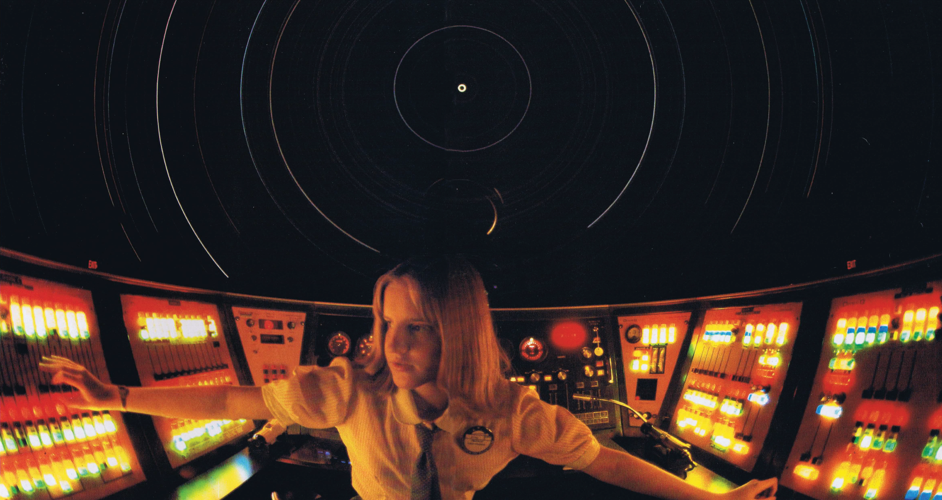
A staff member works at the console under the domed screen at the Flandrau Science Center and Planetarium in 1975. Saturday marks the 50th anniversary of the Flandrau Science Center and Planetarium, which opened on the U of A Mall on Dec. 13, 1975.
Flandrau has come a long way, too. In the past six years alone, every public space inside the building has been renovated and updated, including this year’s debut of “Universe of Science,” a new interactive exhibit that takes visitors on a U of A-centric journey through the worlds of astronomy, neuroscience, desert ecology and more.
The facility draws about 15,000 local K-12 students on school field trips each year. It also hosts actual college Astronomy classes and talks for the community at large by leading university researchers as part of its Science at Sunset lecture series.
The wide range of offerings led USA Today to declare Flandrau one of the best planetariums in the country in 2025.
Campbell said this Saturday’s event is only the beginning of the anniversary festivities. Plans are in the works for additional activities throughout the next year, both at the science center and around the community.
“This is such a fun time for Flandrau, and this is such a fun position for me to be in,” Campbell said.

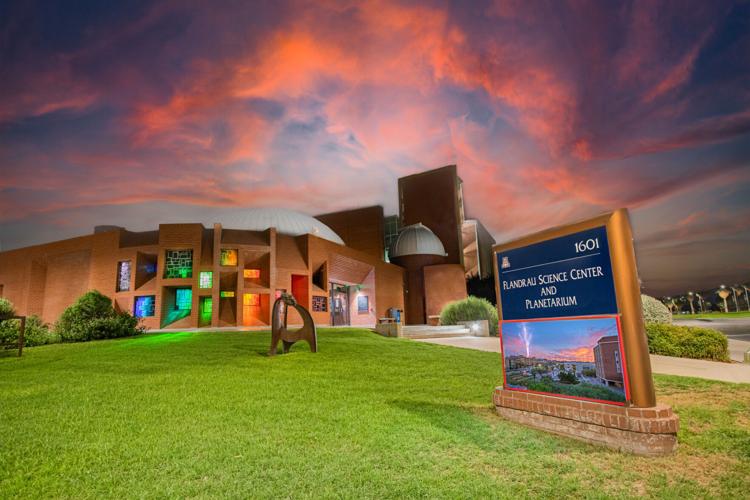
The University of Arizona's Flandrau Science Center and Planetarium at sunset.

