



I’ve seen one or two changes in this business since I broke into it, right out of high school in 1969.
Back then, Linotype machines spat stories out in lead type — after I’d finished expectorating them via my L.C. Smith manual typewriter. I learned to take photos with a 4x5 Speed Graphic, and there was nobody waiting back at the newsroom to produce the images — I learned to develop the negatives, print the photographs and engrave them as “cuts” to go on the page with the aforementioned “hot” type.

McCumber
What’s the point of such woolgathering? It’s this: Through more than half a century of change since then, one thing has not diminished — the affection many of our readers have for consuming their news on the printed page.
It’s not exactly breaking news that it’s gotten harder and harder to accomplish that, particularly over the last couple of decades, as digital media have come to dominate the landscape. But we know that we have a responsibility to do everything we can to deliver a good newspaper to our print readers each day. Many of you have been subscribers for a long time. You have helped us, and are still helping us, to keep delivering local news to Tucson’s porches and driveways, and you should feel good about that. We are very grateful to you for your commitment to local journalism.
As of this week, one more challenge to our print delivery has been posed — and overcome. If you are reading this on the page, the newspaper you are holding was printed in Las Vegas, Nevada, and trucked to Tucson before being delivered to you. As of this week, that’s the new normal for our print production.
I remember in 1982 when a dreadful, tragic explosion at our Tucson plant on South Park Avenue forced us to print the next day’s paper in Phoenix. It was a huge effort, but we got it done and got the paper delivered. Then, six years ago, we were forced to shut down our local presses and take production to Phoenix on a daily basis. And we have made that change work.
On Sunday night, our Monday paper rolled off the Phoenix presses for the last time. And our best Plan B (C?) is the large, modern press facility at the Las Vegas Review-Journal. I visited the Las Vegas plant last month, and I am confident in the production capability and dedication to quality that I saw there.
The Arizona Republic, the state’s largest newspaper, is also being printed at the Las Vegas facility.
As outlandish as this may have sounded a few years ago, such lengthy travels between press and reader have become the norm in hundreds of cities and towns across the country as production costs pressure has produced more and more press consolidation.
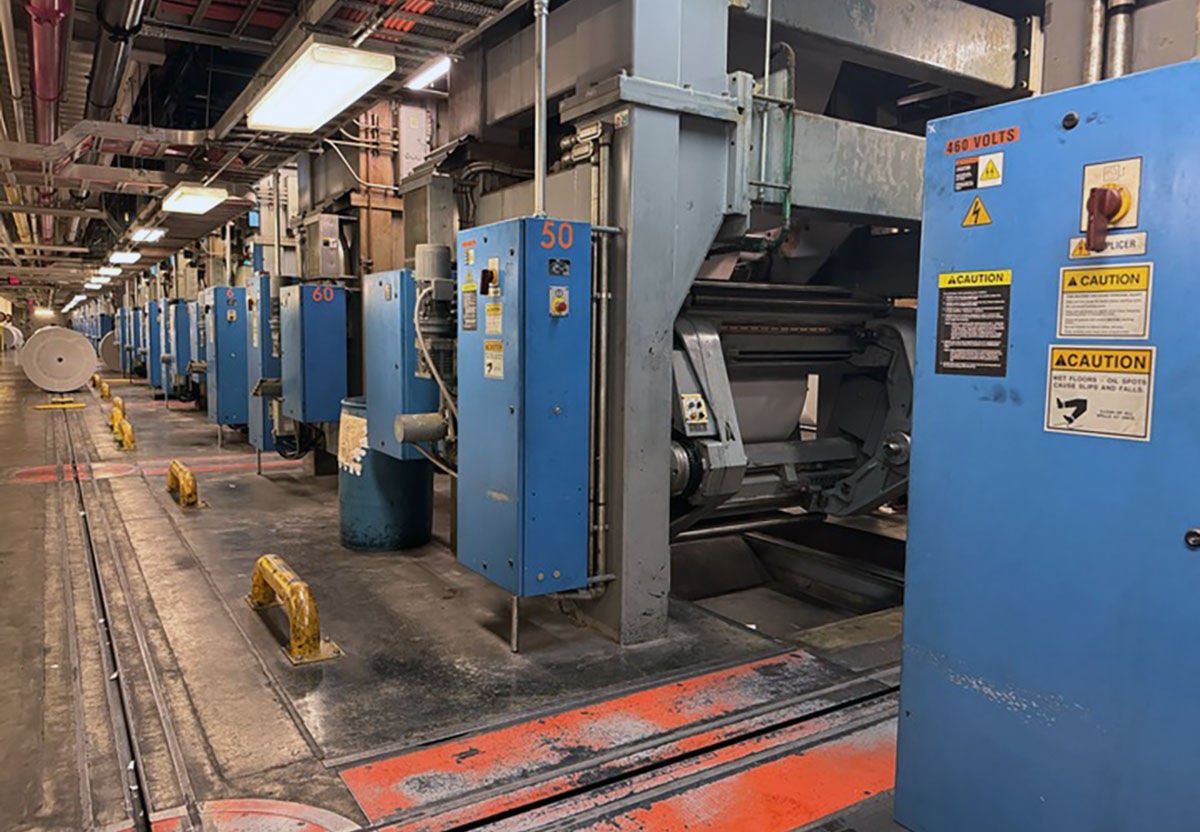
As of this week, the Arizona Daily Star is being printed in Las Vegas, Nevada, and trucked to Tucson for delivery. The Star was most recently print in Phoenix, but that facility has closed.
Obviously, this comes at a price — the daily Phoenix-to-Tucson trucking had already pushed print deadlines forward several hours. This print “commute” means the print product closes several more hours earlier.
We are still in the breaking news business — online at tucson.com. And realistically, that’s where people have been going for up-to-the-minute news for years now. That doesn’t change.
Photos: New Star/Citizen building and downtown Tucson in 1954
Star/Citizen/TNI building, 1954
Updated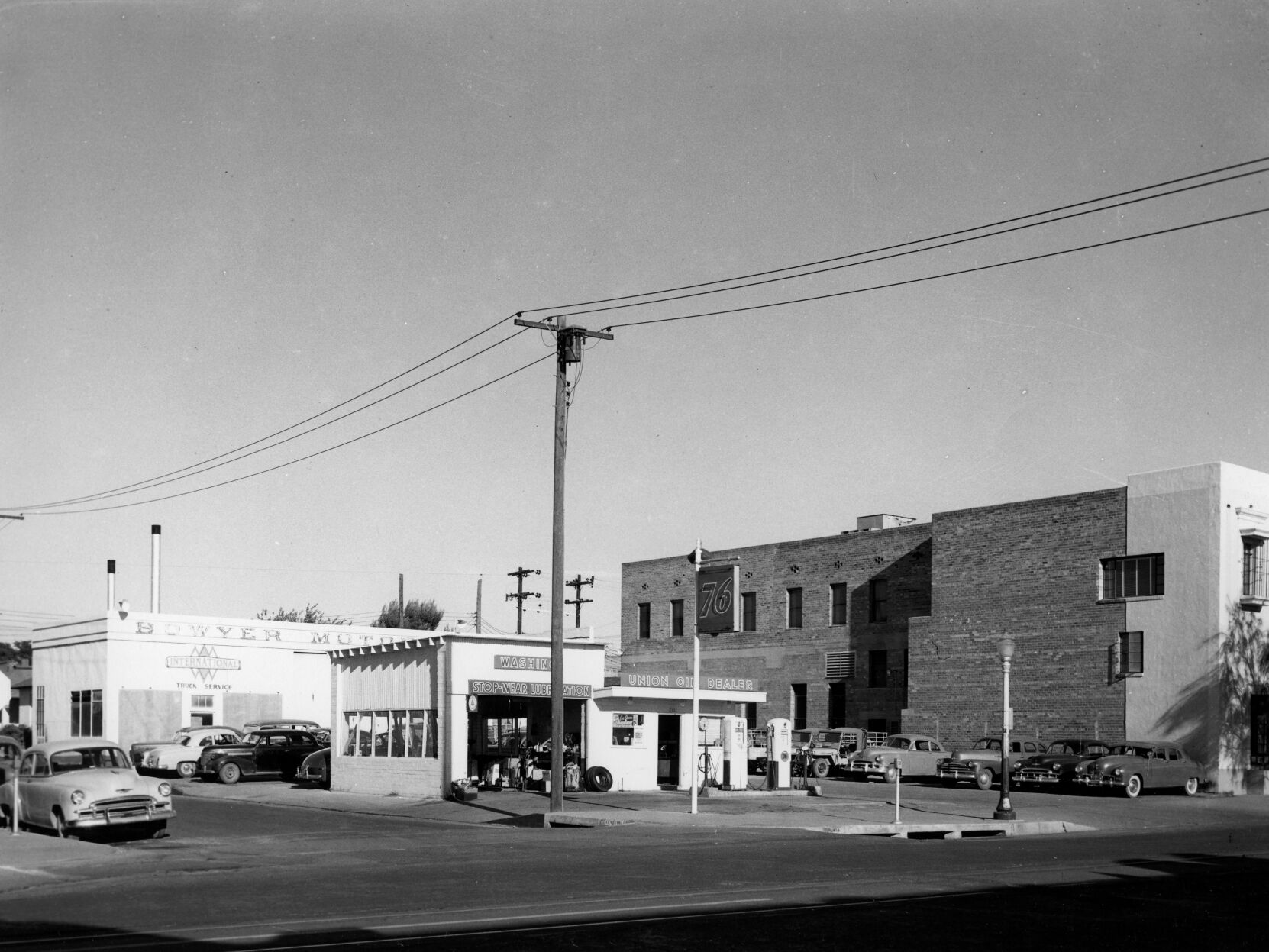
A Union 76 service station and Bowyer Motor Co. (behind) on Miltenberg Street and Stone Ave. were demolished in 1953 to make way for the addition to the Tucson Newspapers building (Arizona Daily Star and Tucson Citizen) in 1953. Bowyer Motor Co. moved to Stone and Mabel.
Star/Citizen/TNI building, 1954
Updated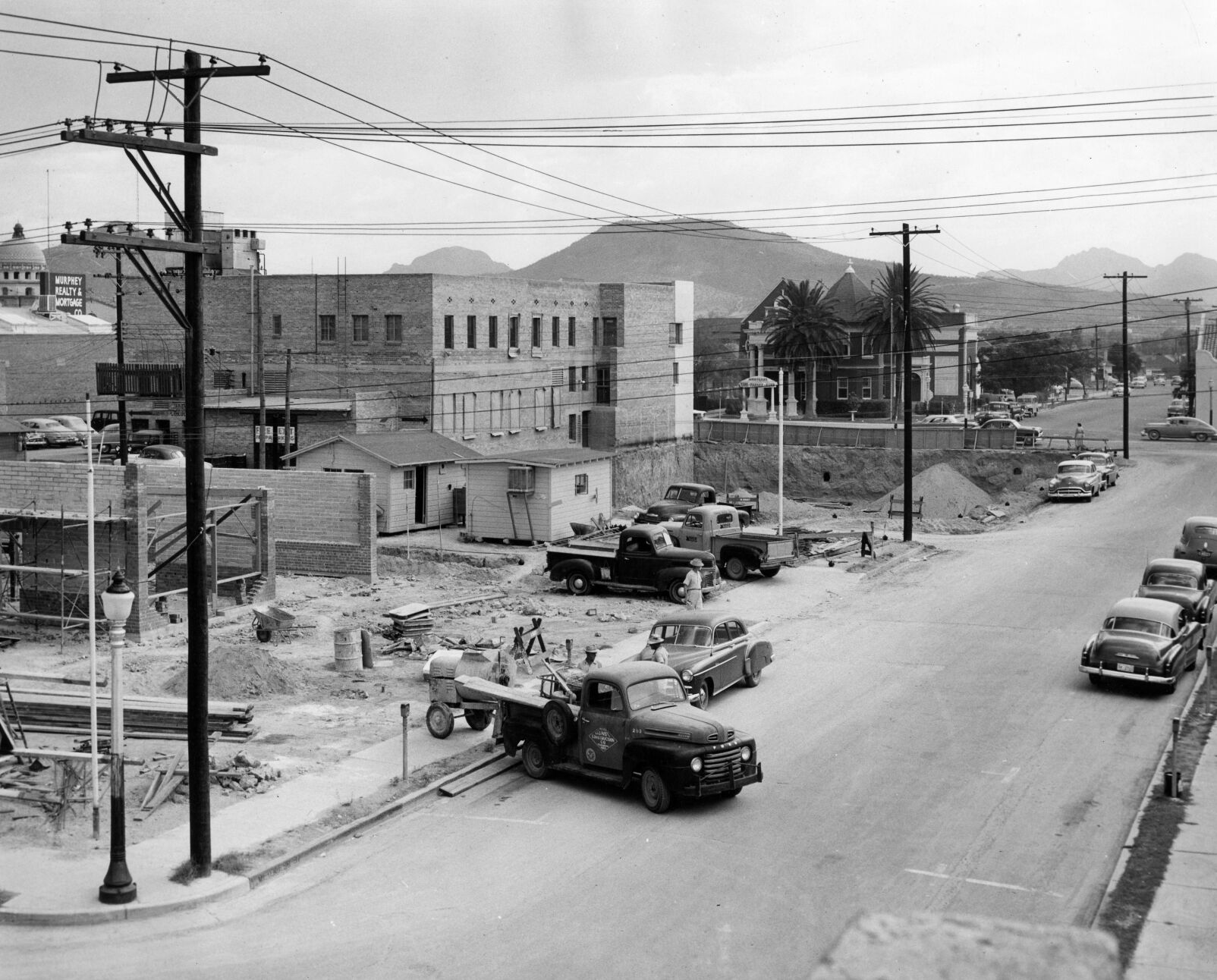
Excavation for the addition to the Tucson Newspapers building (Arizona Daily Star and Tucson Citizen) at 208 N. Stone Ave. in 1953. Looking West on Miltenberg Street from the rear of the building. A service station is under construction at left.
Star/Citizen/TNI building, 1954
Updated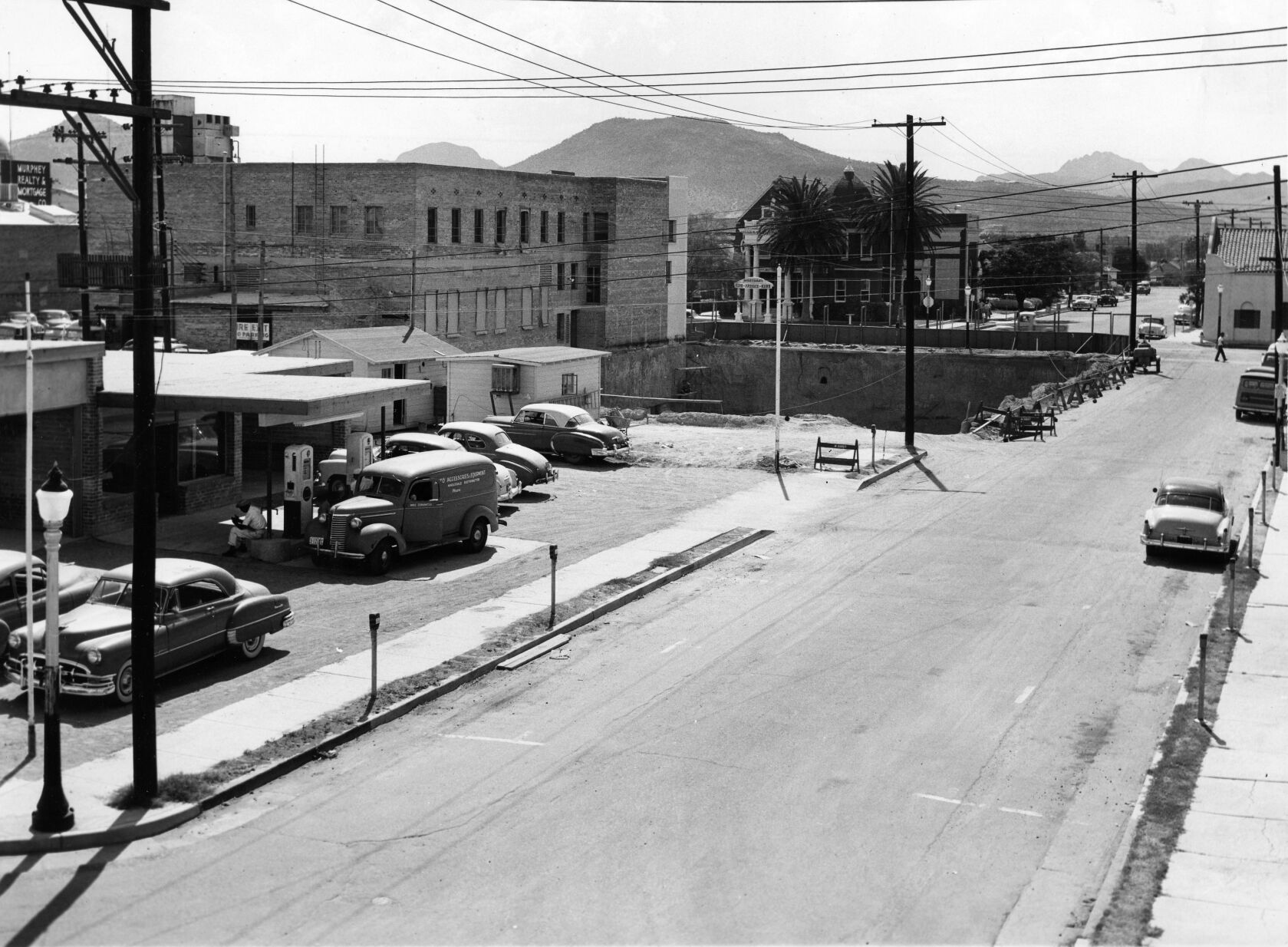
Excavation for the addition to the Tucson Newspapers building (Arizona Daily Star and Tucson Citizen) at 208 N. Stone Ave. in 1953. Looking West on Miltenberg Street from the rear of the building. Note the completed service station at left.
Star/Citizen/TNI building, 1954
Updated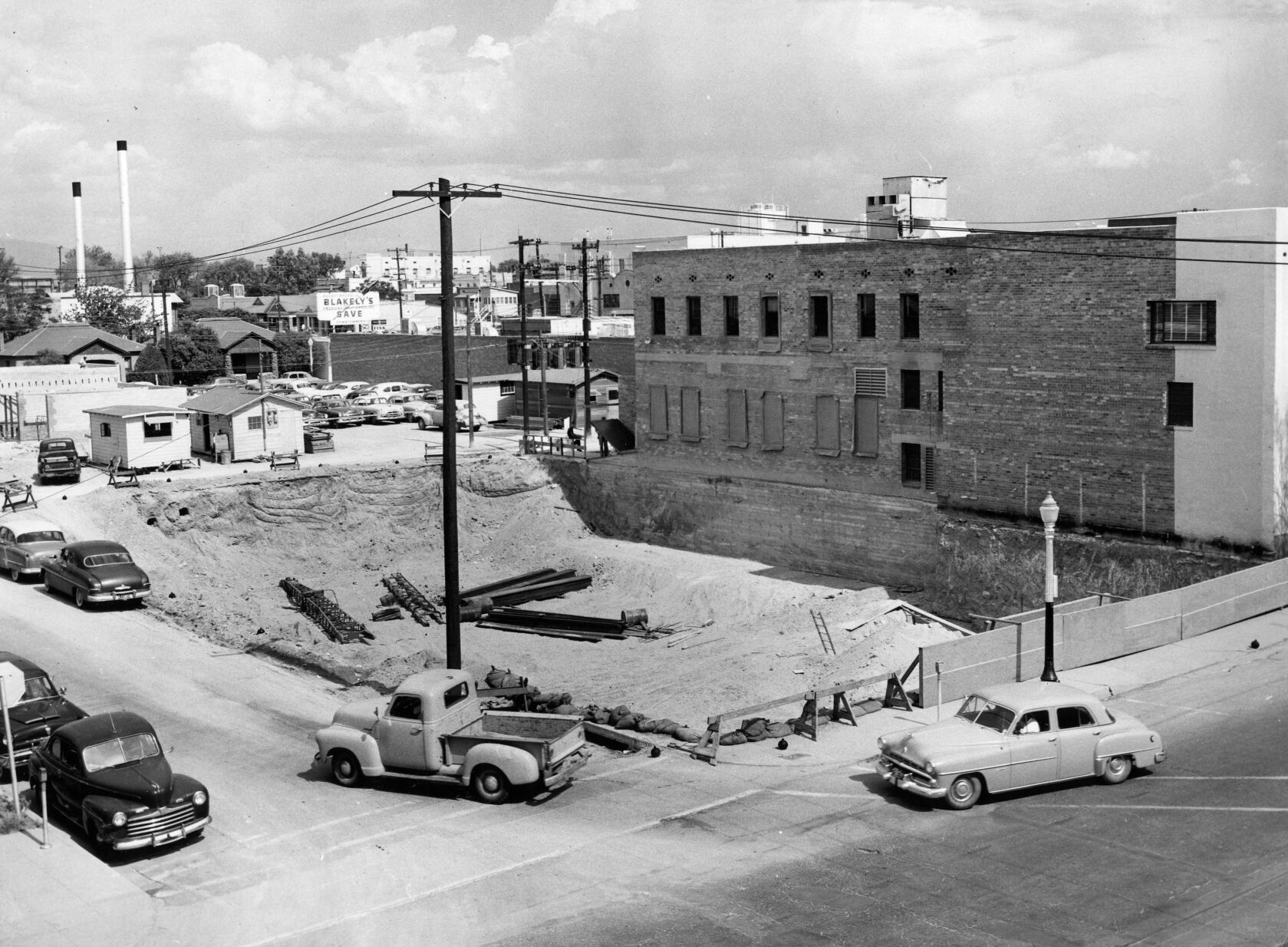
Excavation for the addition to the Tucson Newspapers building (Arizona Daily Star and Tucson Citizen) at 208 N. Stone Ave. in 1953. Looking southeast from the corner of Stone Ave. and Miltenberg St.
Star/Citizen/TNI building, 1954
Updated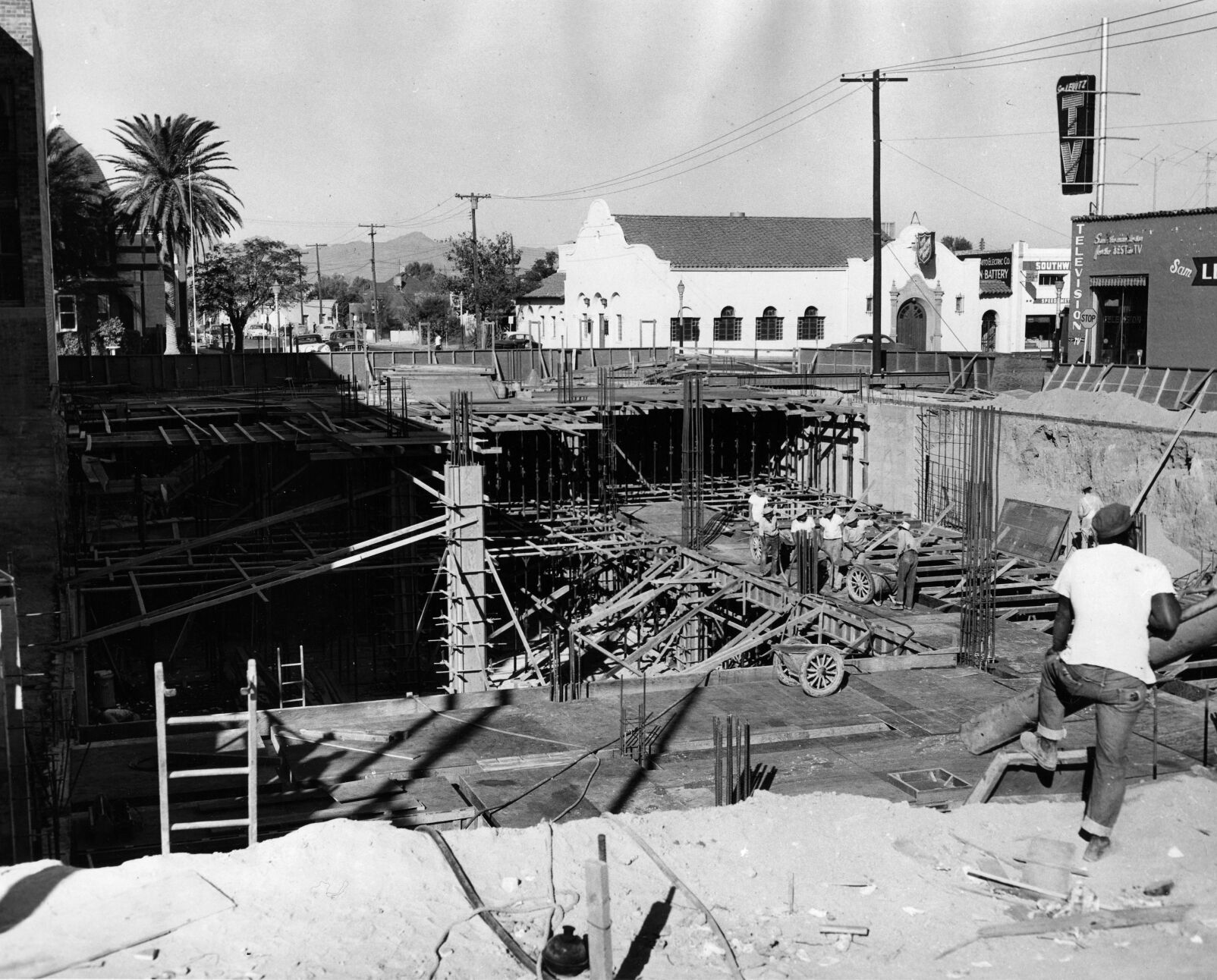
Wooden forms for poured concrete and steel rebar for supporting columns are constructed at the addition to the Tucson Newspapers building (Arizona Daily Star and Tucson Citizen) in 1953. Looking west from towards Stone and Council.
Star/Citizen/TNI building, 1954
Updated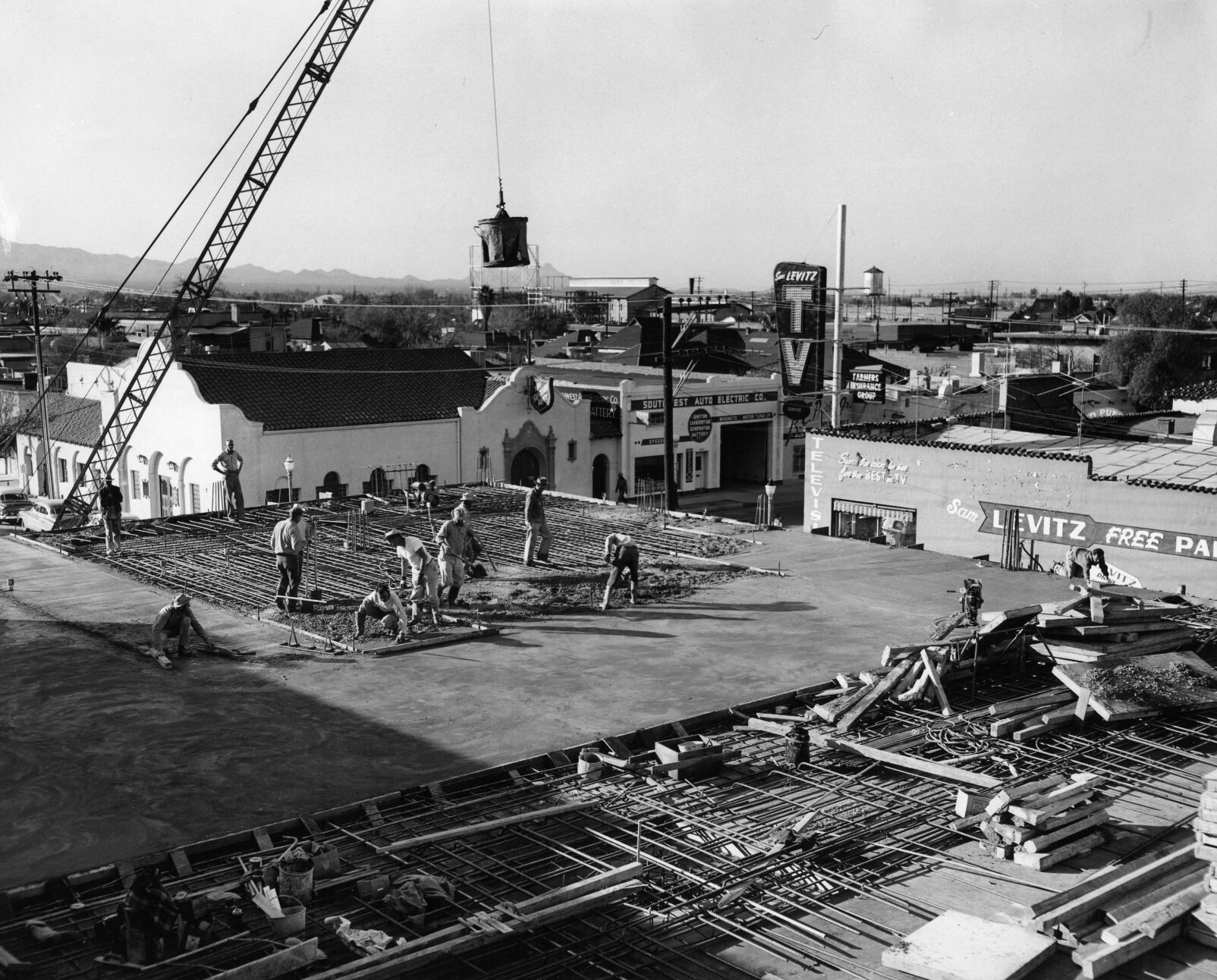
Concrete pour for the second floor of the addition to the Tucson Newspapers building (Arizona Daily Star and Tucson Citizen) in early 1954. No pump trucks in these days. It was one bucket at a time. Looking northwest. None of the buildings across the street exist today
Star/Citizen/TNI building, 1954
Updated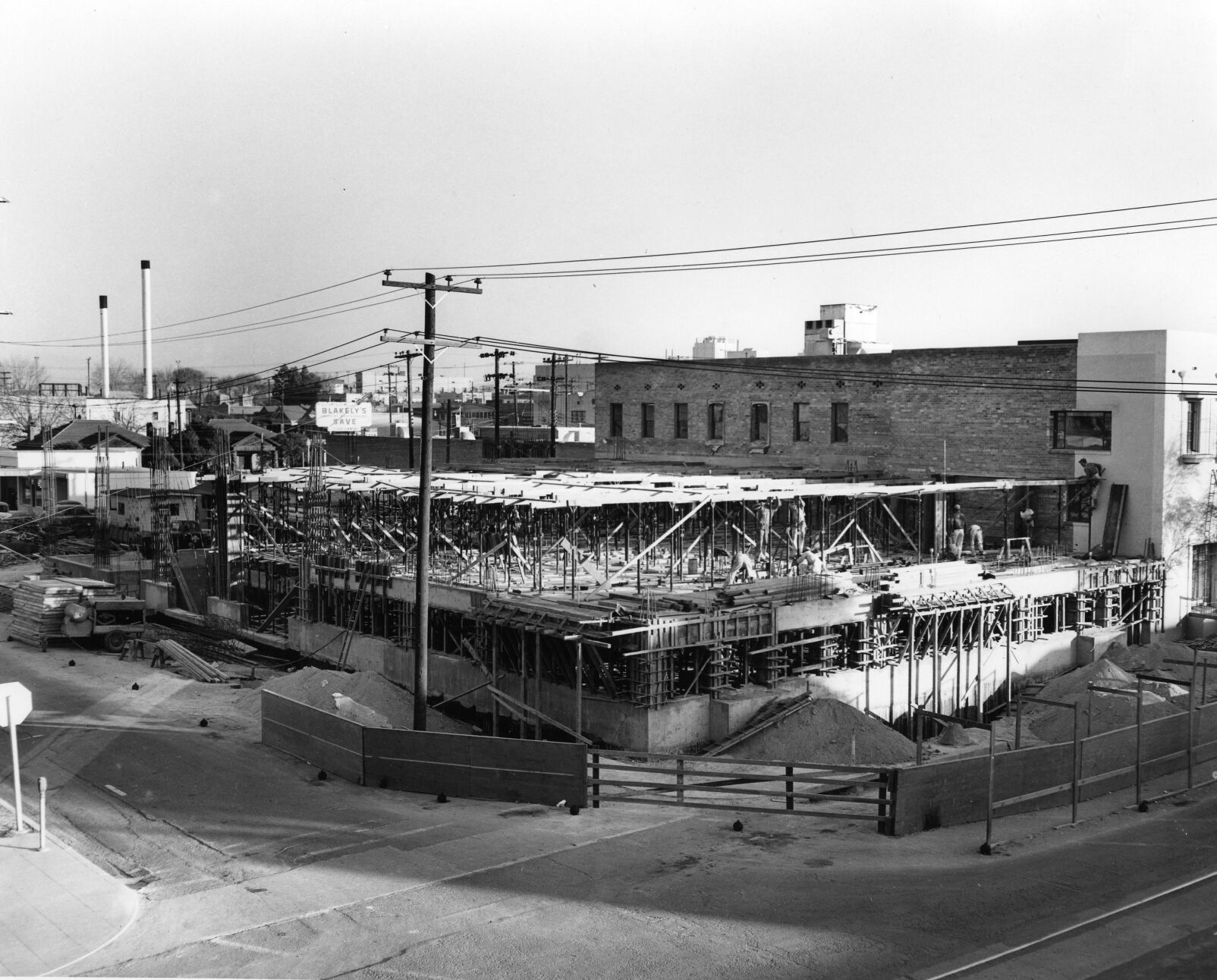
Forms for the third floor concrete deck are constructed for the addition to the Tucson Newspapers building (Arizona Daily Star and Tucson Citizen) in late 1953.
Star/Citizen/TNI building, 1954
Updated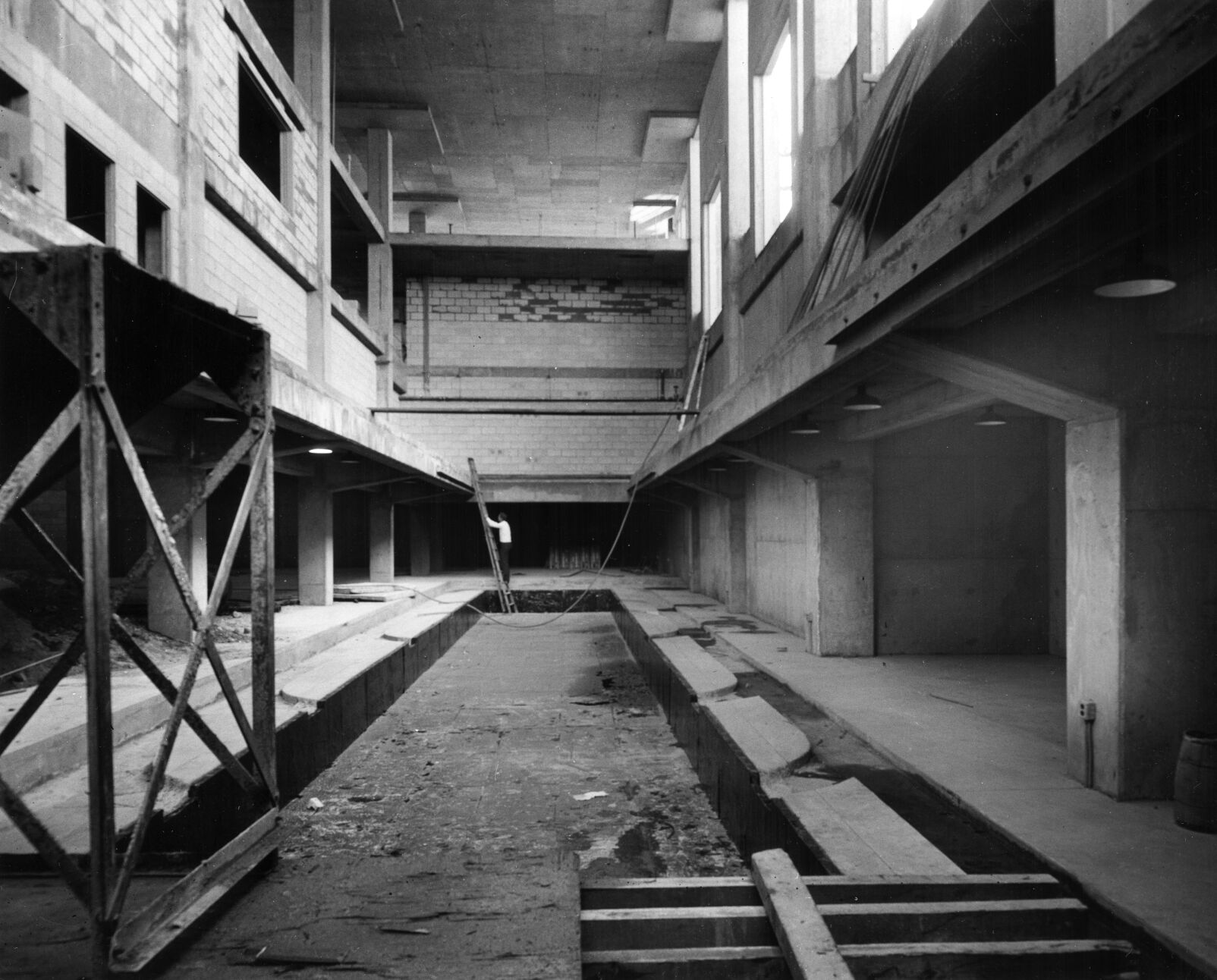
The bay for the new 4-story Goss printing press in the addition to the Tucson Newspapers building (Arizona Daily Star and Tucson Citizen) in 1954.
Star/Citizen/TNI building, 1954
Updated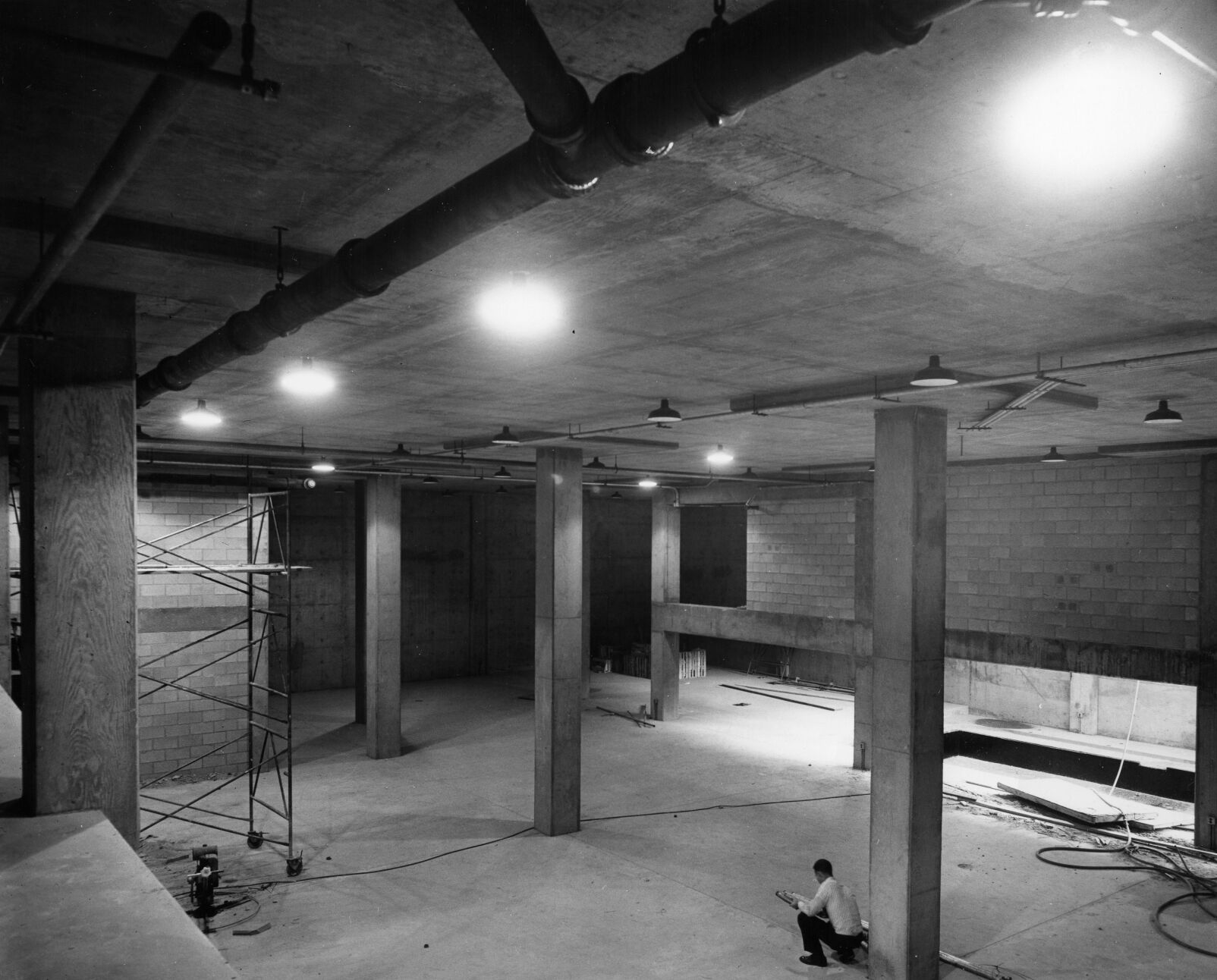
The newsprint warehouse was built to hold 900 tons of newsprint, as part of the addition to the Tucson Newspapers building (Arizona Daily Star and Tucson Citizen) in 1954.
Printing press for Tucson Newspapers
Updated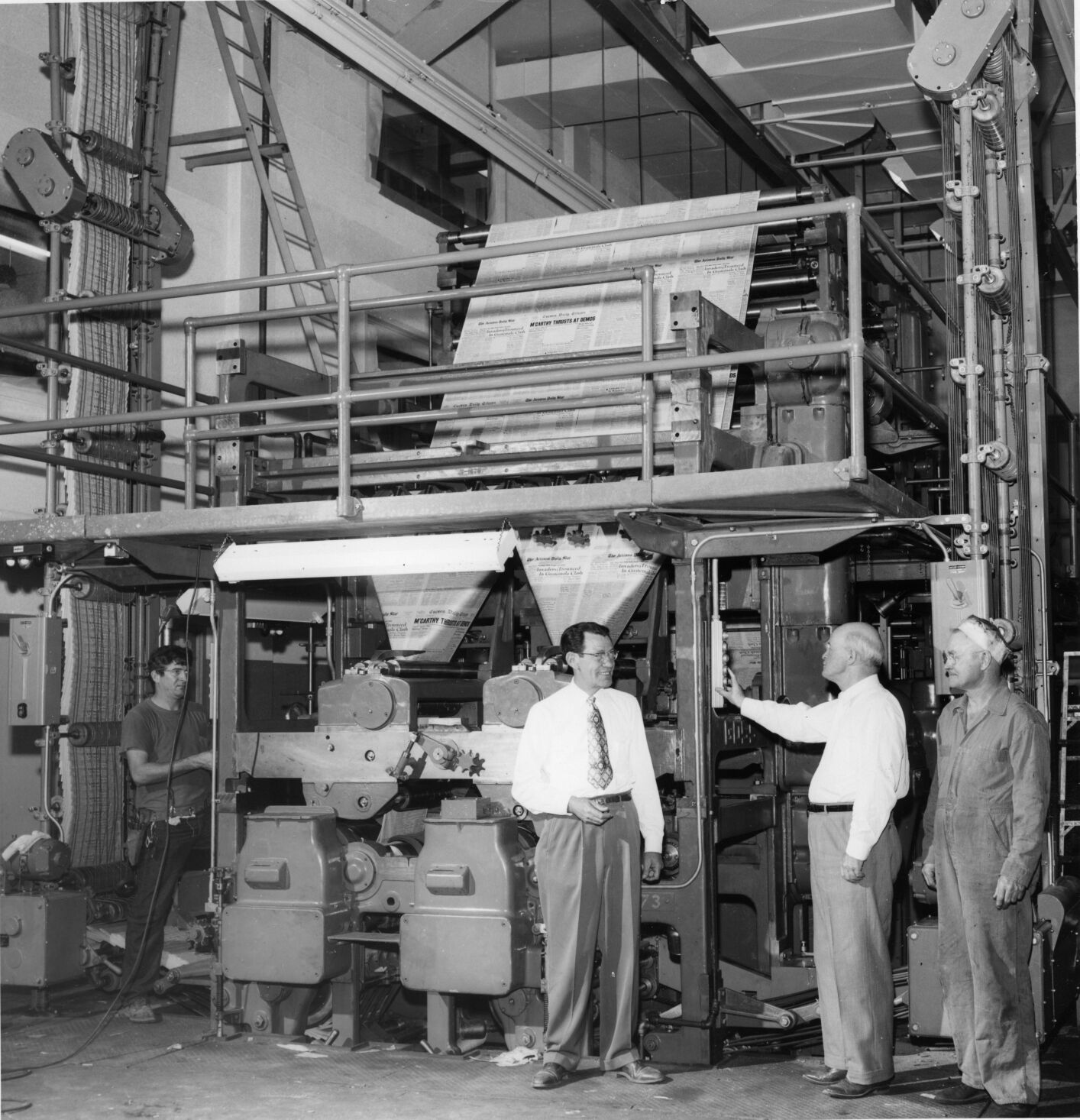
William R. Mathews, editor and publisher of the Arizona Daily Star, pushes the button that starts the New Tucson Newspapers' Goss Headliner presses in the company's new building at 208 N. Stone Ave. on July 4, 1954. The entire Star/Citizen mechanical departments were moved from the one building to another in 17 hours.
Star/Citizen/TNI building, 1954
Updated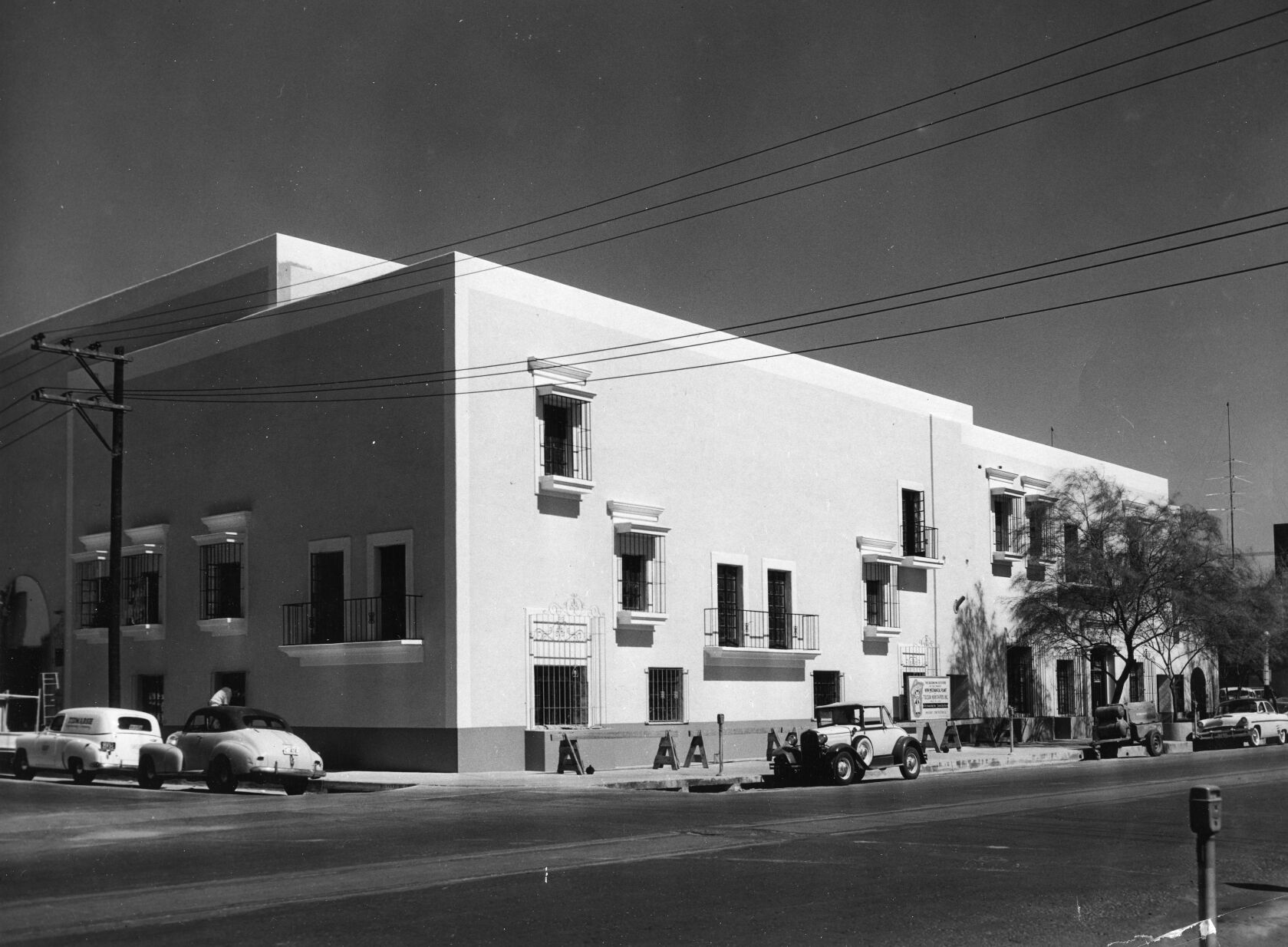
The completed exterior of the addition to the Tucson Newspapers building (Arizona Daily Star and Tucson Citizen) in 1954.
Star/Citizen/TNI building, 1954
Updated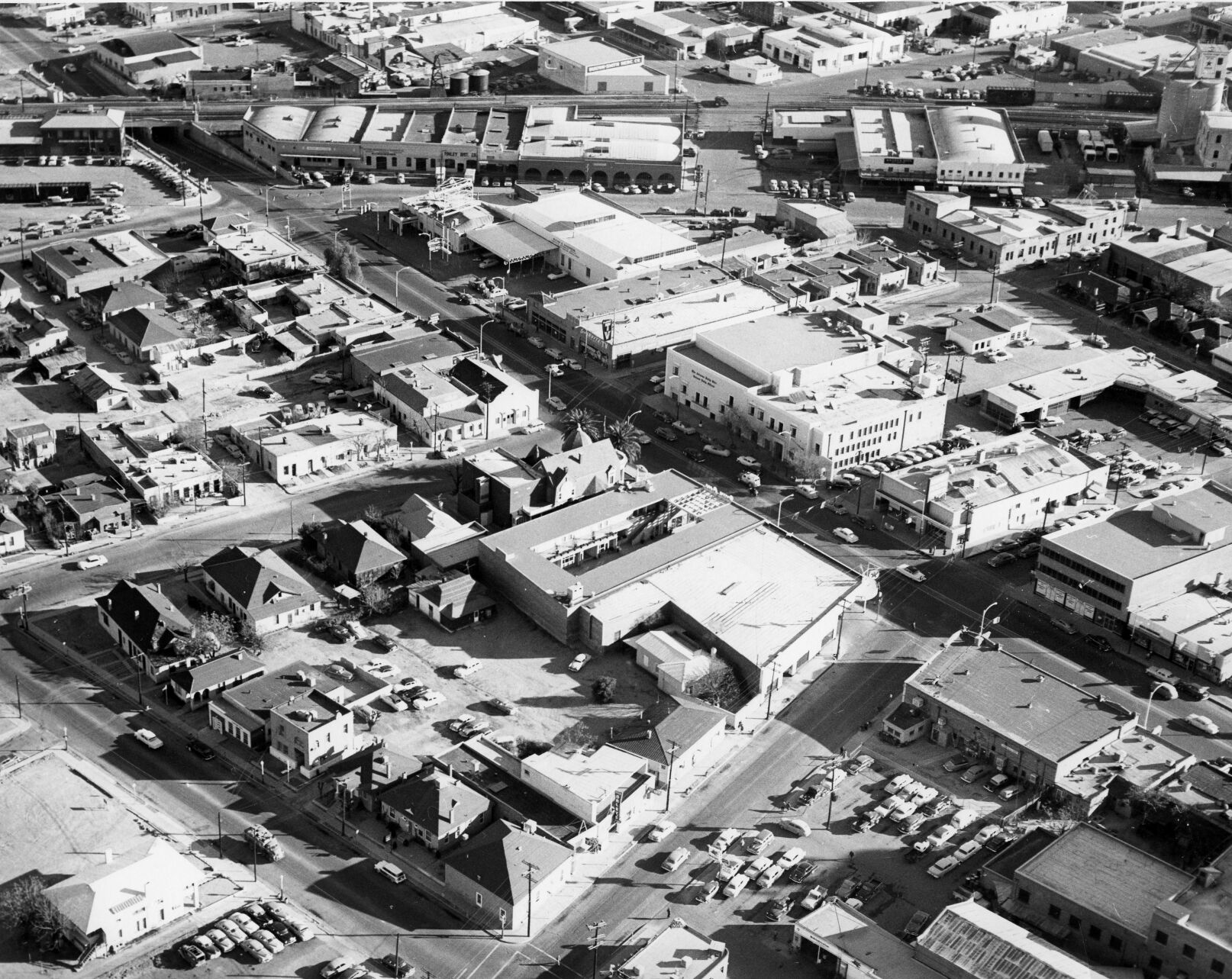
Aerial photo of downtown Tucson showing the completed Tucson Newspapers building (Arizona Daily Star and Tucson Citizen) in 1955. The newspaper is center right (white building). The Pima County Consolidated Courts building and parking garage now occupy roughly the same area down to Toole Ave. (upper left). Miltenberg Street, to the north of the TNI building, became part of Council Street in 1960.
Star/Citizen/TNI building, 1954
Updated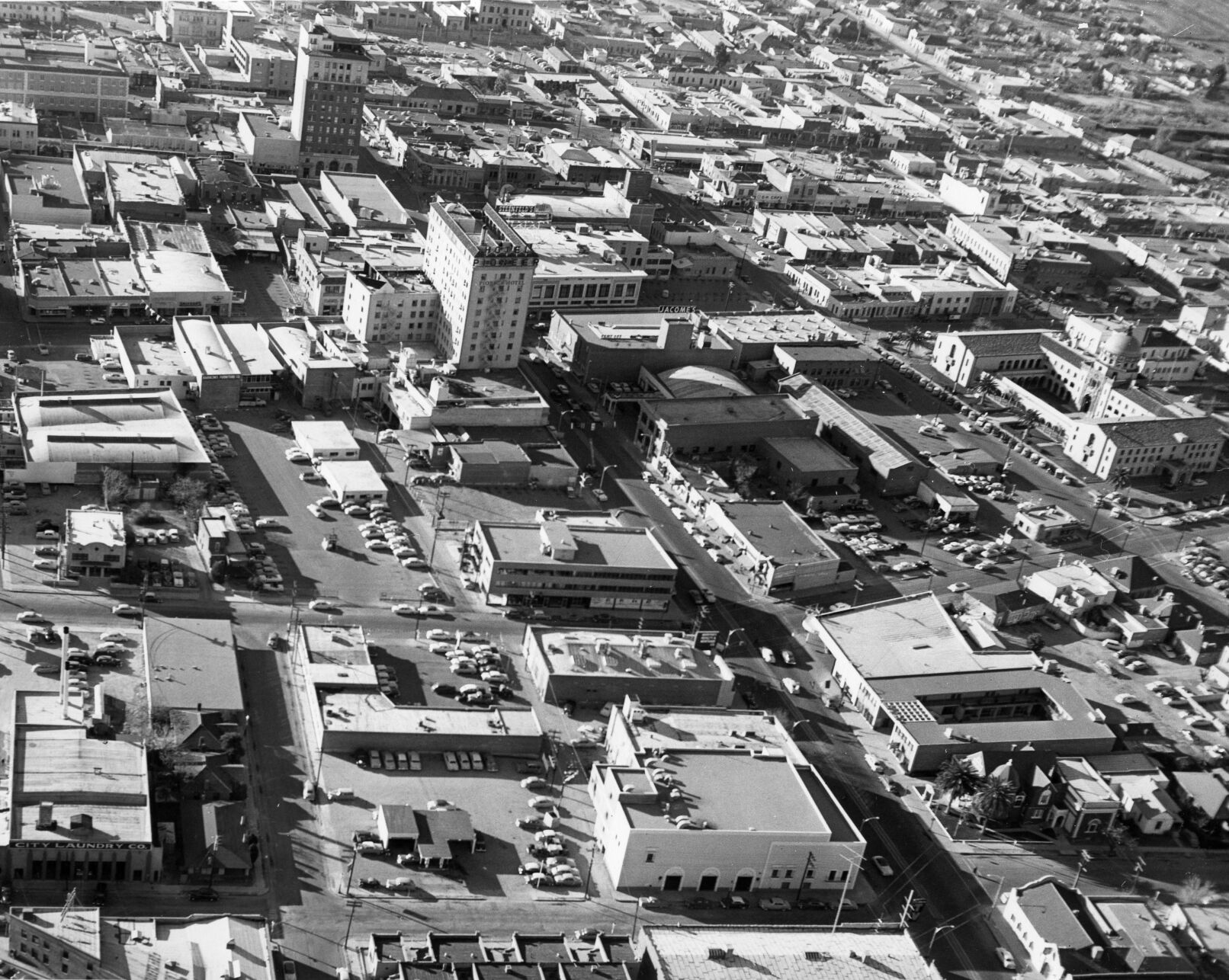
Aerial photo of downtown Tucson showing the completed Tucson Newspapers building (Arizona Daily Star and Tucson Citizen) in 1955. The newspaper is lower right. The Pima County Consolidated Courts building and parking garage now occupy roughly the same area. Miltenberg Street, along the bottom of the photo, became part of Council Street in 1960. It was demolished in recent years during redevelopment.
What also doesn’t change is the in-depth examination of local issues that the Star’s reporters provide. Those features, investigative and explanatory stories, so recently celebrated as the Star won the three top awards and half a dozen other first-place awards in the Arizona Press Club contest, won’t change. You’ll still find them in print in the Arizona Daily Star. And the entire news staff is still right here in Tucson.
We appreciate your understanding as our business goes through yet another upheaval. Stick with us. We’ll continue to do our best for you.

