


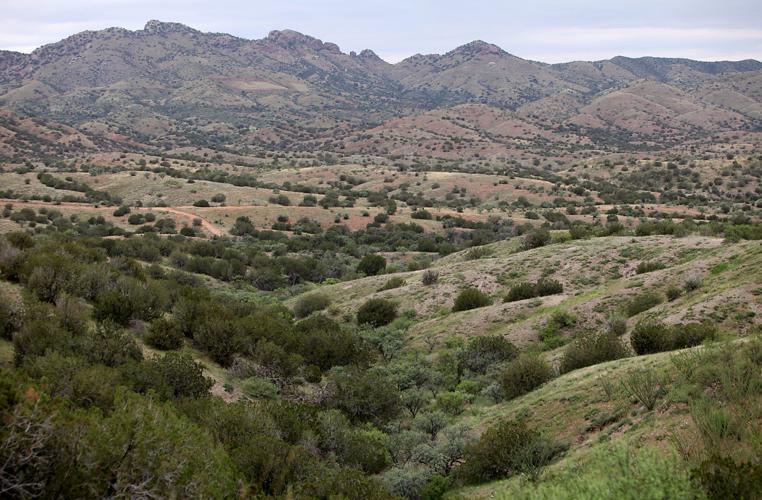
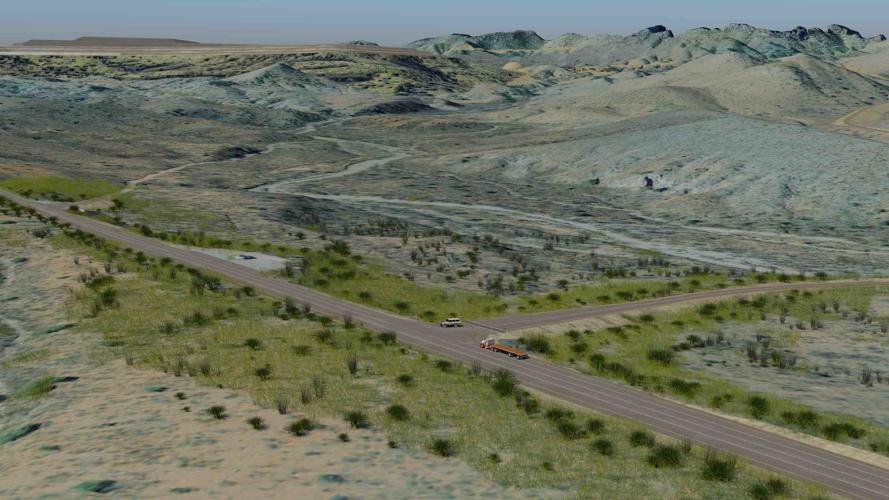

The planned Rosemont Mine will have significant impacts on animals and plants in the Santa Rita Mountains and its environs, the U.S. Environmental Protection Agency has said.
In a memo to the Army Corps of Engineers, the EPA laid out a wide range of impacts on fish, birds, mammals and insects and their habitat. The EPA memo, written in November 2017, was obtained recently by the Arizona Daily Star under the Freedom of Information Act.
The Corps on March 8 issued a federal Clean Water Act permit for the mine, the last permit the mine needs to start construction. The permit authorizes Hudbay Minerals Inc. to discharge dredged and fill material onto nearly 38 acres of washes on the mine site to allow its construction.
The mine’s potential impacts to wildlife were one of many factors cited Wednesday in a lawsuit filed in U.S. District Court by opponents of the $1.9 billion project. The suit seeks to overturn the permit.
Hudbay said in follow-up comments to the Corps in 2018 that the EPA exaggerated many of these impacts. Some of EPA’s comments were inaccurate, misleading or unsubstantiated, the Toronto-based company said.
Still others used terms such as “significant” without adequately defining them, Hudbay said.
The Corps said many of those impacts aren’t covered by the scope of the permit that it issued. The agency said it isn’t legally authorized to review environmental problems caused by construction or operation of the mine — just the discharge of materials into washes.
The opponents’ lawsuit has made that point a key focus, however. They say the Corps illegally deviated from past stances taken by the EPA and by the Corps’ regional office in Los Angeles and that the scope should be much broader and include many of these impacts.
The EPA’s memo summed up and in some cases analyzed comments on Rosemont wildlife issues made in numerous past reports from several federal government agencies and their consultants, and put them in a single package.
Overall, the concerns raised by the EPA speak directly to the biological importance that many environmentalists and others opposed to the mine have placed on this site for many years.
Lying on the eastern half of the Santa Rita Mountains, the mine site is bisected by an intricate network of 154 individual ephemeral and intermittent drainages, covering more than 18 linear stream miles, the EPA said.
The area also provides several important wildlife movement corridors, allowing large mammals such as black bears, mountain lions and the rare jaguar and ocelot to proceed from one area to another, the EPA said.
Specifically, the EPA said:
- Mine construction and operations will kill or damage habitat for at least 700 to 750 plant and animal species total.
- At least 70 migratory bird species and 50 mammal species will be among the wildlife species affected.
- The mine will have significant adverse impacts on a dozen endangered species living on or near the mine site — a conclusion also reached by the U.S. Fish and Wildlife Service in its 2016 final Rosemont biological opinion. The EPA didn’t mention that the service also said the impacts won’t be severe enough to jeopardize the species’ existence or illegally alter their critical habitat, meaning they wouldn’t violate the federal Endangered Species Act.
- The mine will fragment six major animal-movement corridors totaling 1,626 acres in the Santa Ritas, significantly disrupting animal dispersal and migration patterns for many species such as bears and mountain lions. The EPA said some of the fragmentation will be caused by the mine’s filling in of washes — the action most directly covered by the Corps’ permit.
- After the mine closes, the half-mile deep open pit that had been pumped out to allow mining will fill with water, creating a toxic pit lake that could harm a host of bird, mammal and bat species that would drink from the lake or eat insects living in it. The lake, filled with toxic metals left behind by mining, will hold about 96,000 acre-feet of water, the EPA said.
That would be a little more water than Tucson Water customers use every year and would make this one of Southern Arizona’s largest water bodies.
Overall, wildlife will be impacted by land-clearing and other mine activity that will damage more than 5,400 acres of natural vegetation, the EPA wrote. That includes nearly 600 acres of riparian areas, more than 2,500 acres of Madrean evergreen scrub and more than 2,300 acres of desert grassland.
water-based habitats face biggest harm
Damage to water-based habitats will likely be the biggest harm to wildlife from the mine, the agency added.
“A large majority of the invertebrate, bird, mammal, reptile and amphibian species that will be directly impacted preferentially use stream, seep, spring and riparian habitats at (or near) the mine site, for all or a portion of their life cycles,” the EPA wrote to the Corps. “The great diversity of species within several plant and animal groups that will be directly impacted by the mine is highly significant.”
The mine will result in the direct loss of five springs and 15 stock tanks, with highly likely impacts to an additional 11 springs, and possible indirect impacts to another 60 springs, the EPA said. These streams and associated springs and wetlands provide habitat for hundreds of species of native wildlife that will be killed or displaced, the EPA said.
The EPA report also zeroed in on potential mine impacts on birds, noting that Southern Arizona is the most biologically diverse wintering ground for short-and long-range bird migrants in the United States.
In 1977, an ornithologist identified 138 bird species known to live in the area where the mine would go, at a time when another mining company was proposing an open-pit operation there, the EPA said.
Nearly 290 total bird species have been recorded in the larger Santa Rita Mountains Important Bird Area, an area recognized by the National Audubon Society as one of over 2,500 such areas nationwide that are important for the survival of migratory birds. About 2.6 percent of the Santa Ritas’ bird area — or 2,634 acres total — will be destroyed or damaged by mine construction, the EPA said.
The Rosemont Mine site also contains critically important grassland, woodland, stream, wetland and riparian habitats that support populations of many species of wintering birds and thus is a “key wintering area,” the EPA said. It cited a 2013 report by Forest Service consultant SWCA Environmental Consultants, done for the mine’s final environmental impact statement.
Direct impacts from the mine on birds will include loss of nesting, overwintering, foraging, roosting and migration habitat, and a decrease in food and water availability, the EPA said.
Hudbay’s rebuttal and mitigation plans
In its response, Hudbay, for one, said that the discharge of fill into close to 40 acres of washes — the area directly at issue in the Army Corps permit — will only affect a limited number of plant and animal species.
The mine’s impacts on areas outside the filled-in washes — where presumably, the bulk of the 700 to 750 species the EPA mentioned live — are going to be mitigated by the dozens of Rosemont mitigation measures approved by the Forest Service, Hudbay said.
The EPA’s statement that these impacts will be “highly significant” implies that someone has done a statistical analysis of the impacts that hasn’t been performed, the company said.
“... These unsubstantiated statements by the EPA are misleading and clearly overstate the potential effects of the project on animal assemblages,” Hudbay said.
Regarding wildlife corridors, Hudbay said the EPA failed to define what significant fragmentation of them from the mine means.
Since the mine’s total impact will range from 0.0001 to 4.1 percent of the land in the six corridors, it is misleading without specific evidence to state that these impacts could reasonably be considered “significant,” Hudbay said.
Given those percentages, the EPA’s claim that the discharge of fill material into washes will cause a “loss” of these corridors also is “dramatically overstated and wholly unsupported,” Hudbay said.
As for migratory bird impacts, the document cited by the EPA to make its point that 70 such species will be impacted by the mine actually says that 65 species may be impacted and five would suffer an “unknown impact,” Hudbay said.
The EPA’s discussion of wintering birds impacted by Rosemont overstates the resources available, the company said. While there are grasslands and woodlands within the site, and “xeroriparian” habitat not containing cottonwood and willow trees, the streams are part of an ephemeral system that carries water only after rains, Hudbay said.
No wetlands exist in the mine project area, Hudbay said.
Also, EPA’s statement about the Rosemont area’s importance for wintering birds didn’t acknowledge that the SWCA report the EPA cited on wintering birds said that similar wintering bird habitat “exists in nearly all of Southeastern Arizona,” Hudbay said.
“This is an important point when reviewing potential impacts associated with the fill activity,” the company said.

