

Parents of children who are U.S. citizens were arrested at the border more than 100,000 times in fiscal years 2011 and 2012 — and very few of them were able to plead their case before a judge before being deported, a human-rights organization found.
Keeping a family together should at least be considered before deporting someone, said Clara Long, a U.S. researcher with Human Rights Watch. Instead, at the border and after a criminal conviction, “deportations are just automatic,” Long said.
On Nov. 20, the administration announced an effort to keep families together by deferring deportation for some parents of children who are U.S. citizens or legal permanent residents, focusing the government’s resources on deporting certain people, including convicted felons and recent border crossers.
But Long said it’s contradictory to say the administration wants to “deport felons, not families” when it continues to prioritize deportation of anyone caught at the border.
Parents of U.S. citizen children are nearly twice as likely to be processed under a previous deportation order and 1.35 times more likely to be charged with illegal entry or illegal re-entry than nonparents, Human Rights Watch said in the report, which is based on Customs and Border Protection apprehension data from fiscal years 2011 and 2012.
“When someone is separated from their family and they don’t see any way out, they continue to cross and continue to cross,” Long said. “Someone can be a felon simply by trying to rejoin their family multiple times.”
ALMOST A FELON
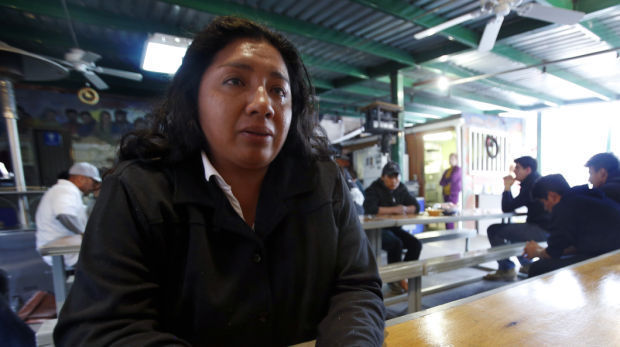
Aurora Olivares almost became a felon herself. She now sits in a Nogales, Sonora, women’s shelter trying to decide what to do.
The Puebla native, who lived in Utah for 11 years, is the mother of three girls, ages 8 through 12, who are all U.S. citizens.
“I was happy. I was working and I had my three girls,” she said. But she hadn’t seen her parents in 11 years and she feared her mother, who was very ill, would die before they were able to see each other again. So she returned to Mexico and brought her daughters with her.
They spent a few months in Puebla and, on April 18, 2012, she put them on a direct flight to Utah from Mexico City, while she took another plane to Hermosillo. In Sonora, she thought, she would cross illegally as she had done 12 years ago.
While her daughters arrived safely in Utah, Olivares was caught by the Border Patrol at the border and deported back to Mexico.
She tried crossing again in 2013 but was detained, and this time she was charged criminally with illegal re-entry, a felony, plus a misdemeanor of illegal entry. She was processed in Tucson through Operation Streamline — a federal program in which immigrants enter pleas en masse — and accepted a deal to plead guilty to the misdemeanor charge.
She received a 75-day sentence, but was in a detention center for more than a year as she sought asylum and went through appeals. Before a final decision on her case came down, she was deported through Nogales on Dec. 30, 2014.
“I didn’t care about being detained as long as it meant one last shot at being with my daughters again,” she said, tears streaming down her cheeks.
“A LINE HAS TO BE DRAWN”
She hasn’t seen her daughters in nearly three years. While they could travel to Mexico, her former partner won’t let them do so and is limiting communication between them.
What Human Rights Watch wants the government to do is an overreach, said Jessica Vaughan, director of policy studies for the D.C.-based Center for Immigration Studies.
“It’s their choice to keep trying to come back here, exposing themselves to potentially being prosecuted,” she said. “It’s important to recognize there is some responsibility for repeatedly ignoring the law rather than waiting it out for an opportunity to come back legally in the future if the son or daughter sponsors them.”
Having family members here, she said, should not trump a criminal history or another factor that makes someone ineligibile.
“If we are going to have regulated legal immigration, a line has to be drawn somewhere, and the government has to be ready to enforce it,” Vaughan said.
There are already more qualified potential legal immigrants waiting in line than the country can accommodate every year, she said.
Olivares said she just wants an opportunity to come back.
“There are many mothers like me, who are crying, who are pleading for an opportunity,” she said.
She would stay in Mexico if she didn’t have children or she could bring them with her, she said, but that’s not an option.
She misses their hugs, their kisses. Waking them up in the morning, taking them to the park and helping them with their homework.
It breaks her heart, she said, when they do get to talk and they ask when she’s coming back.
The little one tells her, “Mommy, I’m afraid I’m not going to remember your face anymore.” Olivares just tells her she’ll send her photographs to make sure that doesn’t happen.
A PERILOUS JOURNEY
She walked through the desert by herself, guided by a smuggler using a cellphone. She wandered lost, with only the sounds of the coyotes and snakes in the background. She has jumped the iron border fence more than once.
All with one goal: being back with her daughters. But now she weighs all her options. She knows if she tries to cross back and gets caught, the punishment will be more severe. She already has a 20-year bar from returning to the United States.
All of her legal troubles relate to trying to cross the border, but some immigrants lose their legal status and get deported after criminal convictions like for certain drug offenses.
“We live in a world in which we’ve had harsh criminal immigration laws since 1996 that continue to punish immigration harshly for what are some times old or minor crimes that many people in this country are discussing to reduce punishments for,” Long said.
The 1996 Illegal Immigrant Reform and Immigrant Responsibility Act expanded the definition of “aggravated felonies” to include nonviolent theft offenses, nonviolent drug offenses, forgery and fraud, for example.
What’s really needed is a permanent solution, Long said, “to take a look at those laws and the kinds of stories we highlight that show who can be swept up in the system,” Long said. “People who are veterans, people who paid their dues in prison and now are left with really severe consequences that tear them apart from their families.”

