



You are forgiven if you think you’ve heard this before:
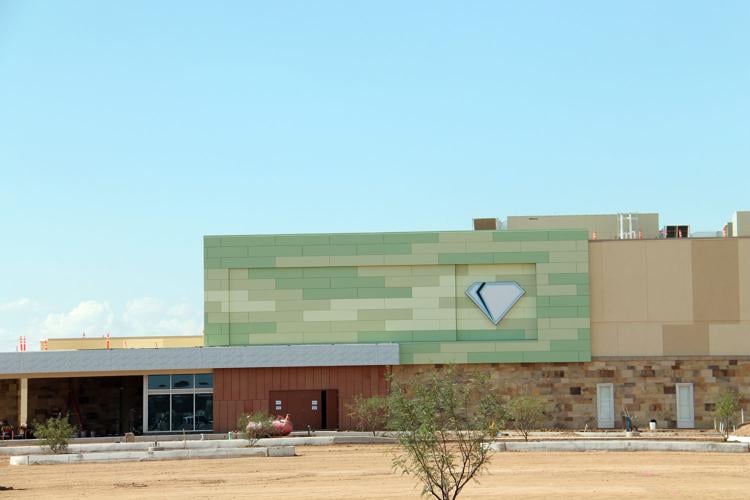
The Tohono O’odham Nation has won another court ruling in its effort to establish a full-service casino outside of Glendale. Yet the state of Arizona continues to fight the nation in court.
This has been a pattern for the last several years: the state loses, but the people who claim to be representing the residents of Arizona continue using our taxpayer money to fight this losing battle. In the meantime, the Sells-based tribe has built the casino and customers are playing Class II games there — basically, electronic bingo-based games that are permitted by federal law.
In the latest awkward pairing of events, the 9th U.S. Circuit Court of Appeals ruled March 29 that the Tohono O’odham Nation may conduct Class III gaming at its West Valley site. This seemed to resolve the issue once and for all, but the tribe still needed a state permit and licensed employees.
Not two months later on May 27, in a separate lawsuit, state Gaming Director Daniel Bergin filed a motion to force the Tohono O’odham Nation to disclose previously withheld documents about the decision to build the casino. Bergin’s argument is that the O’odham committed fraud in entering into the 2003 Gaming Compact with the state of Arizona, and therefore the state can withhold its permission for the casino to conduct Class III gaming.
This was a compelling argument once — before court after court concluded that it doesn’t hold water. It seems true the nation played fast and loose with Arizona voters’ expectations in 2002: At the same time we approved a compact that we thought would cap the number of casinos in the Phoenix area, the nation was quietly hatching plans for an additional one.
But the March 29 ruling addressed this exact point and found the state wrong and the Tohono O’odham Nation right.
The three-judge panel was unanimous in affirming an earlier federal-court ruling by U.S. District Judge David Campbell that gaming is permitted at the Glendale-area site because that land has been accepted by the federal government as tribal land. The panel ruled:
In short, the duly-executed Compact negotiated at length by sophisticated parties expressly authorizes the Nation to conduct gaming on its ‘Indian Lands,’ subject to the requirements of IGRA [Indian Gaming Regulatory Act]. This language is unambiguous and not reasonably susceptible to Plaintiffs’ interpretation that the Compact implicitly bars the Nation from gaming in the Phoenix metropolitan area.
Pretty definitive, eh? Later, the 9th Circuit declined to have a larger, 11-judge panel review that decision, upholding it once again.
But while that 2011 lawsuit by the state, and the Gila River and Salt River Pima-Maricopa Indian communities was being litigated, the Tohono O’odham Nation filed a separate suit last year demanding that the state authorize the new casino to operate Class III games. That’s the suit in which the state is continuing to claim that fraudulent actions by the O’odham allow the state to withhold authorization.
The slim reed that the state is holding on to is that the judge in this second case has granted the state greater leeway to pursue the fraud argument despite claims of “sovereign immunity” by the Tohono O’odham Nation.
Perhaps, with this greater leeway, the state will win the right to view, among its requested documents, the minutes to a closed session of the Tohono O’odham Nation’s tribal council on June 6, 2002. And perhaps that will show that high-ranking tribal officials were deliberately tricking the public about to consider the gaming compacts.
But what is the likelihood that will change the minds of anyone who matters? It seems small. The judge ruling in this current case is also Campbell — the same one who previously ruled the Tohono O’odham Nation may conduct Class III gaming at its Glendale-area casino and who was recently upheld by the 9th Circuit.
What’s going on in the background, naturally, is politics.
The Gila River Indian Community and Salt River Pima-Maricopa Indian Community operate the other Phoenix-area casinos and are fighting the Tohono O’odham Nation with everything they’ve got. And what they’ve got is millions upon millions of dollars from their existing casinos.
The Gila River community spent $3.65 million on lobbying Congress in 2014 and $2.91 million in 2015, the Center for Responsive Politics reports. This year, the Gila River community is on pace to spend $2.76 million. In 2014 and 2015, the Tohono O’odham Nation spent $1.6 million and $2.6 million on lobbying.
What the Gila River lobbying money has bought is a bill to prohibit the Tohono O’odham Nation from conducting gaming at the site until 2027. What the Tohono O’odham have garnered is just enough opposition for the bill to fail to reach the 2/3 of votes needed for passage in the House in November.
Behind that spending is a partisan split: The Gila River has largely spent on Republican candidates like Gov. Doug Ducey, whose administration is bringing the current suit against the nation. The Gila River community and Salt River Pima-Maricopa community each gave $2,000 to Ducey’s 2014 campaign.
The Tohono O’odham Nation, on the other hand, has mostly supported Democrats and put $4,000 toward the campaign of Ducey’s opponent, Democrat Fred Duval, in 2014.
Now is it starting to make sense? The state administration elected with the help of Phoenix-area tribes is defending its interests against a Tucson-area tribe that opposed this administration’s election.
So, you could look at the state’s last-ditch effort to thwart Class III gaming at the new casino as a high-minded effort to support the voters’ will in 2002. Or you can look at it more realistically, in my view, as a waste of money on behalf of a special interest that has sway in Phoenix.

