

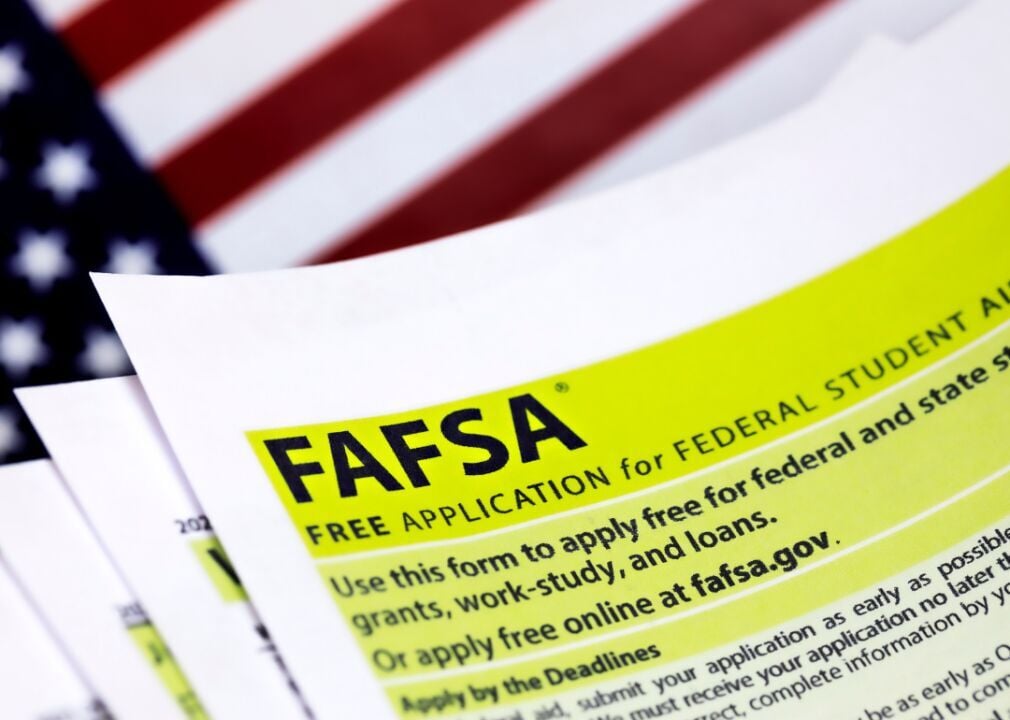

Arizona has extended the Free Application for Federal Student Aid priority deadline for the state’s public universities to May 1 after nationwide delays and challenges with the form.
The FAFSA, as it’s known, has been extended by the Arizona Board of Regents for those hoping to attend the University of Arizona, Arizona State University and Northern Arizona University. The previous deadline was April 1.
Between 8,000 and 10,000 Arizona students who have Social Security numbers but whose parents do not are unable to fill out the form. Those students qualify for federal aid and have the right to fill out the FAFSA, but because of issues with the form, cannot right now.
Other students have encountered issues with the amount of federal aid they are being awarded.
The financial aid application is used for more than 17 million students nationwide and is meant to award federal money to help students cover the cost of college through federal student loans, work-study jobs and Pell Grants for low-income students.
The FAFSA was overhauled this year after Congress passed a law ordering the U.S. Department of Education to make widespread changes to the system. The hope was to make it easier to fill out and to give better access to low-income families. But it has been repeatedly delayed after incorrectly calculating the aid for students and possibly mishandling Pell Grants.
Low-income and first-generation students will be affected the most, said Jane Kuhn, the Arizona Board of Regents’ chief enrollment and student success officer.
The impact, especially on the Pell Grants, has hit Arizona hard because the number of students who are Pell Grant eligible here is relatively high compared to other states.
“The impact of this failure of the DOE falls very heavily on our shoulders relative to other states,” said Regent Lyndel Manson.
Instead of coming out in October, the new form was released Dec. 30, 2023. And now, colleges and university financial aid officers won’t get students’ data until mid-March while the Department of Education works to fix glitches in the form’s new system.
“I am absolutely mind boggled that our Department of Education, which is in charge of providing funds to low-income students to attend college, actually put out a brand-new system and brand-new form without running them side by side, without doing any form of beta testing,” Manson said at Thursday’s ABOR meeting. “This is absolutely unacceptable.”
The delays and complications with the form have already affected Arizona students.
Just 15.7% of Arizona high school seniors have completed the FAFSA as of early February, compared to 22.5% nationally, according to ABOR. More than 29,100 Arizona resident students had already completed their form by early February last year, compared to just over 15,800 this year.
John Arnold, executive director of ABOR, said the FAFSA issues have been “incredibly frustrating” because the board has “invested millions of dollars over the last two years to change the trajectory of FAFSA completion in the state, which has been very low.”
Arnold said the efforts to increase FAFSA completion were working until the Department of Education changed the form.
“It has destroyed all those efforts,” he said. “I mean millions of dollars that we spent to address this particular issue.”
According to research from the National College Access Network, high school seniors who complete the FAFSA are 84% more likely to immediately enroll in postsecondary education.
ABOR has launched a new website, College Ready AZ, to offer FAFSA resources and recommendations for students and families.
The site also includes a FAFSA updates page with tips and experts to help families navigate current challenges.

