

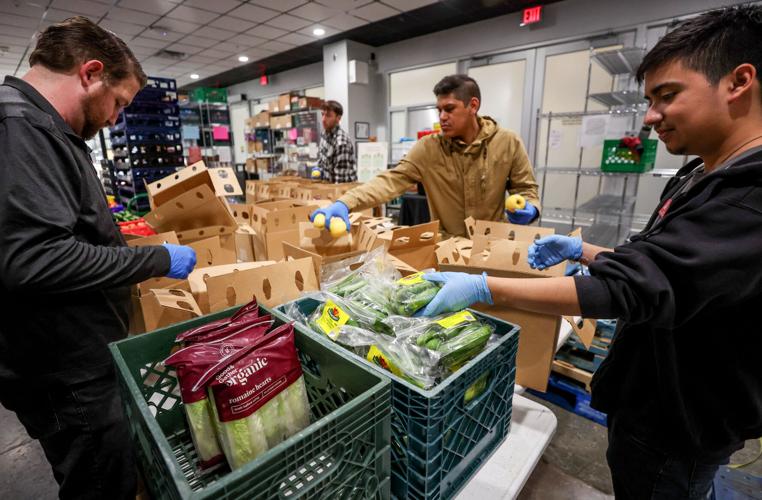


The University of Arizona’s campus pantry is cutting back on the food and hygiene products it offers to students in need this year after a record-breaking number of customers last fall.
“We love getting to support this many people, but rising numbers and rising grocery costs have pushed us to make some cuts to the program to ensure that we can still operate at the best of our ability,” says a statement on the organization’s Instagram.
In the fall, the campus pantry had a “record breaking” semester, with over 32,782 visits by more than 3,800 unique users, distributing over 246,000 pounds of food.
In response to the increased demand and the higher price of groceries, the pantry is cutting back on the types of food offered, as well as on non-menstrual hygiene products.
“Our core mission is to provide supplemental groceries to our community,” the statement read. “Although we know that not all individuals have access to other groceries, the Campus Pantry is not designed to be the sole solution to food, but rather to fill in the gaps of need.”
Undergraduate and graduate students, as well as faculty and staff, are welcome to use the campus pantry, located in the Student Union Memorial Center.

The University of Arizona campus pantry plans to stop providing hygiene basics like shampoo, conditioner and deodorant, among other changes.
The program gained such popularity, said Bridgette Riebe, assistant director of the basic needs center and services at the UA, because of both better marketing of its services and also reduced stigma about food insecurity on campus.
“I think students often feel isolated when they experience food insecurity,” she said. “And I think we’ve normalized this resource and made it a welcoming and friendly environment for them to come, that they don’t feel shameful about utilizing this resource.”
Riebe also noted that she has noticed the price of groceries increase in Tucson over the last few months. The campus pantry, she said, can help subsidize some expensive grocery shopping for students in need.
There has been concern from students and UA community members that the cuts are related to the university’s $177 million budget deficit.
That is not the case, UA officials say. No funding cuts have been made to the pantry, a university spokeswoman said.
Foods such as plantains, large yogurts, snacks and frozen meals will no longer be available at the pantry. Additionally, some items remaining will increase in “point value.” Customers of the pantry are allotted a certain number of “points” every visit.
Customers receive five points every time they come in and can shop up to two times per week. Some items, including milk, eggs and bread, are worth two points, while a one-point item could include a box of pasta or rice, Riebe said. Half-point items are “not substantial” and meant to “fill in the gaps,” and include canned vegetables, beans and ramen. Some produce, like apples and bananas, can be as low as a quarter of a point.
But now, those points are increasing and some of the food available is being offered less.
Snacks, granola bars and yogurt cups, for example, have all increased in point value. Items like garlic, green onions, peppers and other produce have been reduced to only a three-week rotation, and produce will now rotate based on the season.
Additionally, hygiene products such as shampoo, deodorant, toothpaste and toilet paper will no longer be offered. The pantry will continue to offer “some menstrual products,” however.
Despite the cuts, Riebe said that it is still “really important that the university has a resource like this, because no students should have something like food insecurity stand in the way of them getting their degree.”
Get your morning recap of today's local news and read the full stories here: tucne.ws/morning

