




Every year, millions of dollars in Pima County-based student financial aid remain unclaimed.
“That’s a missed opportunity that could otherwise allow students to change their families’ futures and their own individual futures,” said Rocque Perez, head of the Metro Education Commission.
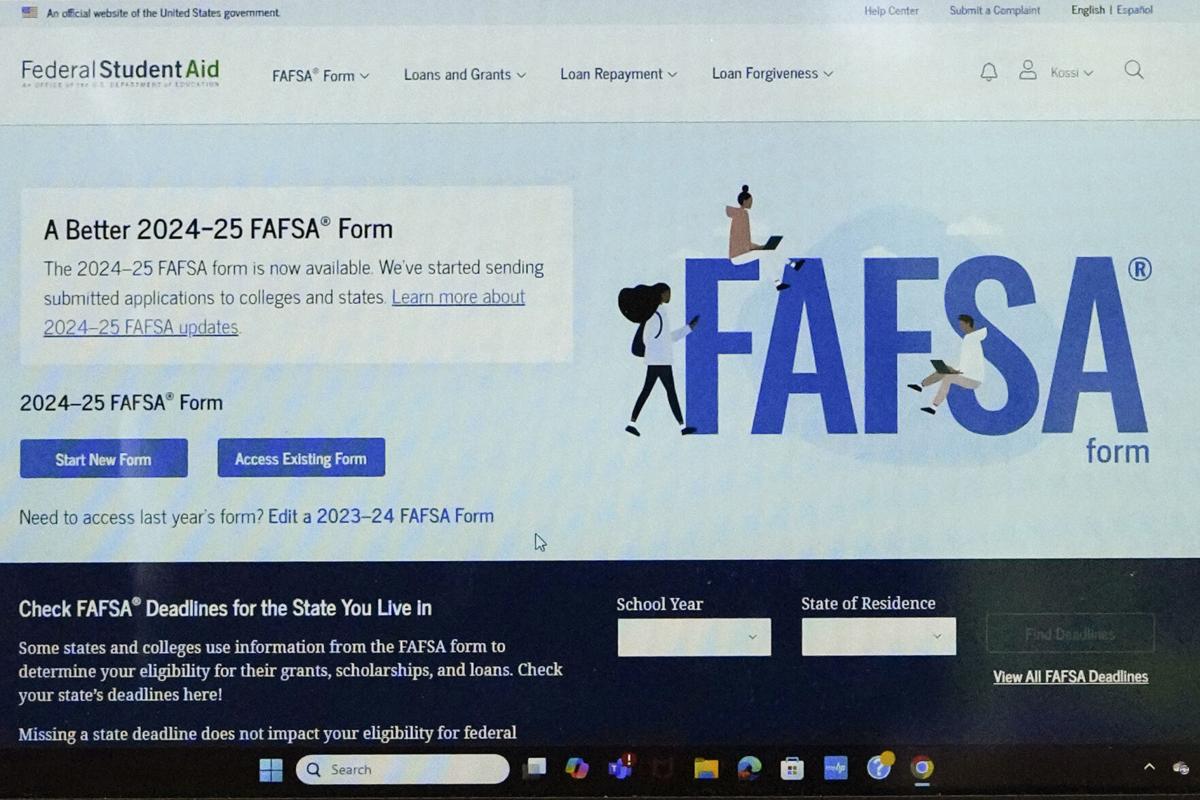
The key to obtaining much financial aid for post-high school graduation is with the FAFSA (Free Application for Federal Student Aid). A disastrous revamp of the FAFSA application process last year led to students and families forgoing the FAFSA nationwide. Prospective Pima County applicants were no exception.
Perez estimated a 7% drop in Pima County’s FAFSA completions following the updates. Additionally, they were being submitted later than usual, he said.
Like many other school districts, Tucson Unified School District’s numbers suffered after the rollout. The district had a completion rate of 55-59% completion rate by about this time in the 2024-2025 cycle, according to federal data. Tucson Unified’s completion rate the previous cycle (2023-2024) hovered between 60-64% by Dec. 6, 2023.
The FAFSA makeover “put us in a bind,” said Lupita Cabral, a college and career readiness coordinator at Cholla High School. “We didn’t know how to help these kids. There were a lot of questions that we didn’t have answers to, so it did hinder us.”
Perez said it affected students in unique situations, like housing insecurity, most of all.
Other groups felt the effects of the rough rollout.
“Students that might have undocumented parents were left out of luck when they realized they couldn’t continue completing the application, because that application didn’t account for some of those special circumstances,” Perez said.
The Pima College Access Network (PCAN), an initiative of the Metro Education Commission, has partnered with Pima Community College to launch a series of FAFSA workshops across Pima County.
The workshops are designed to provide hands-on assistance to students and families navigating the FAFSA application process, helping them secure federal aid.
The State of Arizona has launched efforts to get more students to complete the FAFSA. Pima County schools and organizations are taking action.
Catalina High School, Cholla High School, Palo Verde High School, Pueblo High School, Rincon High School and Tucson Magnet High School participate in the FAFSA Peer Coach Project. The effort aims to increase FAFSA completion and create a college-going community in the schools.
Student leaders serve as FAFSA Peer Coaches to bring FAFSA awareness and support. Peer Coach Advisors help guide the student coaches. Training is provided to the peer coaches and advisors throughout the year.
Cabral said she has three peer coaches helping.
“They come up with (promotional) activities. They reach out to their peers, they’re out there digging in the trenches,” she said. “That’s what this was meant to do. They use social media. They go out into the school and bring home the message that the FAFSA is very important.”
Funding for the project was approved by the Arizona Board of Regents for the 2024-2025 and 2025-2026 academic years. Tucson Unified School District’s governing board approved a partnership with the board of regents in June. Tucson Unified’s funding is for two school years. This year is the project’s first. A ABOR grant provided $51,000 towards the district’s efforts. The following school year has $57,000 worth of funding.
The hope is that these investments could exponentially increase the amount of financial aid awarded in Pima County.
Federal funding for a post-high school education – whether it be cosmetology school or a four-year university – can’t be awarded if a FAFSA isn’t completed. Once those dollars pay tuition, they can enter the local economy.
“They’re bringing those federal dollars here to Tucson,” Perez explained. Many of those federal dollars go towards an education at the University of Arizona.
Perez said that educating students who utilize federal financial aid “gives the university the capacity to increase services to the students. That’s an investment in the community.”
“It’s not just for a certain group of people to continue on with education,” Cabral said. “They can use (federal funding) at a vocational school, a beauty school, things like that. It’s a way to help them continue. There’s money out there.”

