


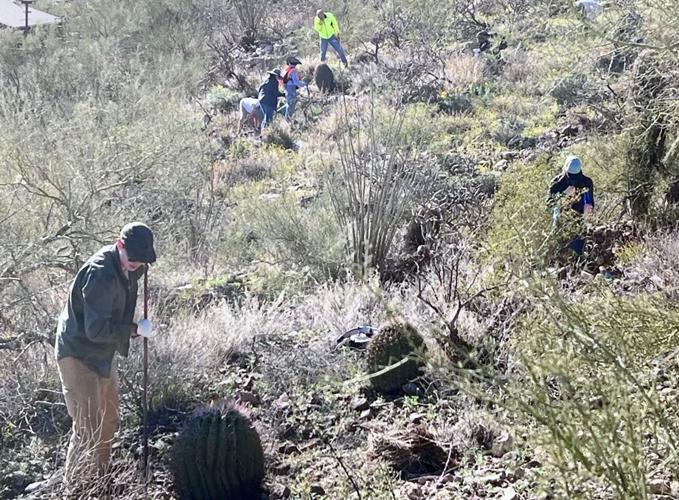
Volunteers spent hours on a recent Saturday pulling up buffelgrass at Sentinel Peak Park to kick off the Arizona-Sonora Desert Museum’s annual “Save our Saguaros” month.
“Save our Saguaros” month started in 2017 to raise awareness about invasive species: buffelgrass, fountaingrass, stinknet and others. Each February, the Desert Museum provides a hub for different organizations to host invasive plant removal events, including upcoming buffelgrass removal events at Santa Catalina State Park and Colossal Cave.
Buffelgrass is an invasive grass species brought to Tucson from the Savannah Desert for livestock forage and erosion control, according to Kaitlyn Tyler, the organizer of the kickoff and project administrator for the science team at the Arizona Sonora Desert Museum.
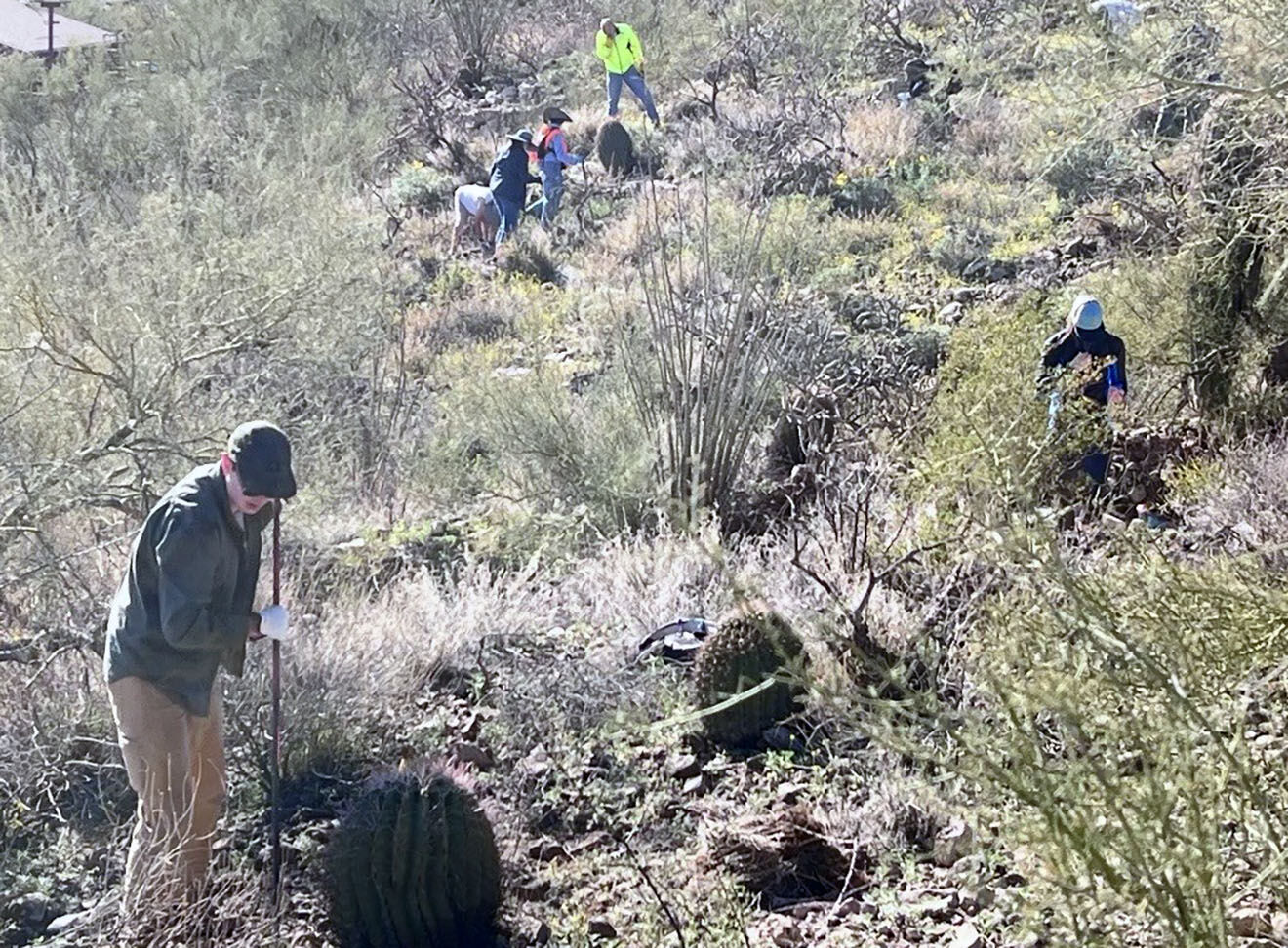
About 75 volunteers helped pull buffelgrass at Sentinel Peak Park earlier this month.
“It wasn’t until much later people realized what a problem it could be in the Sonoran Desert,” she said.
Buffelgrass particularly affects wildfires, as it fills the empty areas of the desert, she said. When a fire starts, it is fueled by the excess grass, which causes it to spread rapidly. And because the grass is fire-tolerant, after the fire is put out, saguaros and other native plants struggle to regrow while buffelgrass thrives.
During the month of February, “Save Our Saguaros” offers a variety of volunteer opportunities for locals to help combat invasive species and their impacts on the Sonoran Desert.
Protecting desert ecosystems
Mia Blaine, a first-time volunteer, said she had a lot of fun at the kickoff on Feb. 7 and felt like she was making an impact.
“This is a great way to start getting out there and volunteering for your community,” she said.
This was her first time removing buffelgrass, but she said she often volunteers with the Watershed Management Group to pull arundo, another invasive plant in the Sonoran landscape.
“I always think it’s really good to kind of make yourself aware of whatever invasive species are around,” Blaine said. “That way if they pop up in your yard or in your neighborhood, you can, you know, kind of remove them before they become a problem.”
Volunteers like Blaine learned about buffelgrass and other invasive plants, as well as how to identify them. Then volunteers grabbed tools, including a small pickaxe and gloves, before heading out on a short hike to the pull-site.
Once at the site, the group leaders gave a demonstration on how to pull buffelgrass and stack it so it will have a harder time reseeding in the future.
“I think it’s always really important to learn about the ecosystem that you’re in, whether you’re here for a little bit or here permanently, I think it’s really important to just kind of find the ways that make it better,” Blaine said.
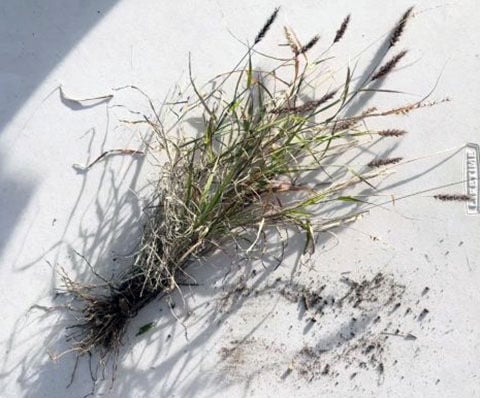
Buffelgrass is shown prior to a recent weed-pulling event at Sentinel Peak Park.
Angela Loya-Stoebe, the education specialist at the Desert Museum, taught kickoff volunteers about the dangers buffelgrass poses to desert tortoises.
The buffelgrass creates a thick layer on the ground that prevents tortoises from burrowing, which they do to sleep and lay eggs. While tortoises are herbivores, they do not eat the buffelgrass because of its little nutritional value, but it can stop native plants from growing, reducing the desert tortoises’ resources.
And because tortoises move slowly, Loya-Stoebe said, they have a hard time escaping wildfires fueled by buffelgrass
Efforts to remove the plans continue beyond February. In the summer, when it is too hot for volunteers, goats are brought to the mountain to munch on the buffelgrass.
Making use of invasive species
In Tucson, some groups are also trying to make use of the grasses.
During some pulls, volunteers carry large, white bags and put the grasses into them to carry out and use to make buffelgrass adobe bricks.
Buffelgrass can be used to create support for the sand and dirt in the adobe, said Alexander Scherotter, a University of Arizona student. Combining the dirt with water makes slip, which is then coated onto the buffelgrass, stopping the germination process and preventing the grass from spreading.
“It’s a great story of taking something that has become really bad for our native plants and repurposing it into this really beautiful material that’s so natural, so human,” he said.
People can help make the buffelgrass bricks this February and March every Saturday 1-5. The bricks have been used to make ovens, and a test house will be made using the bricks in April and May.
Scherotter hopes eventually the bricks can be used to build houses, too.
More information regarding “Save Our Saguaros” month events and volunteer sign-ups are at buffelgrass.org.

