


Construction on a 50-mile stretch of the SunZia wind energy transmission line in the San Pedro River Valley was halted on orders from the U.S. Bureau of Land Management.
BLM Director Tracy Stone-Manning wrote to Tohono O’Odham Tribal Chairman Verlon Jose on Wednesday that she had ordered an “immediate suspension” of SunZia’s activities within the San Pedro Valley located entirely on non-federal land.
Manning wrote that her order came in response to “an urgent request” from Jose on Oct. 31, made in a letter to Interior Secretary Deborah Haaland. Interior is BLM’s parent agency.
Sites that could be affected by SunZia construction include “ancient burial sites, archeological sites, ceremonial sites, all those sacred areas that are concerning to the Tohono Nation and other affected tribes,” Jose told the Arizona Daily Star Thursday.
The power line stretch through the San Pedro Valley east and northeast of Tucson is part of a 550-mile-long, 3,500-megawatt wind energy project that the San Francisco-based Pattern Energy is building from central New Mexico to central Arizona.
“I respectfully request to meet with you at your earliest convenience within the next 5 days to consult regarding your objections and discuss a path forward,” Stone-Manning wrote to Jose.
Jose said he is gratified by BLM’s decision, but that he’s still concerned the SunZia work is continuing along an area of the route north and west of the San Pedro area. To him, that means BLM still intends to proceed with the entire route including that in the river valley, because the area still under construction directly connects to the area where it’s been stopped.
“We have a consultation, and in the meantime, Sunzia is still doing work which actually sends the message that they are going to do it anyway” in the San Pedro Valley, Jose said Thursday. The tribe hopes for an alternative route — “one less invasive to any historical, cultural or archeological areas,” he said.

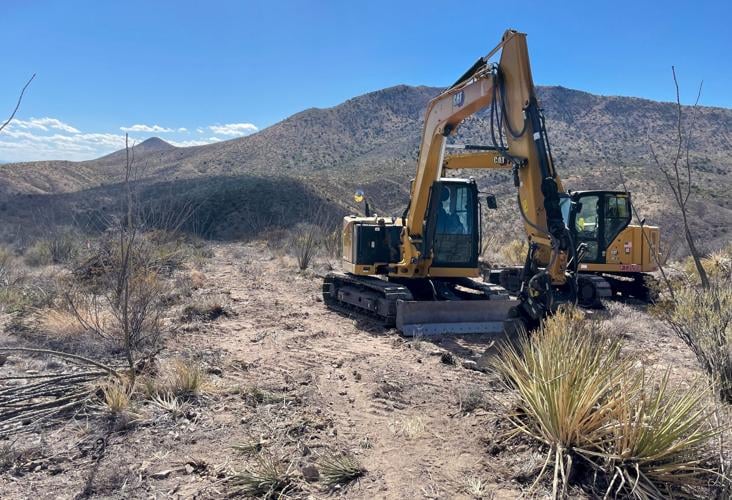
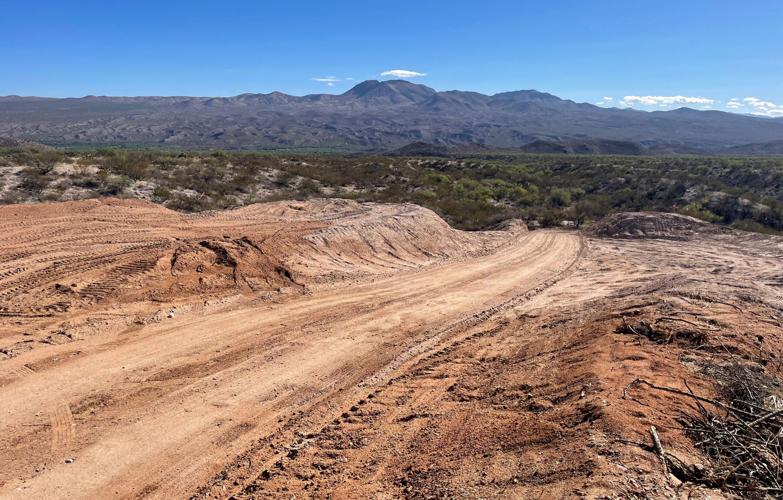
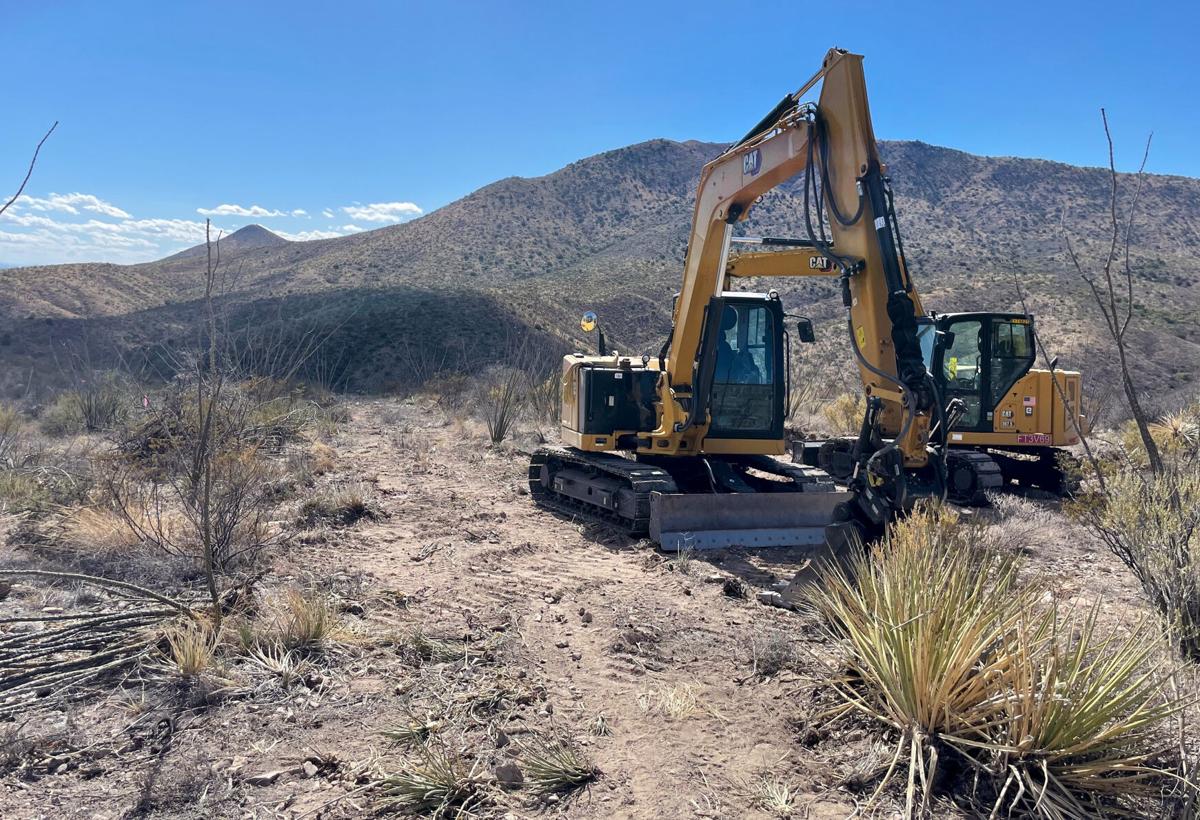
Construction work for the SunZia Southwest Transmission Project in the San Pedro Valley, about 15 miles north of Benson, as seen on Oct. 29.
Reached for comment earlier Thursday, Pattern Energy official Natalie McCue said, “This temporary pause is to allow for these discussions with tribal entities to move forward. We see this pause as a good faith effort step on the part of BLM as part of the BLM consultation process, which we will work to fully support.”
SunZia had started work on the San Pedro Valley part of its power line after BLM issued a notice to proceed on Sept. 26, McCue said. It had started on other portions of the line in Arizona in early September.
Jose told Interior a halt to construction is needed because BLM previously issued SunZia a notice to proceed with work in that area before all historic properties along the route were identified and before a treatment plan for the properties was finished.
Under what Jose said is a Joint Secretarial Order, “the BLM has the obligation to give consideration and deference to tribal proposals, recommendations, and knowledge that affect management decisions on such lands.” Instead of shouldering these obligations and meeting National Historical Preservation Act requirements, “BLM has made clear its intentions to prioritize SunZia interests,” Jose wrote.
The San Carlos Apache, Zuni and Hopi tribes have also expressed major concerns about the SunZia project going through the San Pedro Valley.
Pattern officials said, however, that any site preparation work or initial construction activities that occurred in the San Pedro Valley to date was authorized by BLM in areas “where there were no historic properties present or in locations where there would be no adverse effects to historic properties,” as identified in cultural inventory reports and historic property treatment plans.
“We fully respect the heritage, history and rights of Indigenous people. Throughout the BLM-led government to government process, we have actively worked to address tribal concerns,” said McCue, Pattern’s assistant vice president for environmental permitting.
In addition, the company is carrying out extensive mitigation, salvage work and replanting to compensate for the uprooting of saguaros, agaves and other desert plants during construction, Pattern officials said.
In an emailed response Thursday to questions from the Star, BLM declined to say how long this work could be delayed. It also declined to say if its decision to suspend construction meant it agreed with Jose’s contention that BLM originally approved the start of construction before adequate tribal consultation was carried out.
“The BLM will conduct government-to-government consultations on this matter and chart a path forward,” the bureau said, adding that other lands along the SunZia route aren’t affected by the suspension.
The federal government has long recognized that the entire San Pedro River Valley holds spiritual and cultural significance for tribes.
In a 2012 report, the U.S. Geological Survey wrote, “the San Pedro River watershed holds important spiritual and cultural values, particularly for American Indian tribes with cultural or historic ties to the watershed. “In describing the 2006 book “History is in the Land,” which describes tribal cultural connections to the San Pedro Valley, the USGS report said, “The authors described the connections of four tribal groups to the San Pedro Valley — the O’odham, Hopi, Zuni, and Apache. Although written Western histories most closely associate the San Pedro River watershed with eastern relatives of today’s O’odham, the Apache, the Zuni, and Hopi have strong connections to the San Pedro River region by means of their historical migrations.”
Transmission line through the Lower San Pedro Valley inches closer to reality, despite opposition.

