



It turns out maybe we can relax about MS-13 after all.
For more than a year, Attorney General Jeff Sessions, President Trump and the rest of the administration have been sounding alarms about the threats posed to Americans by the international gang. Trump has repeatedly referred to MS-13 members as “animals,” and the White House put out a statement describing the gang this way:
“MS-13 is a transnational gang that has brought violence, fear, and suffering to American communities. MS-13, short for Mara Salvatrucha, commits shocking acts of violence to instill fear, including machete attacks, executions, gang rape, human trafficking, and more. In their motto, the animals of MS-13 make clear their goal is to ‘kill, rape, control.’ The gang has more than 10,000 members in the United States spreading violence and suffering.”
The federal government has followed Trump’s lead, with Sessions announcing last year the gang would be targeted by a Justice Department organized-crime task force.
“I am announcing that I have authorized them to use every lawful tool to investigate MS-13 — not just our drug laws, but everything from RICO to our tax laws to our firearms laws,” Sessions said in October. “Just like we took Al Capone off the streets with our tax laws, we will use whatever laws we have to get MS-13 off of our streets.”
In Tucson, the Border Patrol has taken the hint and started issuing press releases when they catch suspected MS-13 members trying to cross the border.
Seems like a pretty terrible threat, right?
Well, maybe not.
The same Jeff Sessions who has gone all-out to paint a terrifying picture of the gang also issued a seemingly contradictory order about them last week. No longer, Sessions decided, can asylum-seekers win protection in the United States by citing the threat of gang violence in their home country. Sessions also decided domestic violence could no longer be used to justify an asylum claim.
“Generally, claims by aliens pertaining to domestic violence or gang violence perpetrated by non-governmental actors will not qualify for asylum,” he wrote in his decision. “The mere fact that a country may have problems effectively policing certain crimes — such as domestic violence or gang violence — or that certain populations are more likely to be victims of crime, cannot itself establish an asylum claim.”
Sessions made a legal justification for his decision, but the obvious intent of his intervention in the issue was to slow the flow of Central American migrants to our border with Mexico.
While the overall number of apprehensions on the southwest border is still historically low now, the number of asylum claims is high.
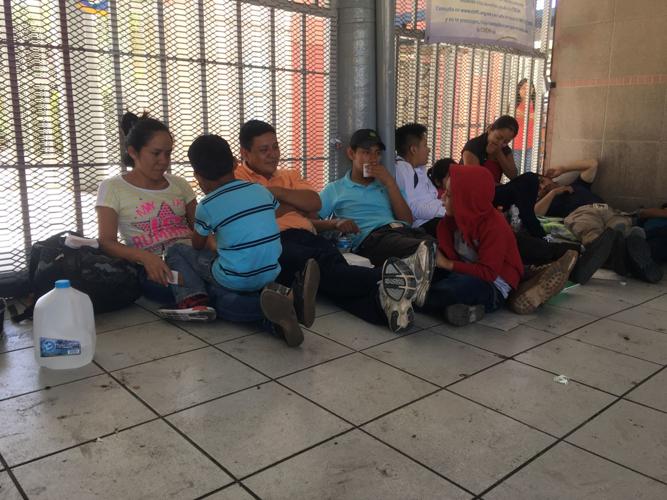
The UN High Commission on Refugees reported in May that more than 294,000 asylum-seekers left northern Central America last year, primarily for Belize, Mexico, Costa Rica, Panama and the United States. The main motive: Forced recruitment into criminal gangs or threats from them.
Sessions’ asylum order raises an obvious question: If MS-13 poses such a big threat in the United States, how can he say the gang’s threats and violence in small, poor countries don’t justify an asylum claim at our border?
To be consistent, Sessions ought to take one stand or the other: Either MS-13 isn’t as bad a threat in the United States as he’s said and therefore doesn’t justify asylum claims by Central Americans, or it is as bad a threat in the United States as he claims and its violence does justify asylum claims.
It can’t be both a massive threat in a developed country with a rule-of-law tradition like the United States and a trifling threat in a poor, institutionally weak country like El Salvador.
So what’s really going on? It appears the Trump administration uses MS-13 as a symbol of a border they want to portray as out of control. That’s the message that won Trump the White House and that he is reconfiguring for the 2018 elections. Since most of the migrants arriving at the border these days are from Central America, and many are young, the gang serves the rhetorical purpose well.
That’s not to say the gang doesn’t pose a serious threat in certain areas of this country. It does. It’s violent and nasty and deserves a crackdown in those places. But researchers connected to Arizona State University conducted hundreds of interviews of gang members in the United States and El Salvador and concluded MS-13 is not well-organized, not widespread and can hardly be called “transnational” at all.
But Sessions may believe his own rhetoric about MS-13, and if he does, he ought to continue offering asylum protection from the people suffering most from its violence — asylum-seekers from Central America.

