




The word “equity” has been gradually seeping from academia through activist and political circles into conversation in the broader public.
The concept remains vague to much of the public, but it’s poised to take on a solid bureaucratic form within Tucson’s city government — probably prematurely, in my view.
Mayor Regina Romero and council members Lane Santa Cruz and Karin Uhlich highlighted three “transformative investments” in an April 26 letter about this year’s budget sent to the city manager. Among them: $500,000 in funding for a new Office of Equity.
That money, which was also approved in this year’s budget, should go to hire three permanent, full-time program manager positions as well as a permanent full-time administrative specialist, they said in the memo. In other words, it would create an equity office of four within city government.
In fact, the city is already close to hiring a new chief equity officer, Romero’s spokesman, Nate Sigal, said. In its online brochure advertising the position, the city put the salary range at $80,995 to $143,458 per year depending on experience and qualifications. Among the position’s 10 listed duties:
“Develops citywide performance indicators and progress benchmarks to ensure accountability toward equitable delivery of city services.”
“Manages the strategic development and implementation of equity programs, policies and measurements to achieve racial equity at an interpersonal level, organizational level and community engagement level.”
“Collects, analyzes and presents data measuring the city’s progress on operationalizing equity.”
If this all seems a little unclear, it could be that you have been outside of the critical-race theory circles from which the equity concept emerged. But in essence, Sigal explained to me Tuesday: “Equity doesn’t mean providing the same service. It means acknowledging that certain populations may be advantaged or disadvantaged and require additional resources.”
It’s not just about city spending, either. It’s also about hiring, promotions and other government processes. The idea is to work toward equitable treatment of people from marginalized groups throughout the organization.
The first duty of the chief equity officer will be to carry out an “equity audit” of the city, Sigal said. In the financial realm, the city employs two internal auditors and hires outside firms to perform additional audits.
Albuquerque has big equity office
This new equity office would not replace or assume the responsibilities of the existing Office of Equal Employment Opportunity Programs. On its web page, that office says it “is responsible for implementing and enforcing equity policies for the City of Tucson.”
But it has more specific duties of handling internal complaints by city employees about discrimination, investigating wrongful conduct allegations and upholding the Americans with Disabilities Act, among other responsibilities.
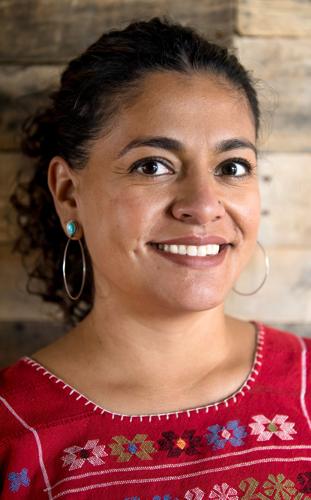
This division of labor is not typical, it appears, but exists in some other cities, too. I spoke Tuesday with Michelle Melendez, who directs the city of Albuquerque’s Office of Equity and Inclusion. That office employs nine people, she said, six of them paid for out of the general fund, and three of them from a grant.
“Our office looks at more of the systemic issues,” Melendez said. “Not individual cases, but more, how are we organized as a city and how can we use data and racial equity tools to help our city become much more equitable and inclusive.”
The office focuses on who the city of Albuquerque hires and promotes, who the city does business with and where the city makes big capital investments, Melendez said. Among the office’s accomplishments has been working with Albuquerque’s procurement office to include voluntary questions about demographic information on its W-9 tax forms.
“Right now we’re conducting a disparity study to see if there’s a disparity in who we do business with as a city,” Melendez said.
Albuquerque was among 32 cities nationwide that had city equity offices, according to a tally by the City Mayors Foundation. Typically, these offices do handle individual discrimination complaints, the foundation reported.
Beyond that, the foundation reported: “Most of the equity offices focus exclusively on eliminating inequities within their municipal workforces. They may focus on city administrative practices, such as hiring and procurement, and/or on city departments to address variances in the impacts of the municipal services on different racial and demographic groups in their cities.”
‘Systems that serve whiteness’
Santa Cruz has been the primary driver of the equity concept on the Tucson City Council. She asked for an equity audit of how the city was spending CARES Act money in May 2020, a request that ended up setting off a conflict between her and fellow Council member Steve Kozachik. The city later determined that audit couldn’t be carried out under federal rules.
On Sept. 9, Santa Cruz brought another item to the council, establishing the Office of Equity. As part of the discussion, she had two guest speakers on the equity concept, including Jamie Utt-Schumacher, a Ph.D. student in teaching learning and sociocultural studies at the University of Arizona, the same department from which Santa Cruz earned her Ph.D. He focused on the origins and import of the concept of “whiteness.”
“If I am of whiteness, there is no hope for me to be able to act toward equity or to act toward justice,” he said. “The reason this is so important is that, it tells us, no matter how great our intentions might be, no matter other aspects of our identity that make us marginalized — whether it’s our LGBTQ identity or our disabled identity or what have you — we can still make choices that invest in systems that were built to serve the idea of whiteness.”
At that meeting, Santa Cruz said we need to “normalize these conversations even when they feel uncomfortable. We need to get through that so we can really serve our community members in the city of Tucson.”
In that spirit, I wonder why Santa Cruz, Romero and Uhlich are proposing an office of four full-time employees, at least one likely making $100,000 per year, before the city has performed an equity audit. Clearly, an outside firm would be happy to take city money to audit our hiring and spending in view of how it treats marginalized groups.
That audit could then tell us whether we need to hire the chief equity officer or the three colleagues, or if we could do with periodic outside reviews. The audit could also consider whether we already have an office dedicated to equity — the office of Equal Employment Opportunity Programs — that could possibly accommodate an additional hire to carry out research and outreach on these issues.
If we’re going to normalize these conversations, then premature, possibly duplicative spending on equity officers can’t be beyond critique.
You weren't watching where you were going and now you've got some cactus needles in your foot. Before you try a shot of tequila, stay sober and get those needles out.
19 Tucson institutions you'll never see again
Magic Carpet Golf
Updated
Magic Carpet Golf, which stood for 40 years on East Speedway, closed in 2008 — swallowed up by a neighboring car dealership.
The rebar-and-concrete characters were scattered throughout the city after a preservation effort by State Rep. Steve Farley, D-Tucson and artist Charles Spillar
The Poo Monkey, plus palm tree, are now stationed at a private residence.
See more of the statues and their locations here.
Justin's WaterWorld
Updated
Justin's WaterWorld, at 3551 S. San Joaquin Road, had slides (the Cannonball, Blue Twisters!) and pools. It closed in 2007.
Adding a twist of her own, Alicia Champlin, 13, catches some air at the end of Blue Twister, one of the many slide rides.
Zachary's Pizza
Updated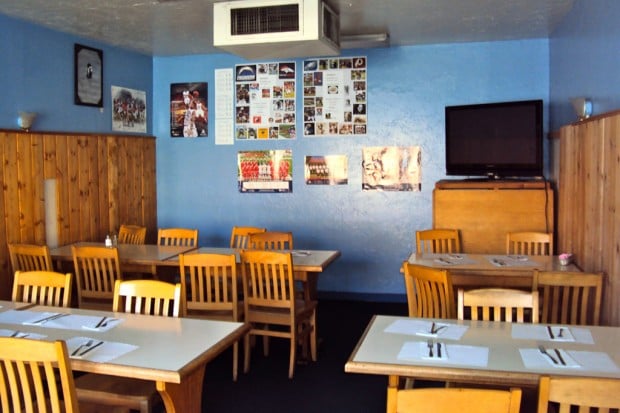
Zachary’s Pizza, 1028 E. Sixth St., closed July 29, 2012 ending a 24-year run as one of Tucson's most enduring pizza restaurants.
Read more about it here.
The Polar Bar
Updated
Tucson's Polar Bar, opened in the 50s on Speedway between Country Club and Alvernon, was started by Derald Fulton who later opened Tucson's legendary fast-food chain Lucky Wishbone. It had an extensive menu with a dining area and car hop service.
That's a ganga!
Updated
Austin Agron, the owner of Bargain Center Furniture gained notoriety by dropping lamps and yelling, "Hey, neighbor, that's a ganga!" on TV commercials.
From an Arizona Daily Star story published in February, 1983: "I've found the personal touch is important in doing commercials," says Austin Agron, who uses the slogan "It's a ganga!" to attract customers to Bargain Center Furniture, 4949 E. 22nd St. "People walk into my store and see me — the guy from the commercial. It gives them a warm feeling, and that's good for business."
A “ganga” is the Spanish word for “bargain” or “windfall.”
Agron began using the word at the suggestion of a local disc jockey who was doing a remote broadcast from Agron’'s furniture store.
“In Spanish, ‘ganga’ means ‘bargain.’ And since that’s the name of my furniture store, it’s the perfect trademark,”
Bargain Center Furniture closed in 2005 though the Tucson Furniture Mart that opened in its place was also owned by the Agron family.
Gordo's Mexicateria
Updated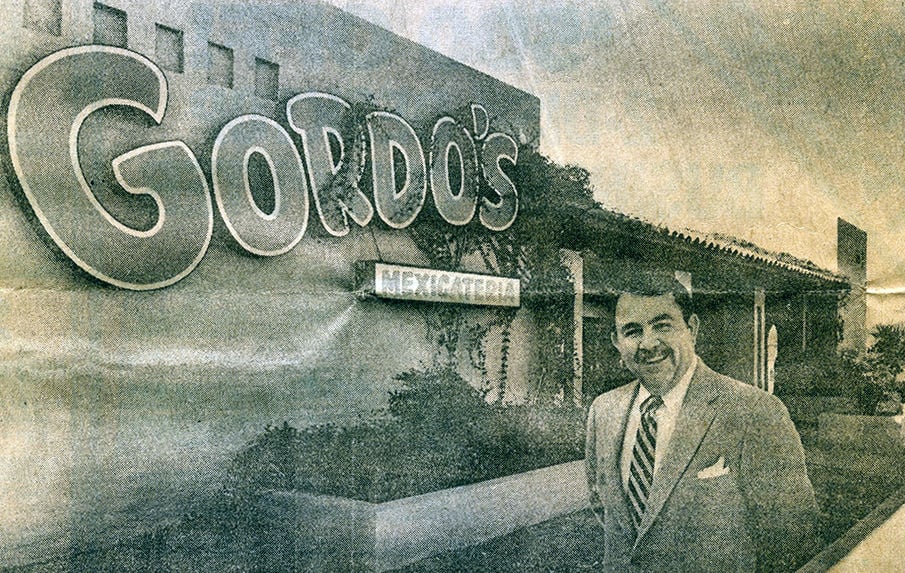
Gordo's Mexicateria, located on Broadway for about 40 years, was known for its commercials in which owner Diego A. Valenzuela asked, ""Do you like chimichangas? I mean, do you r-r-r-really like chimichangas?" Valenzuela died in 2003 at age 69.
The Haunted Bookshop
Updated
Kids enjoy their favorite books at the Haunted Bookshop, 7211 N. Northern Ave., in June, 1980.
The beloved northwest bookstore closed in May 1997. Here's what we wrote at the time:
They browsed through business books, rifled the reference section - and bought almost everything that wasn't nailed down.
The Haunted Bookshop, unable to compete with two nearby chain superstores, is now Tohono Chul history. But last Saturday, the beloved independent store's last day of business, people came for a last look - and a memento or two.
"You wouldn't believe what people want," said clerk Kim Messier, who took time out from ringing up 60-percent-off sales to chat.
In addition to buying books, folks also carted off step stools, card racks, store displays, framed prints and patio furniture - as well as the store's six-car model train.
The locomotive and cars - which used to whiz around a track mounted high above customers' heads - attracted a number of impassioned bids, Messier said.
"People just want a piece of the bookstore," she added, looking around the increasingly empty, increasingly ghostly space. "We were an institution."
Fruit-Land Market
Updated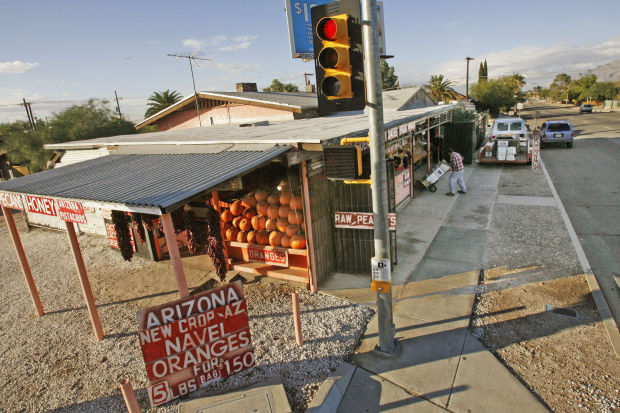
Fruit-Land Market stood at Speedway and Sixth Avenue.
Marshall Kgun
Updated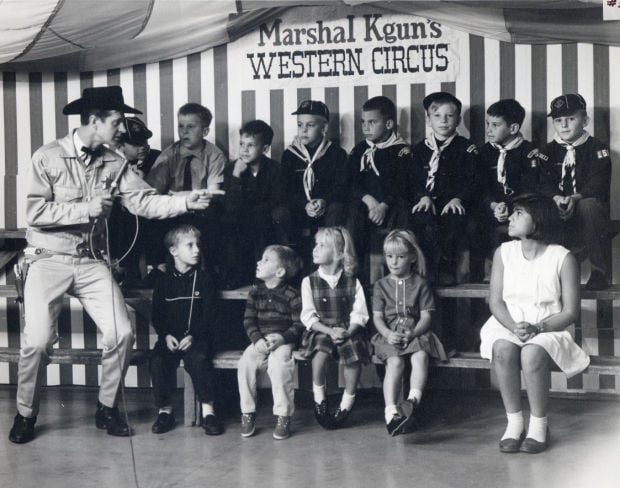
Burt Oien, KGUN-TV's first Marshall KGUN, entertains the kids in the late 1950s. The "Marshal Kgun" kiddie show ended in the late '60s.
The Big A
Updated
It was in the name of progress, but that didn't make it any easier. A longtime campus favorite, the Big A Restaurant, at 1818 E. Speedway, was being forced to move to make way for the Speedway widening project. Rosemary Seery, shown here on April 10, 1989, and her husband had signed a lease to move their restaurant down the street to 2033 E. Speedway. Although all the memorabilia and even the coaches' corner would make the move, many were concerned the Big A would never be the hangout it had been since 1961. The Big A closed in 1999.
Levy's Department store
Updated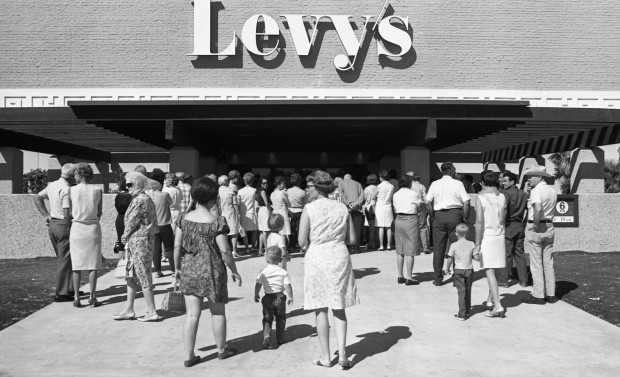
Customers wait for the doors to open for the first time at the Levy's store at El Con Mall on Sept. 15, 1969. The building was razed in 2012 and a Walmart was built in its place.
The Hidden Valley Inn
Updated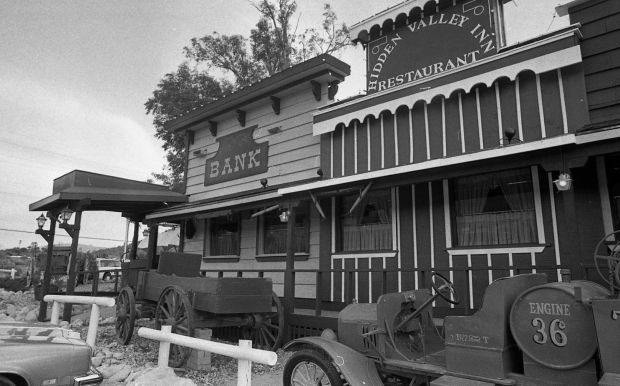
The Hidden Valley Inn, shown here in 1982, on Sabino Highway closed in 2006. It had been rebuilt after a fire in in 1995. It was converted into office space.
El Conquistador Hotel
Updated
El Conquistador Hotel opened Nov. 22, 1928, and was demolished in 1967 to make room for expansions to the El Con Mall.
George L. Mountainlion
Updated
The original resident/mascot mountain lion of the Arizona-Sonora Desert Museum, George L. Mountainlion (photographed here in 1958) was famous for being incredibly friendly and a published columnist.
Austin's Old Fashioned Ice Cream
Updated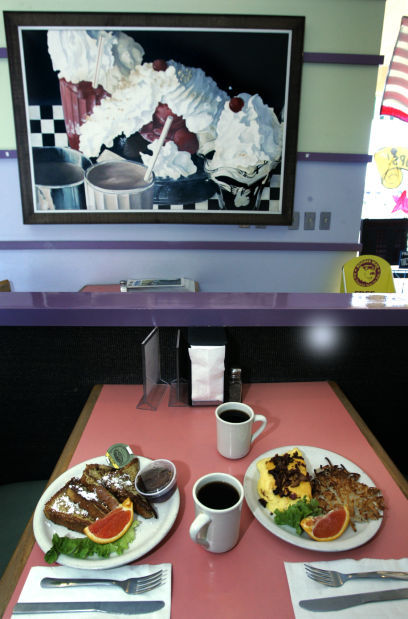
Austin's Old Fashioned Ice Cream, opened in 1959, was known for pickle ice cream, amazing shakes and diner fare. The restaurant closed in its original location on Broadway just west of Country Club in 2010 and didn't survive much longer in a new location. RIP Austin's.
Steinfeld's department store
Updated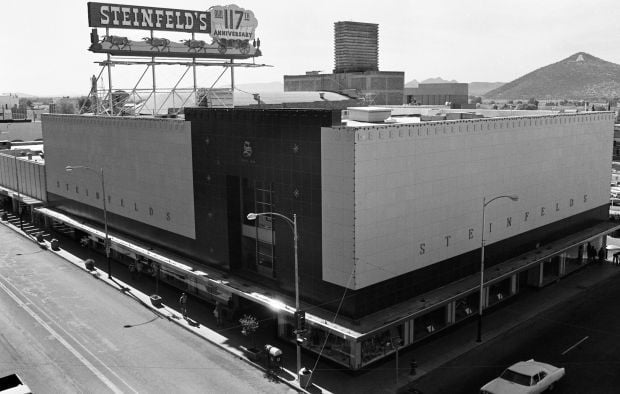
On July 23, 1974, the 69-year-old Steinfeld's, at the corner of Stone Avenue and Pennington Street, was demolished. In its place, the new 16-story Arizona Bank Plaza office building would be constructed.
Professional baseball
Updated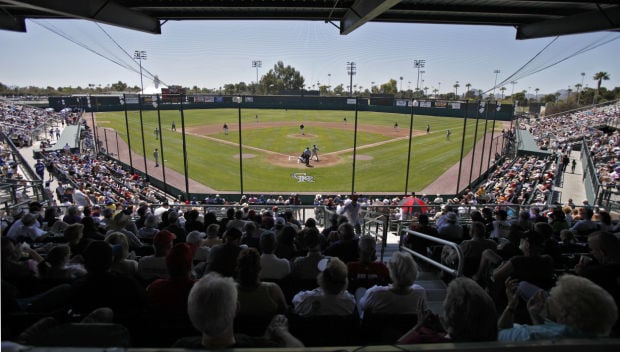
Major League Baseball's spring training abandoned Tucson, as have multiple minor and independent league baseball teams.
El Parador
Updated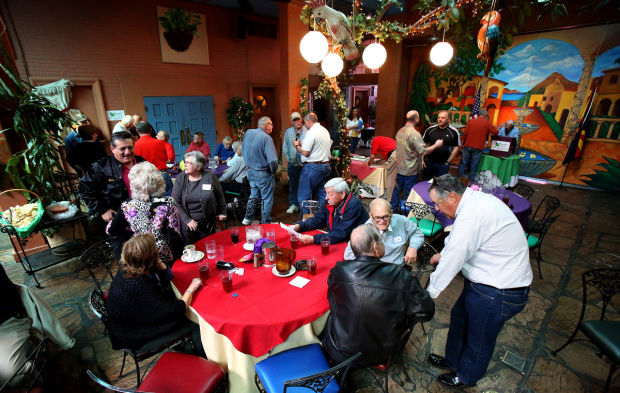
El Parador Restaurant, a longtime tropically-themed Mexican restaurant, closed in 2013, ending a 40-year run on East Broadway.
Drive-Ins
Updated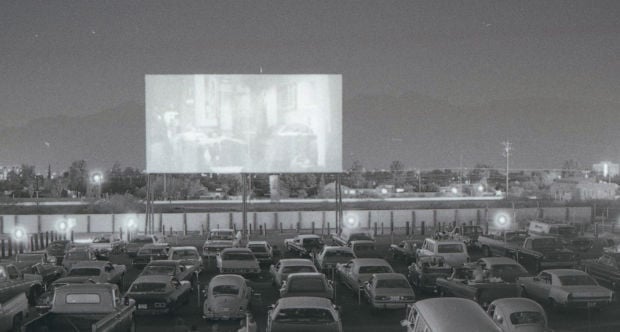
The DeAnza Drive-In at 22nd and Alvernon, Tucson's last drive-in theater, closed in 2009.

