

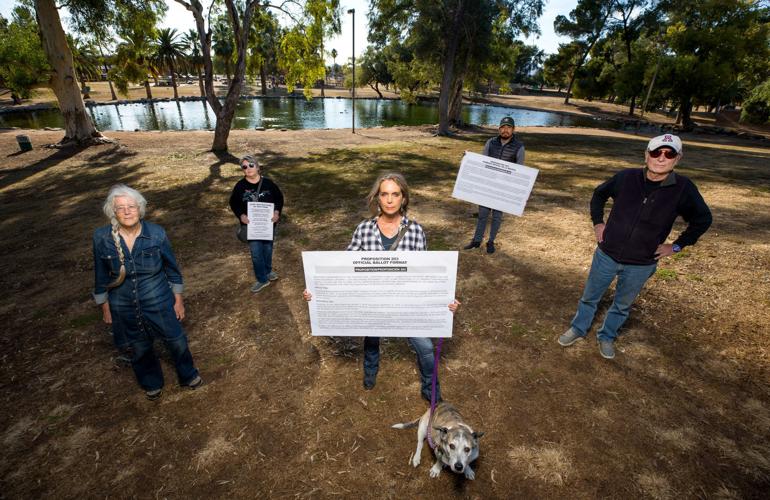



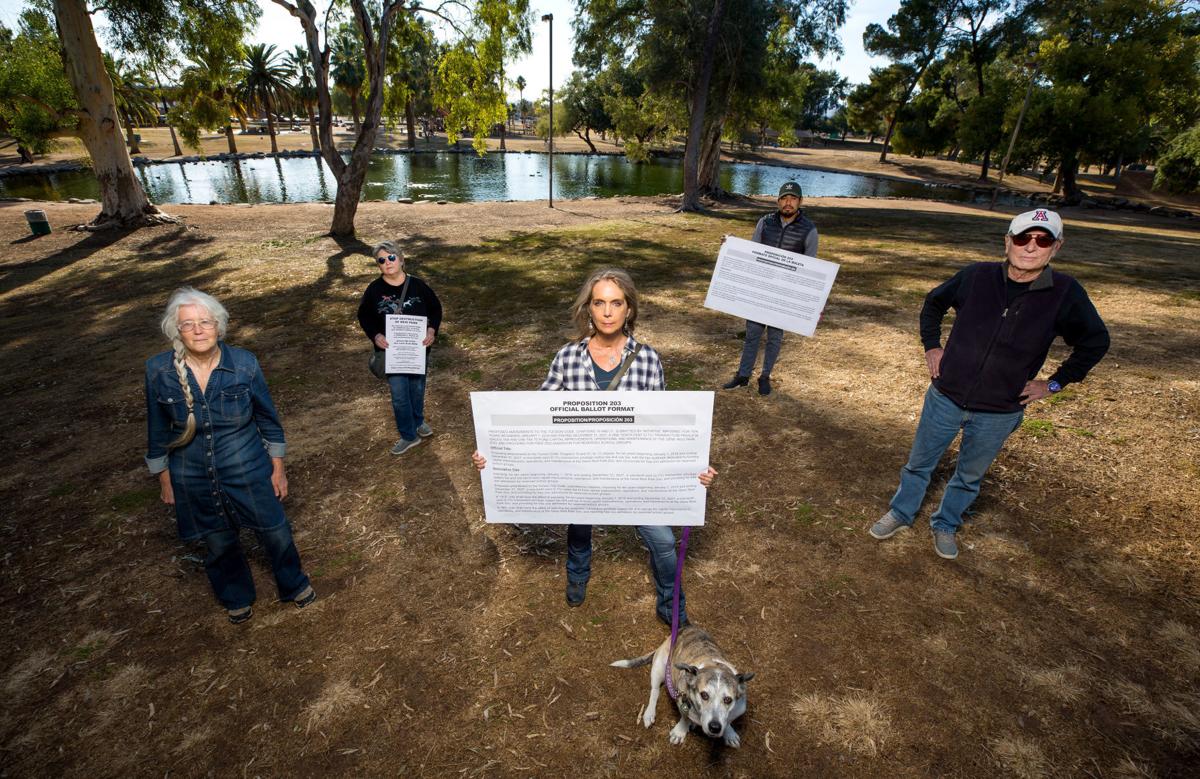
For now, people can freely roam around the south duck pond in Reid Park, or up Barnum Hill.
No fees, no fences — just an open oasis of trees and water and birds.
Your free access will end in February as the Reid Park Zoo takes over the 3½ acres including the south pond and the hill — unless a new insurgency stops it.
A group calling itself Save the Heart of Reid Park formed after the members learned of the long-standing plan for the zoo to take over the precious place in early November.
This is the area just south of the park’s larger pond that is unshaded and surrounded by a paved walking path, all of which would remain. The two ponds are connected by a trickling stream,and two rivulets of pumped water run down either side of the hill, one into each pond. Mature Aleppo pines and eucalyptus trees shade the south pond’s hill and shore.
Before this, the last zoo expansion, completed in 2012, handed over 7 acres of Reid Park along East 22nd Street. Together, that would be around 11 acres of open park, with no entry fee, lost in the last 10 years to a city-owned zoo that you have to pay to enter.
I used to play soccer on the field that since 2012 has been the enlarged enclosure for the zoo’s elephants. Hard to kick a ball there now. As little ones, my kids used to run around the hill, streams and pond now slated for removal from the park.
On Friday, I met a woman at the south pond feeding the waterfowl with her kids. Blanca Calderon told me that she, her 1-year-old daughter, Payton, and her 8-year-old son, Jason, come every week.
“We like to come and see the animals,” she said.
She wasn’t talking about the zoo animals that you have to pay to see. She was talking about the ducks and geese that came rushing toward her and the kids as we talked, begging for a scrap of bread.
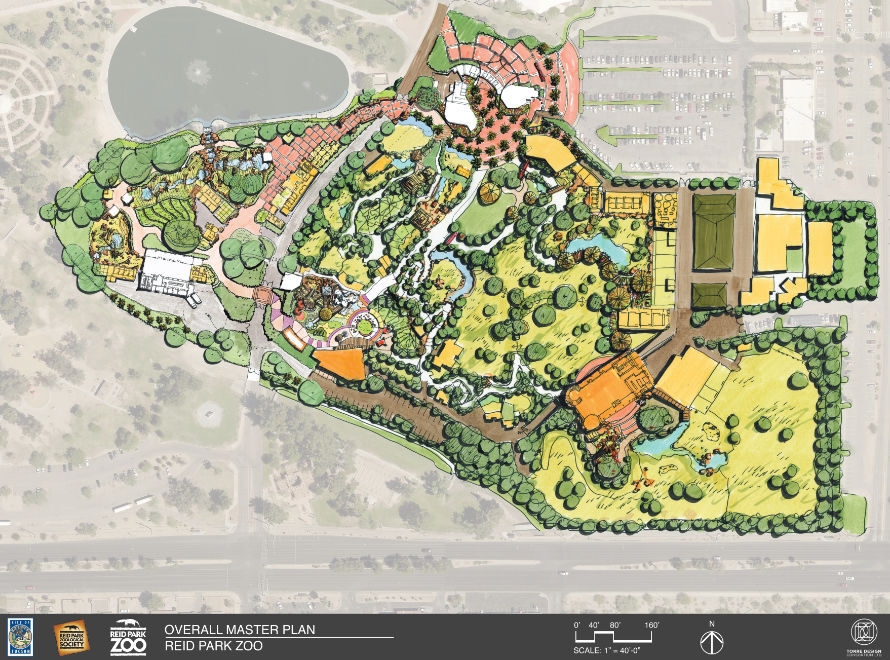
Overall Master Plan for the Reid Park Zoo expansion.
In a city like Seattle or Boston, with lots of hills and water, a wooded hillside alongside a pond filled with waterfowl wouldn’t be so unusual. In Tucson, it’s precious, especially for the people who live nearby who can’t afford to pay for the zoo, or to play golf, or to travel up into the mountains.
This is one of the arguments championed by Manon Getsi and Lauren McElroy, co-chairs of a new group called Save the Heart of Reid Park that is attempting to stop the zoo from taking over the pond and hill.
“Barnum Hill is one of the most lovely sites in the park,” Getsi said. “It’s the heart of Tucson’s Central Park.”
The comparison to Central Park is something another group of Tucsonans started making about six years ago. The group, called Expand Reid Park, pushed for an expansion into the adjacent golf courses. The Expand Reid Park effort fizzled after it ran face first into the golf lobby. Now, instead of expanding, the park is shrinking.

Video: Reid Park Zoo
Getsi, McElroy and others didn’t learn of the zoo expansion until Bonnie Wehle wrote a letter to the editor of the Star that was published Nov. 6. Wehle reported in her letter that a parks worker had told her the zoo was planning to drain the pond, raze the hill and construct a building there.
This prompted an angry response from city of Tucson officials, pointing out it isn’t true that the hill will be razed or a zoo building constructed at the site. Of course that, to me and others, is beside the point.
Save the Heart of Reid Park members have appealed to zoo CEO Nancy Kluge, interim parks director Tim Thomure, and City Councilman Steve Kozachik, whose ward the park and zoo are in. Kozachik is not very sympathetic to those who missed the news of the zoo’s planned expansion.
“Since 2014, I’ve participated in Reid Park master plan public presentations,” Kozachik said. “All of them include a westerly expansion of the zoo. They were very well-attended.”
That may be the case, but an expansion of the zoo was not in the language of the sales-tax hike voters approved in 2017, which is what’s paying for the growth.
That 10-year, one-tenth of 1 cent increase was to go “to fund capital improvements, operations, and maintenance at the Gene Reid Park Zoo, and providing for free zoo admission for reserved school groups.”
Formal plans for the expansion weren’t drawn up until after the 2017 election, when the tax increase won by 633 votes, a margin of less than 1% of the votes cast.
The zoo has spent about $1.8 million on plans for the expansion so far, Kluge said, and construction is slated to begin in February.
The expansion is planned to house a new Pathway to Asia exhibit that will feature large enclosures for Malayan tigers. The zoo’s last tiger died in July.
Without the expansion, there’s not enough room for tigers to be housed appropriately, Kluge told me.
Of course, simply not having tigers at the zoo is also an option. So, potentially, is using some other plot of land along the zoo’s perimeter, although Kluge told me that’s not an option — this site was optimal for the new exhibition.
“We had discussions with Parks and Rec,” she said. “It was based on form and function with what would work best.”
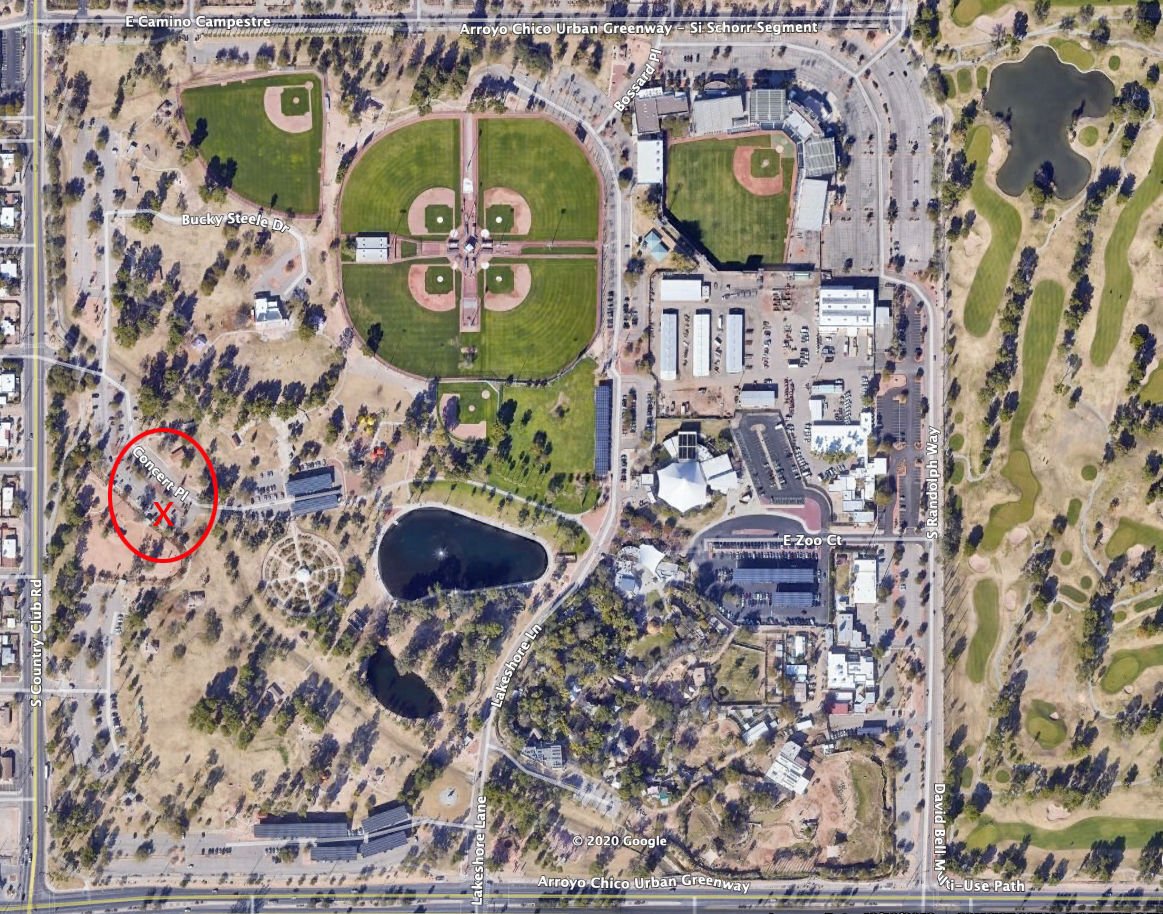
Aerial of Reid Park showing the zoo (bottom right) and the lakes.
Although Barnum Hill, which was built in 1961, would remain standing inside the zoo after construction, the Aleppo pines would be removed because arborists said they show signs of beetle infestation, Kluge said. New trees would be planted.
Thomure told me that potentially a new pond, maybe even a hill, could be built northeast of the north pond, the one that would continue to exist after the planned expansion. Opponents like Getsi and McElroy point to that same area, northwest of the zoo as the only place they would accept for the zoo expansion.
None of this conflict would be occurring, of course, except for the elephant in the room — golf. The city owns twice as much land adjacent to Reid Park and the zoo as they take up together. The only problem is it’s occupied by two golf courses, Randolph and Dell Urich — the prized, money-making possessions among Tucson’s five courses.
As a councilwoman, Mayor Regina Romero went after money-losing courses, but nobody in the city is eager to take the political risk of going after these jewels in the tarnished crown of city golf.
The result: The general public is stuck fighting to keep an acre here or there open and accessible. The sales tax you pay to support the city is not enough to guarantee access to all of Tucson’s Central Park anymore, as money-making ventures gobble up space.
That’s not how it should be, especially in a city supposedly committed to climate justice and a million new trees.
Neither the south duck pond nor Barnum Hill should be colonized by the zoo, because they are unique, precious and freely accessible. But if the zoo’s expansion goes forward, the public needs to be made whole for every acre taken.
There are adjacent golf courses, city parking lots, fenced-off ballfields and other nearby spaces the city can lop off if the expansion happens.

The Reid Park Zoo is making improvements and expanding thanks to a sales tax increase approved by voters in 2017. The entryway has been redone…

