

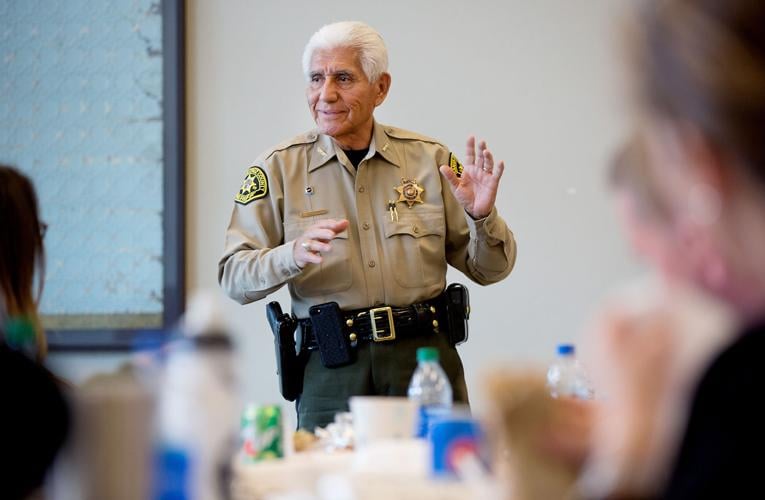


You would be excused if you forgot about Arizona’s longest-serving border sheriff in recent years.
Santa Cruz County Sheriff Tony Estrada was born in Nogales, Sonora, grew up in Nogales, Arizona and served in law enforcement on the U.S. side of the line for more than 50 years.
Estrada worked for 25 years in the Nogales Police Department before retiring and running for sheriff in 1992. He won seven consecutive terms before deciding not to run for reelection last year, leaving office at the end of 2020.
In recent years, the people in political power and in some national news media preferred to ignore him. When Vice President Mike Pence went to Nogales to talk about the new border wall in April 2019, the Cochise County sheriff was invited, not Estrada, the local sheriff.
Estrada has been an outlier among border sheriffs — he refused to portray the borderlands as an out-of-control area requiring a drastic federal crackdown.
For him, more than any of the others, the border is home. His experience as part of an immigrant family growing up poor in Nogales formed him.
And in recent years, that perspective has hardened his resistance to the dominant narrative about the border and the migrants who pass through.()
Here is an abridged transcript of an interview with Estrada conducted on Dec. 21.
Q: How did you end up in Nogales, Arizona, as a child?
A: I was born in Nogales, Sonora, Mexico, immigrated in December of 1944 when I was about a year and a half old. It was my mother, my three brothers and myself. I was the youngest. A fifth brother was born here. He was the only U.S. citizen. My dad was already here. He was immigrated, he was working.
This is the contrast between immigration then and immigration now. All my father needed was — and he was a laborer like a carpenter — a letter of employment. And my mom paid pennies and dimes and nickels in order to pay the fees. But with that letter of employment, we were able to get immigrated. It was so simple, so easy compared to how it is daunting now.
Q: What was your life like growing up in Nogales?
A: I lived about three blocks away from the Dennis DeConcini port of entry, 309 Terrace Avenue. We lived in a three-room house, no indoor plumbing. My dad was paying $10 a month for rent.
We were, I guess you’d consider us poor. But we didn’t really realize that because a lot of people in the neighborhood were like that as well. We were lucky that we had a roof over our head and we had three meals, whatever they were. You know, maybe meat was scarce. We didn’t have a refrigerator. We had an ice box. Rarely did we ever have anything to put in there, so rarely did we put in any ice.
Obviously we didn’t have a TV. We didn’t have a phone. Later on when we moved out of there, we managed to have that. But at that time we didn’t have any of those amenities. We played all day. We built kites. We spun tops, we played marbles and we played baseball and football, basketball, hide-and-go-seek, everything that we could do to fill in that day. And we were happy.
Q: How was it growing up as a Spanish speaker in those days?
A: I went to the Elm Street School, which was just up the hill from me. At that time, you know, they didn’t want you to speak Spanish. None of my family spoke English. So when I went into kindergarten, I got into an immersion program. I mean, I had to learn. By the second or third grade, I was reading and writing, but I had nobody to talk English with around my family, and probably not too many people around the neighborhood either. Everybody spoke Spanish.
You were not supposed to be speaking Spanish because it was an ‘inferior’ language in the United States. And now look at it. It’s so important. Now, you know, all of the kids here are bilingual practically, and they’re marketable because they know Spanish.
Q: What was the crime like when you were with the Police Department from the 1960s through the 1980s?
A: We had what we call cross-border crime, because there were gaps in the fence. They would just come literally walk through, and a lot of these people would come in or burglarize at night at buildings and homes, mostly the downtown stores.
The majority of the people that were in the city and county jail were Mexican nationals who crossed over legally or illegally. A lot of them were shoplifting, a lot of burglaries. Some of them for drugs but not large quantities.
Fifty-, 60-, up to 80% of the prisoners in the city and county jails were Mexican nationals. It’s probably 5%, 1% right now.
Q: How and when did that change?
A: In the mid-’90s, there was an influx of people, and that is when the federal government came up, put up the ugly helicopter landing mats (as a border barrier) in the downtown area. You know, they never consulted with the leaders here or on the Mexican side. Typical of the U.S. government. Of course, there was an uproar. Eventually they got rid of it.
But let me tell you what happened as a result of what they put down there. With more boots on the ground, with more Border Patrol agents coming in, and what I call that Iron Curtain, the cross-border crime almost disappeared.
Why? Because they couldn’t afford to jump over that wall. It wasn’t worth it anymore. That wall, the boots on the ground, the technology, the lights, the sensors, the bicycle patrol —everything that kicked in in the mid-’90s, it stopped all of that cross-border crime.
Q: What do you think about the border walls that went up outside the urban area?
A. The wall and the fence and the extension of it — what it has done is send these people through these rough, dangerous terrains where they’re getting sick and dying, or being victimized.
It took care of the urban problem we had, but it created a new style of crime, much more vicious and much more serious, by pushing these people out in the desert.
They started doing all of the things to curtail immigration, make it more difficult, make it more dangerous, more expensive. Then people were having more of a problem coming across on their own like they used to before. (Before), they didn’t need a mule, I mean guides or anything like that.
Well, the cartels said, you know what, this is another business opportunity for us. So now they’re involved in human smuggling.
Q: What is responsible for the escalation of drug trafficking, supply from Mexico or demand from the United States?
A: As far as I can tell, as a country, we are responsible for the cartels. We created the cartels. When I got started, it was individuals who came over here, made contact with somebody on the Mexican side and picked up a small load or whatever and headed out.
When the United States started clamping down on it and the demand continued to grow, the cartels came into existence. The cartels would not have existed if it hadn’t been for the demand. So as a country, we are responsible.
Q: Why get involved in these issues if they are not most of what the Sheriff’s Department handles anyway?
A: One of the things that I think makes me unique is the fact that, like I said, I’m the only Hispanic sheriff. I’ve been adamant about some of the policies and the cruelty of administrations past and present, and outspoken.
I’ve had the opportunity to have a voice and kind of speak for these people that don’t have a voice.
Photos of the U.S. – Mexico border fence
U.S. – Mexico border near Douglas, Ariz.
Updated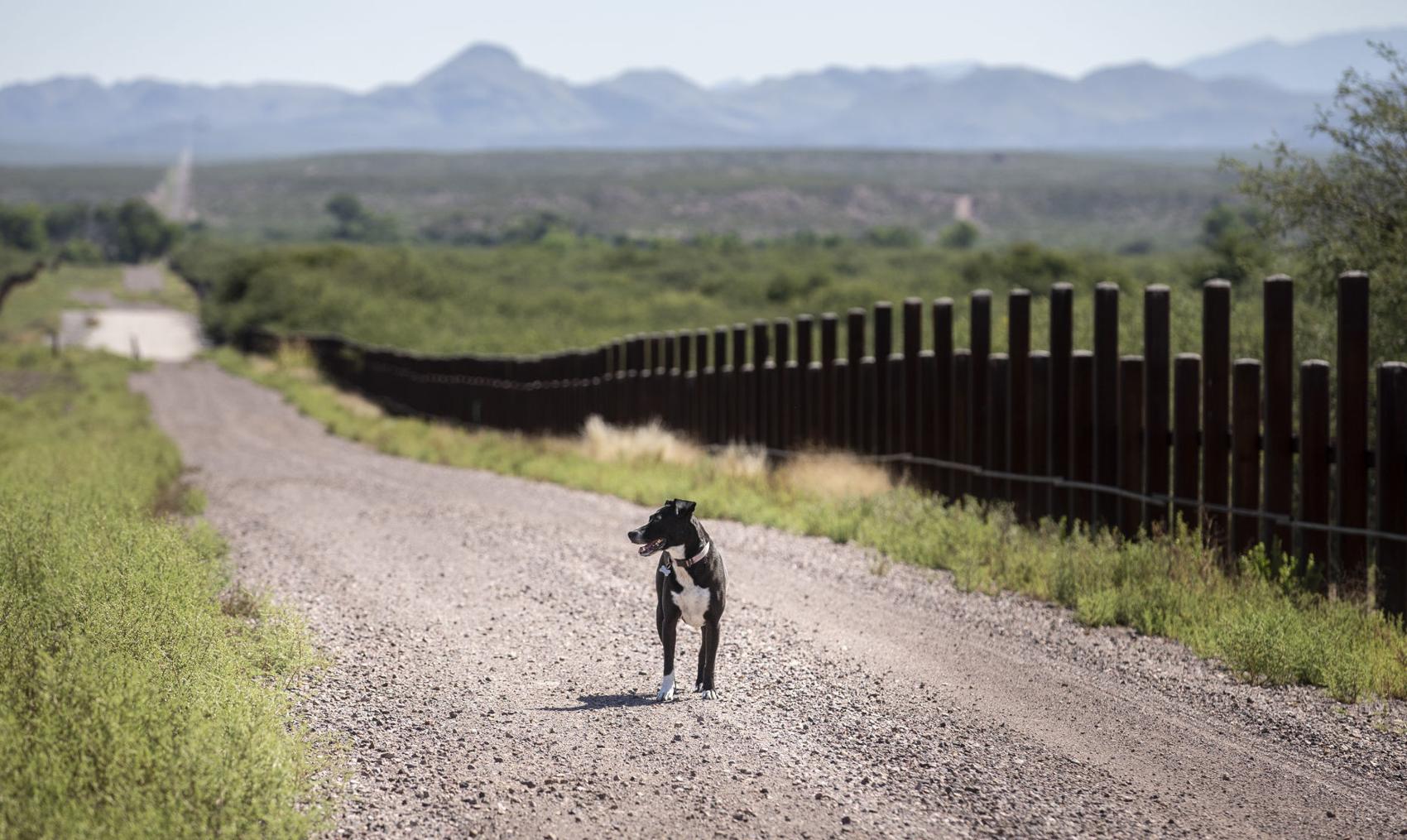
A dog stands on a road commonly used by Border Patrol near Slaughter Ranch Museum Thursday, Sept. 27, 2019.
U.S. – Mexico border near Douglas, Ariz.
Updated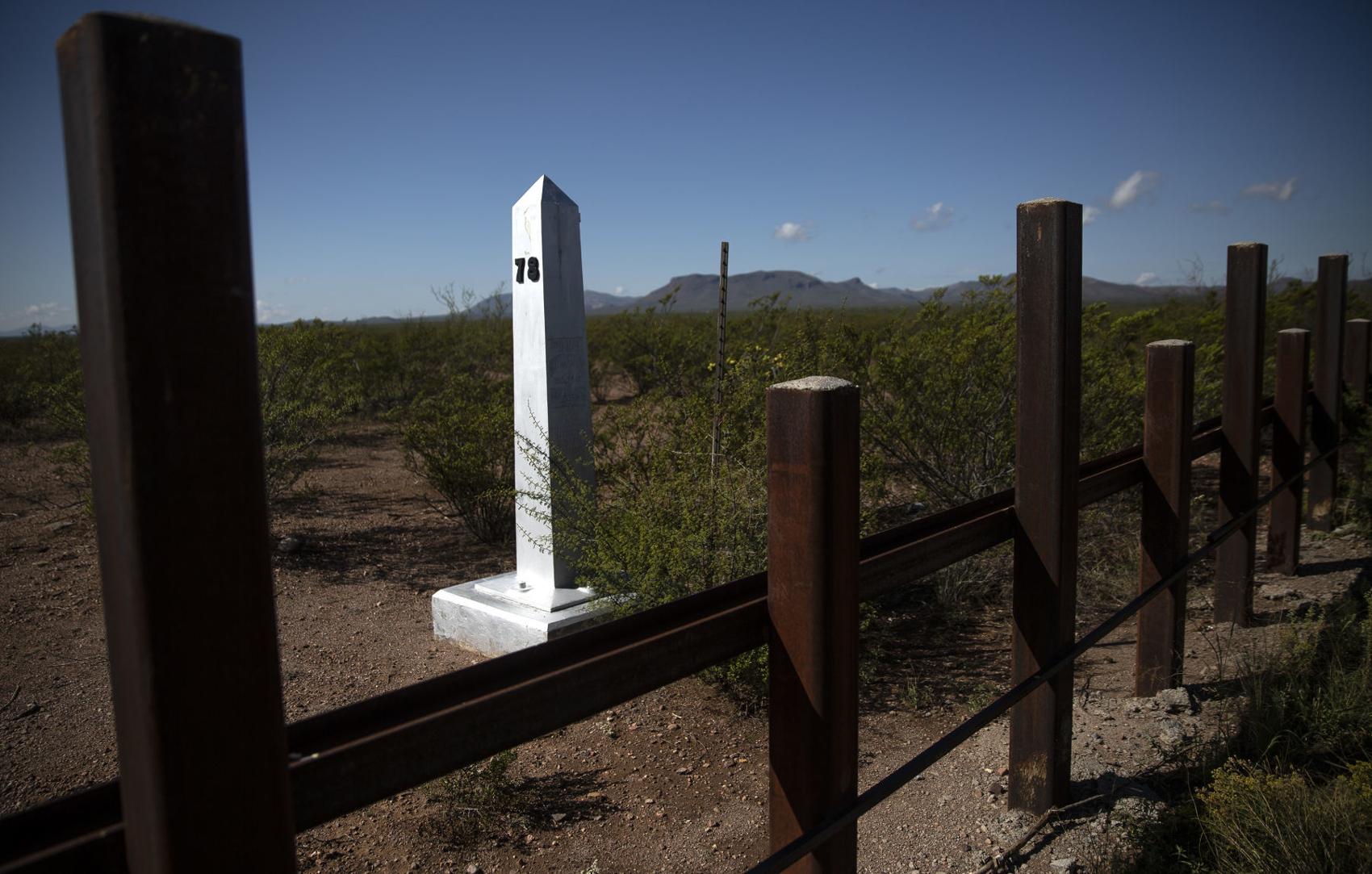
A border monument on the Mexico side of the border seen east of Douglas Thursday, Sept. 27, 2019.
U.S. – Mexico border near Douglas, Ariz.
Updated
The San Bernardino National Wildlife Refuge sits on the U.S. side of the border with Mexico east of Douglas Thursday, Sept. 27, 2019.
U.S. – Mexico border near Douglas, Ariz.
Updated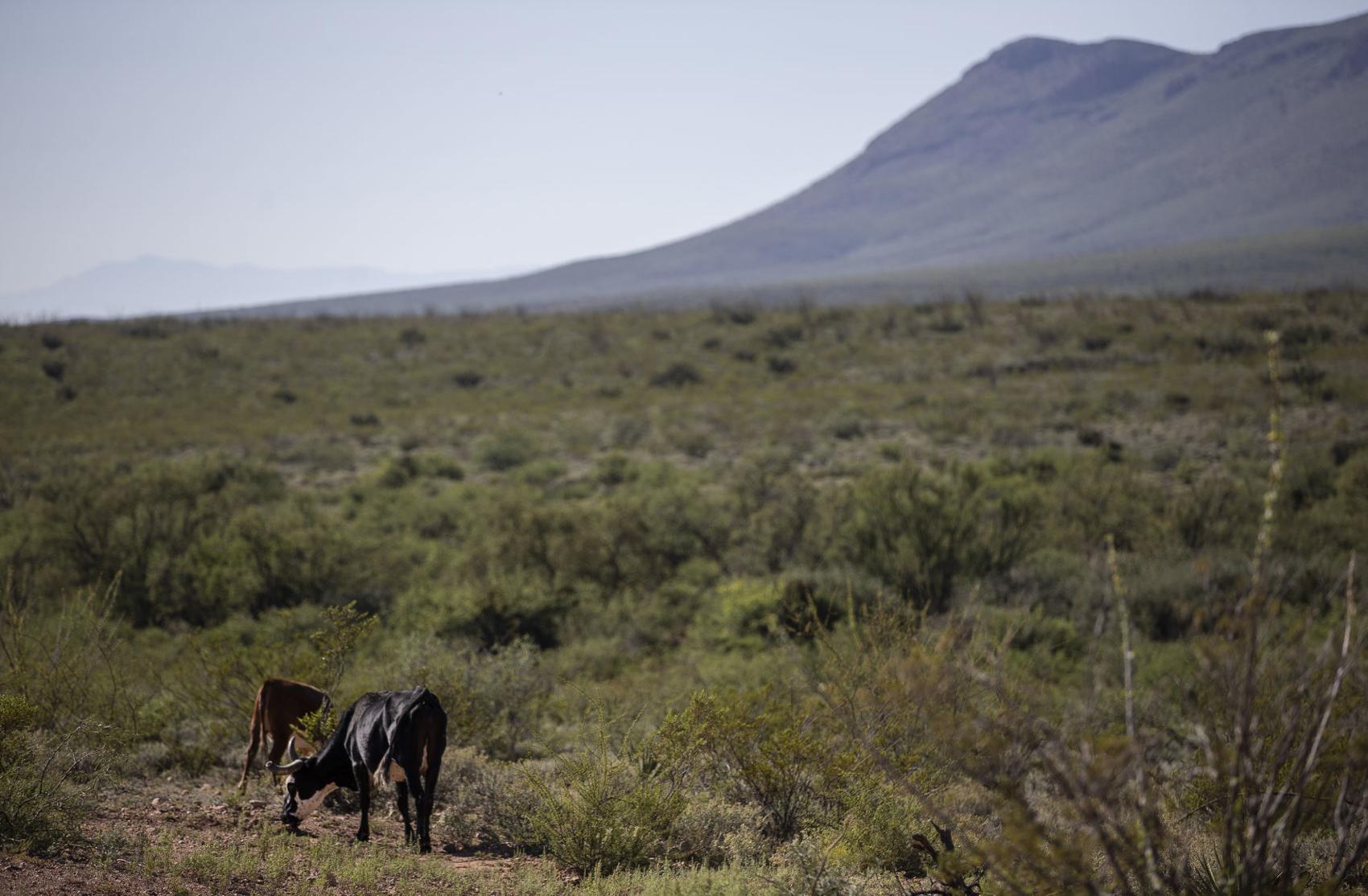
A bull and cow graze near the site of new wall construction east of Douglas Thursday, Sept. 27, 2019.
U.S. – Mexico border near Douglas, Ariz.
Updated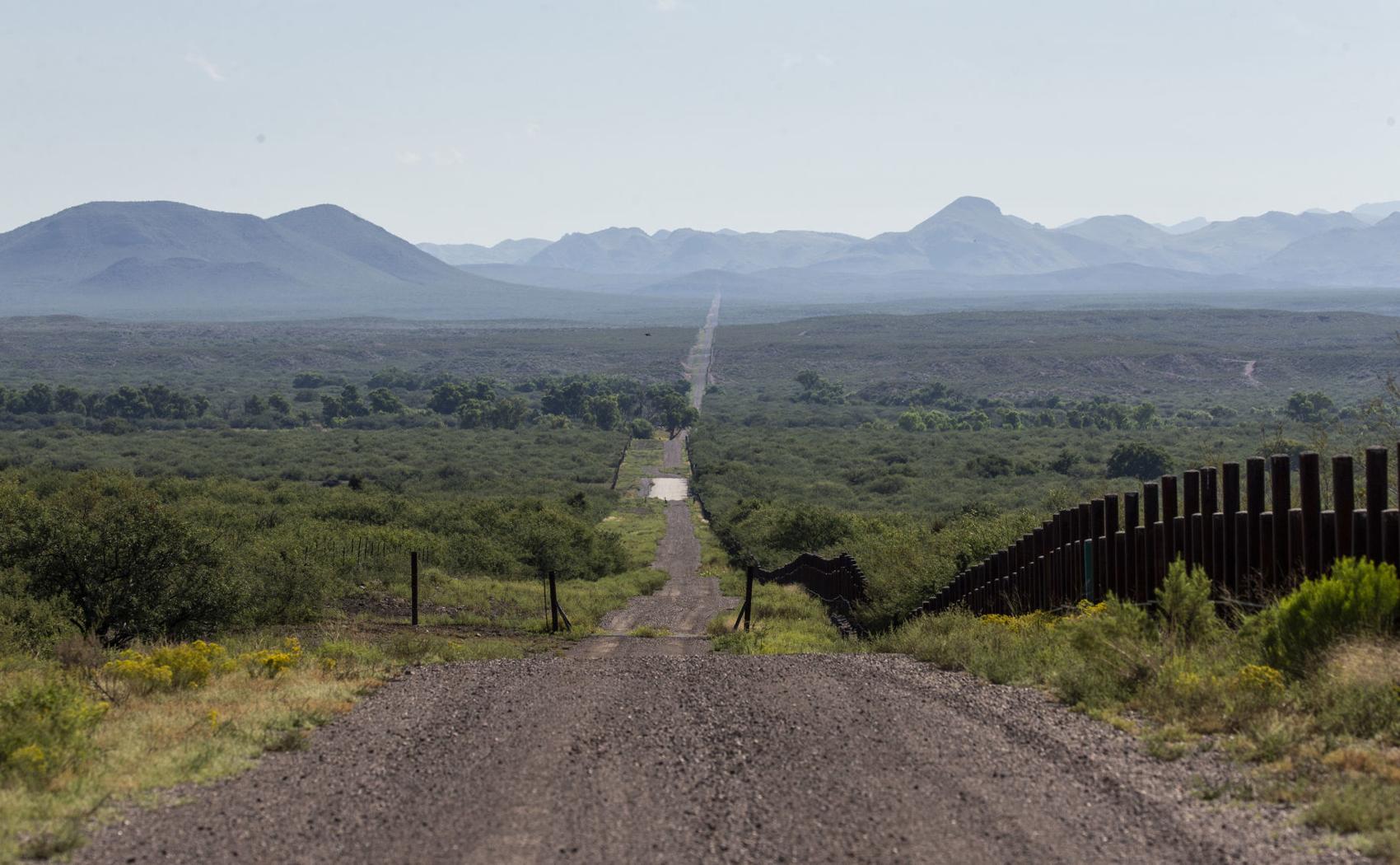
The border seen stretching from hills east of Douglas into the Guadalupe Mountains Thursday, Sept. 27, 2019.
U.S. – Mexico border near Douglas, Ariz.
Updated
Flowers grow around border fencing near the San Bernardino National Wildlife Refuge Thursday, Sept. 27, 2019.
U.S. – Mexico border near Douglas, Ariz.
Updated
Construction equipment set up at the site of new border wall construction on the US/Mexico border east of Douglas Thursday, Sept. 27, 2019.
U.S. – Mexico border near Douglas, Ariz.
Updated
A Border Patrol tower on the hills east of Douglas Thursday, Sept. 27, 2019.
U.S. – Mexico border near Douglas, Ariz.
Updated
Memorials place on graves at Julia Page Memorial Park in Douglas which sits along the U.S./Mexico border Thursday, Sept. 27, 2019.
U.S. – Mexico border near Douglas, Ariz.
Updated
A car drives through Douglas on a road parallel to the U.S./Mexico border wall Thursday, Sept. 27, 2019.
U.S. – Mexico border near Douglas, Ariz.
Updated
The Slaughter Ranch homestead Thursday, Sept. 27, 2019.
U.S. – Mexico border near Douglas, Ariz.
Updated
A lake on the Slaughter Ranch Thursday, Sept. 27, 2019.
U.S. – Mexico border near Douglas, Ariz.
Updated
A toy rocking horse placed on the side of East Geronimo Trail with a sign advertising five minute pony rides for 25 cents Thursday, Sept. 27, 2019.
U.S. – Mexico border near Douglas, Ariz.
Updated
Highway 2 in Mexico winds its way to Agua Prieta Thursday, Sept. 27, 2019.
U.S. – Mexico border near Douglas, Ariz.
Updated
The vehicle in a ditch was driven through the international border fence in Agua Prieta, Mex., into Douglas, Arizona in July 1987.
U.S. – Mexico border near Douglas, Ariz.
Updated
Mexican citizens run back into Agua Prieta, Mexico through a hole in the border fence at Douglas, Ariz., after the U.S. Border Patrol scared them back across the border in 1997.
U.S. – Mexico border near Douglas, Ariz.
Updated
The Raul Hector Castro Port of Entry on May 1, 2018, in Douglas, Ariz.
U.S. – Mexico border near Douglas, Ariz.
Updated
The Douglas, Ariz., border crossing in 1968.
U.S. – Mexico border near Lochiel, Ariz.
Updated
U.S./Mexico border fencing next to a old church building in Lochiel Tuesday, Oct. 1, 2019.
U.S. – Mexico border near Lochiel, Ariz.
Updated
Old border posts line the U.S./Mexico line near Lochiel Tuesday, Oct. 1, 2019.
U.S. – Mexico border near Lochiel, Ariz.
Updated
A Soal Off Roading sticker placed on a U.S./Mexico border post near Lochiel Tuesday, Oct. 1, 2019.
U.S. – Mexico border near Lochiel, Ariz.
Updated
Mountains in Santa Cruz County seen from Duquesne Road between Nogales and Lochiel seen Tuesday, Oct. 1, 2019.
U.S. – Mexico border near Lochiel, Ariz.
Updated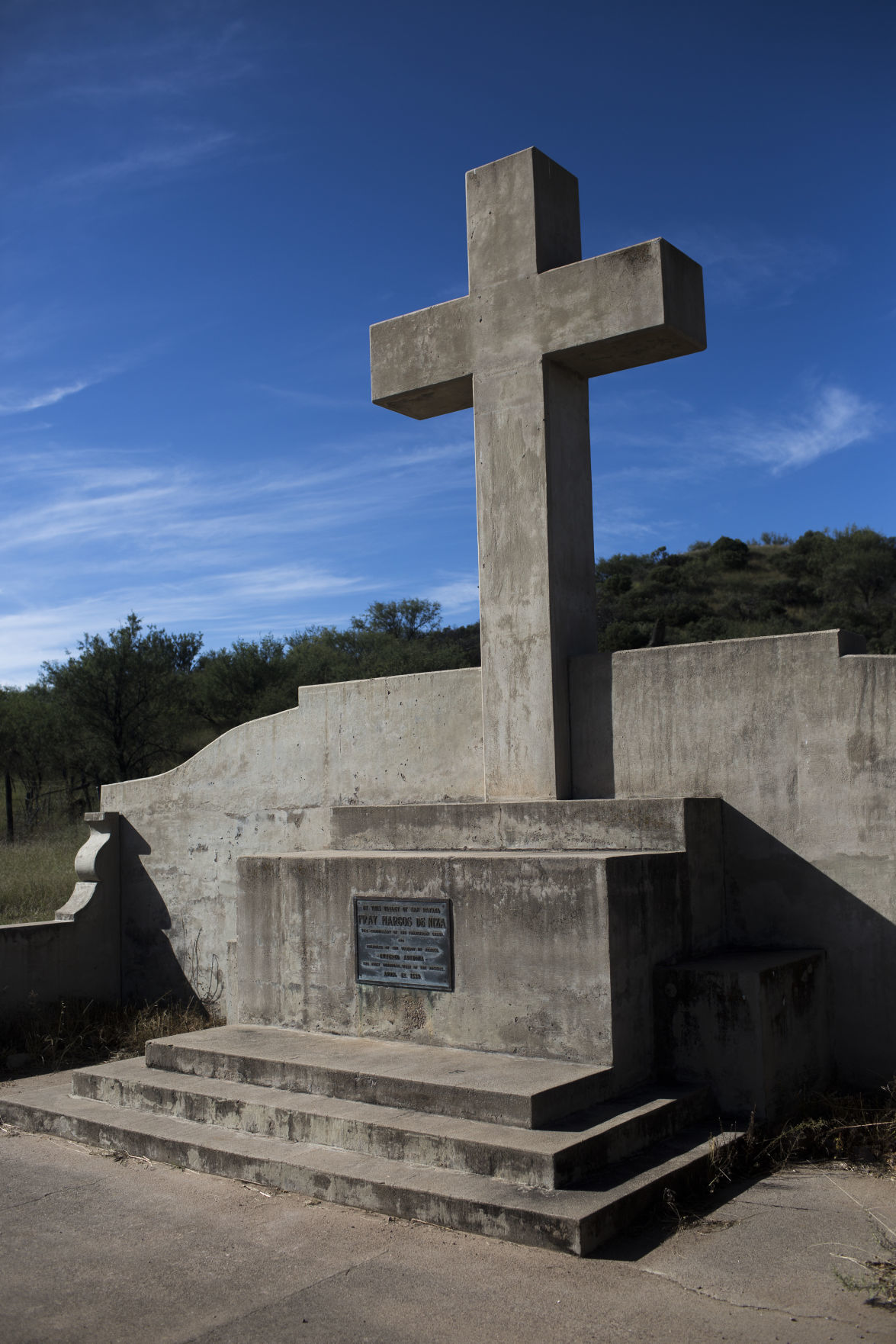
A monument in Lochiel marking where Fray Marcos De Niza entered Arizona Tuesday, Oct. 1, 2019.Tuesday, Oct. 1, 2019.
U.S. – Mexico border near Lochiel, Ariz.
Updated
Brothers Ramon and Ed De La Ossa mend fencing on their family's ranch in Lochiel after moving cattle Tuesday, Oct. 1, 2019. The ranch which used to span both sides of the U.S./Mexico border has been in the family for three generations.
U.S. – Mexico border near Lochiel, Ariz.
Updated
Ed De La Ossa mends fencing on his family's ranch in Lochiel Tuesday, Oct. 1, 2019. The ranch which used to span both sides of the U.S./Mexico border has been in the family for three generations.
U.S. – Mexico border near Lochiel, Ariz.
Updated
Ed De La Ossa moves cattle on his family's ranch in Lochiel Tuesday, Oct. 1, 2019.
U.S. – Mexico border near Lochiel, Ariz.
Updated
U.S. Customs inspector Helen Mills, right, greets Mexican counterpart Raymundo Aguirre Castillo at the U.S. - Mexican border station at Lochiel, Ariz., in 1979.
U.S. – Mexico border near Lochiel, Ariz.
Updated
The US Customs building, right, at Lochiel, Ariz., is just a short distance away from the international border in May 1972. For ten years, Mills has been managing the port of entry, which is mostly made up of five houses, a school and an vacant church, inspecting vehicles as they head into the US. During the week, from Monday through Saturday, Mills opens the border gate from 8 am to 10 am and from 4 pm to 6 pm. On Sunday the gate is open from 8 am to 6 pm. In that time barely a dozen vehicles make their way across the border but it is a major convenience to the local residents.
U.S. – Mexico border near Nogales, Ariz.
Updated
Pedestrians walk to the Nogales port of entry Tuesday, Oct. 1, 2019.
U.S. – Mexico border near Nogales, Ariz.
Updated
A pedestrian walks across North Grand Avenue in Nogales near the U.S./Mexico port of entries Tuesday, Oct. 1, 2019.
U.S. – Mexico border near Nogales, Ariz.
Updated
U.S. Customs and Border Protection officer R. Hernandez uses a density-measuring device on the rear quarter-panel of a Mexico-bound passenger vehicle at the DeConcini Port of Entry on Nov. 2, 2016, in Nogales, Ariz.
U.S. – Mexico border near Nogales, Ariz.
Updated
A Customs and Border Protection officer makes a visual check of a man's identification at the DeConcini Port of Entry on Feb. 15, 2017, in Nogales, Ariz. Busts of fraudulent border-crossing documents and the use of someone else's documents plummeted in Arizona and the rest of the border in the past decade.
U.S. – Mexico border near Nogales, Ariz.
Updated
Northbound commercial truck traffic lined up for inspection at the Mariposa Port of Entry on March 28, 2017, in Nogales, Ariz.
U.S. – Mexico border near Nogales, Ariz.
Updated
In the commercial lanes a semi truck stops between the lanes looking for the first available opening at the Mariposa Port of Entry in 2015.
U.S. – Mexico border near Nogales, Ariz.
Updated
Javier Castillo inspects a north-bound Mexican tractor-trailer at the Arizona Department of Transportation's inspection facility at the Mariposa Port of Entry on Sept. 19, 2017, in Nogales, Ariz. ADOT's International Border Inspection Qualification program, led by ADOT's Border Liaison Unit, teaches commercial truck drivers what to expect during safety inspections when they enter Arizona ports of entry.
U.S. – Mexico border near Nogales, Ariz.
Updated
A Border Patrol truck parked near the commercial port of entry in Nogales.
U.S. – Mexico border near Nogales, Ariz.
Updated
An illegal alien scales the U.S.-Mexico fence back toward Sonora after a Nogales Police Department officer, right, spotted him west of the Mariposa Port of Entry, Nov. 15, 2018, in Nogales, Ariz.
U.S. – Mexico border near Nogales, Ariz.
Updated
Kory's, a store catering to wedding, quincea–era and formal gowns, located at 15 N Morley Ave, Nogales, Ariz., sits katty corner to the Morley Gate Border Station on January 30, 2019.
U.S. – Mexico border near Nogales, Ariz.
Updated
Sun shines through the U.S.-Mexico bollard fence west of the Mariposa Port of Entry, Nov. 15, 2018, in Nogales, Ariz.
U.S. – Mexico border near Nogales, Ariz.
Updated
Children from Nogales, Sonora, climb through a hole in the international border fence to trick-or-treat in Nogales, Arizona, on Halloween in 1987.
U.S. – Mexico border near Sasabe and Lukeville, Ariz.
Updated
Border monument #166 is seen on the right as construction continues on the new 30-foot tall bollard fence that replaces old U.S./Mexico border fence two miles east of the Lukeville, Arizona port of entry on October 8, 2019. Photo taken from Sonoyta, Sonora, Mexico.
U.S. – Mexico border near Sasabe and Lukeville, Ariz.
Updated
Construction continues on the new 30-foot tall bollard fence along the U.S./Mexico border two miles east of the Lukeville, Arizona port of entry on October 8, 2019. Photo taken from Sonoyta, Sonora, Mexico.
U.S. – Mexico border near Sasabe and Lukeville, Ariz.
Updated
A Mexican worker rides his horse along a road south of the U.S./Mexican border wall on his way back into Sonoyta Wednesday, Aug. 28, 2019.
U.S. – Mexico border near Sasabe and Lukeville, Ariz.
Updated
New paneling of border wall seen about three miles east of the Lukeville/Sonoyta port of entry seen from the Mexico side of the border line Wednesday, Aug. 28, 2019.
U.S. – Mexico border near Sasabe and Lukeville, Ariz.
Updated
Old mesh paneling is removed in preparation for new wall to be built about three miles east of the Lukeville/Sonoyta port of entry seen from the Mexico side of the border line Wednesday, Aug. 28, 2019.
U.S. – Mexico border near Sasabe and Lukeville, Ariz.
Updated
A construction worker prepares cables to lift a piece of the 30-foot tall bollard fence along the U.S./Mexico border fence two miles east of the Lukeville, Arizona port of entry on October 8, 2019. Photo taken from Sonoyta, Sonora, Mexico.
U.S. – Mexico border near Sasabe and Lukeville, Ariz.
Updated
Border Patrol Officers to the side of a worksite about three miles east of the Lukeville/Sonoyta port of entry where new border wall is being installed seen from the Mexico side of the border line Wednesday, Aug. 28, 2019.
U.S. – Mexico border near Sasabe and Lukeville, Ariz.
Updated
Old wall east of the Lukeville/Sonoyta port of entry seen from the Mexico side of the border line Wednesday, Aug. 28, 2019.
U.S. – Mexico border near Sasabe and Lukeville, Ariz.
Updated
Raised wall east of the Lukeville/Sonoyta port of entry seen from the Mexico side of the border line Wednesday, Aug. 28, 2019.
U.S. – Mexico border near Sasabe and Lukeville, Ariz.
Updated
A work site east of the Lukeville/Sonoyta port of entry seen from the Mexico side of the border line Wednesday, Aug. 28, 2019.
U.S. – Mexico border near Sasabe and Lukeville, Ariz.
Updated
Normandy fencing placed against a section of border fence west of Lukeville Wednesday, Aug. 28, 2019.
U.S. – Mexico border near Sasabe and Lukeville, Ariz.
Updated
A semi passes by Quitobaquito Springs as it drives along Highway 2 in Mexico Wednesday, Aug. 28, 2019.
U.S. – Mexico border near Sasabe and Lukeville, Ariz.
Updated
An area referred to as "flood gate" along the U.S./Mexico border near Sasabe, Ariz. is on the list of the Department of Homeland Security’s priorities for building a border wall, but no funding has been allocated yet. September 16, 2019.
U.S. – Mexico border near Sasabe and Lukeville, Ariz.
Updated
Vehicle barriers mark the U.S./Mexico border within the Buenos Aires National Wildlife Refuge in Sasabe, Ariz. on September 16, 2019.
U.S. – Mexico border near Sasabe and Lukeville, Ariz.
Updated
A portion of the U.S./Mexico bollard border fence ends on the right and vehicle barriers begin within the Buenos Aires National Wildlife Refuge in Sasabe, Ariz. on September 16, 2019.
U.S. – Mexico border near Sasabe and Lukeville, Ariz.
Updated
A U.S. Customs and Border Protection Integrated Fixed Tower, left, near Sasabe, Ariz. on September 16, 2019.
U.S. – Mexico border near Sasabe and Lukeville, Ariz.
Updated
The new 30-foot tall bollard fence that replaced old U.S./Mexico border fence can be seen on the left. It's located about miles east of the Lukeville, Arizona port of entry on October 8, 2019. Photo taken from Sonoyta, Sonora, Mexico.
U.S. – Mexico border near San Luis, Ariz.
Updated
A US Border Patrol vehicle seen next to a section of new 30 foot high wall along the US/Mexico border near the commercial port of entry in San Luis Thursday, Aug. 8, 2019.
U.S. – Mexico border near San Luis, Ariz.
Updated
Old fencing is taken down along the United States/Mexico border seen from the northern end of San Luis, Mexico, Aug. 7, 2019.
U.S. – Mexico border near San Luis, Ariz.
Updated
A security guard stand in a construction site where a new fence will be placed on the United States/Mexico border seen from the northern end of San Luis, Mexico, Aug. 7, 2019.
U.S. – Mexico border near San Luis, Ariz.
Updated
Old fencing against new fencing along the United States/Mexico border seen from the northern end of San Luis, Mexico on Aug. 7, 2019.
U.S. – Mexico border near San Luis, Ariz.
Updated
Crews prepare ground for a new fence to be placed on the United States/Mexico border seen from the northern end of San Luis, Mexico on Aug. 7, 2019.
U.S. – Mexico border near San Luis, Ariz.
Updated
Vehicles in line to enter the United States from San Luis, Mexico on Aug. 7, 2019.
U.S. – Mexico border near San Luis, Ariz.
Updated
New fencing along the United States/Mexico border seen from the northern end of San Luis, Mexico on Aug. 7, 2019.
U.S. – Mexico border near San Luis, Ariz.
Updated
A new section of fencing on the U.S. - Mexico border in California, just west of Yuma, Ariz., in 1993.
U.S. – Mexico border near San Luis, Ariz.
Updated
Sand drifts through the "floating fence" that marks the border running through the dunes, Wednesday, July 25, 2018, west of San Luis, Ariz.
U.S. – Mexico border near San Luis, Ariz.
Updated
A sign warns of the dangers of trying to swim the All-American Canal just north of the Mexican border, Wednesday, July 25, 2018, west of San Luis, Ariz.
U.S. – Mexico border near San Luis, Ariz.
Updated
A long string of lights illuminate the no-man's land between the triple fencing of the Mexican border, Wednesday, July 25, 2018, San Luis, Ariz.
U.S. – Mexico border near San Luis, Ariz.
Updated
The border fence comes to an abrupt end at the currently dry Colorado River, Thursday, July 26, 2018, west of San Luis Rio Colorado, Sonora.

