




We’ve paid a million taxpayer dollars now defending a former UA track coach from a lawsuit by an athlete he coached — and strangled and assaulted.
To be precise, that’s $1,085,274 of Arizona taxpayer money paid to former coach Craig Carter’s lawyers.
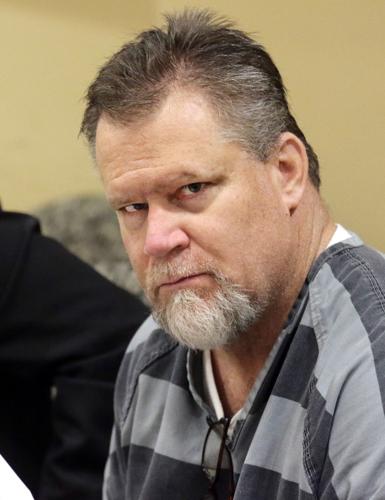
Carter began a five-year prison sentence Friday for his convictions in two criminal cases in which he victimized track and field athlete Baillie Gibson and her roommate.
Even with the criminal convictions, it looks like we’ll still be paying to defend Carter in the simultaneous civil suit deep into his prison term.
How long? As long as taxpayers keep subsidizing his defense in the civil case, there is no incentive for the attorneys representing Carter — John Munger and his associates — to resolve it. In fact, the incentive is the opposite. It is to explore ever-more-exotic avenues of defense and drag the case on, billing the state every step of the way.
That’s what seems to have happened last week. Munger’s firm subpoenaed my Arizona Daily Star colleague Caitlin Schmidt, who has written most of our recent stories on the case, as well as the Star in general and KGUN 9 television.
Why?
Why not? It’s all paid for by taxpayers.
Here’s what they demanded via the subpoena:
“All Documents and Communications relating to any conversation, interview, or other interaction between You [Schmidt] and Cadigan Law Firm, P.L.L.C., Michael J. Bloom, P.C., The Carrillo Law Firm, P.L.L.C., and/or the law firm of Manly, Stewart & Finaldi, or between You and any attorney(s) or other employees(s) employed by or associated with any of the foregoing, specifically including but not limited to Lynne M. Cadigan, John C. Manly, Jennifer E. Stein, Morgan A. Stewart, Michael J. Bloom and/or Erin Carrillo, at any time on or after April 29, 2015, particularly including but not limited to emails, text messages, phone records, voicemails, call logs, Pictures, and Video.”
They also asked for the same documentation of any communications between my colleague Schmidt and the plaintiff Gibson herself. The Star is fighting the subpoena. Neither Munger nor an associate returned calls I made to them Friday afternoon.
Attorney Thomas Denker said in a court filing that, “The subpoena is not intended to interfere with the gathering, writing, editing, publishing, broadcasting, and disseminating of news to the public as protected by the First Amendment, Constitution of the United States, or by Article II, Section 6, of the Constitution of Arizona.”
But it does. Any effort to get into a journalist’s news-gathering efforts inherently interferes with our ability to do our jobs. They know it, and they certainly haven’t liked most of the coverage of the case, which has included stories on ESPN. But there’s no disincentive to issuing subpoenas across Tucson or across the country.
It’s a sweet deal for Munger, Denker & Co.
It’s important to realize, though, that the subpoenas are a sideshow to the central issues of the case, some of which have now been proven in criminal court.
Gibson accused Carter of sexual assault and abuse, saying that the relationship they had was coerced, because he was her coach and had power over her. The criminal acts Carter was convicted of are more specific and happened at the end of their relationship — strangling Gibson, threatening her with a box cutter and harassing her roommate after the roommate had obtained an injunction against him.
Munger and his team have mounted an aggressive defense, arguing that Gibson instigated and pursued the relationship, to Carter’s detriment. They’ve demanded the details of her sexual history, countersued Gibson and her attorney and generally pursued a scorched-earth defense. They say the countersuit is not being paid for with state money, but I found by interviewing five attorneys last year that what they learn in the main suit inevitably helps them in the countersuit.
It’s the kind of defense available only to a rich person, or someone whose defense is paid out of the bottomless pocket of the taxpayer.
Here’s why we do it: State law says we must indemnify state employees accused of wrongdoing in the conduct of their job. The risk-management officers in the Arizona Department of Administration said that includes Carter, and they approve the monthly billings, as they have since the first bill arrived, 2ƒ years ago in December 2015.
Still, the way the case has played out does not sit right with local civil attorney Stephen Portell, whom we have consulted about the case occasionally in our reporting.
“For the risk manager to allow this much aggressive, over-the-top behavior is weird. It goes beyond the duty to indemnify,” he said. “The statute does not say that you spend an unlimited and unreasonable amount of money under these circumstances.”
Still, the duty to defend the ex-employee does not change when the defendant is convicted of a crime, as Carter has been, administration department spokesman Megan Rose told me. The only thing that changes in civil court is that Carter can no longer claim he didn’t commit the acts he was convicted of in criminal court.
It’s impossible to tell what exactly is going on in the civil case, though. At some point, it became the pattern that most of the motions filed in the case are sealed, something Pima County Superior Court Judge Jeffrey Bergin has allowed for unclear reasons. Cadigan, who initially sought to keep Gibson’s identity secret in the case, says she and Gibson now both want the case open to the public.
So, not only are we paying more than $1 million for Carter’s defense, but we can’t know what exactly it’s being spent on — other than attempts to harass news organizations whose coverage the attorneys don’t seem to like.

