






The future site of Tucson had everything a colonizing army could want in the 18th century: “water, pasture and wood” at a place on the map that seemed ideal for stopping the advance of enemy attackers.
So wrote Spanish Army Lt. Colonel Hugo O’Conor in his proclamation establishing the Presidio San Agustín del Tucson on Aug. 20, 1775.
The redheaded Irishman turned loyal servant of New Spain is widely credited with founding modern-day Tucson, 250 years ago this month, when he chose a terrace overlooking the Santa Cruz River floodplain for what would become one of the largest fortresses on the kingdom’s northern frontier.
It’s not hard to see why he was drawn to the place. There was water year-round in the stretch of the Santa Cruz at the base of what is now “A” Mountain, and the peak could be used as a lookout to spot Apache raiders moving along the riverbed, said historical archaeologist Homer Thiel.
In his proclamation, O’Conor confidently — and wrongly — declared it the perfect location for His Majesty’s Armies to finally achieve the “closing of the Apache frontier.”
The following year, the soldiers garrisoned at the Presidio in Tubac were ordered to march 45 miles north to begin fortifying their new home.
“It was a piece of blank land with nothing on it,” Thiel said, but it was far from empty.
At the foot of the dark hill across the river from the site, O’odham people had long been living in a village they called S-cuk Son, where Jesuit missionary Eusebio Francisco Kino established the Mission San Cosme y Damián de Tucsón in 1692.
For centuries before that, the area was home to generation upon generation of Indigenous farmers, who grew irrigated crops along the river and built pit houses for shelter.
“We call them the Early Agricultural people,” Thiel said. “We don’t know what they called themselves because it’s been lost to history, but there were people living here thousands of years ago.”
That presented a puzzle for the civic boosters promoting Tucson’s milestone birthday. They solved it with a plus sign inserted at the end of the official name for the year-long celebration: “Tucson 250+: Inhabited for millennia, est. 1775.”
That’s the thing about anniversaries: Sometimes they can change, depending on who is doing the counting and when they decide to start.

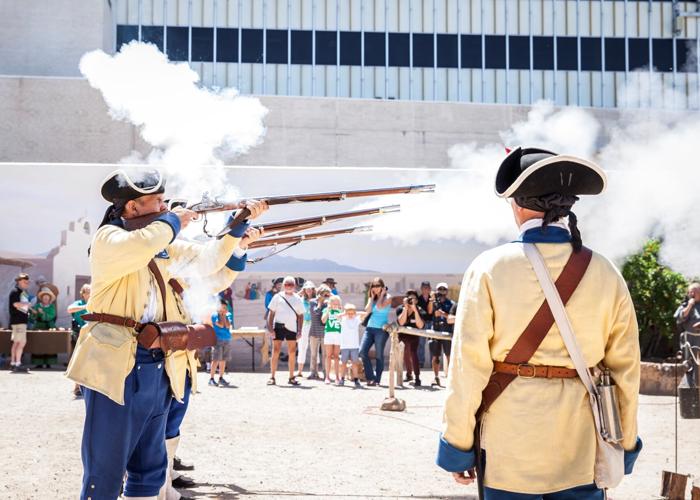
Presidio Museum “soldados” will hold a musket demonstration at the 2024 Celebration of All Things S-cuk Son/Tucson.
Digging in time
Soldiers occupied the Tucson Presidio from late 1776 until 1856, when Mexican troops finally withdrew from the area two years after the Gadsden Purchase made it part of the United States.
As Tucson grew over the ensuing decades, the crumbling fortress was gradually dismantled and built over, until the last section of wall came down with little fanfare in 1918.
The history of the place had to be pieced together later using military records and other surviving documents archived in Spain and Mexico, a handful of first-hand accounts from the fortress and scattered archaeological evidence, much of it unearthed during development downtown.
Thiel has played a major role in a lot of that work. The senior project director for local firm Desert Archaeology said he has taken part in at least 10 scientific digs within the Presidio’s 11-acre footprint since 1992.
He helped find remnants of the east and west walls, the northeast tower, the blacksmith shop and parts of two houses that once stood inside the fortress. He also excavated cooking pits, a bread oven and several deep holes where dirt was mined for adobe bricks and then gradually filled with garbage.
“There was just tons of trash. It must have been really smelly,” he said.

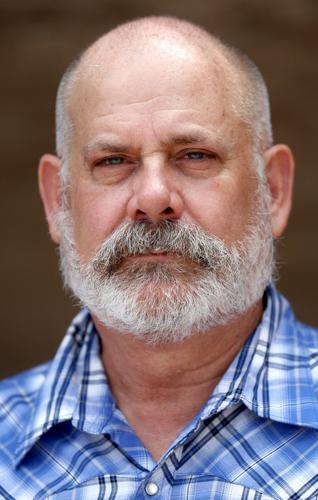
Homer Thiel, historical archaeologist, on August 15, 2025.
Along the way, Thiel has collected countless artifacts and compiled family histories for the former residents of the fortress in a 400-page book now in its fourth edition.
Early on, the Presidio’s defenses consisted of earthen berms and crude wooden palisades, Thiel said.
The adobe walls were still being built in 1782, when the Apache launched one of their largest assaults on the settlement. Work to finish the fortifications accelerated after that, with workers using wooden forms and poured material instead of individual adobe bricks.
“We could actually see that when we excavated the (northeast) tower,” said Thiel, who helped open the Presidio San Agustín del Tucson Museum in 2007 and now serves as vice president of the nonprofit trust that runs it.
The finished walls were 8 to 10 feet high and about 2 feet thick, and they stretched for 670 feet on each side, with towers at the corners rising as much as 20 feet in the air. Houses and other structures were built against the inside of the barrier, allowing soldiers to stand on their roofs and lean over the top of the walls to fire down at attackers, Thiel said.
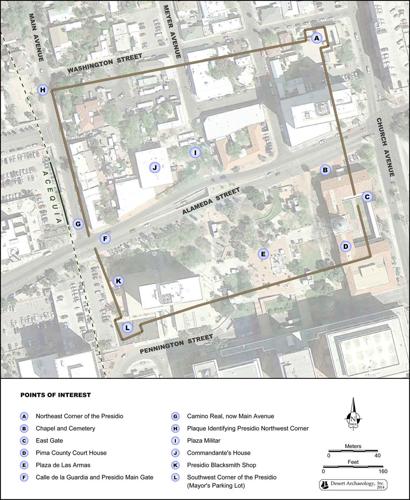
The main gate faced west, toward the river, near the present-day intersection of Alameda Street and Main Avenue. It had heavy wooden doors with a platform above them on which soldiers were posted day and night, Thiel said.
The commandant’s house was located where the Tucson Museum of Art now stands. The chapel and cemetery were located along the north side of the historic Pima County Courthouse.
Before building the January 8th Memorial at the historic Pima County Courthouse in downtown Tucson, the county conducted an archaeological dig at the construction site in 2019 that turned up artifacts from the presidio.
Human remains from the Presidio era have been unearthed during road and utility work along that stretch of Alameda over the years, including the intact grave of a Hispanic man thought to be a soldier at the fort. Based on an examination of his remains in 2021, the man was between the ages of 35 and 50 when he died, with one missing molar and signs of arthritis on his spine and right elbow.
Like most people back then, he was probably laid to rest in a cloth shroud instead of his garments, Thiel said. Clothing was too valuable to be buried.
The man’s bones eventually will be turned over to Los Descendientes de Tucson and reinterred in a plot that the nonprofit cultural organization maintains at Holy Hope Cemetery.
Thiel said there could be hundreds of other Presidio-era residents still buried beneath Alameda Street.
On their plates
The Presidio’s small adobe brick homes had dirt floors and roof beams of mesquite, cottonwood or pine covered with a layer of saguaro ribs and tamped earth. Furniture was scarce, and most people slept on mats on the ground.
When it was cold, people heated their homes with corner fireplaces. When it was hot, they slept outside on the ground or atop their roofs, Thiel said.
Doors were typically made from sticks or rawhide, and there were few windows because glass was scarce and expensive.
Most of the cooking was done outside in communal ovens or pits. Soups and stews were probably a staple, as were tortillas and bread.
Archaeological evidence and a few surviving descriptions suggest the typical Presidio diet included a mix of the maize, beans, pumpkins and squash Native Americans had been cultivating along the river for millennia and imported Old World crops such as wheat, peaches, apples, quince and watermelon.
Domestic animals provided eggs, milk and meat. Inventory records from the early 1800s show thousands of cattle, sheep and horses in the area, along with a lesser number of mules and burros that were eventually harnessed to power grain mills for making flour.
Thiel said food was generally prepared in simple Native American pots and bowls but served on fancy dishware meant to reflect cultural identity and status. Namely, that meant “brilliantly colored,” Spanish-style majolica dishes, which he said had to be carefully packed into freight wagons and hauled 1,000 miles north from Mexico City.
Though travel was slow and dangerous, and the nearest stores were at least 100 miles away in Imuris or Arizpe, imported goods did find their way to colonial Tucson, including cloth for making clothes, blocks of chocolate and jars of ceremonial wine for the Presidio priest.
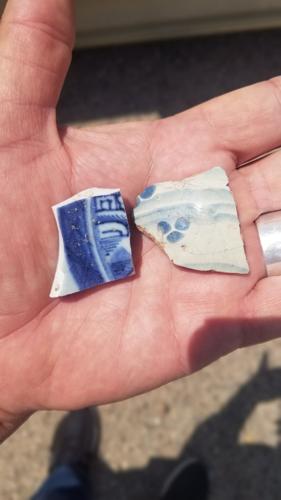
Archaeologists have also unearthed sherds of decorative dishware that crossed oceans from Europe and the Far East to reach the frontier outposts of New Spain. Such an object would have been “a high-status item, so probably only the officers could afford it,” Thiel said.
Traces of treasures from that time are still being discovered in downtown Tucson.
In June, he said, “a nice piece of Chinese porcelain” was recovered from a Presidio-era trash pit that was unearthed during the excavation for some new light poles near the Museum of Art.
Frontier living
Thiel said men living at the Presidio, soldiers included, were expected to help tend the crops and livestock that kept them fed. Children were put to work picking fruit and herding animals.
The women cooked, washed clothes and handled other household chores. Thiel said there was a spot on the rocks at the edge of the Santa Cruz where they would do laundry while soldiers stood nearby guarding them.
Presidio women of child-rearing age generally gave birth every other year, and infant mortality was high.
“If you survived into being an adult, you could expect to live into your 50s or 60s,” Thiel said. “I’m sure there were times when it was horrible to live here, but it was probably what you were used to.”

Artist Robert Ciaccio’s drawing of a Presidio-era house interior.
In 80 years, the Presidio operated under 15 different commanders and the flags of three countries — Spain, independent Mexico and the United States, when the Army’s Mormon Battalion briefly seized the fort in 1846.
For much of that time, it was home to around 400 people, including about 100 soldiers, with another roughly 500 O’odham and other Indigenous people living just outside the walls.
The 1848 census listed 509 residents at the Presidio. Three years later, a disease outbreak — most likely cholera — killed 122 residents, roughly a quarter of the population.
Violent death was also a possibility.
Thiel said the fortress or the farms immediately surrounding it were raided by the Apache “at least 80 times” over the decades, and the garrison often responded with brutal campaigns against Indigenous populations they saw as a threat in the area.
Soldiers typically agreed to serve for 10 years at a time, and the Army offered pensions to those who were wounded in battle. It was one of the only paying jobs available in New Spain at the time, so almost everyone signed back up when their service was finished, Thiel said.
“We have some of the surviving enlistment records. The men would sign with an X because none of them could read or write,” he said.
Many of those stationed at the Tucson Presidio ended up staying in Arizona or moving back here later.
“It was often a dangerous place, but it was a place where you could make a pretty good living,” Thiel said. “There are probably thousands of people in Tucson today who are related to people who once lived in the Presidio.”

A map by Desert Archaeology shows the outline of the Presidio and 12 points of interest overlaid on an aerial image of downtown Tucson.
Fortress family
Hector Soza is one such descendant.
The 96-year-old Tucsonan proudly traces his roots back six generations to one of the first soldiers to serve at the Presidio, his great-great-great-grandfather José María Sosa.
Soza said he remembered his parents talking about the family’s colonial history, so he started researching their past about 30 years ago, after he retired from a career as an engineer at Hughes Aircraft.
He ended up writing a book that follows the Sosa line — and the parallel path of Tucson itself — from the 18th century colonial period to the near present.
José María Sosa was born in 1743 in the Sonoran village of Jecori and moved with his family to Tumacacori when he was a boy. Soza said his great-great-great grandfather was baptized at the original San Xavier Mission in 1754, and joined the Spanish Army in 1770 by marking his enlistment paper with an X.
That document includes a physical description of the 27-year-old soldier that could also be used to describe Soza in his younger years: 5-foot-4½ inches tall, with black hair, brown eyes and a sharp nose.
He spent his first 6 years of military service in Tubac under the command of Juan Bautista de Anza, and then he was sent north to help establish the new Presidio in Tucson. Just before he left, he married Rita Espinosa, a girl he met in Tubac, and he took her with him.
“For the troops coming from Tubac, I’d say it was a disaster. When they moved up here, there was nothing here,” Soza said Friday from the courtyard of the Tucson Presidio Museum. “There must have been a lot of hardship in trying to get the place going.”
Records indicate Sosa participated in at least 20 campaigns against the Apache and other hostiles and was wounded once. He was gradually promoted through the ranks to become the second ensign at the Tucson Presidio.

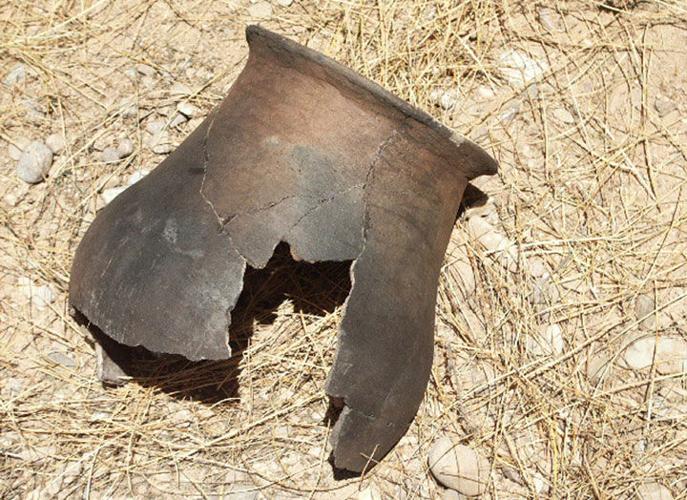
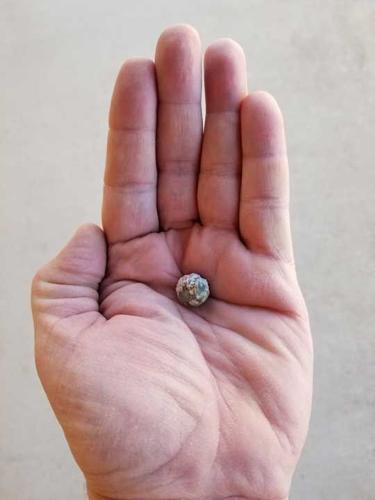
The remnants of a Native American Sobaipuri Pima bean pot that was likely used to cook soups and stews at the Presidio San Agustín del Tucson.
A 1797 census of the fortress by its military chaplain shows a son and three daughters in the Sosa household.
Soza said his great-great-great-grandfather was still serving in Tucson as a soldier for the Kingdom of Spain when he died in 1800 at age 56.
The Sosa family remained in the Tucson area and continued to make its mark.
In the 1860s, Soza’s great-uncle, José María Sosa III, built the first part of the Sosa-Carrillo house, which is now preserved as a historic landmark on the Tucson Convention Center campus and serves as the home to Los Descendientes’ Mexican American Heritage and History Museum.
At some point in the late 1800s, the Sosa name changed to Soza, possibly at the hands of a census taker or a government clerk in a land office.
Hector Soza was born in 1929 on the large ranch his grandfather homesteaded near Cascabel, east of Tucson — property that still holds a small family cemetery and features on the map with names like Soza Mesa, Soza Wash and Soza Canyon.
In addition to all his family research, Soza has spent a sizable chunk of his retirement volunteering with Los Descendientes and the Tucson Presidio Trust, for which he and his wife, Mickie, used to dress up in colonial-era costumes for reenactments before her death in 2022.
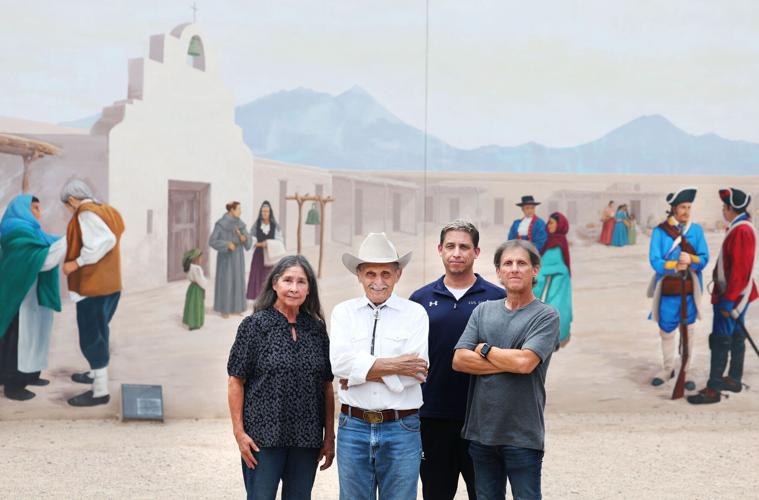
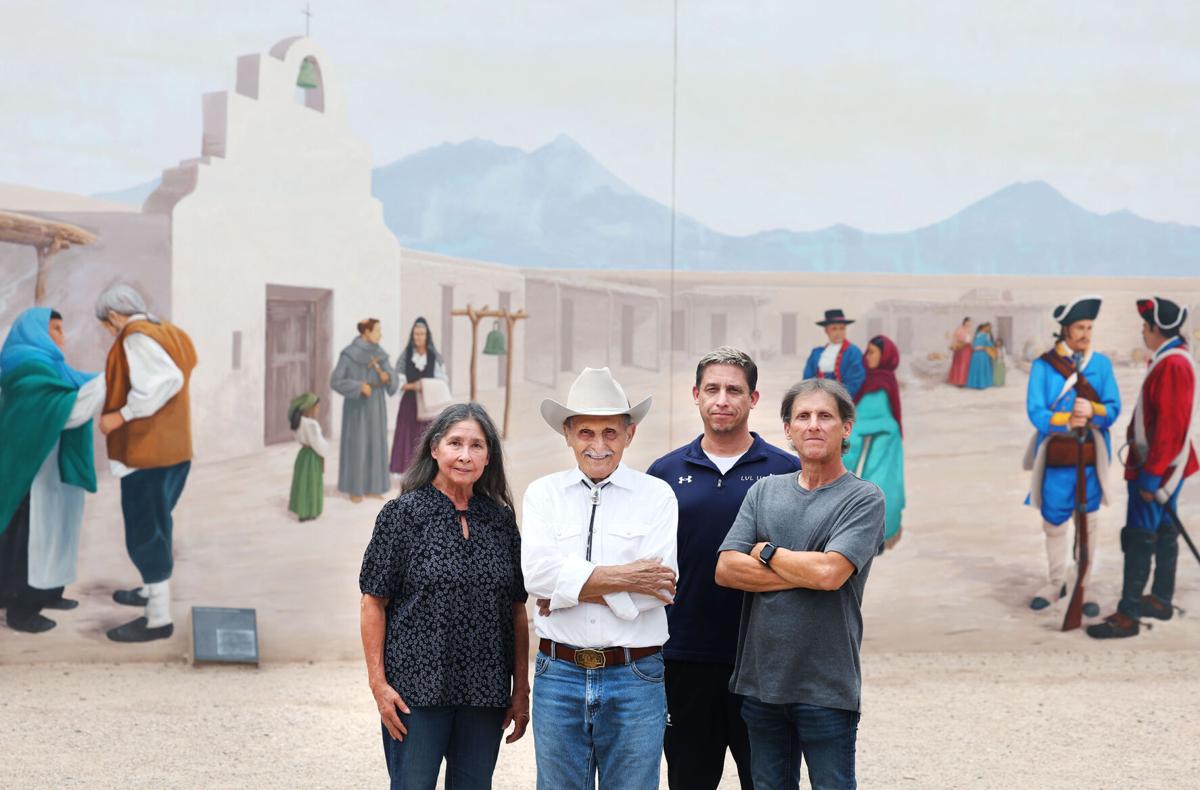
If you know where to look on the large mural in the Presidio Museum’s courtyard, you can find the couple depicted as stand-ins for Soza’s real-life pioneer ancestors.
Soza said he’s looking forward to celebrating Tucson’s 250th birthday during the official festivities on Saturday in the historic downtown block surrounding the Presidio Museum and the Museum of Art. He might even show up to the party in his replica Spanish Army uniform.
“I’m proud of who I am,” Soza said. “My (great-great-great-) grandfather left his footprints here, and I’m walking on some of them.”

