


In the hours before Enrique Mercado was killed while cycling on The Loop, the Tucson City Council had a long, delicate discussion of homelessness, addiction and mental illness.
Much of the focus, as it often is, was on how to help people living on the streets into the services they need to get their lives on track.
“We understand the issues,” Mayor Regina Romero said. “Each and every one of us on the mayor and council, we hear from our neighborhoods, we see it in the streets, the needs. We have acted consistently for the past six years on offering services and resources.”
But you could also sense a hesitant shift among council members and city officials away from concern about services and toward making the city safer for the general public — finally. You could hear it in the way Ward 6 Council Member Karin Uhlich, among others, talked.
“I need to represent folks who are on the streets in my ward, as well as people who own 1,200-square-foot brick bungalows off an alley, where they don’t feel safe even taking their dog out,” Uhlich said. “That’s not OK.”
It’s a welcome, if late, shift in perspective. For years, the Tucson City Council has focused on offering increasing services to help homeless, addicted and mentally ill people get off the streets.
They’ve helped many, but it hasn’t made a noticeable dent in the number of people doing drugs and living in our public spaces in a way that may make them unusable for other people.

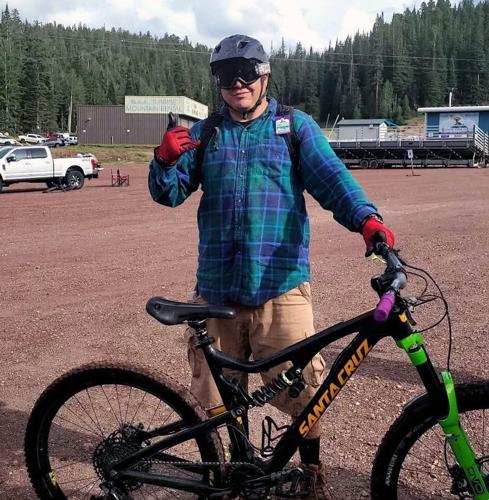
Enrique Mercado
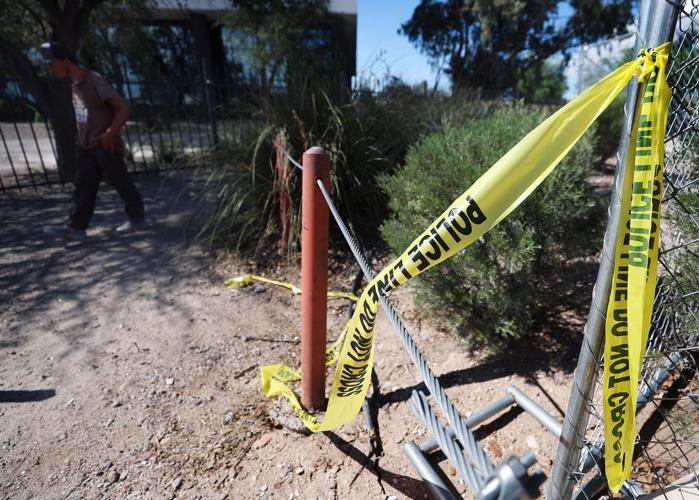
One of those notorious places is the stretch of The Chuck Huckelberry Loop where Mercado was stabbed to death on Tuesday night, on the south side of the Rillito, between North Stone and North First avenues. While the precise circumstances of the killing remain unclear, this area has been the site of repeated crimes and occasional efforts to crack down.
When I wrote about it in February 2024 as The Loop’s biggest trouble spot, things had calmed down a bit. Tucson police bicycle patrols had been able to disrupt what Council Member Kevin Dahl then called “an open-air drug market.” But if you don’t keep up the pressure, these trouble spots return to form.
This, I think, is where the City Council and Pima County Board of Supervisors need to make a shift in focus. In short, we need to stop thinking about the issue as solving people’s difficult problems, and start thinking about the issue as primarily one of securing public spaces.
City, county have taken steps
I often hear people say things like “the city is doing nothing about the homeless problem.” That’s not true. If you’ve watched council meetings or been out in some of these hotspots, you know the city has been doing a lot, for years, and Pima County has gotten serious, too. Social-service agencies, religious groups and mutual-aid groups are also out there all the time.
The city has bought hotels and converted them into transitional housing, they set up the “homeless encampment protocol” for prioritizing responses, they’ve sent out city staff, in coordination with social agency workers, day after day to try to get people to go into shelters, medical treatment or detox.
(The protocol, by the way, does help prioritize public nuisances in the way I’m proposing.)

Crime scene tape dangles near the area along on a portion of the Chuck Huckelberry Loop where Enrique Mercado was fatally stabbed Tuesday night during a group bike ride.
They’ve set up mobile showers and cooling centers. In fact, I know from city data that they’ve provided 2,696 showers since January 2023. They’ve also served 1,334 people with emergency shelter and put 283 people in supportive housing programs, among other accomplishments.
Pima County, according to a June 25 memo by administrator Jan Lesher, spent $732,058 on cleaning up camps. It’s also gotten involved in front-end solutions by, among other things, establishing the Transition Center, a one-stop shop near the Pima County jail, where people in troubled situations can get help with anything from warrants to clothing to treatment options. An average of 401 people per month visited so far in 2025 and tend not to end up back in jail.
The county is also looking at ways to address the 1,300-shelter-bed shortage in the area.
A shift in emphasis
Still, for a lot of Tucsonans, these aren’t the numbers that matter. What matters is the number of parks made safe and comfortable for families to play in, the number of bus stops cleared of fentanyl smoke and shopping carts, and, yes, minimizing the stretches of the Loop that pose a threat.
This could be a more productive way of looking at the same set of problems. We can shift the burden of local government from trying to solve the intractable issues of everyone on the street to securing public spaces for everyone.
The 2024 Grants Pass decision by the U.S. Supreme Court allowed cities to prohibit sleeping on public property. The decision could lead to cruel enforcement, as some local officials argued back then. But my argument was and is that the decision gives cities tools — it doesn’t require us to be Draconian.
We should still be offering services to people in places like Santa Rita Park and the 100 Acre Wood, and giving them time to move out, but moving them out in the end so that the general public can have those places back. We would still work hard on providing affordable housing.
But this conception also means leaving people alone if they’re living outside and aren’t causing any problems, not assuming their burdens unless they ask for help.
Drug crime proposal
Local officials have long been averse to locking people up as a solution, but there’s a growing recognition things have gone too far.
In an Aug. 26 interview with me, Romero criticized Pres. Trump as attempting to “criminalize homelessness” in his executive order on the subject, but then she added: “If someone is committing crime, then we need to make sure that we arrest them and prosecute them.”
“Fifty percent of the work that our police officers are doing in terms of arresting are not being prosecuted,” she said.
A proposal that Ward 4 Council Member Nikki Lee made at Tuesday’s council meeting would try to address that problem by making drug possession a misdemeanor crime in the city.
The reason for pursuing it, in short, is that the Pima County Attorney’s Office often drops drug-possession charges, meaning people smoking fentanyl in a park can be arrested over and over without consequence.
With a city misdemeanor crime, the entire case would take place within the city justice system, so Tucson would not have to depend on overloaded county prosecutors to carry out the city’s priorities.
Securing space for all
The City Council, the Tucson police chief and other city administrators are quick to say they don’t want to jail people for being homeless. Most Tucsonans agree with that, I’m sure.
But if people are congregating in public spaces and committing crimes like smoking meth or fentanyl, not to mention more serious crimes, we need to intervene to secure the space for everyone. In the process, maybe we can get a few people into a shelter, transitional housing, detox or treatment.
“Nobody in this community in the last four years in my time as chief has heard me say arrest is the only solution,” Kasmar told the council. “Arrest does at times play a role in leveraging folks into treatment when it’s appropriate when it’s applicable.”
Uhlich put it this way: “Jail’s not the answer. Avoiding jail can be an incentive though. I’m sorry to sound harsh, but we know some truths here.”
It’s actually not harsh, and it’s about time local government faced these truths.
If people are committing crimes and making public spaces unusable, we should arrest them, offer diversion and services as appropriate and prosecute them if not, as a way to secure these spaces for everyone.
It might have made a difference Tuesday night in a notorious spot on the Loop.

