



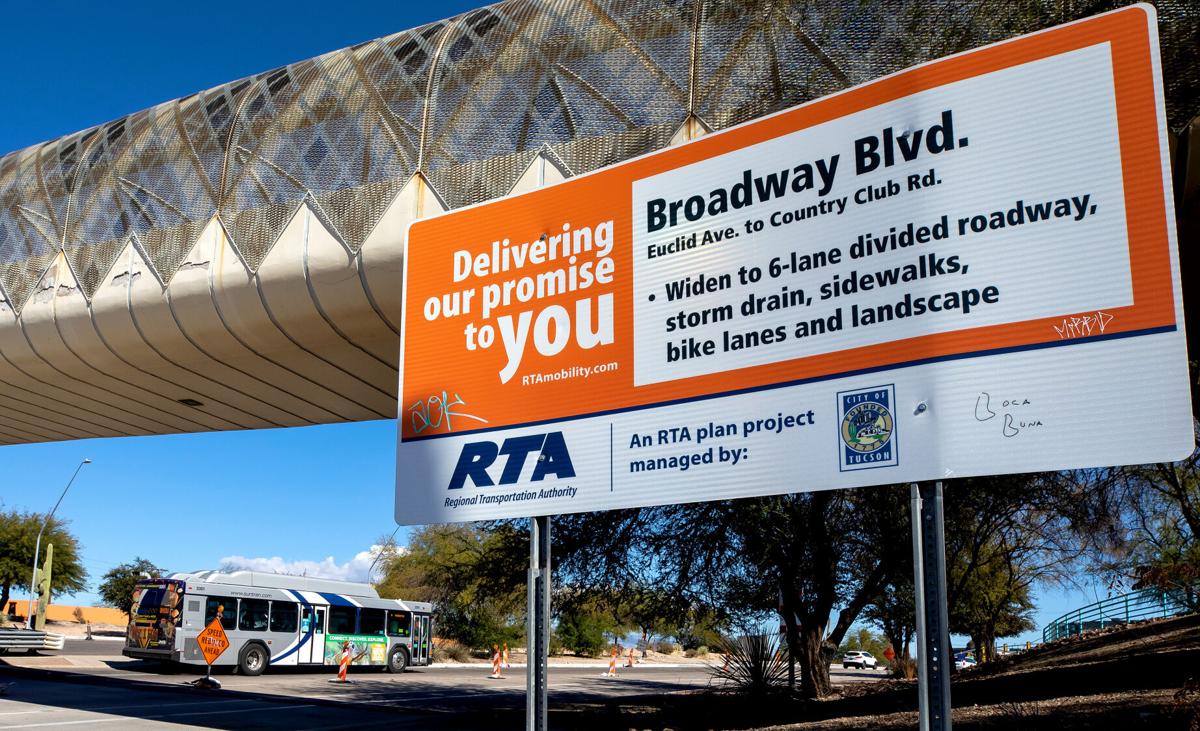
A newly released state audit of the Regional Transportation Authority shows that its projects still face a massive funding shortage, and officials seem no closer to having a specific solution to fix the problem than they were last summer.
The RTA is a road work program that uses a voter-approved sales tax to upgrade the region’s transportation network, implementing projects like street widening to reduce congestion and installing bike lanes to boost pedestrian safety.
Hundreds of millions of tax dollars have poured into the program since 2006, though the recent audit shows its work has had “mixed” success. Car crashes in Pima County have decreased by thousands under the RTA, for instance, but the rate of biker deaths increased by 35% — a higher rate than all but one of the comparison cities cited in the report.
Those are just some of many RTA successes and shortcomings listed in the audit, though all are overshadowed by one major problem: a $150 million gap in funding that continues to threaten the future of 11 major projects, the vast majority of which are located in Tucson.
“We have as much stake as the RTA does in the completion and delivery of the program,” said Tucson City Manager Michael Ortega about the shortage. “It’s really about delivery of the program as a whole as was promised to the voters. How we do that is a function of putting some more money into it (and) putting partnerships together.”
Auditors found that each of the underfunded projects require an extra $2 million to $64 million before they can be completed, blaming the “cost overruns” on factors that include rising construction expenses and unforeseen challenges like large-scale drainage problems.
This is not a new issue, however. Tucson’s RTA projects — including one on First Avenue that’s meant to fix one of the city’s deadliest roads — have been in peril for over a year, with no clear solution in sight.
It played a central role in the city’s monthslong battle with the RTA earlier this year that nearly ended with the county’s largest jurisdiction withdrawing support for the regional initiative, which could have spelled the end of the RTA when it goes up for voter renewal in 2026.
Ortega and the RTA gave few specifics about how the gap will be closed, with both saying they will work with each other to come up with the money. The RTA’s governing board also vowed to complete the projects, though the motion was similarly light on details.
“I’m confident that the RTA Board has made a commitment to deliver the program. A couple of meetings ago, a motion was made and approved that reestablished their commitment to deliver the program,” Ortega said. “Based on that motion, I’m very confident that the program will be delivered. What the configuration and the time frame of that delivery looks like, I can’t tell you because those details were not worked out.”
The RTA is only required to meet the funding amount that was listed on the 2006 ballot. With increased construction costs and inflation, that’s not enough, however, but program officials said it’s Tucson’s responsibility to cover the gap.
“The RTA will coordinate with local governments to identify non-RTA funds to complete the cost of constructing RTA projects,” a program spokesperson said. “It is the responsibility of the local government agency constructing a project to identify and provide funding for cost overruns beyond the RTA voter-approved ballot amount.”
One potential solution is decreasing the scope of some projects. It’s been proposed for First Avenue, where the change would close the funding gap for that project by focusing on safety improvements and nixing the roadway widening that was originally planned.
City officials said extra lanes on First Avenue are no longer necessary because traffic there has not increased as much as staffers predicted in 2006, though the RTA has been hesitant to change any voter-approved projects so late in the game.
Ortega also mentioned using federal grants to secure the needed funds, but that solution could be messier than it seems.
Tucson has big transportation goals outside of the RTA that require a 50% increase in the city’s annual road work budget. Officials have said federal funding will be a major part of those efforts, as well.
It’s unclear if using federal grants to pay for RTA projects would drain those resources for city-specific goals. Such a scenario could close the funding gap, but also cripple Tucson’s other transportation efforts over the next decade.
“I don’t know about that. That would be a question for the feds,” Ortega said about whether using federal funds for Tucson’s RTA projects would conflict with funding city-specific initiatives. He added that the needs of the different transportation initiatives in the region are “independent,” but there’s “an opportunity to bring in federal dollars to help the region as a whole.”
Discussions about the funding gap will be ongoing among RTA Board members for the foreseeable future. Officials from across the region remain confident that they will find the money, despite having made little progress toward a solution over the past year.

