



It’s always tempting to compare people making immigration-reform proposals to Lucy Van Pelt holding the football for Charlie Brown to kick.
“Immigration reform? Sure, sounds great!” the supporters say. “Let’s push this through for once and for all.”
Then — oops! — someone withdraws support or rallies opponents against the bill. The proposal dies, and supporters, who may have only grudgingly supported it in the first place, are left disappointed again. Some progress would have beaten no progress at all, but alas.
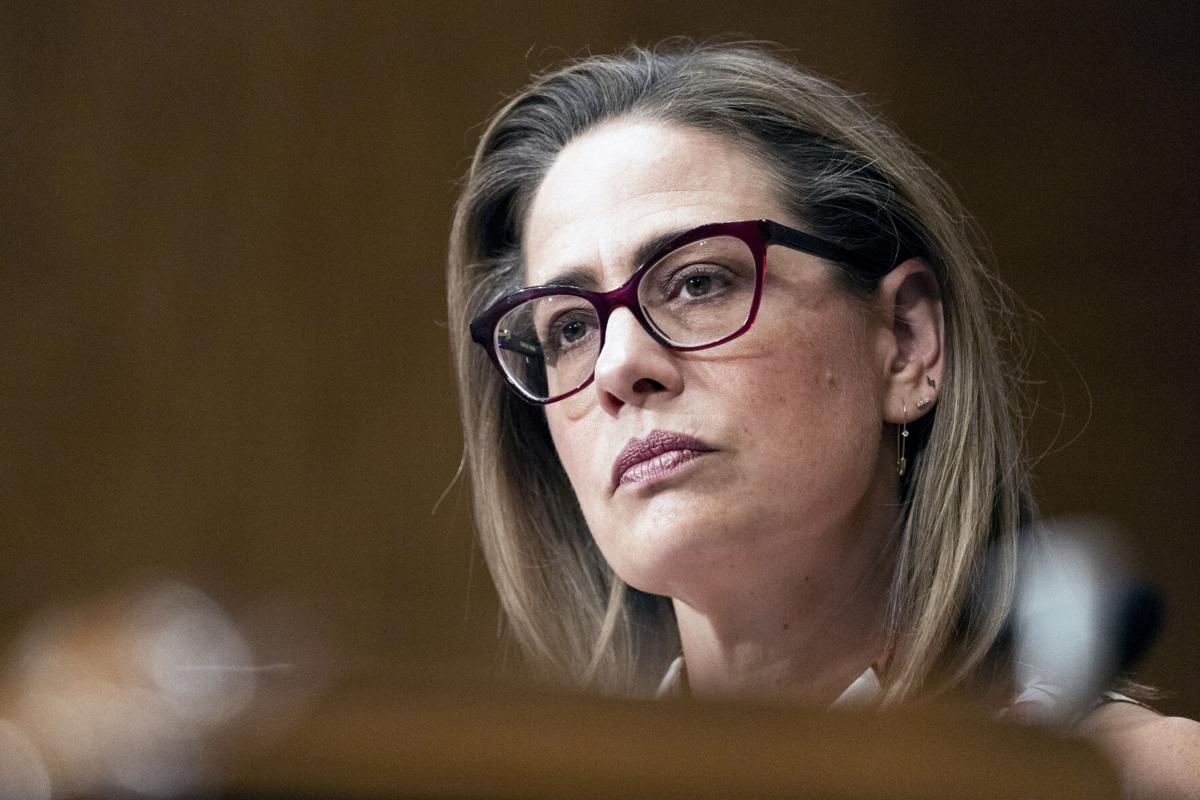
So be warned, but Sen, Kyrsten Sinema has put herself in the Lucy position again. Sinema, the centrist Arizona Democrat, and Sen. Thom Tillis, a North Carolina Republican, have agreed on a framework for an immigration reform bill they hope to push through quickly, before the new Congress is sworn in next month.
Sinema spokeswoman Hannah Hurley told me these components are not “hard and fast,” but the main planks of the draft proposal so far are:
Spending at least $25 billion more on border security efforts, including pay raises for Border Patrol agents and building regional asylum processing centers.
Accelerating processing of asylum claims, and expulsions as required, through increased hiring of asylum officers and centralization of the process at the regional centers.
Extending the rapid expulsions of people who cross the border between ports of entry for a year, or until the regional centers are ready, but using new federal law rather than the Title 42 health code to do so.
Establishing a path to citizenship for approximately 2 million people who entered the country illegally as children but maintained good records and qualified for the Obama-era DACA program — Deferred Action for Childhood Arrivals.
If this sounds familiar, that’s not surprising. These are the kinds of proposals that have populated various recent efforts at so-called “comprehensive immigration reform.”
In 2021, Sinema joined with a different Republican senator, John Cornyn of Texas, to propose the Bipartisan Border Solutions Act. They announced the “bipartisan, bicameral” bill with some fanfare in April that year. It went nowhere, but the New York Times editorial board called for the bill to be revived in an Oct. 28 piece.
This new framework by Sinema and Tillis borrows heavily from that bill, especially the emphasis on building regional processing centers for asylum claims. In practice, these would essentially be detention centers, though there is the possibility of people being released with ankle bracelets or that sort of thing.
The framework as it exists now leaves completely aside the millions of people living in the country illegally who are not eligible for DACA, either because they came to the country as adults or for another reason. Overall, it gives conservatives a lot of what they want while giving liberals one thing they really want: citizenship for DACA recipients.
This, of course, could end up being just the latest iteration in a long, sad history of efforts at reforming our immigration laws. The existing architecture of our immigration laws was established in 1952 and updated in 1965 to remove quota that favored northern and western European countries, Muzaffar Chishti, senior fellow at the Migration Policy Institute, told me.
He gave me a five-minute walk through this underwhelming story. In 1986, Congress dealt with illegal immigration through an amnesty, and in 1990, tweaked legal immigration laws. Since then, it’s been a litany of hopes raised, followed by failure.
I was there reporting in Guanajuato in February 2001 when the new presidents of Mexico and the United States, Vicente Fox and George W. Bush, held a summit and agreed to solve this migration problem. Then the Sept. 11 attacks happened .
After that, there were efforts at comprehensive immigration reform in 2006, 2007 and 2013. Remember John McCain’s involvement, or the so-called Gang of Eight? Always, Republicans in one chamber or the other scotched the bill.
“Since 1990, we’ve done almost no reform to the immigration system,” said Chishti, who is an immigration lawyer. “The Berlin Wall fell, 9/11 happened, the Great Recession happened, the COVID pandemic happened, and the immigration architecture remained the same.”
What gives a slight bit of hope now are the impending ends of two immigration policies. Title 42, the public-health measure that allowed rapid expulsions but created repeat crossings, is scheduled to end Dec. 21. And the DACA program has been thrown back to a federal judge in Texas who is likely to end it.
Add in the fact that Republicans didn’t do as well as expected in the 2022 elections while banging the drum of border alarm again, and maybe — maybe — there is hope.
“Republicans who are pro-immigration think the lame duck is their last chance to get something done,” Chishti said.
Assuming that Democrats will support the eventual bill because of the DACA provision, it will serve as a great test of Republican willingness to do anything on immigration. If they don’t buy something that gives them so much and Democrats so little, it’s safe to conclude they would rather have the political issue of immigration than solve it.
But of course, if history is any guide, this effort too will fail to become law, and then the GOP will take the House, and there will be pressure on House leaders to do nothing but build walls and add border agents.
In that case, I suppose, Sinema wouldn’t just be Lucy, but Charlie Brown, too. After all, while she keeps putting these proposals up, these cartoon footballs teed on the ground, she never gets to kick them either.
Let’s hope this time we don’t all end up flopped on our backs again.
New drone footage of the shipping containers at the Arizona border in the Coronado National Forest. The barrier has expanded to 3.25 miles. Video courtesy of Sky Island Alliance

