


A faculty leader is criticizing the University of Arizona’s processes for handling dismissal cases, saying President Suresh Garimella’s delegation of that responsibility entirely to the provost’s office seems to be undermining conciliation efforts and employee rights.
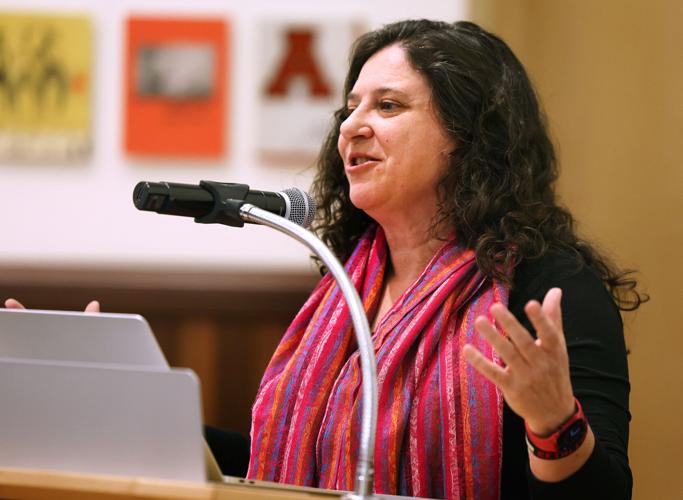
“The provost’s office has undermined best practices on serious disciplinary action in three discernable ways,” UA Faculty Senate Chair Leila Hudson wrote to Garimella on Dec. 10.
“First, it appears to be undermining mandatory conciliation efforts that are mandated and traditional,” she said.
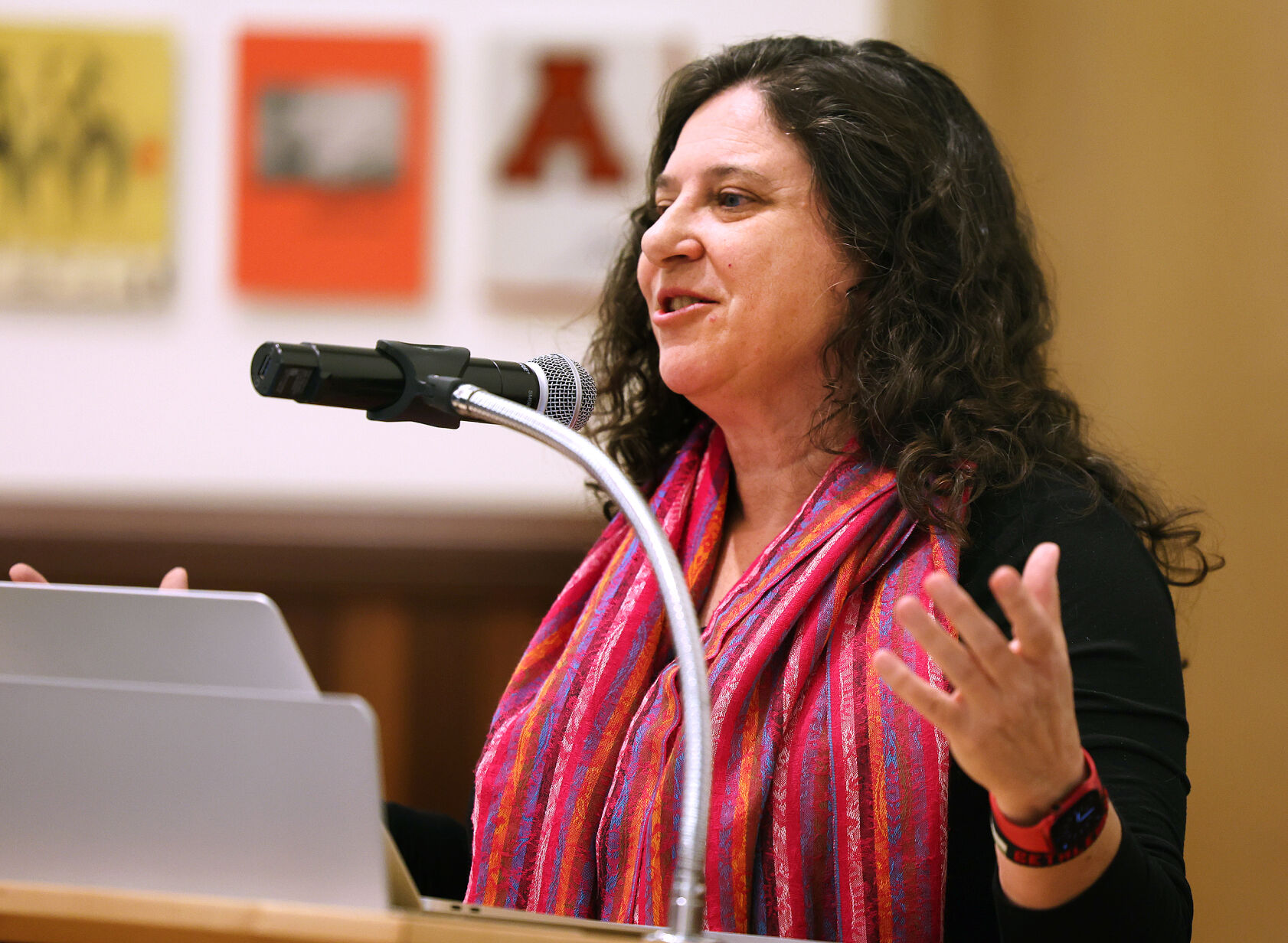
Faculty Senate Chair Leila Hudson
“Second, it seems to be routinely bypassing Loudermill rights of public employees to due process,” she continued, referring to rights established by a Supreme Court case known as Loudermill that include receiving appropriate notice of charges and evidence and an opportunity for a pre-disciplinary hearing before losing a public-sector job.
“And third, it has issued in one case an intimidating ultimatum that appears to urgently pressure a faculty member into voluntarily resigning within days,” Hudson wrote, without divulging details of any of the cases.
Garimella wrote a memo on June 24 to Provost Patricia Prelock, delegating to her the authority to oversee matters such as contract renewals and non-renewals, dismissals, furloughs and placing employees on leave.
UA spokesperson Mitch Zak said, “It is common practice at universities for the president to delegate certain academic personnel authorities to the provost, who serves as the institution’s chief academic officer.”
"While we do not generally comment on personnel matters, Provost Patricia Prelock and university leadership are committed to accountability and to ensuring all employees fulfill their responsibilities to students and the university. The provost will address these issues directly with the chair of the Faculty Senate in the near future," Zak said.

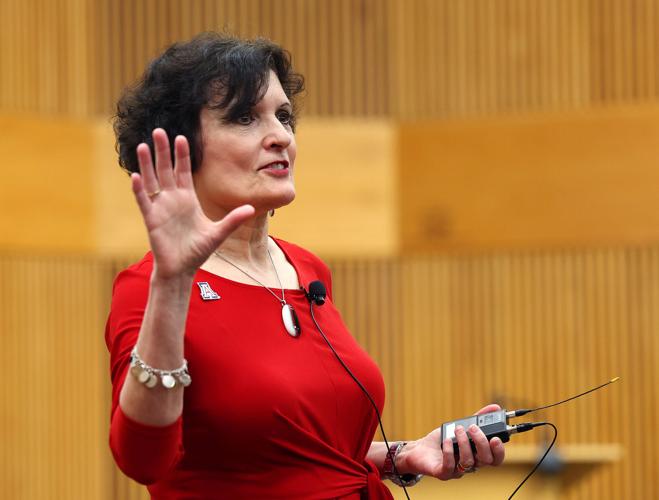
UA Provost Patricia Prelock
Zak did not respond to the Star’s request for an interview with Prelock or to requests for comment from her or Garimella about Hudson’s statements in her letter.
Prior to Prelock taking over the dismissal responsibilities, Garimella would have been the third and final authority to review a dismissal recommendation. Since Garimella now doesn’t have to sign off on a dismissal, there is one less step in reviewing it.
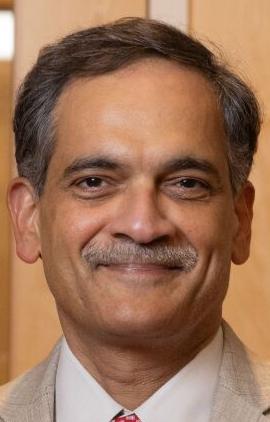
UA President Suresh Garimella
Additionally, in the past, UA’s Committee on Conciliation conducted conciliation talks with a faculty member facing dismissal and the college administrator recommending dismissal, and also investigated the circumstances and evidence.
Keith Maggert, chair of the UA Committee on Conciliation and an associate professor of molecular and cellular biology, said the conciliation committee, named by the Arizona Board of Regents, should not be cut out of the evaluation process.
Maggert said Prelock, in her handling of dismissal processes, doesn’t give due credit to precedents of how the university has worked. He said that while her actions may be allowed by policy, he thinks they are “terrible ideas in the way that they create a conflict between faculty and administration.”
“We on the Committee on Conciliation agree wholeheartedly in situations that would be just cause for dismissal for faculty. But I think what this does is it places all the power in one person’s hand to unilaterally dismiss somebody on shaky grounds,” Maggert told the Star.
In her letter to Garimella, Hudson referred to three cases to illustrate her points.
One recent dismissal case being handled by Prelock’s office is that of English tenured professor Matthew Abraham, who contends he was dismissed from teaching his fall classes as retaliation by the UA after he spent years suing it over public records and criticizing its hiring processes that he claimed were based on diversity, equity and inclusion.
According to his department head and college dean on the other side, Abraham did not appropriately handle his duties for fall classes, failed to disclose external employments, and “threatened” his department head in email communications.
Abraham is appealing his dismissal. The case is awaiting a report by the UA Committee of Academic Freedom and Tenure, which held two hearings in November and December to listen to Abraham’s and UA’s arguments. The report will then be submitted to Prelock for her to make a final decision on his appeal.
In Abraham's case, the Committee on Conciliation was to meet with him and his college dean to hear both sides. Hudson said Prelock’s office substituted itself, in this process, for Dean Lori Poloni-Staudinger of the College of Social and Behavioral Sciences. This led to an “unprecedented conciliation failure” where members of the committee declined to conciliate without the dean, said Hudson.
Maggert told the Star his committee felt it was “highly unusual and highly problematic” for the provost’s office to substitute the dean’s role with the vice provost for faculty affairs, Andrea Romero. When the committee was told it had to do it this way, Maggert said it decided against conciliation because it wouldn’t be as meaningful.
He said he doesn’t know if this is a blanket change in the conciliation process, but that under Prelock, there have been two cases that came to the conciliation committee, and in both, she had the vice provost involved instead of the college dean.
Hudson also referred to a case in which the provost’s office, in a manner Hudson said suggested retaliation against the conciliation committee, “rejected the good faith recommendations of the process and itself usurped the committee’s role by declaring a ‘failed conciliation’ not on procedural grounds, but apparently because it did not like the outcome.”
In a letter Prelock sent regarding this case, the provost told Maggert it was her understanding that the committee couldn’t reach a resolution with the parties and that she disagreed with his position that the committee was tasked with “fact-finding, advocating for a particular party, or questioning the actions of the college.”
“That is contrary to the spirit of a neutral conciliation process,” said Prelock. “There are many factual errors in the report the committee generated, and it is far beyond the scope of the committee’s role to supplant the judgment of the college. Because this document exceeds the authority of the committee under ABOR policy, I do not accept it and will move forward only on the information that conciliation failed.”
In response, Maggert said “conciliation” was different from “mediation,” with the former being a more active process guided by and with the input of conciliators. He said the conciliation committee disagreeing with the parties is a normal part of the process and cannot be interpreted as a “failure.”
Hudson wrote that Prelock’s office is “routinely bypassing” employees’ rights to get appropriate notice of charges and have a hearing before being dismissed. She said the office has “displayed carelessness and disregard” in handling dismissal recommendations with adequate attention to the charges, evidence, context and need for due process.
Hudson said Prelock has undermined the conciliation process and “aborted the only pre-dismissal meeting in which the accused could ask and answer questions about the charges and evidence against them.”
“Declaring a ‘failed conciliation’ may be designed to prevent the faculty member’s appeal letter and supporting evidence from being recognized or circulated to impartial mediators prior to the termination,” Hudson wrote.
In her final point, about an “intimidating ultimatum” issued to a tenured faculty member whom she did not name, Hudson said it asked him to “‘voluntarily resign’ within less than a week and thus forego his right to a formal Committee of Academic Freedom and Tenure hearing in return for an additional semester of half pay.”
She described this incident as unlike anything she’s seen in her career and said it “suggests the belated realization of weakness of the dismissal case, the lack of due diligence in the provost’s office, and the lack of concern from the provost’s office for due process.”
“Please encourage Provost Prelock to review ongoing dismissal cases and get her house in order before the University incurs more exposure to public scrutiny and litigation,” Hudson wrote, in closing, to Garimella.
Hudson told the Star she received a note of acknowledgement from Prelock and that they’ve discussed meeting about this once the new semester starts in January.

