


A University of Arizona committee is investigating the dismissal of a tenured English professor who alleges the university targeted him after he spent years suing UA over public records and criticizing its hiring processes, claiming they were race-based, discriminatory or preferential on the grounds of diversity, equity and inclusion.
UA officials counter that professor Matthew Abraham was dismissed because he said he couldn’t teach his fall undergraduate class in person as they required, and because he sent an email to his department head that they deemed threatening. This came after years of “abusive and toxic” emails he sent, his department head said.
Abraham, who has been at the UA for 13 years, is now on administrative leave from his $99,245 position while the Committee of Academic Freedom and Tenure considers his appeal of his dismissal.
Abraham was informed on Aug. 19 by his department head, Cristina Ramírez, that she would find a replacement to teach his fall undergraduate writing course, after she said Abraham failed to confirm if he would be able to teach the assigned course in-person. Abraham said he had communicated with Ramírez and Lori Poloni-Staudinger, dean of the College of Social and Behavioral Sciences, on Aug. 15 that he would teach the course but would use a mixture of online modalities.
In an Aug. 19 email to UA Provost Patricia Prelock, Poloni-Staudinger said Abraham’s two outside employments at the time with the Arizona Attorney General’s Office and the Tucson City Attorney’s Office, both of which have since ended, created a conflict of commitments.
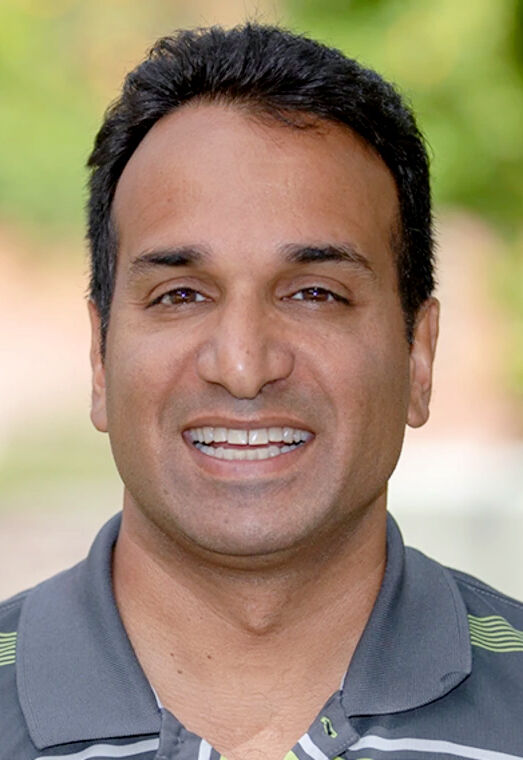
Matthew Abraham
“Dr. Abraham accepted these positions knowing that he could not perform the duties and responsibilities of a full-time employee for one agency without neglecting the duties of the other agency. However, he refused to acknowledge this obvious conflict and incompatibility of these roles,” Poloni-Staudinger wrote to Prelock.
“I have reason to believe Dr. Abraham told students in ENGL 468, the course in question, that the course could be shifted to an online modality. This was after Dr. Abraham was told by Dr. Ramirez that the modality and time would not be changed because of his outside employment and he was not to communicate to students about a modality or time change,” Poloni-Staudinger continued.
Prelock approved Poloni-Staudinger’s request to dismiss Abraham a day after that email. The provost, as the university’s top academic officer, has been designated by UA President Suresh Garimella to handle matters of contract renewals and non-renewals, dismissals, furloughs and placing employees on leave.
Due to the Tucson City Attorney’s Office position, where Abraham was an assistant prosecutor, he had informed Ramírez and Poloni-Staudinger he would not be able to teach the course in-person on Tuesday and Thursday afternoons, which led the two administrators to say he wasn’t fulfilling his job responsibilities and to request his dismissal.
In addition to the city attorney’s position that made him unavailable to teach in-person, Poloni-Staudinger also said Abraham had accepted full-time employment with the Arizona Attorney General’s Office in 2024 despite being employed full-time at the UA. She said he didn’t disclose the Attorney General’s Office employment until after he began work in that position.
In Poloni-Staudinger’s second point in requesting Abraham’s dismissal, she said he violated the UA’s safety environment requirement. She specifically cited an email sent by Abraham to Ramírez, his department head and supervisor, on July 22, in which he copied over 30 people, including Prelock, Vice Provost of Faculty Affairs Andrea Romero, Senior Vice President for Research Tomás Díaz de la Rubia and Chair of the Faculty Leila Hudson.
In that email, Abraham called Ramírez “servile, spineless, pathetic, disgraceful” and wrote, “Thanks for showing that you do not know what you are talking about, with your usual false piety.” Among other things, he also said her appointment as head of the English department while still an associate professor was a violation of UA policy and that hence, the department had had an “illegitimate department head” for at least a year.
“One would hope that someone in a supervisory capacity would have read up on the relevant policies governing faculty notices of reappointment before opining about non-existent ‘contractual duties,’ ” Abraham wrote.
“Knowledge of, and compliance with, policies has never exactly been one of your strengths,” he continued. “Sadly, your subsequent promotion to full professor, the in-rank vote for which has been publicly withheld, has not led you to actually take any principled stands either for or in defense of the English Department faculty, as rank political opportunism continues to guide your actions.”
An Aug. 15 report and formal complaint — submitted by Ramírez to the College of Social and Behavioral Science dean’s office, the provost’s office, faculty affairs and human resources — said Abraham’s email was “deemed unprofessional, harassing, and sexist, triggering trauma and fear within the English Department.” The complaint said the email violated multiple UA policies, including “professional conduct, anti-harassment, and personnel privacy, and may also breach Arizona’s electronic harassment law.”
“This email was inappropriate, unprofessional, harassing, and sexist, and used tones of verbal violence. I left the office on that morning of July 22 not feeling safe in the building or in my position as department head,” said Ramírez in the formal complaint filed almost a month after the incident, in which she noted she reported the email to Poloni-Staudinger the morning it was sent. “The University of Arizona has a very recent history of institutional trauma brought on by the murder of department head, Tom Meisner (Meixner), in his own office. This email triggered this trauma and caused in me a fight-or-flight response.”
Thomas Meixner, who was head of the UA’s Department of Hydrology and Atmospheric Sciences, was shot and killed on campus in 2022 by a former graduate student, Murad Dervish, who had a history of sending threatening messages to UA employees. Dervish was sentenced in June 2024 to natural life in prison without parole.
Ramírez said she felt an “immediate shock” and “a degrading sense of professional standing within the department and the university,” since Abraham’s email was public and sent to so many university members. “Although there were no overt threats to violence in the email, the tone of the email is demeaning, belittling and still had a chilling effect on me as well as others in the department,” she said.
Ramírez said Abraham had used the policy of academic freedom as a “smoke screen to justify his bullying pulpit” for years in the English department, adding that in years of “abusive and toxic emails,” she and past department head Aurelie Shehaan, who is now deceased, “had to remain silent and not respond to his reproaches.” “The silence, however, puts me and others in the position of seeming to publicly condone his hostile emails, which in turn gives the impression that I have not tried to address this toxic behavior,” Ramírez said.
She asked the university to take certain actions against Abraham, including that, if he were to be put on administrative leave, for him to also be placed on a protective order immediately restricting his access to campus. “Putting this protective order in place will ensure the safety of myself, staff, and other faculty and provide a consequence if the order is violated,” she said.
Abraham’s history within the English department included his submission of a grievance with the Grievance Clearinghouse Committee in 2020 about former department head Shehaan when she was the English department chair, saying she was impeding his academic freedom. The committee went on to conduct a conciliation process between the two parties, which documents say was a “partial success,” with Shehaan agreeing to consider one session on academic freedom while Abraham had asked for three department-wide sessions.
Abraham is also part of two lawsuits — one public records lawsuit now before the Arizona Supreme Court, which was first filed in Pima County Superior Court in 2021, and a second more recent federal lawsuit filed by the Liberty Justice Center about a claim Abraham filed with the Equal Employment Opportunity Commission in 2022.
Both lawsuits were based on Abraham’s complaints to UA officials about what he contended to be “discriminatory hiring and selection practices that, in his view, unlawfully favored candidates based on race and other protected characteristics.” Overall, his complaints included “formal internal grievances, public records requests, and written communications to UA leadership opposing such practices” between 2017 through 2022, according to court documents.
Between November 2018 and September 2020, court documents say Abraham submitted multiple public records requests under Arizona’s Public Records Law to get documents on UA’s faculty hiring, leadership appointments and committee proceedings. He also wrote a letter in September 2020 opposing UA and the Arizona Board of Regents’ participation in what he called instances of race-based discrimination and practices favoring DEI criteria in ways that adversely affected him in hiring and selection decisions, court documents show.
Following this, he filed a “charge of discrimination” with the Equal Employment Opportunity Commission in August 2021, saying the UA was racially discriminating against him — a natural born U.S. citizen of Indian heritage — and denying him leadership positions in the English department. The commission later found this claim to be ”unperfected,” court documents show.
In September 2021, Abraham also took legal action in Pima County Superior Court against the Arizona Board of Regents, which oversees the university, seeking compliance with the public records law regarding hiring and selection information. His opposition to the use of DEI and race in making hiring-related decisions continued.
He filed another “charge of discrimination” in March 2022 saying the UA was retaliating against him by keeping him out of university governance groups, including the Committee on Academic Freedom and Tenure and UA’s Academic Program Review. He alleged UA officials label and exclude certain faculty members as “problematic,” including those who “filed grievances” or “challenged administrative practices,” or were considered “impartial faculty” with “hidden agendas,” “problems for the university” or “not easy to work with.”
UA Faculty Secretary Katie Zeiders, who was a nominating committee member in October 2021, recorded Abraham being labeled as “ineligible” due to officials’ personal experiences and rumors that he was “problematic,” using that to disqualify him from being a part of the Committee of Academic Freedom and Tenure.
The Committee of Academic Freedom and Tenure held two hearings in November and December on the appeal of Abraham’s dismissal. After the final December hearing, the committee will now write a report to be submitted to Prelock within 30 days, and then she will have 45 days to make a decision on Abraham’s appeal.

