



The provost’s office at the University of Arizona will invest $200,000 in a new, one-time bridge funding program to support students working on grant projects whose federal funding has been paused or stopped.
The program will be in addition to the $1 million bridge funding program started earlier this year by the UA Office of Research and Partnerships for faculty, staff and students facing grant funding cuts by the Trump administration.
The provost’s one-time initiative for spring 2026 will provide bridge funds to university grants that “directly support student success, including academic support, advising, mentoring, experiential learning, assessment and related activities,” said UA spokesperson Mitch Zak.
It is to ensure that “high-impact, student-facing initiatives” are supported during temporary funding gaps, he said, until permanent funding is secured.
The money will be provided for up to one semester or a maximum of six months, and will be provided in amounts ranging from $10,000 to $50,000 to be spent through June 30, 2026.
The program began accepting requests on Nov. 24 and will do so through Jan. 5, before decisions are made by Jan. 13.
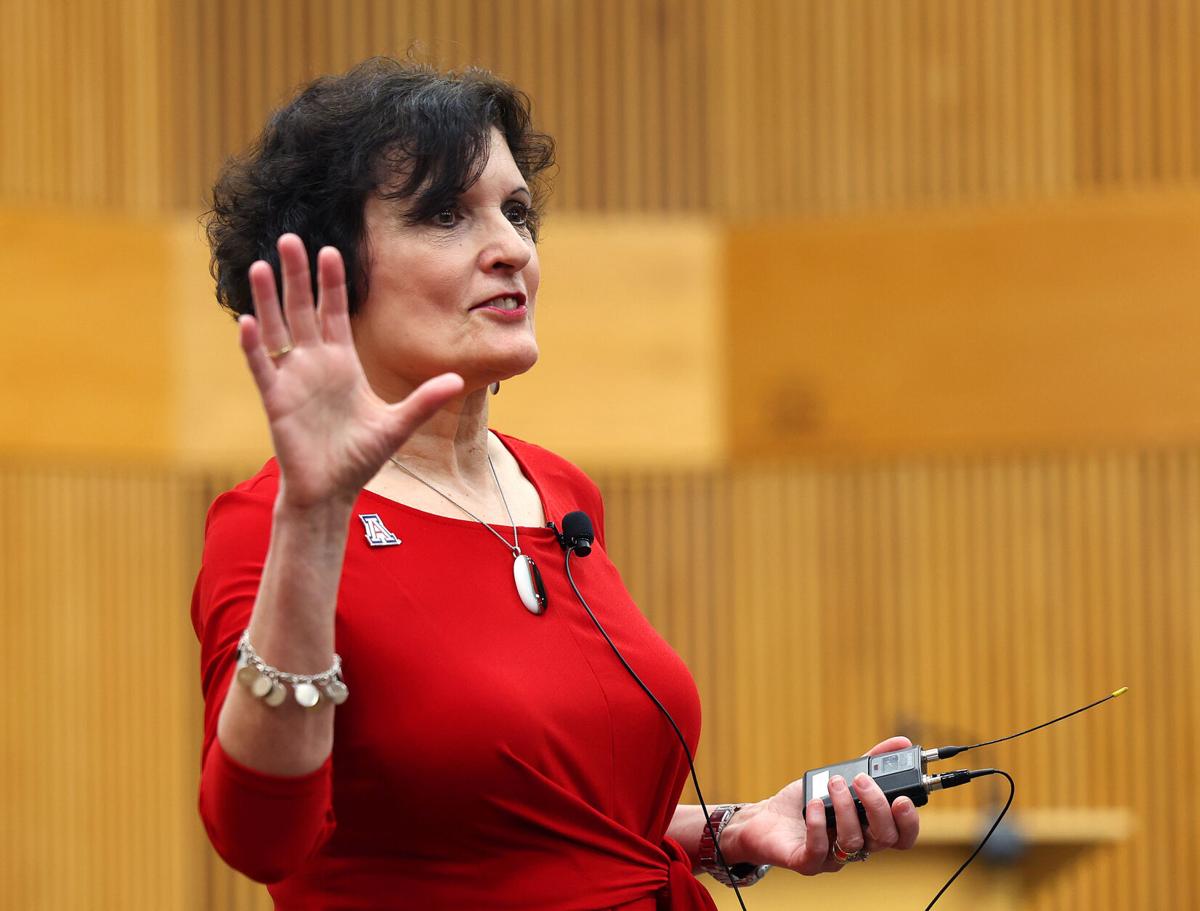
“This program will provide short-term institutional support to principal investigators and project teams to maintain momentum when experiencing temporary gaps or delays in federal funding,” Provost Patricia Prelock wrote to the Faculty Senate in a December report.
The provost office’s bridge funds can be used for direct student support, such as undergraduate and graduate wages or stipends, tuition support, advisors or mentors, program coordinators, materials and supplies, and student-focused data or evaluation work, said Zak.
The program will be evaluated after the spring semester to determine how to move forward.
Since becoming UA provost in May, Prelock has emphasized her goals of supporting and improving student graduation and retention rates. Her goal is to increase student retention by 2% each year over the next three years so that the UA gets to 90%, and to increase graduation rates by 2% over the next five years so they reach 65% for four-year graduation and 85% for six-year graduation.
The aim of launching the bridge program, in addition to the fund previously created by the office of Senior Vice President of Research and Partnerships Tomás Díaz de la Rubia, is to cater to student grants that may fall outside the original program’s eligibility criteria, said Zak.
“Provost Prelock, graduate college leaders and the broader university community recognize the importance of supporting graduate students,” he said. “Providing competitive stipend levels for graduate students is essential to recruiting highly qualified applicants who will contribute meaningfully to the University of Arizona’s research and teaching missions.”
The Trump administration has targeted federal research funding this year for universities, pausing or stopping some ongoing projects and reducing the percentage of overhead costs covered by grants. As of May, federal agencies had eliminated 73 research awards and grants at the UA, totaling nearly $61 million in unspent funds; more recent tallies haven’t been provided.
The National Science Foundation had terminated the most research grants at the UA as of May, but the largest amount of money lost was through grant terminations by the National Resources Conservation Service, the U.S. Agency for International Development and the Environmental Protection Agency, officials said.
UA colleges affected the most by terminated grants as of May included the College of Engineering, the College of Social and Behavioral Sciences, the Zuckerman College of Public Health, the College of Medicine, and the College of Agriculture, Life and Environmental Sciences.
The White House offered a higher education compact, initially to nine universities, including the UA, which would give them preferential access to federal funds if they agreed to a list of financial, ideological and political demands. The UA declined to sign the compact, saying academic freedom, merit-based research funding and institutional independence must be preserved.
See the A1 covers from the past for this day in history.

