



When the videos come on my phone or computer these days, I often look away.
What they show is so upsetting, so enraging, that I avoid them to be able to continue with my day, or get some sleep. Seeing children zip-tied, or angry, masked agents smash the windows of a car to pull out a baby’s father, or a praying pastor shot in the head with a pepper ball, or concerned neighbors thrown to the ground, has a way of breaking one’s focus.
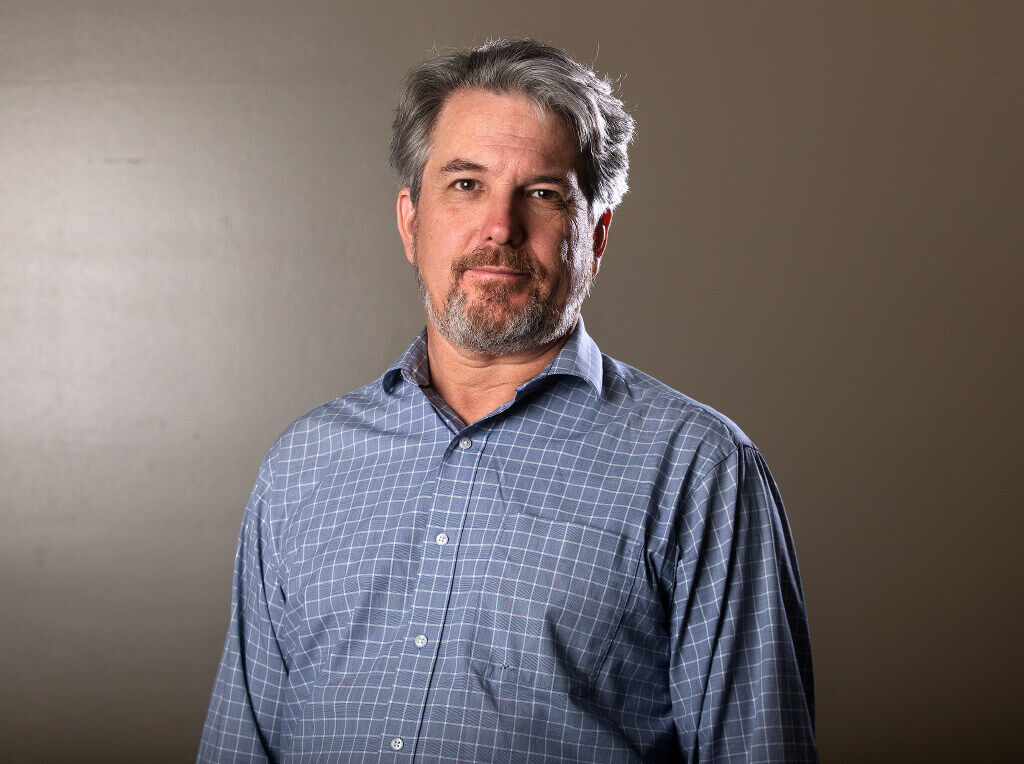
Arizona Daily Star columnist Tim Steller
But then one of the irreverent videos sneaks in to my feed — like the one of a protester wearing an inflatable frog costume, dancing as federal agents fire pepper balls toward this green menace. Or I see costumed troupes mimicking the actions of federal agents as they try to act intimidating. And I think: There is a way.
As the next No Kings day nationwide protest comes up this Saturday, with demonstrations planned around the Tucson area, the Trump administration is trying to frame its opponents nationwide as a terroristic, paid force that is inciting violence.
“I mean, this is part of Antifa, paid protesters. It begs the question, who’s funding it?” Transportation Secretary Sean Duffy said on Fox Business on Monday.
The Trump administration is even working to reframe constitutionally protected protests against the government’s actions as the “culmination of a sophisticated, organized campaigns of targeted intimidation, radicalization, threats, and violence.”
The accusation of payment is undoubtedly hilarious to all the people who’ve organized and joined protests around Tucson since Trump resumed the presidency in January. This hard core of mostly middle-class, middle-aged and retired people hardly had to be paid to protest and must wonder where those paychecks went.
They were mad before. And since the days of Saturday morning demonstrations outside the Tucson Tesla dealership, the reasons to feel enraged have only grown.
In September, the U.S. Supreme Court issued a temporary ruling that allows racial profiling: Federal agents may stop and detain people based solely on their race or appearance.
Pres. Trump declared the people of Democratic-run cities like Tucson “the enemy from within” and pledged to use the military against us.
ICE and Border Patrol agents began their heavy-handed attack on Chicago, shooting, pepper-spraying, glass-smashing and tackling their way through the metropolis.
Violence politically counterproductive
Rage is a natural response to abuses of power. It is miraculous that federal agents in Chicago have been almost exclusively the deliverers, not the recipients, of violence there, since fighting back against bullying and injustice is so natural to people of good conscience.
But violence of any sort is a no-win destination for demonstrators and government opponents. That’s one of the reasons local organizers of anti-Trump demonstrations have been so keen to emphasize non-violence.
“One of the ways to focus people on the administration’s violence is to avoid committing violence ourselves, so that it’s clear the violence comes from one side and one side only,” said Bennett Burke, who has been organizing local protests, now in the name of a new coalition called Defend Tucson/Tucson Se Defiende. In Tucson, “We have not yet seen that kind of violence as we’re seeing in the national news. But because the Trump administration is targeting blue cities — well, we’re living in one.”
Much-talked-about research shows that violence, beyond the questionable morality, is also politically counterproductive. Researcher Erica Chenoweth’s famous studies show that when at least 3.5% of a country’s population has mobilized in a concerted, nonviolent action against its government, that government typically falls. In the U.S. context, 3.5% of the population is about 12 million people.

A protester in a frog costume at ICE protests in Portland, Ore. has become a viral sensation. The frog, part of the “animal army” at the protests, mocks the intimidating federal agents themselves, and the attempt to caricature protesters as violent.
The success rate is true of nonviolent movements, but violent movements tend not to work out as well. Out of 323 political movements Chenoweth studied, nonviolent movements had a 53% success rate, while violent movements had a 26% success rate.
Of course, no one thinks the No Kings protests are going to overthrow the Trump government. They’re just an exercise of our threatened rights to assemble and speak.
Mockery, satire lightens mood
From the Trump administration’s actions and statements, they seem worried about protest movements. They’ve been building a case that all protesters are paid plants and/or budding terrorists.
A Sept. 25 presidential memorandum says, “The United States requires a national strategy to investigate and disrupt networks, entities, and organizations that foment political violence so that law enforcement can intervene in criminal conspiracies before they result in violent political acts.”
Trump allies have insisted, especially after the killing of Charlie Kirk, that calling Trump or his movement “fascist” is equivalent to inciting violence. It’s not, of course.
The truth is, opposition to Trump administration actions, even on immigration, is an opinion held by the majority of Americans. If a mass movement can avoid violent images, it has a good chance to move the public and make them comfortable voicing their own views.
That’s part of the reason why I find the growing inflatable frog brigade at protests, especially in Portland, so compelling. This “animal army” serves to welcome a broader public while mocking the intimidating federal agents themselves and the attempt to caricature the protesters as violent.
“It was just to contrast the narrative that we are violent extremists,” Seth Todd, who started the inflatables trend in Portland, told the New York Times.
Nothing cuts self-serious politicians like mockery and satire do. In a time of justified rage, it also lightens the mood.

