



It’s been 35 years since Congress created a national conservation area along the San Pedro River and told the U.S. Interior Department to file a legal claim to determine how much water it has the right to carry.
Now, dozens of hours of testimony and hundred of pages of legal paperwork later, a judge has for the first time “quantified” those water rights in a ruling. The ruling could provide legal ammunition for environmentalists and others seeking to limit groundwater pumping documented to have reduced river flows for decades.
At stake is how much water legally belongs to the San Pedro Riparian National Conservation area. It covers nearly 57,000 acres and stretches 40 miles long and two miles wide along the river from the Mexican border to just south of Benson in the vicinity of the St. David Cienega.
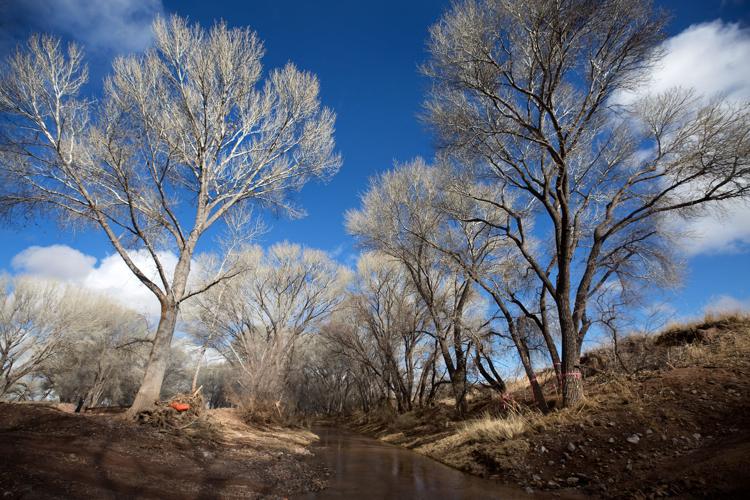
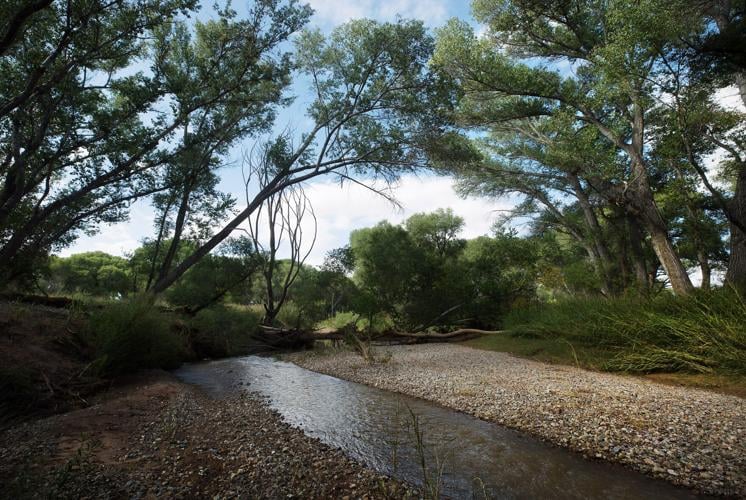
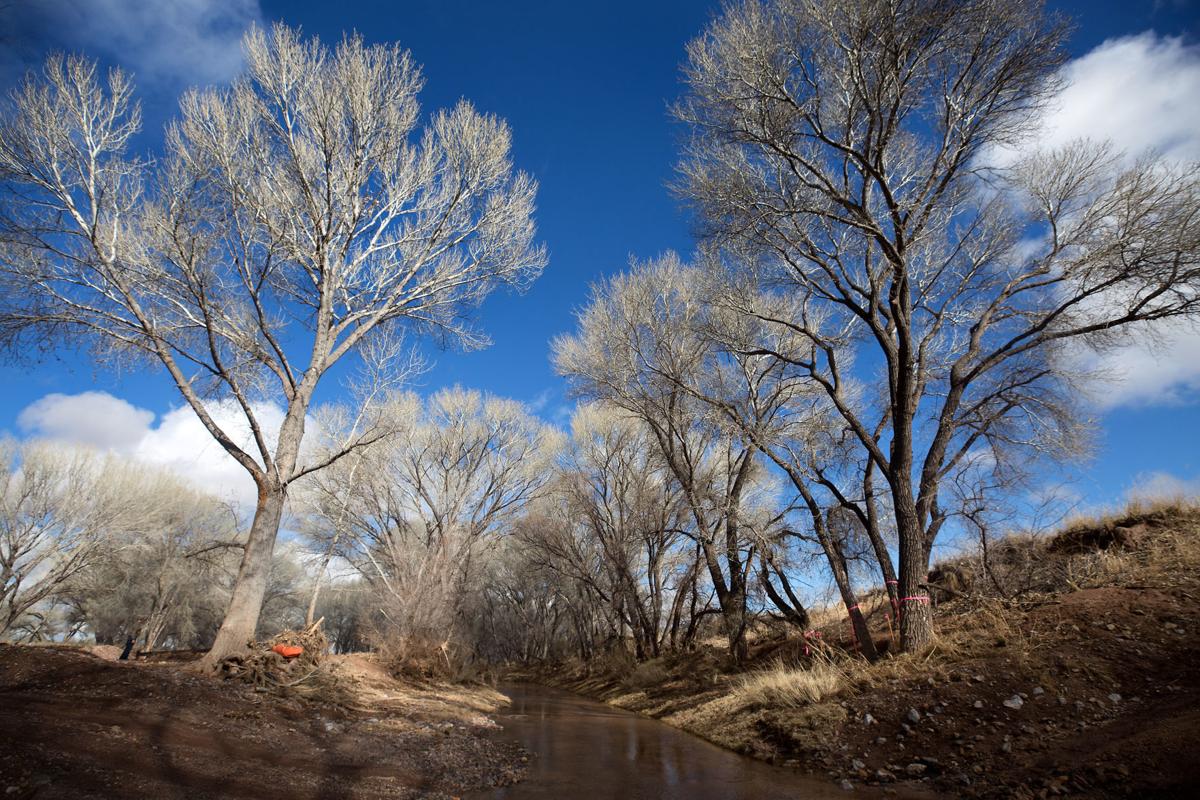
It plays host to what is probably the Southwest’s richest stands of riparian cottonwood and willow trees — groves that have attracted more than 400 bird species and drawn birdwatchers and ecologists from all over the world.
Maricopa County Superior Court Judge Mark Brain’s decision in late August didn’t create as many water rights for the river as the federal government and environmentalists had wanted. In fact, two retired U.S. Bureau of Land Management scientists who participated in the case said this ruling could diminish the river’s health over time.
But the judge overrode objections from business and local government interests who had opposed designating any water rights for the river. Given the intense conflict over the case and over the river in general, it’s possible the ruling will be appealed.
The ruling caps, but hardly ends, a longstanding and at times bitter and emotional legal dispute pitting the Bureau of Land Management, the Salt River Project utility in Phoenix, and the San Carlos Apache tribe against an array of local agencies and businesses. Those include the city of Sierra Vista, Cochise County, two private water companies operating in the Sierra Vista area, and the mining giant Freeport McMoran, along with the Arizona State Land Department.
It came more than four years after the various parties had a two-week trial to argue these issues in great detail. The case had dragged on long before, since the U.S. Department of Justice filed its first claim for river water rights back in 1989.
This case is being considered as part of the much larger Gila River adjudication, which started in the mid-1970s. It covers the entire Gila River Basin in Arizona, which includes the San Pedro, a Gila River tributary.
Brain gave BLM’s adversaries a major legal victory by approving their request to base the San Pedro River’s water rights on a much more recent time period than the bureau had requested. In the period the judge approved, from 1981 through 2015, the river carried less water than it had in the period BLM asked for, from 1954 through 1988.
“Incredibly important step”
Still, the judge’s creation of a water right is “an incredibly important step forward” for the long-imperiled river, said Robert Glennon, a retired University of Arizona law professor and an expert on water law.
“A judge has finally decreed the San Pedro has federal reserved rights. It hasn’t happened before,” said Glennon, who discussed the river’s travails extensively in his book “Water Follies.”
“There are still wells being drilled, they are being drilled with impunity with the assumption that no one could stop them from doing anything,” Glennon said. “This case could provide the ammunition to do that.”

Glennon
The presence of a federal water right also should help the case for a new petition that longtime activist Robin Silver filed Wednesday to have the state declare a formal water management area to control pumping in the entire Upper San Pedro Basin, Glennon added.
“It shows that the BLM has a federal reserved right that’s an express right created by Congress. And the states have an obligation to enforce federal law. They can’t ignore federal water rights,” Glennon said.
He added, however, “There’s a lot of discretion that goes into his decision,” referring to Arizona Department of Water Resources Director Tom Buschatzke, who must decide whether to grant Silver’s petition to create an Active Management Area for the Upper San Pedro Basin in Cochise County.
Silver, a Flagstaff environmentalist who has fought to protect the river for more than 30 years, said a clear violation of the judge’s new ruling already exists at a monitoring well along the river where the water level has already fallen below the minimum set by the judge.
In addition, Silver, who was not a party to the case the judge decided, sees another potential legal opening from the ruling for reviving a lawsuit he lost at the Arizona Supreme Court against a major Sierra Vista development five years ago. The Supreme Court dismissed Silver’s lawsuit aimed at stopping the 7,000-home Tribute project by a 4-3 vote, in part because the river had no quantified legal water right.
The court upheld ADWR’s decision that the developer had proven the project had an adequate water supply for 100 years, in keeping with Cochise County legal requirements. Silver said he will now “re-litigate” this case, based on the judge’s ruling quantifying a water right for the conservation area, which Silver said makes the 2018 decision “no longer valid.”
Opponents’ concerns
Officials of three entities that opposed the bureau’s position seeking a significant amount of water rights for the conservation area — Freeport, Cochise County government and Pueblo del Sol Water Company — didn’t respond to the Star’s requests for comment on the ruling.
Chuck Potucek, Sierra Vista’s city manager, said he doesn’t have an opinion of the ruling yet because “our attorneys are reviewing it right now.”
“It’s been seven years since I testified in that case. I’m glad to see there’s a result. BLM by law has to get an allocation (of water rights) so I don’t think there’s any surprise they will get an allocation. Whether or not they got everything they asked for or whether we got close to what we asked for, I don’t know,” Potucek said.
“My hope is that it’s a ruling that the parties can live with and work with,” he said. “It’s been like a cloud hanging over us. I think all parties were dealing with that on some level. BLM absolutely needed to have their allocations settled. That they should get soon. What we were concerned about was the amounts.”
Fears river will still decline
The two retired BLM scientists criticized the judge’s ruling for basing the river’s water rights on flows covering 34 years ending in 2015.
James Fogg, a retired BLM hydrologist who was the lead technical expert for the federal agency, noted that both a bureau team of riparian experts and a prominent Arizona State University stream ecologist, Julie Stromberg, identified several downstream stretches of the conservation area that are already rated ecologically non-functional or functional “on a downward trend.”
If the 1981-2015 period is used to establish the river’s water rights, “I expect that downward trend to continue, both in time and space,” Fogg told the Star.
He foresees “a significantly greater risk” of the decline in the river’s health to travel upstream from the current declining reaches to now-healthier areas to the south.
Jeff Simms, a retired BLM fish biologist who was a witness in the court case, said of the judge choosing 1984 to 2015 as the legal “period of record” for determining river flows: “The Number One thing — it’s not what Congress wanted. They wanted to keep the river the same way it was in 1988. It’s in a degraded state. If you don’t use the period of record before 1988, you don’t get what Congress wanted.”
With increased development of the Upper San Pedro Basin after 1988, river flows would necessarily be expected to decrease, Simms said.
“The river back then was diminishing. They wanted that to stop. That’s why they asked for a water right. They wanted (the river) not to be damaged by continual growth and pumping in the basin.”

A judge has for the first time quantified federal water rights for the national conservation area along the San Pedro River, shown east of Sierra Vista. The ruling could provide legal ammunition for environmentalists and others seeking to limit groundwater pumping documented to have reduced river flows for decades.
Since climate change and drought have reduced the river’s flows since 1988, and since a growing population in the area has increased water demand, it appears the ruling intentionally skewed the period of record in favor of a period with lower flows, he said.
The BLM itself, asked to comment on the case, said through spokeswoman June Lowery, “The BLM is aware of the Superior Court’s August 25 decision. At this time, the BLM is evaluating the court’s ruling.”
Protecting conservation area ecology
In his ruling, Brain directly disputed Simms’ point — a point that BLM as a whole also made throughout the court case. The 1988 law doesn’t support the position that Congress wanted to preserve the river as i was then, the judge ruled.
“The statute did not couple hydrology with a date in time, it coupled hydrology with ecology,” Brain wrote. “The statute did not reserve water sufficient to maintain streamflow ... as it existed in 1988. It reserved water sufficient to protect” the conservation area, he ruled.
Brain also noted that the BLM and Freeport presented extensive testimony to back their differing views of which period of record best represents the river’s long-term flow. The two parties also disagreed whether the long-term drought that has plagued this region since the middle-1990s makes the 1981-2015 period less representative of historical river flows.
But Brain dismissed those issues as irrelevant also, saying the most important question is how much water is needed in the river to protect the conservation area’s ecology.
Looking at the river’s riparian habitat of cottonwoods and willows, and after discussing several studies of the river’s habitat, he concluded, “The riparian area has improved quantitatively and qualitatively since 1988.” River flows in that time have been enough to protect its highest quality habitats, he wrote.
Monitoring wells can’t drop further?
The judge sided with the bureau clearly, however, on how deep nine government-run monitoring wells lying along the river should be allowed to drop.
On all but one of those wells, the water levels set by the ruling mean those eight wells now will either have to be kept higher than the levels BLM recommended, or drop by only a very small distance from the bureau’s recommended level..
Silver said his personal comparison found that the current water levels in the eight wells are at roughly the same level as the judge will allow them to drop to — meaning they won’t be allowed to drop at all.
On that issue, clearly, “We won. This is what we were asking for,” said Tricia Gerrodette, a longtime Sierra Vista environmentalist who has followed this case closely. and attended most of the trial on it.
While the government lost on what time period on which the water right will be based, “just to get a ruling was exciting,” Gerrodette said.
What the ruling didn’t make clear was exactly how much water the conservation area is entitled to. In the BLM’s legal claim, it requested water rights ranging from 15,900 acre-feet to about 30,000 acre-feet per year, as measured at three stream gauges on the river.
It sought another 2,015 acre-feet annually at a fourth stream gauge on the Babocamari River, a tributary. For comparison, Tucson Water delivers around 100,000 acre-feet of water per year to its customers.
The judge, however, didn’t set a specific numerical water right. He awarded the conservation area the right to monthly flow amounts at each stream gauge. That amount will be based on the median rate of each day’s average flow over a month, based on river flows between 1981 and 2015. The median is the point at which 50% of flows are above and 50% are below it.
The water right is for “protection of the riparian area and the aquatic, wildlife, archeological, paleontological, scientific, cultural, educational and recreation resources” of the conservation area, the judge ruled.
Activist Silver said he calculated on his own how the judge’s formulas for determining required river water rights would translate into actual numbers. Using those formulas, all four stream gauges would actually be entitled to as much or significantly more water rights than what the BLM had originally requested, he said.
Despite the efforts by Sierra Vista and other opponents of San Pedro water rights to “deny the river it’s due water, it looks like the river did quite well,” he said. He acknowledged that the government will have to carry out its own calculations to set an official, numerical water right for the conservation area.
Enforcement: A big unknown
Not clear at this point is how effectively this ruling will be enforced.
“The Department of the Interior would have to enforce it for the BLM, through the (Interior) Solicitor’s office. I’m not very optimistic about the prospects for enforcement,” Simms said. “It’s a long shot that they will take offenders to court, which would be municipal water suppliers who increase their use, or any other entities.”
The first thing to do is “you have to pick out who you are going to court against. You have to show who is the offender. You can’t take everyone in the county or the entire Upper Basin to court,” he said. “Who’s the problem? Is it 1,000 single-family homeowners and their private wells, or is it municipalities, or both? It gets into a can of worms on who you shut down.”
Also, wells owned by individuals in rural Cochise County, unlike those of urban users, aren’t metered, so “we don’t know how much people are using.”
But the more specific a definition is ultimately given to the actual water right number, “the more numbers are attached to it, the stronger Robin’s case becomes for saying the more recent pumpers are interfering with that water right,” Glennon said of Silver, a founder and board chairman of the Tucson-based Center for Biological Diversity.
Glennon predicted that the ultimate fight over the river’s water right will occur in the still-to-be decided general adjudication over the entire Gila River Basin. “That court has jurisdiction over all rights to waters in the Gila,” he said.
The river's beaver population is hanging on almost 25 years after being reintroduced by wildlife officials.
 Environmentalists ask state to regulate groundwater pumping near the San Pedro
