



Look, Tucson is not going to form its own public electric utility.
Yes, the city is going through a process of exploring breaking away from Tucson Electric Power, along with some other options. But for various political, practical and financial reasons, taking Tucson out of Tucson Electric Power’s coverage area and making it a separate public utility is almost certainly not going to happen.

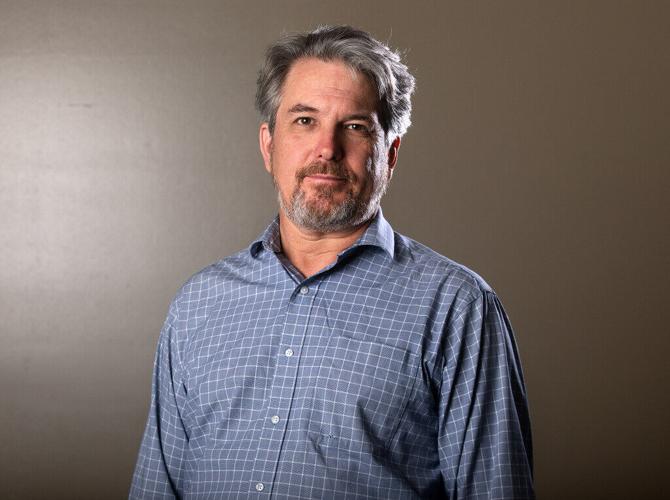
Arizona Daily Star columnist Tim Steller
To understand why, consider just two factors: Disconnecting key transmission lines within Tucson city limits from their extensions outside city limits would be a long, costly process. Also, the idea will undoubtedly be contested in court, and if the concept ever gets to a vote, will be subject to a massive, probably persuasive campaign against going public.
The City Council kept the possibility of this “municipalization” alive during a discussion at their study session Tuesday, accepting a report by GDS Associates that concluded it is feasible to form a municipal electric utility in Tucson. The study found it could also be beneficial to establish a program whereby the city buys power on behalf of local residents.
TEP has contended the study is based on flawed assumptions that lead to over-optimistic conclusions.
The council showed no great urgency to embrace the idea Tuesday. And practically speaking, municipalization isn’t going to happen.

The Tucson City Council has raised the possibility of forming a municipal electric utility to replace TEP. That idea is unlikely to happen, but related proposals are worth considering, especially in the current political environment.
Still, the process of exploring options isn’t necessarily a waste of time. In fact, I think it’s a good time for the city council in a climate-oriented place like Tucson to be thinking big, flexing its muscles as the elected representatives of hundreds of thousands of TEP customers.
The main reason is the political atmosphere in the state and the country.
Back to fossil fuels
President Donald Trump’s federal government, almost unbelievably, is trying to steer energy production back from renewables to dirtier, more expensive fuels like coal. And while Tucson Electric Power is trying to achieve net zero greenhouse emissions by 2050, it has a long way to go.
In 2024, 22% of the power TEP provided to customers was from renewable sources — wind and solar. But 18% was from coal and 51% from natural gas. The coal plants are scheduled to be retired by 2032, but who knows what will happen as conservative enthusiasm for fossil fuels trickles down to state regulators.
The five regulators in Arizona’s Corporation Commission, meantime, are all Republicans for the first time in many years and seem poised to be a utility-friendly body. Some critics of the corporation commission’s slow movement on renewable energy consider them a captured regulatory body, serving the interests of the companies they regulate more than the customers of those utilities.
The commission gave TEP a 10% rate increase in 2023, just two years after a previous boost in electric rates took effect. As it stands, TEP is allowed to make a 9.55 % profit on its monopoly operations.
The commission also seems eager to embrace a preliminary proposal by Tucson Electric Power and two other utilities to build a new nuclear power plant in Arizona. The idea, announced in February, is to explore a site for a small modular reactor.
On its Wednesday meeting agenda, the commission defines their own “mission” on the nuclear proposal this way: “Through the engagement of community partners, develop the strategy, deliverables, and roadmap that will enable the development of Advanced Nuclear Power generation in Arizona by 2035.”
By their wording, it seems they’re already sold on the nuclear idea.
Alternative proposals
The Republican-run Legislature also seems highly receptive to the big utilities. As Bob Christie of Capitol Media Services reported in Monday’s Star, contributions and lobbying by Arizona Public Service especially helped the utilities achieve two big legislative wins: Protecting them from liability for wildfires caused by their equipment and allowing them to sell off old coal plants at a loss while paying themselves back through the sale of bonds.
When I talked with Joe Salkowski, TEP’s director of communications, about this on Thursday, he noted that the bills weren’t passed as the utilities initially proposed them.
“If you follow the path of both of those bills, they changed significantly from the point they were introduced until the point they were signed by the governor,” Salkowski said. “Each piece was revised in response to a lot of feedback and conversation in both the House and the Senate.”
Fair enough, but they passed, the second one despite serious objections from Democrats and no Democratic votes.
So the federal government, state regulators and the Legislature are increasingly friendly to old, polluting technologies and to the monopoly utilities who provide our power. That doesn’t leave a lot of venues to hold those utilities accountable.
But we do have the Tucson City Council seeking ways to make the local utility cleaner and cheaper. The municipalization idea seems way too ambitious, but less radical proposals such as community choice aggregation are worth looking into.
Under CCA, the city would purchase the power on behalf of residents and businesses, and it would be transmitted and distributed by the utility. This isn’t legal in Arizona now, but it is in 11 other states, including California, Ohio and Massachusetts.
One supporter, Shelly Gordon of Arizonans for Community Choice, told me “CCA would allow Tucson to take over the power generation portion of the utility ‘bundle’ which today includes power generation, transmission and delivery. It’s a much lighter lift for a city, lower cost to administer (approx. $50M according to the study but there are far lower startup costs among the CCAs that already exist). And CCA would save ratepayers about 18% over a 10-year horizon; part of that 18% could be used to fund local energy programs.”
Achieving this wouldn’t be easy either, since it requires changes to state law, but it’s the kind of thing that Tucson can push for and maybe accomplish in the long run. In the short run, it will at least show the local utility what the local people want.

