


It's weird after all these years to finally have the ballot open in my hands and not know which way to vote on RTA Next.
I've covered the Regional Transportation Authority in some depth for more than a decade. Most of my coverage has been critical of the 20-year transportation plan as it has slowly unfolded over recent years.

Arizona Daily Star columnist Tim Steller
The incomplete projects like East Grant Road and the ham-handed governance during recent years angered me.
But now that the ballot is open, with a simple yes-no decision on propositions 418 and 419, I find myself with pen in hand, hovering over the ovals, unsure which ones to fill in.
What I know for sure is that it will be yes for both the plan and the tax, or no for both. Splitting your vote makes no sense because a split decision in the total vote is equivalent to a no, rejecting RTA Next.
The question is, which way? The years of reporting I've done on the first RTA and on the planning for this proposal, along with witnessing local government operate for decades, inform my thinking.
Here are the key factors I'm considering as I decide whether to fill in the "yes" ovals or the "no' ovals on propositions 418 and 419.
In favor of RTA Next
A bird in hand
RTA Next offers the convenience of a plan that we can vote for now that will sustain progress on regional transportation needs without more rounds of planning, debate and campaigning.
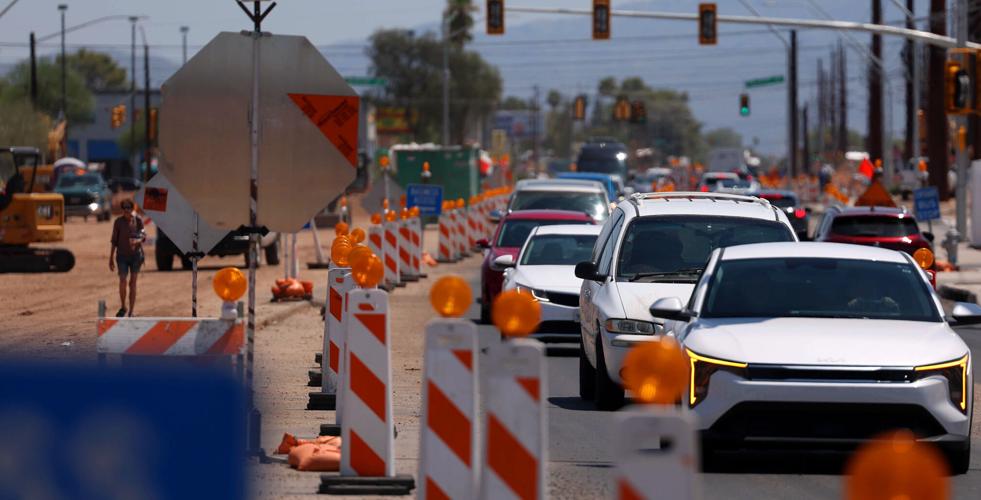
The plan is imperfect. It commits to a relatively traditional allocation of money focused on road widenings and new interchanges. But it also promises an established list of projects and purposes that we can get to work on soon. It also includes significant spending on transit and safety projects.
The alternative, if we defeat RTA Next, is for the individual jurisdictions to float their own sales tax proposals for plans and projects within their municipal boundaries.

RTA Next locks the Tucson area into a renewed transportation tax and plan for 20 years.
Starting again means coming up with a new plan for Tucson — always a big process in itself — then setting an election, campaigning for it and passing it. All that takes time, and passage is not certain.
Transit gets funded
Among the most worrisome and immediate consequences of voting no would be a serious interruption in transit service after the fiscal year ends June 30.
Tucson's transportation director, Sam Credio, warned during a recent City Council meeting that Tucson would have a shortfall of $10 million for its transit services, and outlying areas would fall $11 million short.
That would lead to a reduction of about 141 daily weekday trips, 205 daily Saturday trips and 115 daily Sunday trips across Tucson's 42 Sun Tran routes, he said. There is a chance that we can come up with a better, more inventive way to fund and develop transit options in the Tucson area, but that is some ways off if it ever happens.
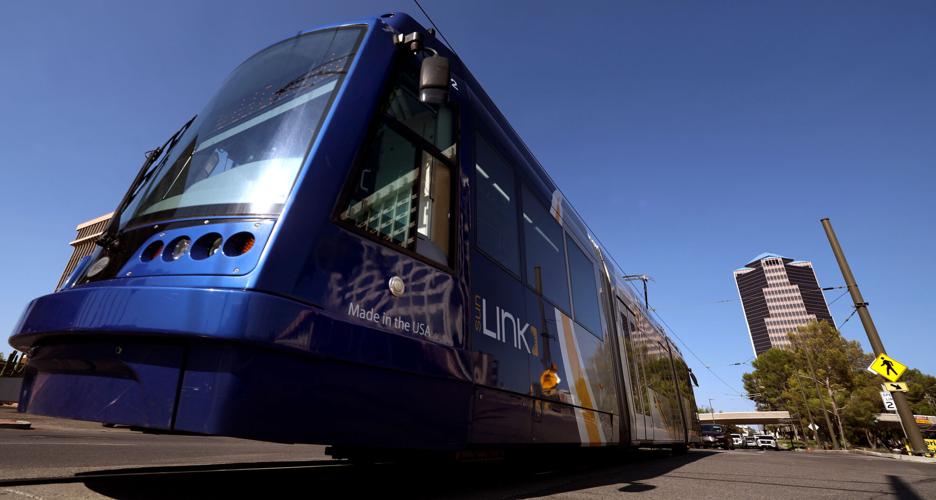
If we say yes, though, that means on July 1, a 20-year total of at least $726 million starts flowing toward expanded bus service, transit safety services, the streetcar and transportation for disabled people.
A dependable leader for now
One of the flaws of the first RTA, as it wound toward its end, was that its previous director, Farhad Moghimi, became increasingly polarizing. City officials, especially, decried him as opposing their priorities and their appointees in order to please the voting majority on the RTA board from outlying jurisdictions. He became sensitive to the criticism, labeling some of it harassment, and the bad feelings escalated.
That finally ended in June 2025, when the RTA board hired former Tucson City Manager Michael Ortega as its director. Ortega is a calming presence who has credibility in the city as well as the suburbs. He has the potential to set a new RTA on the right course.
Of course, it's unclear how long Ortega will stay in the position. And the system that gives small jurisdictions like South Tucson and Sahuarita the same one vote as giant Tucson will remain in place, meaning Ortega, too is subject to disproportionate influence from these smaller jurisdictions.
Against RTA Next
Plan lacks regional vision
One of the chief arguments for the Regional Transportation Authority is that it's good to have the region's jurisdictions working together on shared responsibilities like transportation. I agree with that.
But the plan in front of voters is not, in the end, very regional in vision. Rather, to a large degree, it funds the road priorities of individual jurisdictions in the Tucson area through a countywide sales tax.
This is, in part, just the way the sausage gets made. RTA leadership left behind its Citizens Advisory Committee in 2024 and went about cobbling together plan adjustments that would get the support of the leaders of the member jurisdictions, so these leaders could present a united front to voters.

RTA Next includes significant spending on transit and safety projects.
In the process, Sahuarita, Marana, South Tucson and other jurisdictions each got an allocation of projects that won their leaders' support, even though some, like the Moore Road interchange on I-10, came at the last minute.
South Tucson may be the most eyebrow-raising example: It got a $25 million allocation for transit spending alone, and it gets about 2.5% of overall spending in the $2.67 billion plan, even though the square-mile city accounts for only about 0.4% of the county's population.
While the RTA board does provide a venue for regional discussion of transportation issues, that sort of conversation can still happen at its sister organization, the Pima Association of Governments, where it happened for decades before RTA existed. The RTA board and the PAG board have essentially the same membership.
20 years is too long
One of the lessons of the first RTA program is that things can change a lot over 20 years. Projects that seemed necessary, such as the huge widening of Broadway and the expansion of North First Avenue, may not be so necessary by the time we get to them. But the ballot issue keeps us locked into 31 projects.
There are areas where the spending is flexible — as in which of the arterial roads in Tucson will get reconstructed as part of the projected $177 million in rehabilitation spending, or where exactly $245 million in safety spending will occur. The vast majority of the spending, though, is locked into specific projects or services, such as Sun Tran.
The length of the RTA commits us not just to spending on projects we might not want later but also on a way of doing business we might want to replace. By committing to this 20-year plan, we are probably eliminating the possibility of any alternative vision that might arise, because there's only so much tax money people are willing to pay, and this plan lasts so long.
In other words, if we want to build a Tucson area that is truly less reliant on car travel, that vision will probably go unfulfilled if we pass RTA Next.
Tucson representation remains problematic
For years, Tucson's mayor and City Council members have complained that the RTA's voting system is unfair. It gives the mayor of Tucson, which has a population of around 545,000, the same single vote as is given to representatives of Marana, Oro Valley, Sahuarita, South Tucson, Pima County, the Pascua Yaqui Nation, and the Tohono O'odham Nation.
It's one of the reasons many in the city proper remain suspicious of remaining in RTA, even if Ortega is a friendlier face running the authority.
Also, it is likely that, if RTA Next is defeated and if city voters later approve our own half-cent-per-dollar sales tax (a big IF), a substantially larger amount of money would flow to projects in Tucson proper. Some have estimated the amount in the $400 million range, over 20 years, because the sales tax would be applied only in the city and the revenue would stay in the city.
It's a tantalizing prospect, but of course, it's a big risk.
That's what makes the decision hard — either way you vote, you are accepting real risk on one of the most important subjects for the Tucson area's future. Now, pen in hand, I pick my risk.

