

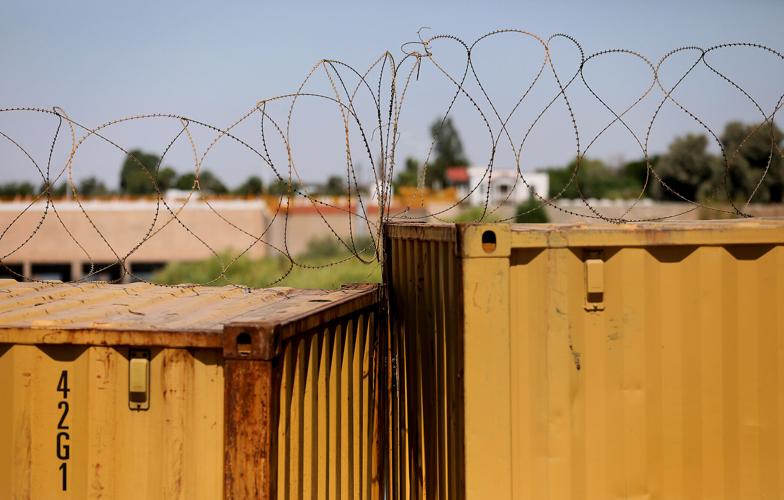

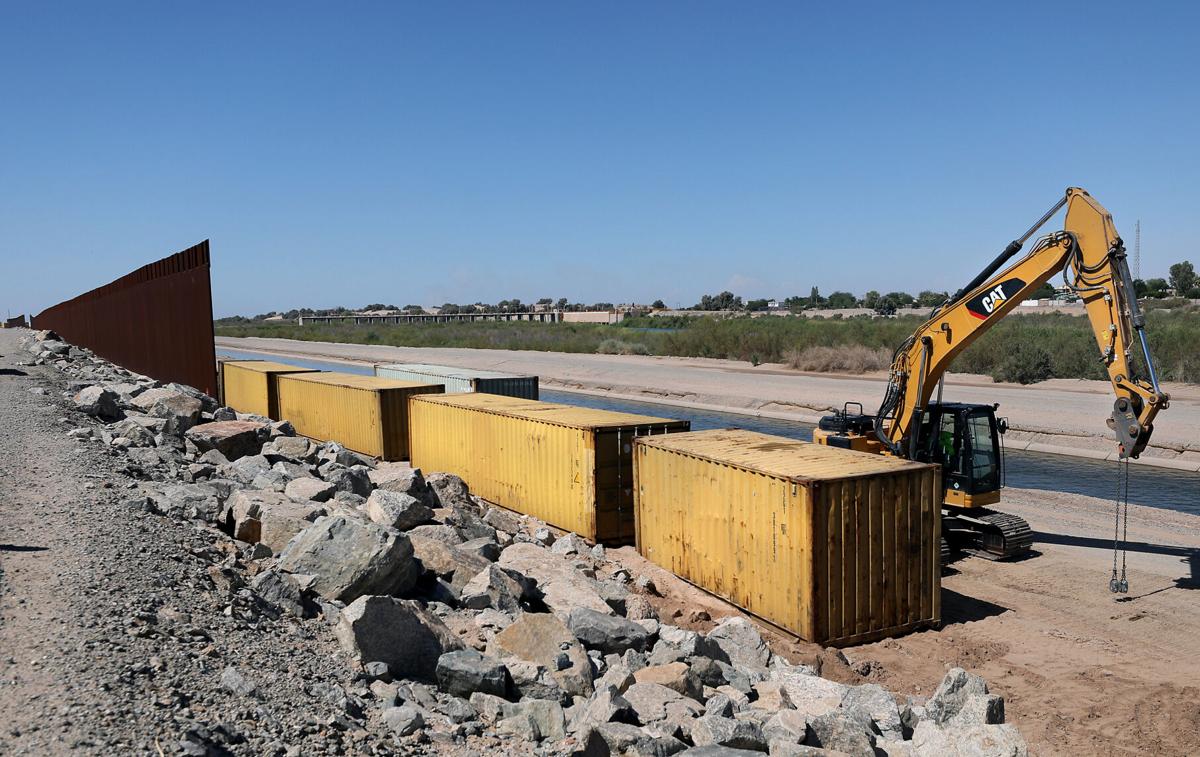
Arizona spent $6 million erecting a border barrier on federal land without permission that is unlikely to stop undocumented migrants from entering the country because it’s north of the actual international border.
Gov. Doug Ducey issued an executive order on Aug. 12 that directed the Arizona Department of Emergency and Military Affairs to fill some gaps in the U.S. border wall in the Border Patrol’s Yuma Sector.
The sector is a part of the border where large groups of migrants have come through in recent months and largely turned themselves over to the Border Patrol with the intent of seeking asylum in the United States.
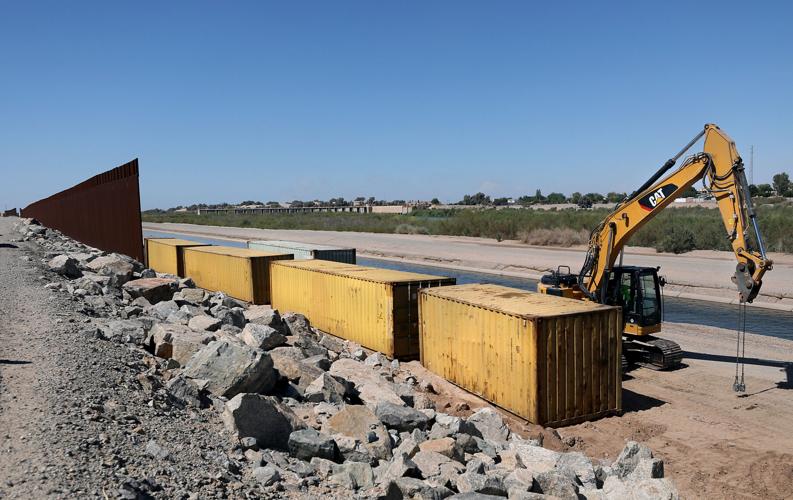
The gaps, which Arizona began filling with shipping crates and was still working on into the week, are on land managed by the U.S. Bureau of Reclamation, and Arizona placed them there without authorization from the federal government.
The Bureau of Reclamation has reached out to Arizona’s Department of Emergency and Military Affairs to discuss this issue, said regional spokesperson for the agency Michelle Helms.
The Governor’s Office had not heard from a federal agency about the crates as of Thursday, according to Ducey’s spokesman C.J. Karamargin.
“Arizona has had enough,” the Republican governor said in a statement. “We can’t wait any longer. ... For the last two years, Arizona has made every attempt to work with Washington to address the crisis on our border. Time and time again we’ve stepped in to clean up their mess.”
The money spent on the shipping-crate barrier is just part of the $335 million Arizona allocated in its budget passed in June for a border barrier.
The problem with the state building a physical barrier on the border is that the southern border in Arizona is all federal land. After passing the budget, a state official said the barrier would be more of a “virtual barrier,” which could include motion sensors, infrared cameras, mobile towers and aerial drones, as well as barriers around critical infrastructure, which could include things like canals, wastewater treatment plants and defense installations.

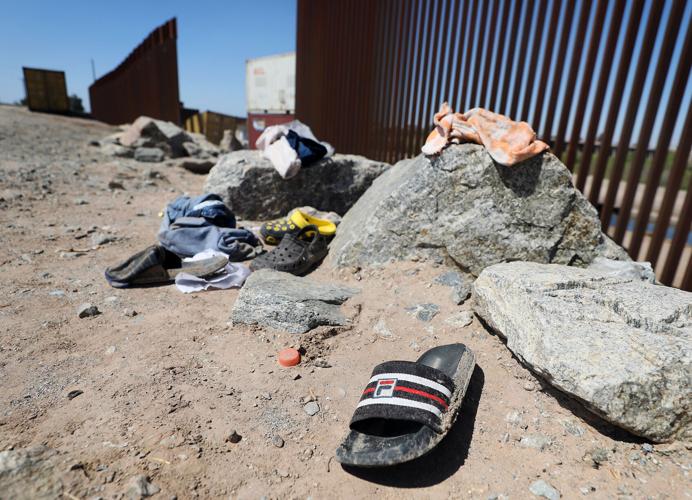
Sandals, clothing and other items are left on the ground by migrants near the U.S.-Mexico border fence in Yuma.
The federal government recently said it would close the gaps before Arizona placed the shipping crates. Customs and Border Protection said it was not prepared to comment on this matter.
U.S. Sen. Mark Kelly, D-Arizona, met with Yuma Sector Border Patrol Chief Chris Clem two days before Arizona brought in the shipping crates to discuss the federal government’s effort to close the gaps, which has no timeline that’s been made public yet.
“Sen. Mark Kelly and Gov. Ducey share the same urgency and concern for border security,” said Kelly’s spokeswoman Marisol Samayoa. “These shipping containers are a temporary solution, which is why Sen. Kelly worked closely with Yuma officials and Border Patrol to secure a long-term solution to close the Morelos Dam gaps in a manner that is safe and effective for law enforcement and the community.”
Yuma wall not on the border
The reason filling those gaps won’t stop people from entering the country is because they are not on the actual border. The border wall in Yuma veers off the border in some places because of waterways like the Colorado River, which runs upstream from the Morelos Dam, a popular border crossing point. Once people are on U.S. soil, Border Patrol has to process them, regardless of what side of the barrier they are on.
Anywhere that the U.S. border follows a river, which is true in this section of the Arizona-Mexico border as well as swaths of border that follow the Rio Grande in Texas, the border wall is necessarily built back onto U.S. soil, says Aaron Reichlin-Melnick, policy director at American Immigration Council, a nonprofit immigrant advocacy group.
“So in those locations migrants can cross the border, walk up to a gate and simply ask to be let in,” he said. “And that is because once they are on U.S. soil, if they don’t voluntarily choose to walk back to Mexico, the U.S. Border Patrol has to do something about that.”
In other words, even if they are impeded by a barrier from heading farther north, they will be on U.S. soil, which means Border Patrol has to process them.
Just like those migrants who are not impeded by a barrier, some get sent back to Mexico under public health policy Title 42, but most are processed and sent to local nonprofit organizations, which help them get to their sponsors all over the country.
Despite the fact that filling the gaps won’t stop the flow of people coming to the country, it could slow or deter people, says Clem, the Yuma Sector chief.

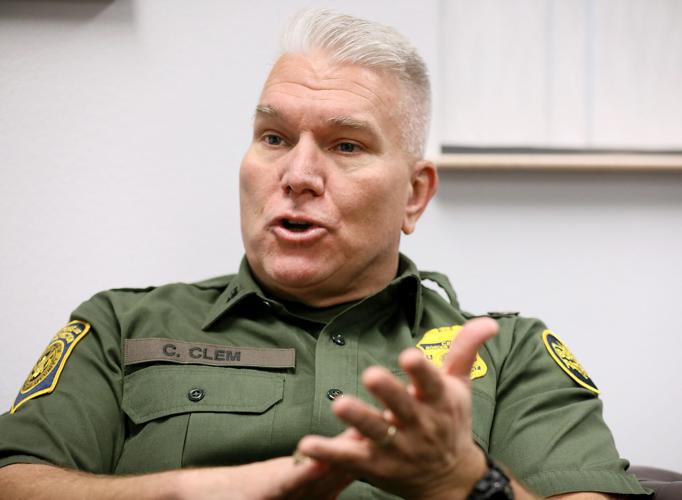
Chris Clem, chief patrol agent for the U.S. Border Patrol, Yuma Sector.
People may be deterred simply because there is a barrier stopping them from going further into the United States, and it could deter people who are drug smuggling or doing other illegal activity, Clem said.
Not many drugs come through the Yuma Sector compared to other parts of the border. The amount of drugs seized in the Yuma Sector has been 244 pounds so far this fiscal year, an eighth of what it was this time last year.
Even with the gaps closed, people will just find other areas to come through, but having those high-traffic gaps closed will better allow Border Patrol to prioritize, Clem said. One part of the border in Yuma that doesn’t have a barrier is on the Cocopah Reservation, where the tribe has said they don’t want a border wall.
If migrants seeking asylum come up to the south side of a barrier that is on U.S. soil on both sides, they would be a lower priority to someone who is absconding from Border Patrol, he said.
“If you have people that have come across and we can see them whether through cameras or an agent observation, and they’re OK, nobody seems to be in distress, versus four guys running from me across the border, heading into the town — we’re gonna go after those people because they are likely the threat versus the low-threat, non-threat situation of folks maybe giving themselves up,” Clem said.

Shipping containers are used to fill in the gaps along the U.S.-Mexico border fence in Yuma.
Addressing the root of the problem
The Yuma Sector has about 900 agents and recently hired immigration processing specialists, which allows more agents to be out in the field, to help them manage the influx of migrants crossing the border there over the last two years.
The number of encounters Border Patrol agents have had with people crossing the border in the Yuma Sector has increased from 7,385 by the end of July in fiscal year 2020 to 259,895 by the end of July this fiscal year.
Clem says the staff additions and new technology and equipment have helped them process all the people and do rescues, which have increased 100% compared to last year, at 253 rescues this fiscal year, including responding to 911 calls, water rescues, heat distress, people caught on top of the wall, snake bites, other environment-related illnesses or injuries and pre-existing conditions that become life threatening.
But there needs to be a higher level conversation to address the root of the problem, Clem says.

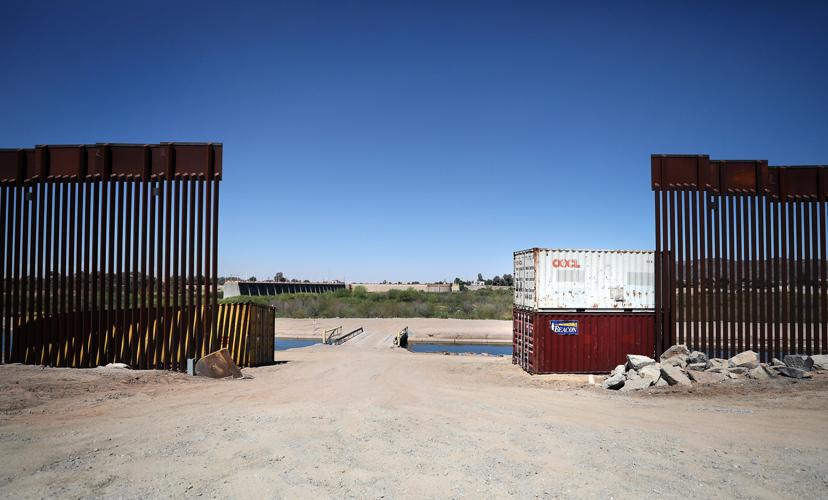
Concertino wire was placed atop shipping crates by the state of Arizona to fill in the gaps along the U.S.-Mexico border fence in Yuma near the Morelos Dam.
“At the end of the day, it’s important to recognize we’re still operating under a 1986 and 1990 immigration framework. This is 2022. We need comprehensive immigration reform,” he said.
“We do need those types of legislative fixes to address some of the issues in regards to this regional, and I would say worldwide, irregular migration flow,” he said. “So we need to make some updates.”
Reichlin-Melnick with the American Immigration Council agrees that ultimately immigration reform is the answer. He said it should include a modern humanitarian protection system that puts people in touch with services and allows them to ask for asylum at ports of entry so that they don’t have to cross between ports of entry. It should also provide federal resources to state and local communities at the border, which some organizations at the border are already receiving, so that they are not required to spend their own resources, Reichlin-Melnick said.
“What we really need is a long-term overhaul of the system as well as an acknowledgement that there is no silver bullet that is simply going to stop people from coming,” he said.
Photos of the U.S. – Mexico border fence
U.S. – Mexico border near Douglas, Ariz.
Updated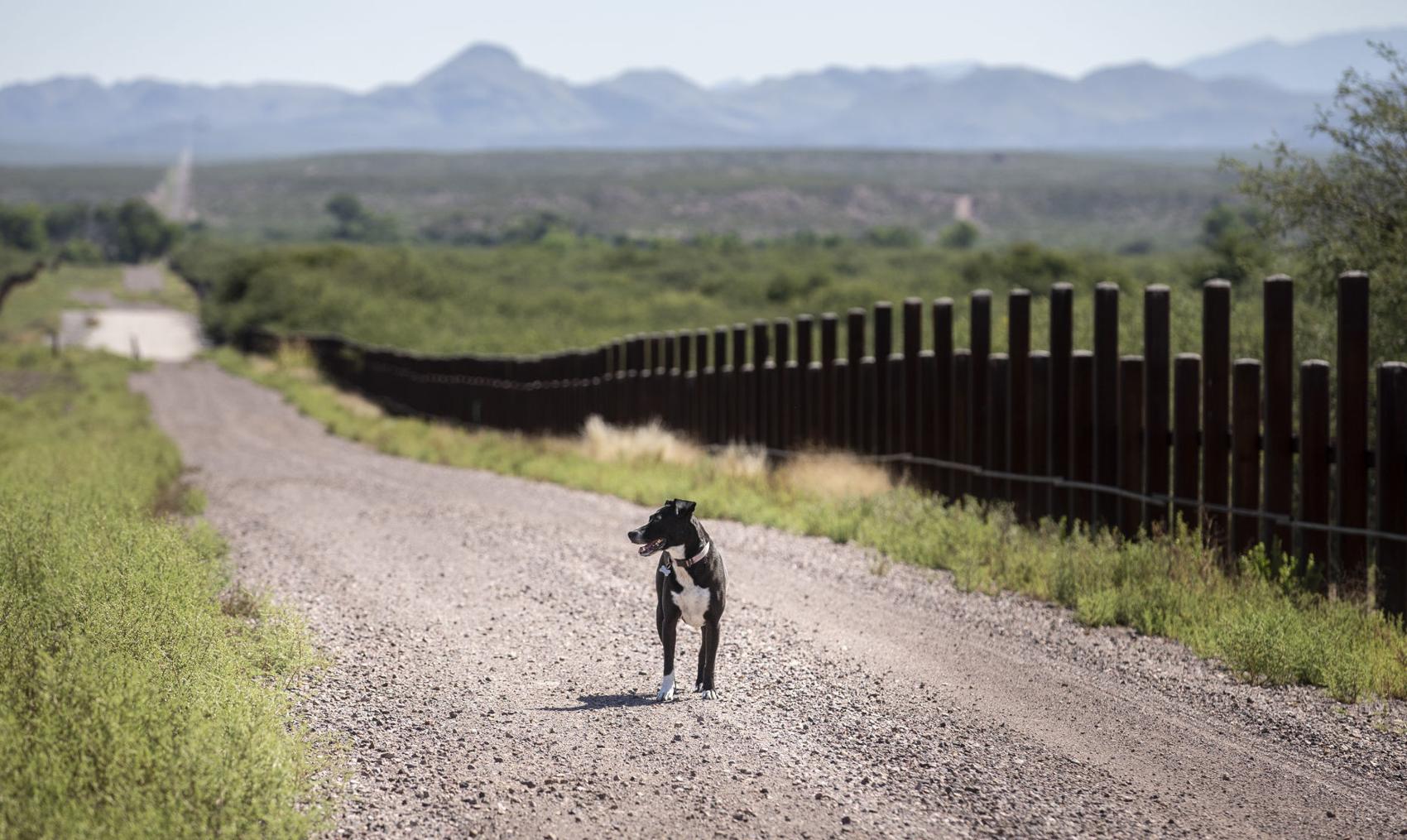
A dog stands on a road commonly used by Border Patrol near Slaughter Ranch Museum Thursday, Sept. 27, 2019.
U.S. – Mexico border near Douglas, Ariz.
Updated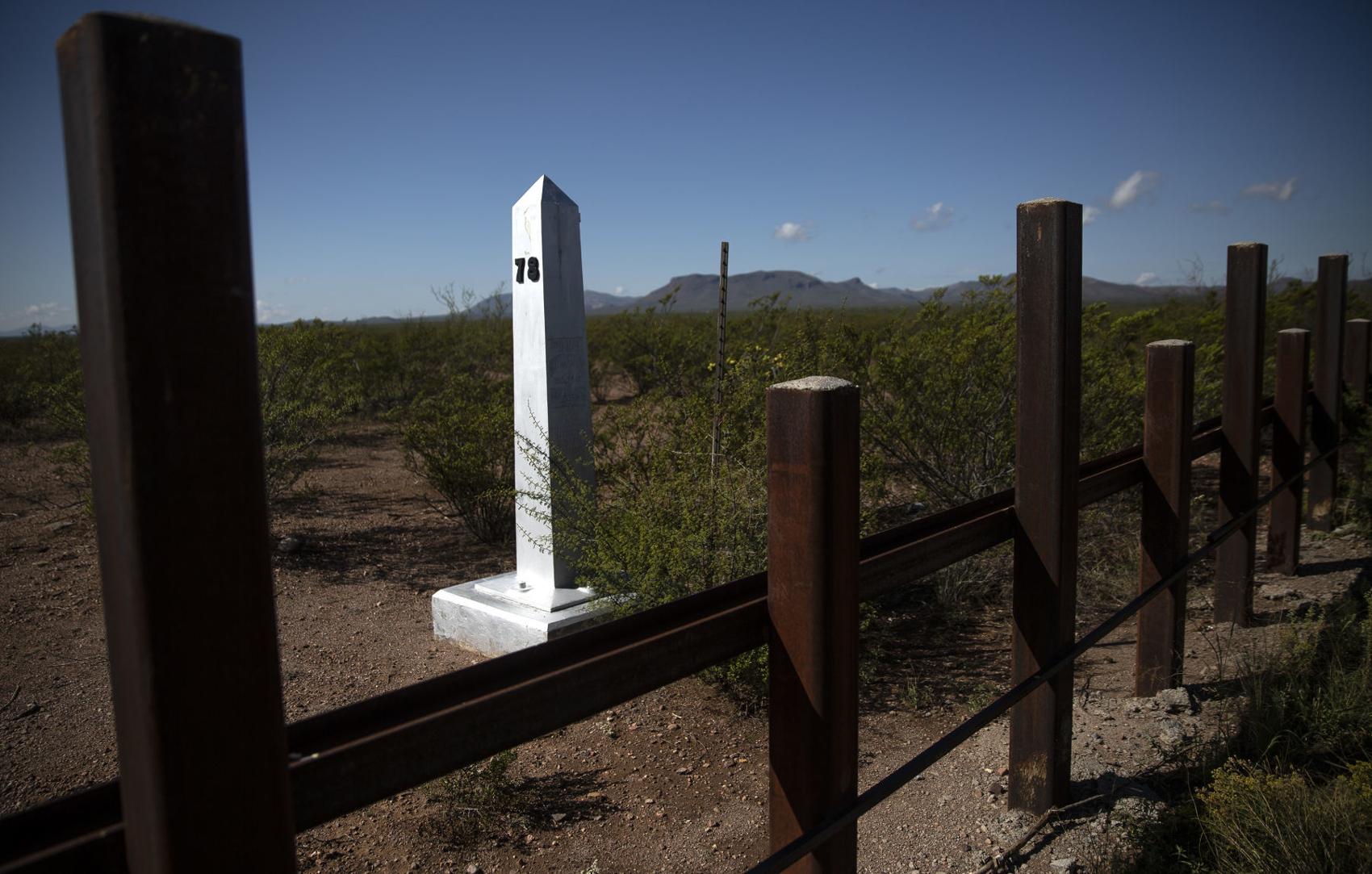
A border monument on the Mexico side of the border seen east of Douglas Thursday, Sept. 27, 2019.
U.S. – Mexico border near Douglas, Ariz.
Updated
The San Bernardino National Wildlife Refuge sits on the U.S. side of the border with Mexico east of Douglas Thursday, Sept. 27, 2019.
U.S. – Mexico border near Douglas, Ariz.
Updated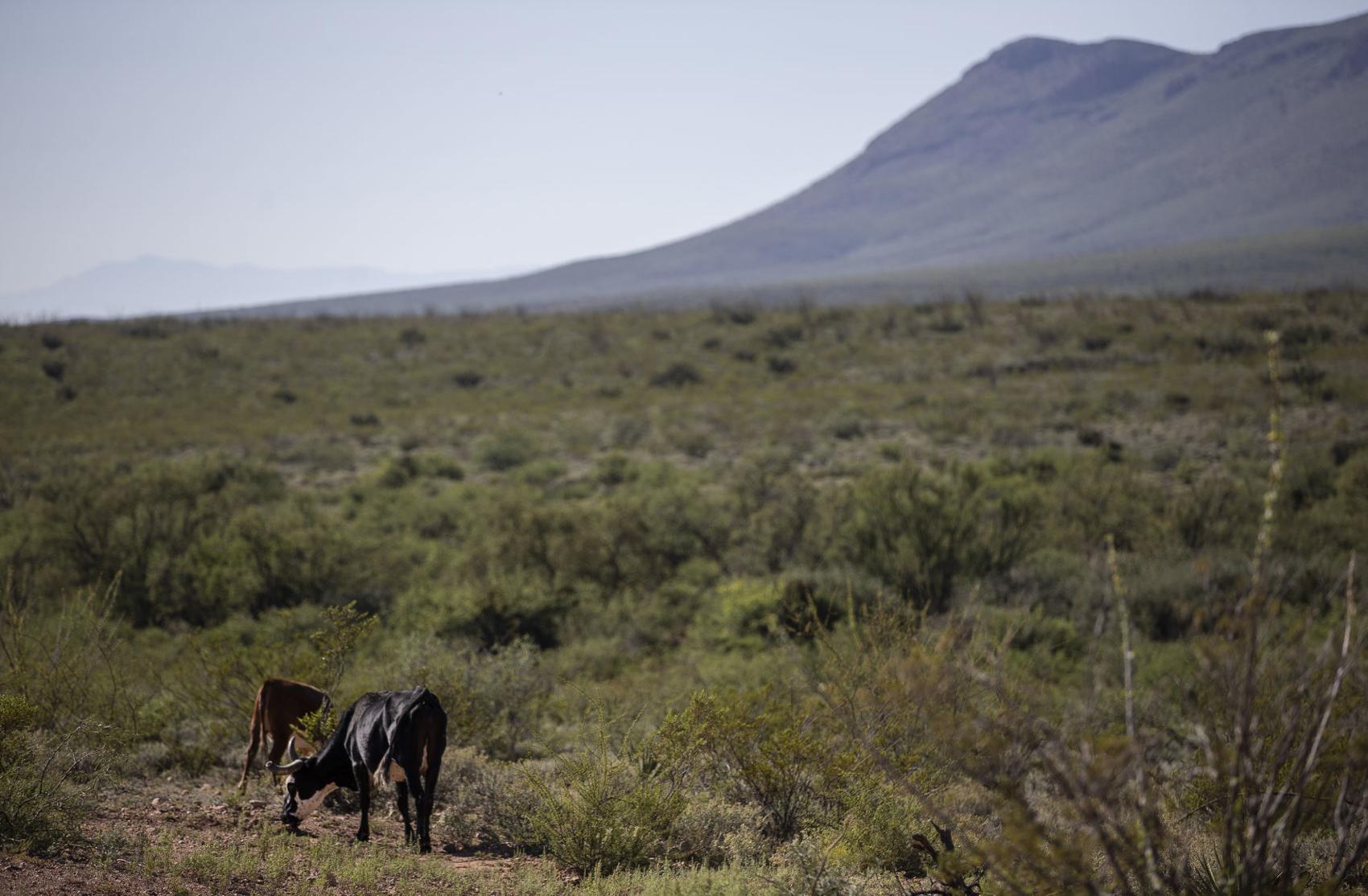
A bull and cow graze near the site of new wall construction east of Douglas Thursday, Sept. 27, 2019.
U.S. – Mexico border near Douglas, Ariz.
Updated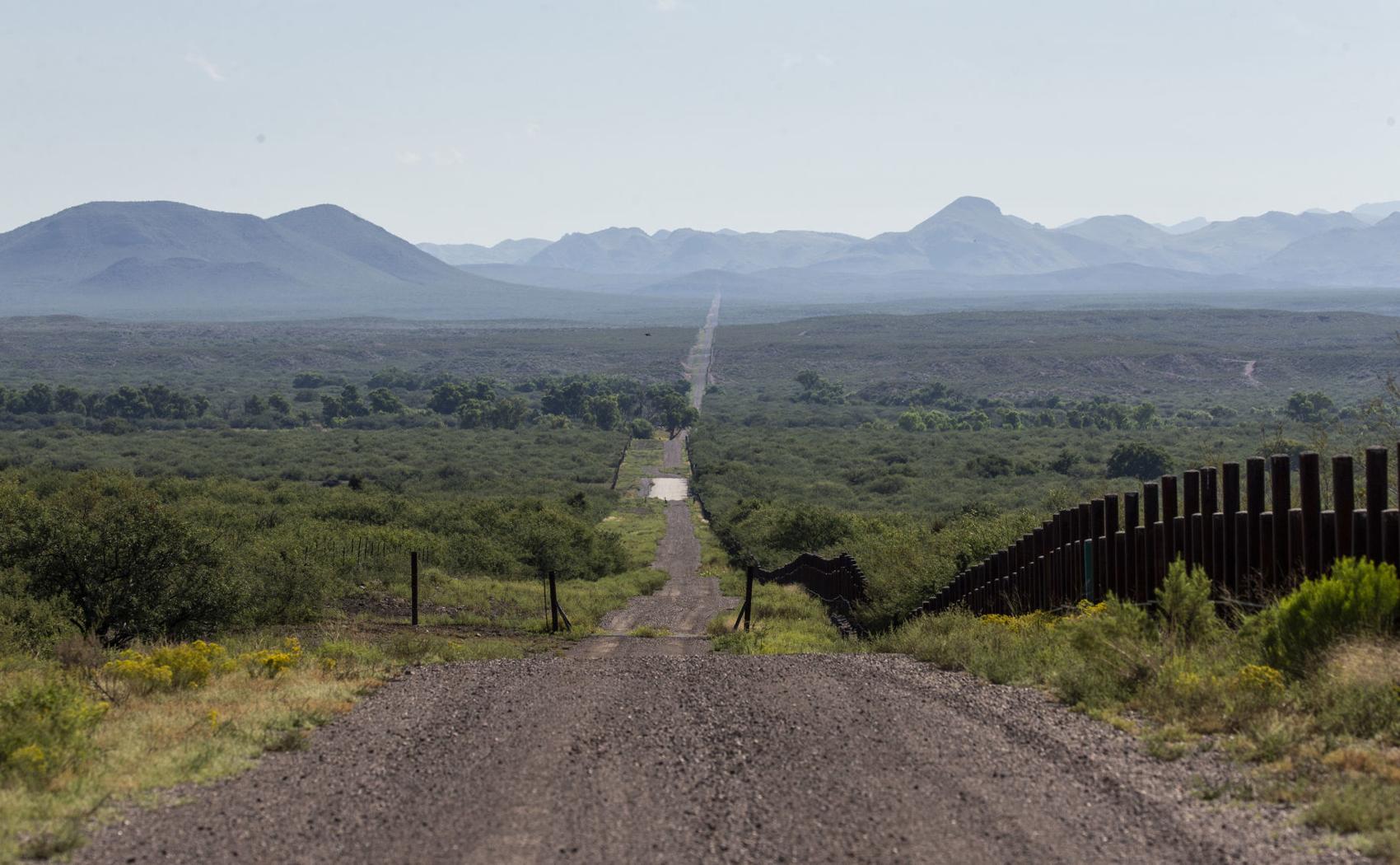
The border seen stretching from hills east of Douglas into the Guadalupe Mountains Thursday, Sept. 27, 2019.
U.S. – Mexico border near Douglas, Ariz.
Updated
Flowers grow around border fencing near the San Bernardino National Wildlife Refuge Thursday, Sept. 27, 2019.
U.S. – Mexico border near Douglas, Ariz.
Updated
Construction equipment set up at the site of new border wall construction on the US/Mexico border east of Douglas Thursday, Sept. 27, 2019.
U.S. – Mexico border near Douglas, Ariz.
Updated
A Border Patrol tower on the hills east of Douglas Thursday, Sept. 27, 2019.
U.S. – Mexico border near Douglas, Ariz.
Updated
Memorials place on graves at Julia Page Memorial Park in Douglas which sits along the U.S./Mexico border Thursday, Sept. 27, 2019.
U.S. – Mexico border near Douglas, Ariz.
Updated
A car drives through Douglas on a road parallel to the U.S./Mexico border wall Thursday, Sept. 27, 2019.
U.S. – Mexico border near Douglas, Ariz.
Updated
The Slaughter Ranch homestead Thursday, Sept. 27, 2019.
U.S. – Mexico border near Douglas, Ariz.
Updated
A lake on the Slaughter Ranch Thursday, Sept. 27, 2019.
U.S. – Mexico border near Douglas, Ariz.
Updated
A toy rocking horse placed on the side of East Geronimo Trail with a sign advertising five minute pony rides for 25 cents Thursday, Sept. 27, 2019.
U.S. – Mexico border near Douglas, Ariz.
Updated
Highway 2 in Mexico winds its way to Agua Prieta Thursday, Sept. 27, 2019.
U.S. – Mexico border near Douglas, Ariz.
Updated
The vehicle in a ditch was driven through the international border fence in Agua Prieta, Mex., into Douglas, Arizona in July 1987.
U.S. – Mexico border near Douglas, Ariz.
Updated
Mexican citizens run back into Agua Prieta, Mexico through a hole in the border fence at Douglas, Ariz., after the U.S. Border Patrol scared them back across the border in 1997.
U.S. – Mexico border near Douglas, Ariz.
Updated
The Raul Hector Castro Port of Entry on May 1, 2018, in Douglas, Ariz.
U.S. – Mexico border near Douglas, Ariz.
Updated
The Douglas, Ariz., border crossing in 1968.
U.S. – Mexico border near Lochiel, Ariz.
Updated
U.S./Mexico border fencing next to a old church building in Lochiel Tuesday, Oct. 1, 2019.
U.S. – Mexico border near Lochiel, Ariz.
Updated
Old border posts line the U.S./Mexico line near Lochiel Tuesday, Oct. 1, 2019.
U.S. – Mexico border near Lochiel, Ariz.
Updated
A Soal Off Roading sticker placed on a U.S./Mexico border post near Lochiel Tuesday, Oct. 1, 2019.
U.S. – Mexico border near Lochiel, Ariz.
Updated
Mountains in Santa Cruz County seen from Duquesne Road between Nogales and Lochiel seen Tuesday, Oct. 1, 2019.
U.S. – Mexico border near Lochiel, Ariz.
Updated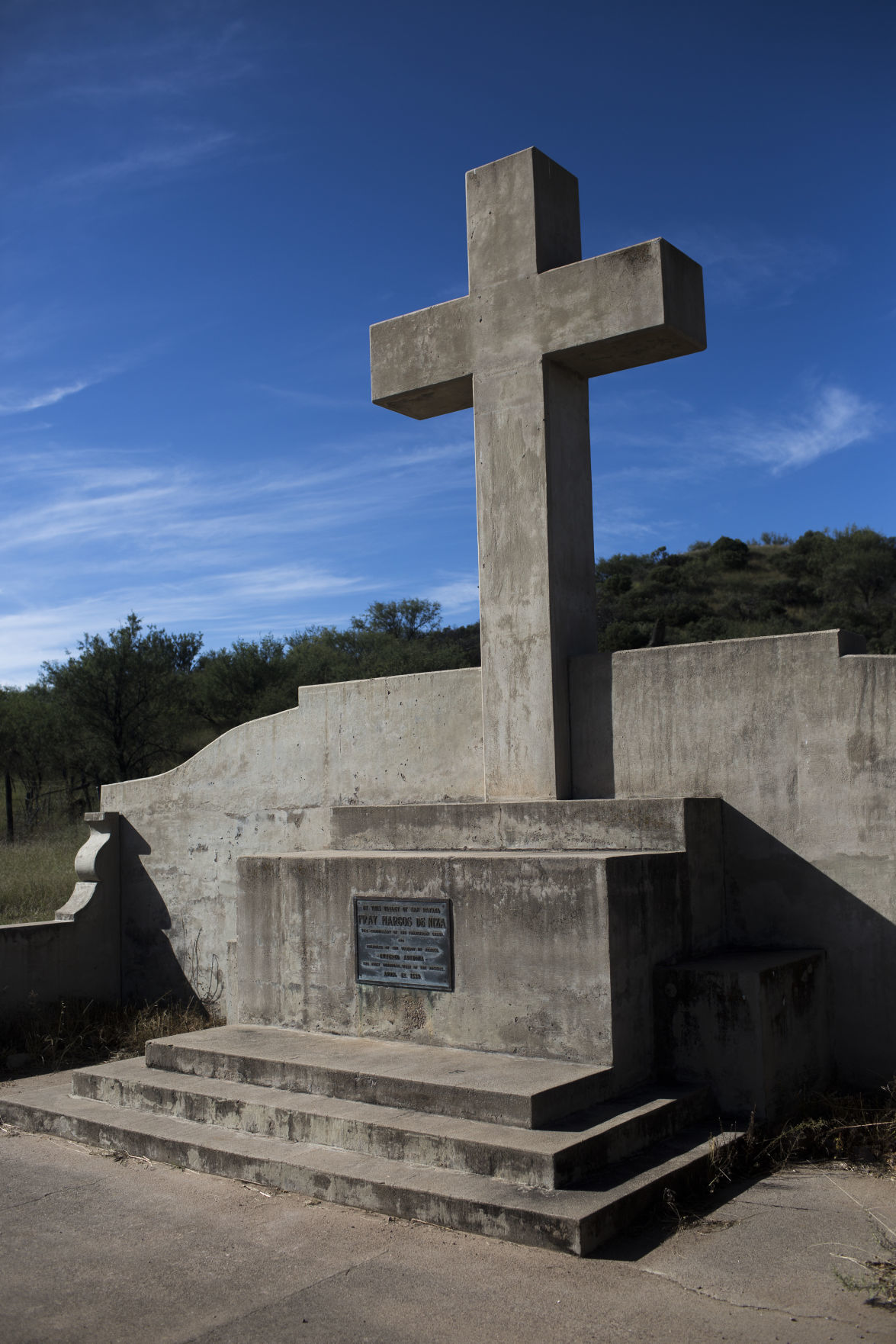
A monument in Lochiel marking where Fray Marcos De Niza entered Arizona Tuesday, Oct. 1, 2019.Tuesday, Oct. 1, 2019.
U.S. – Mexico border near Lochiel, Ariz.
Updated
Brothers Ramon and Ed De La Ossa mend fencing on their family's ranch in Lochiel after moving cattle Tuesday, Oct. 1, 2019. The ranch which used to span both sides of the U.S./Mexico border has been in the family for three generations.
U.S. – Mexico border near Lochiel, Ariz.
Updated
Ed De La Ossa mends fencing on his family's ranch in Lochiel Tuesday, Oct. 1, 2019. The ranch which used to span both sides of the U.S./Mexico border has been in the family for three generations.
U.S. – Mexico border near Lochiel, Ariz.
Updated
Ed De La Ossa moves cattle on his family's ranch in Lochiel Tuesday, Oct. 1, 2019.
U.S. – Mexico border near Lochiel, Ariz.
Updated
U.S. Customs inspector Helen Mills, right, greets Mexican counterpart Raymundo Aguirre Castillo at the U.S. - Mexican border station at Lochiel, Ariz., in 1979.
U.S. – Mexico border near Lochiel, Ariz.
Updated
The US Customs building, right, at Lochiel, Ariz., is just a short distance away from the international border in May 1972. For ten years, Mills has been managing the port of entry, which is mostly made up of five houses, a school and an vacant church, inspecting vehicles as they head into the US. During the week, from Monday through Saturday, Mills opens the border gate from 8 am to 10 am and from 4 pm to 6 pm. On Sunday the gate is open from 8 am to 6 pm. In that time barely a dozen vehicles make their way across the border but it is a major convenience to the local residents.
U.S. – Mexico border near Nogales, Ariz.
Updated
Pedestrians walk to the Nogales port of entry Tuesday, Oct. 1, 2019.
U.S. – Mexico border near Nogales, Ariz.
Updated
A pedestrian walks across North Grand Avenue in Nogales near the U.S./Mexico port of entries Tuesday, Oct. 1, 2019.
U.S. – Mexico border near Nogales, Ariz.
Updated
U.S. Customs and Border Protection officer R. Hernandez uses a density-measuring device on the rear quarter-panel of a Mexico-bound passenger vehicle at the DeConcini Port of Entry on Nov. 2, 2016, in Nogales, Ariz.
U.S. – Mexico border near Nogales, Ariz.
Updated
A Customs and Border Protection officer makes a visual check of a man's identification at the DeConcini Port of Entry on Feb. 15, 2017, in Nogales, Ariz. Busts of fraudulent border-crossing documents and the use of someone else's documents plummeted in Arizona and the rest of the border in the past decade.
U.S. – Mexico border near Nogales, Ariz.
Updated
Northbound commercial truck traffic lined up for inspection at the Mariposa Port of Entry on March 28, 2017, in Nogales, Ariz.
U.S. – Mexico border near Nogales, Ariz.
Updated
In the commercial lanes a semi truck stops between the lanes looking for the first available opening at the Mariposa Port of Entry in 2015.
U.S. – Mexico border near Nogales, Ariz.
Updated
Javier Castillo inspects a north-bound Mexican tractor-trailer at the Arizona Department of Transportation's inspection facility at the Mariposa Port of Entry on Sept. 19, 2017, in Nogales, Ariz. ADOT's International Border Inspection Qualification program, led by ADOT's Border Liaison Unit, teaches commercial truck drivers what to expect during safety inspections when they enter Arizona ports of entry.
U.S. – Mexico border near Nogales, Ariz.
Updated
A Border Patrol truck parked near the commercial port of entry in Nogales.
U.S. – Mexico border near Nogales, Ariz.
Updated
An illegal alien scales the U.S.-Mexico fence back toward Sonora after a Nogales Police Department officer, right, spotted him west of the Mariposa Port of Entry, Nov. 15, 2018, in Nogales, Ariz.
U.S. – Mexico border near Nogales, Ariz.
Updated
Kory's, a store catering to wedding, quincea–era and formal gowns, located at 15 N Morley Ave, Nogales, Ariz., sits katty corner to the Morley Gate Border Station on January 30, 2019.
U.S. – Mexico border near Nogales, Ariz.
Updated
Sun shines through the U.S.-Mexico bollard fence west of the Mariposa Port of Entry, Nov. 15, 2018, in Nogales, Ariz.
U.S. – Mexico border near Nogales, Ariz.
Updated
Children from Nogales, Sonora, climb through a hole in the international border fence to trick-or-treat in Nogales, Arizona, on Halloween in 1987.
U.S. – Mexico border near Sasabe and Lukeville, Ariz.
Updated
Border monument #166 is seen on the right as construction continues on the new 30-foot tall bollard fence that replaces old U.S./Mexico border fence two miles east of the Lukeville, Arizona port of entry on October 8, 2019. Photo taken from Sonoyta, Sonora, Mexico.
U.S. – Mexico border near Sasabe and Lukeville, Ariz.
Updated
Construction continues on the new 30-foot tall bollard fence along the U.S./Mexico border two miles east of the Lukeville, Arizona port of entry on October 8, 2019. Photo taken from Sonoyta, Sonora, Mexico.
U.S. – Mexico border near Sasabe and Lukeville, Ariz.
Updated
A Mexican worker rides his horse along a road south of the U.S./Mexican border wall on his way back into Sonoyta Wednesday, Aug. 28, 2019.
U.S. – Mexico border near Sasabe and Lukeville, Ariz.
Updated
New paneling of border wall seen about three miles east of the Lukeville/Sonoyta port of entry seen from the Mexico side of the border line Wednesday, Aug. 28, 2019.
U.S. – Mexico border near Sasabe and Lukeville, Ariz.
Updated
Old mesh paneling is removed in preparation for new wall to be built about three miles east of the Lukeville/Sonoyta port of entry seen from the Mexico side of the border line Wednesday, Aug. 28, 2019.
U.S. – Mexico border near Sasabe and Lukeville, Ariz.
Updated
A construction worker prepares cables to lift a piece of the 30-foot tall bollard fence along the U.S./Mexico border fence two miles east of the Lukeville, Arizona port of entry on October 8, 2019. Photo taken from Sonoyta, Sonora, Mexico.
U.S. – Mexico border near Sasabe and Lukeville, Ariz.
Updated
Border Patrol Officers to the side of a worksite about three miles east of the Lukeville/Sonoyta port of entry where new border wall is being installed seen from the Mexico side of the border line Wednesday, Aug. 28, 2019.
U.S. – Mexico border near Sasabe and Lukeville, Ariz.
Updated
Old wall east of the Lukeville/Sonoyta port of entry seen from the Mexico side of the border line Wednesday, Aug. 28, 2019.
U.S. – Mexico border near Sasabe and Lukeville, Ariz.
Updated
Raised wall east of the Lukeville/Sonoyta port of entry seen from the Mexico side of the border line Wednesday, Aug. 28, 2019.
U.S. – Mexico border near Sasabe and Lukeville, Ariz.
Updated
A work site east of the Lukeville/Sonoyta port of entry seen from the Mexico side of the border line Wednesday, Aug. 28, 2019.
U.S. – Mexico border near Sasabe and Lukeville, Ariz.
Updated
Normandy fencing placed against a section of border fence west of Lukeville Wednesday, Aug. 28, 2019.
U.S. – Mexico border near Sasabe and Lukeville, Ariz.
Updated
A semi passes by Quitobaquito Springs as it drives along Highway 2 in Mexico Wednesday, Aug. 28, 2019.
U.S. – Mexico border near Sasabe and Lukeville, Ariz.
Updated
An area referred to as "flood gate" along the U.S./Mexico border near Sasabe, Ariz. is on the list of the Department of Homeland Security’s priorities for building a border wall, but no funding has been allocated yet. September 16, 2019.
U.S. – Mexico border near Sasabe and Lukeville, Ariz.
Updated
Vehicle barriers mark the U.S./Mexico border within the Buenos Aires National Wildlife Refuge in Sasabe, Ariz. on September 16, 2019.
U.S. – Mexico border near Sasabe and Lukeville, Ariz.
Updated
A portion of the U.S./Mexico bollard border fence ends on the right and vehicle barriers begin within the Buenos Aires National Wildlife Refuge in Sasabe, Ariz. on September 16, 2019.
U.S. – Mexico border near Sasabe and Lukeville, Ariz.
Updated
A U.S. Customs and Border Protection Integrated Fixed Tower, left, near Sasabe, Ariz. on September 16, 2019.
U.S. – Mexico border near Sasabe and Lukeville, Ariz.
Updated
The new 30-foot tall bollard fence that replaced old U.S./Mexico border fence can be seen on the left. It's located about miles east of the Lukeville, Arizona port of entry on October 8, 2019. Photo taken from Sonoyta, Sonora, Mexico.
U.S. – Mexico border near San Luis, Ariz.
Updated
A US Border Patrol vehicle seen next to a section of new 30 foot high wall along the US/Mexico border near the commercial port of entry in San Luis Thursday, Aug. 8, 2019.
U.S. – Mexico border near San Luis, Ariz.
Updated
Old fencing is taken down along the United States/Mexico border seen from the northern end of San Luis, Mexico, Aug. 7, 2019.
U.S. – Mexico border near San Luis, Ariz.
Updated
A security guard stand in a construction site where a new fence will be placed on the United States/Mexico border seen from the northern end of San Luis, Mexico, Aug. 7, 2019.
U.S. – Mexico border near San Luis, Ariz.
Updated
Old fencing against new fencing along the United States/Mexico border seen from the northern end of San Luis, Mexico on Aug. 7, 2019.
U.S. – Mexico border near San Luis, Ariz.
Updated
Crews prepare ground for a new fence to be placed on the United States/Mexico border seen from the northern end of San Luis, Mexico on Aug. 7, 2019.
U.S. – Mexico border near San Luis, Ariz.
Updated
Vehicles in line to enter the United States from San Luis, Mexico on Aug. 7, 2019.
U.S. – Mexico border near San Luis, Ariz.
Updated
New fencing along the United States/Mexico border seen from the northern end of San Luis, Mexico on Aug. 7, 2019.
U.S. – Mexico border near San Luis, Ariz.
Updated
A new section of fencing on the U.S. - Mexico border in California, just west of Yuma, Ariz., in 1993.
U.S. – Mexico border near San Luis, Ariz.
Updated
Sand drifts through the "floating fence" that marks the border running through the dunes, Wednesday, July 25, 2018, west of San Luis, Ariz.
U.S. – Mexico border near San Luis, Ariz.
Updated
A sign warns of the dangers of trying to swim the All-American Canal just north of the Mexican border, Wednesday, July 25, 2018, west of San Luis, Ariz.
U.S. – Mexico border near San Luis, Ariz.
Updated
A long string of lights illuminate the no-man's land between the triple fencing of the Mexican border, Wednesday, July 25, 2018, San Luis, Ariz.
U.S. – Mexico border near San Luis, Ariz.
Updated
The border fence comes to an abrupt end at the currently dry Colorado River, Thursday, July 26, 2018, west of San Luis Rio Colorado, Sonora.

