


So you missed out on Taylor Swift tickets even though you were among the first to sign in on the website?
State Rep. David Cook wants to help ensure you get a fair shot the next time.
The Globe Republican has introduced legislation that would make it illegal in Arizona to use a “bot’’ — automated software — to scoop up as many tickets as possible and get around restrictions on how many any one individual could buy. His House Bill 2040 seeks to address the methods used by those who later resell their tickets.
For example, it would bar the use of multiple internet protocol addresses, purchaser accounts or email addresses, ways to purchase more than the number of tickets allowed for any individual. It also proposes measures to go after the tech savvy, making it a violation of Arizona law to circumvent or disable an electronic queue, waiting period, presale code or other methods of limiting the number of tickets that could be purchased.
The measure would prohibit the purchase of tickets beyond the posted limit — regardless of the methods used.
Cook’s measure, though, is aimed only at the front end of the process. It would not outlaw “scalping,’’ the resale of tickets at above-posted prices.
The problem of bots and similar technology has existed for years in multiple forms beyond concert tickets. People seeking to purchase tickets for popular sporting events also can find themselves out of luck at official websites where seats at list prices aren’t available — but tickets are available at premiums elsewhere.
The situation gained international attention earlier this year when Ticketmaster found itself so flooded with bot requests for presale tickets for Swift’s 2023 U.S. stadium tour — a tour she opened with shows in the Phoenix suburb of Glendale — that it crashed the system and left many fans frustrated.

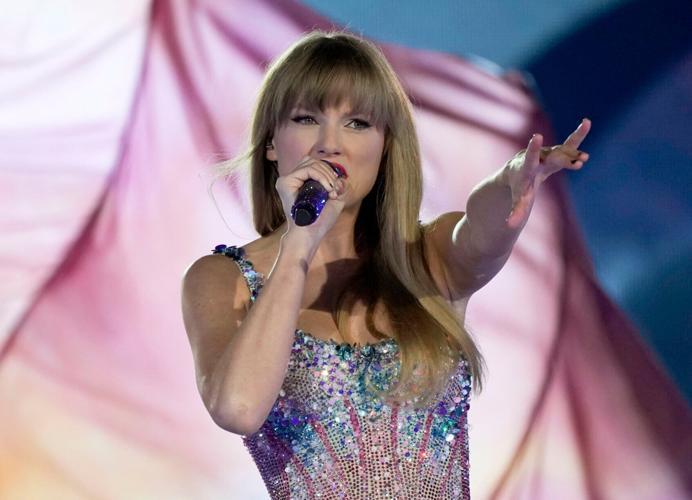
Taylor Swift performs during the opener of her Eras tour in Glendale, Arizona, on March 17.
“We can regulate this”
There already is a federal law, approved in 2016, that makes it illegal to resell tickets purchased with bots. It gives the Federal Trade Commission the ability to impose fines of up to $10,000 per violation.
It took until 2021, however, for the FTC to take its first — and possibly only — action, fining three ticket brokers $31 million for using automated software to buy tens of thousands of tickets through Ticketmaster.
That leaves the question of what can the state do.
“Just as we do with everything else, this opens up, at least, the conversation,’’ Cook said. He said that’s a first step.
“This is a problem and it’s a problem for our citizens in Arizona,’’ Cook said. “What I believe is we can regulate this at some point.’’
Nor is he dissuaded by the fact that many of the offenders are operating beyond the state’s borders. “Those companies still have to operate within our state law,’’ Cook said.
He said finding potential offenders should not be a problem.
“When you go to a website and they say, ‘Oh, we’re sold out,’ … you’re directed to another website,’’ Cook said. The fact that there are multiple tickets available on that site is the first clue when there is supposed to be a limit of no more than four for sale at any one time.
“Why is it that, all of a sudden, this one website has all of these tickets for sale?’’ he asked.
Cook acknowledged that proving someone used a bot — versus simply managing to buy a bunch of tickets four at a time — might not be simple.
“That would be done through an investigation,’’ he said.
Cook said while the Taylor Swift concert gained a lot of attention, those seeking to go to lots of other, smaller events face similar problems. He specifically cited the Prescott Rodeo.
Cook there’s another problem with these third-party sites: fraud.
He said consumers could end up buying something online and get a ticket, only to be told at the door, “Oh, these aren’t from us.’’ But Cook said that’s a different issue that falls under existing criminal laws.
Still, he conceded, HB 2040 is just a starting point and unlikely to be the final version — assuming it survives the legislative process.
“We took the problem to our staff attorney,’’ Cook said. “And this is what they’ve come up with.’’
He said that’s what the legislative process is for: to work out the kinks.
“After we drop those bills, we can amend them and get these questions addressed,’’ Cook said. “Because you don’t know the question until you start working through the process.’’
Federal effort, too
Cook’s effort comes as several U.S. senators introduced what they are calling the Fans First Act.
“The current ticketing system is riddled with problems and doesn’t serve the needs of fans, teams, artists or venues,’’ said Republican U.S. Sen. John Cornyn of Texas when the measure was proposed earlier this month.
U.S. Sen. Amy Klobuchar, D-Minn., another sponsor, said the provisions go beyond bots.
She said the Fans First Act would guarantee that ticket buyers would get refunds when a show is canceled. Klobuchar said it also would ban “speculative ticket sales,’’ where someone sells a ticket they do not actually own.

