

PHOENIX — A veteran state lawmaker is pushing a late-session maneuver that would double his own pay and that of more than half of his colleagues.
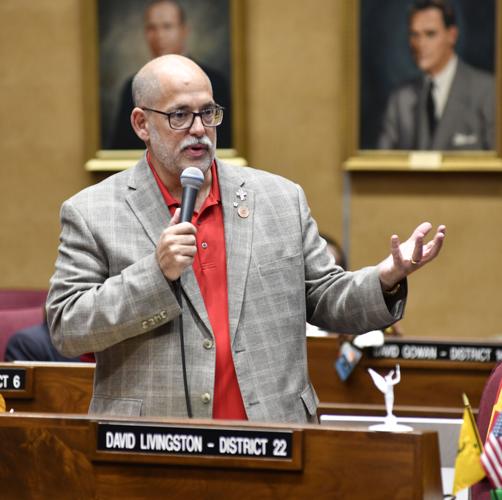
The proposal by Rep. David Livingston set to be heard in the House Appropriations Committee on Monday would entitle lawmakers who live in Maricopa County to a daily allowance of 80% of what the General Services Administration allows in hotel and meal expenses for federal employees who are traveling. That comes out to close to $200 a day.
Only thing is, Maricopa County lawmakers, unlike their rural counterparts, are simply driving to their own offices each day.
In fact, they already get $35 a day just for that — and seven days a week, even though lawmakers generally are in session four days most weeks.
And that’s on top of the $24,000 annual salary — something a separate measure also set for debate Monday seeks to double, though that one is subject to voter approval.
But Livingston, a Peoria Republican, told Capitol Media Services it’s wrong to look at what is called the “per diem’’ allowance simply as covering expenses. He said it should instead be seen as part of a lawmaker’s overall compensation.

Rep. David Livingston
If all this seems familiar, it should. Lawmakers tried a similar maneuver in 2019, tying their allowance to the GSA rate.
Then-Gov. Doug Ducey was willing to support an increase for lawmakers from outside of Maricopa County.
“There is a strong case to be made for ensuring we are appropriately recognizing what is required for them to be here at the state Capitol in Phoenix during session,’’ he wrote. But he vetoed the bill because of the attempted increase for in-county lawmakers.
A separate measure for those living in the other 14 counties eventually was approved and signed by Ducey, giving them the full GSA rate. That equates to $249 a day for the first 120 days of the session, or $29,880, on top of the $24,000 salary.
The actual allowance is greater given that lawmakers also can collect it any day they act “on a legislative matter’’ after the session is over, which could mean meetings with others at the Capitol or in their home districts.
Livingston’s measure using the 80% figure would come out to close to $24,000 in allowance plus the salary for 120 days.
There’s also a provision to get 40% of the GSA rate when the session runs longer.
That’s not unusual. In fact, one year the session, which starts in January, extended into August.
Livingston said he understands that asking lawmakers to approve such a sharp boost in their own compensation without seeking voter input — particularly for lawmakers who live in Maricopa County who don’t have the same living expenses — comes with a certain amount of political risk.
But he said an increase for himself and other Maricopa County lawmakers is appropriate, and he thinks voters will understand.
As evidence, he cited the recent resignation of Sen. Eva Burch, a Mesa Democrat, who called herself “a casualty of legislative pay.”
“I have been struggling to make ends meet and to find balance with my legislative work and my job as a health-care provider,” Burch said.
Livingston conceded that something else may help convince colleagues to go along now: It will be another year before lawmakers need to face voters and run for reelection.
“I think the timing is right,’’ he said.
He has another argument, too, about why in-county lawmakers should be paid more — even if it is in the form of an allowance.
“I think it’s discrimination against the members that live in Maricopa County versus the members that live outside of the county in the discrepancy in pay,’’ he said.
Those who live in the county don’t have the same expenses, such as hotels and having to take all their meals away from home.
“I understand all that,” Livingston said, but added, “You can’t have members paid to do the same job being one-and-a-half, two times, three times the other members. It’s not fair. It’s discrimination. We do the same work. We need to be paid the same, no matter what it is and how you divide it up.’’
Even if Livingston can convince a majority of lawmakers to go along, a change in allowance still goes to the governor, just as happened in 2019. And Democratic Gov. Katie Hobbs appears no more inclined to go along than Ducey, her predecessor.
“Pay raises for politicians is the height of budget mismanagement,’’ Hobbs’ press aide Christian Slater told Capitol Media Services.
And then there’s the timing.
He noted that the plan comes as Livingston has been publicly critical of the governor, accusing her of overspending the money she was allocated for foster care programs and services for the developmentally disabled. Republican House Speaker Steve Montenegro formed a new panel specifically to investigate Hobbs’ fiscal practices.
Slater said if that panel is interested in looking at “mismanagement’’ perhaps it should widen its focus. `We look forward to the new ad hoc committee investigating Rep. Livingston’s disastrous proposed spending spree,’’ he said.
Also up for discussion in Livingston’s committee Monday is a proposal by Fountain Hills Republican Sen. John Kavanagh to ask voters to link actual legislative pay — the current $24,000 a year — to inflation.
But the proposal is worded so the indexing would be back-dated to when voters approved the last legislative pay raise in 1998. So, if approved, it would double legislative pay to close to $48,000.
That measure, already approved by the Senate, would not need the governor’s approval as it would go on the 2026 ballot.
The whole concept of a big increase, whether through a voter-approved change or an allowance increase, or both, is likely to draw at least some legislative opposition.
Rep. Alexander Kolodin, for his part, said he’s willing to boost pay, but with a twist: Set legislative pay at $100,000 a year — but deduct $500 for every day lawmakers are in session.
“You have to line up the incentives right,’’ said the Scottsdale Republican, who has argued that lawmakers, in their annual sessions where they get a daily allowance, are inserting themselves into far too many areas of life and spending on issues he does not consider priorities.
“Can you imagine how much money the state would save?’’ he asked.
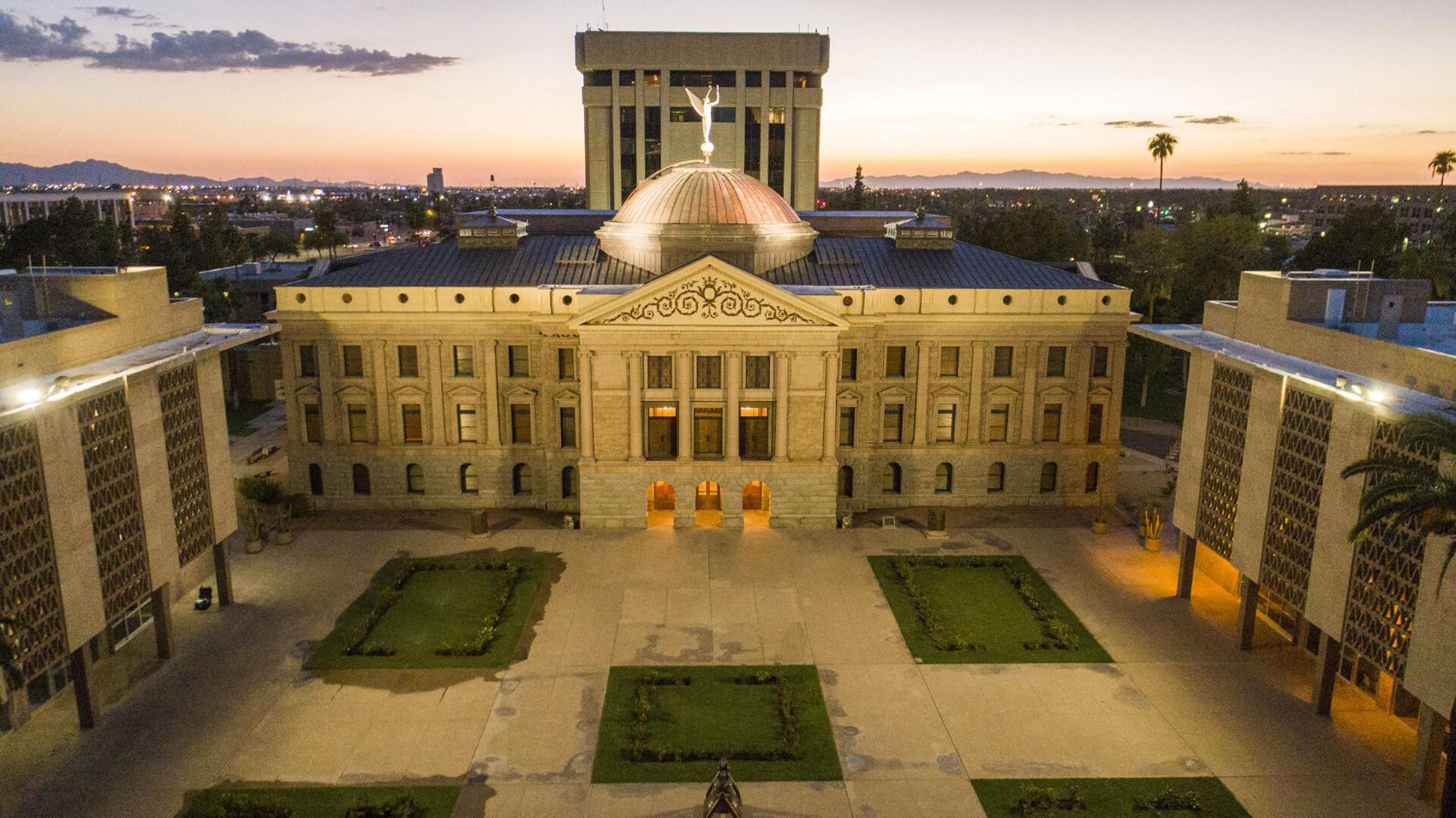
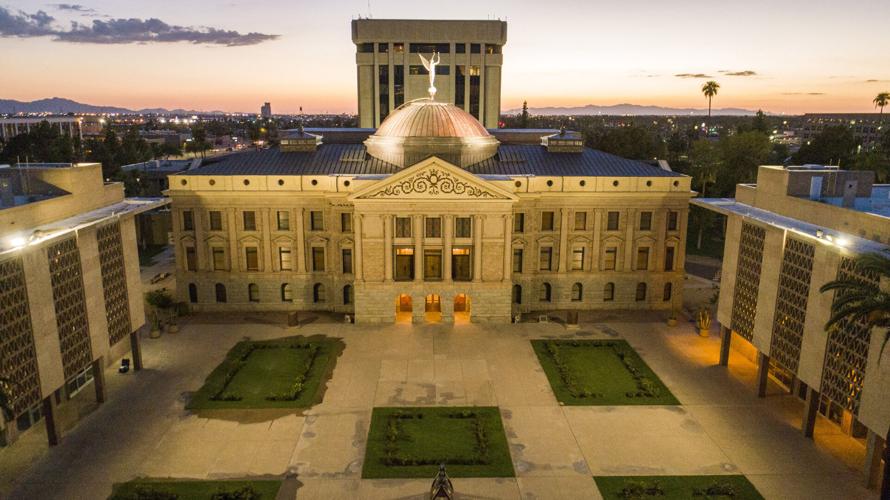
The Arizona Capitol complex in Phoenix.

