
Arizona’s Democratic Party is in turmoil and looking for a way forward after behind-the-scenes tension between the party chair and state officeholders exploded into public view.
Party Chair Robert Branscomb revealed the conflict in a letter Saturday to members of the state committee, pointing the finger especially at Tucson’s own U.S. senator, Mark Kelly. The conflict centered on Branscomb’s firing of the previous executive director, Morgan Dick, and hiring of a new one, Michael Ruff.
“Shortly after I relieved the previous ED (executive director) of her duties, I received a call from Senator Mark Kelly, who strongly discouraged me from making staffing changes without consulting him,” Branscomb wrote to the committee.

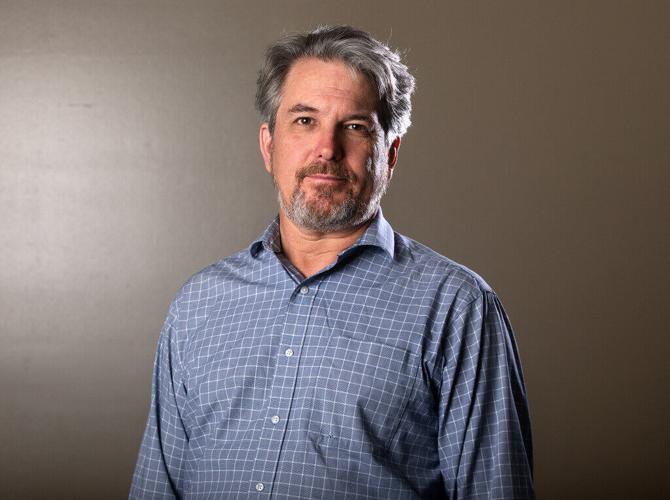
Arizona Daily Star columnist Tim Steller
Branscomb went on, “He emphasized his role in raising funds for the party and implied that I should be grateful, even beholden, to him for the party’s financial resources. I found this sentiment troubling, as it undermined the independent leadership you elected me to bring.”
The discord blew up after the party organized a hiring committee, including representatives of all the statewide elected Democrats and other important interest groups, to find a new executive director. Rather than hiring either of the two finalists recommended by the committee, Branscomb hired a party insider, Michael Ruff.
That’s what really angered the powers that be, Branscomb said in his Saturday letter.
“I received a text from one of our U.S. Senators stating he would no longer support or participate in state party fundraising. Shortly after, the other Senator called me directly — demeaning me and demanding I reverse my decision within 24 hours or ‘face consequences.’”
Branscomb won his position in a January vote, defeating previous chair Yolanda Bejarano, who was supported by Arizona’s top elected Democrats.
Dick said Branscomb unexpectedly fired her a few days after his election. She offered to help the transition but got no response and moved on, she said.
After Branscomb’s public broadside on Saturday, Kelly, U.S. Sen. Ruben Gallego, Gov. Katie Hobbs, Arizona Attorney General Kris Mayes and Secretary of State Adrian Fontes wrote him a joint response.
“We’ve spent the last several months meeting regularly with the Chair and working to support the party through the transition,” the letter begins. “Unfortunately, his statement today includes many false claims and is the kind of bad-faith response we’ve come to expect from the new leadership over the last several weeks.”
It goes on: “While the Chair has lost our trust, we’re not going to let that deter us from our mission of winning in 2026.”
In the midst of all this, on April 16, the state party’s elected secretary, Lisa Sanor, resigned, citing Branscomb’s “poor leadership” in part.
Branscomb has supporters, though, who have complimented him for his transparency about the party’s power dynamics. “All Democrats should be concerned about the issues raised in this letter,” Tucson City Council candidate Sadie Shaw said in a Star op-ed.
The one good thing about the episode, Morgan Dick and Democratic strategist Tony Cani said, was that top Democratic elected officials appear united with each other, if not with the party chair.
There are three main possibilities for moving forward, Cani said. One is that the two sides resolve their conflict. Another is that Branscomb resigns or is pushed out in a special vote by the state committee.
The last is that the party’s top elected officials simply route the money they raise elsewhere. This happened when Republican Doug Ducey was governor and Kelli Ward was party chair. Ducey, as head of the Republican Governor’s Association, routed money raised for the governor’s race that year through the Yuma County Republican Party instead of the state party.
“This is a bummer, but I don’t think it’s devastating for the party,” Cani said.
Goldman gets going in CD6
A well-known Tucson immigration attorney launched this week a campaign for the Democratic nomination for Congress in Congressional District 6.
In his introductory video, Maurice “Mo” Goldman presented himself as a fighter willing to take on the Trump administration and congressional Republicans.
“We don’t have time for fear. We don’t have time for excuses. The fight is now,” Goldman says in the video.
In an interview, Goldman said the people on the streets are demanding more from Democratic officeholders, even though their powers are limited since they’re the minority in both chambers of Congress.
“People are begging for louder voices, and you only see a handful of the usual suspects within the Democratic Party,” he said. “We need to put up the strongest fight we can.”
Goldman grew up in Tucson, the grandson of Holocaust survivors and the son of an immigration attorney, Gloria Goldman. He attended Greenfields Country Day School, Syracuse University for college, and Hofstra University for law school. He is married and the father of three children.
Goldman is going up against one established candidate in Joanna Mendoza, who is from Pinal County and started running in January, raising about $816,000 in the first quarter. Chris Donat has also filed to run for the Democratic nomination.
Tucson Republican Rep. Juan Ciscomani currently holds the office, after winning re-election for the first time in 2024. Republicans have a small registration advantage in the district that runs from the southeast corner of Arizona, across much of the Tucson area to Casa Grande.
City sets November elections
In addition to three City Council seats up for election on Nov. 4, Tucson voters will have their say on the city’s proposed general plan, as well as a potential franchise agreement between the city and Tucson Electric Power Co.
For now, the Nov. 4 election date for the franchise agreement is purely a placeholder, as terms of a proposed franchise agreement between the city and TEP have not been finalized yet, city attorney Mike Rankin said Tuesday night. The city had to call the election at least six months in advance to ensure statutory compliance, Rankin said.
Tucson voters rejected the last franchise agreement two years ago. Prop. 412 proposed a 25-year agreement between the city and the utility that would have imposed a monthly fee on residents to help fund underground installation of a new high-voltage transmission line routed through midtown, as well as future city climate-action programs.
The city and TEP have been in a legal battle over the Midtown Reliability Project for years now: the city wants the line undergrounded in accordance with ordinances banning new, overhead transmission lines on designated “scenic” and “gateway” corridors, but the utility contends that undergrounding the lines would be prohibitively expensive.
The City Council also called an election for its proposed general plan, “Plan Tucson 2025,” which addresses how the city will protect the local environment, responsibly manage water resources and plan land use, among other goals.