


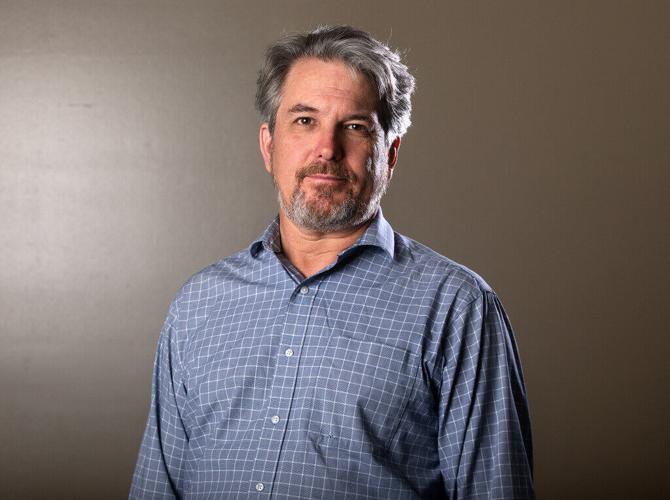


In a Feb. 19 hearing, Sen. David Farnsworth was proposing to strip community colleges and universities of all their state money if they did one thing wrong.
All it would take under his bill, SB 1694, would be one class touching on any of a list of concepts, including gender identity or social justice. Then, all the state funding for tens of thousands of students and faculty in sciences, engineering, languages, arts and everything else, would disappear — more than $600 million for the UA this year alone.
All that for, potentially, one contested topic being taught in one course.
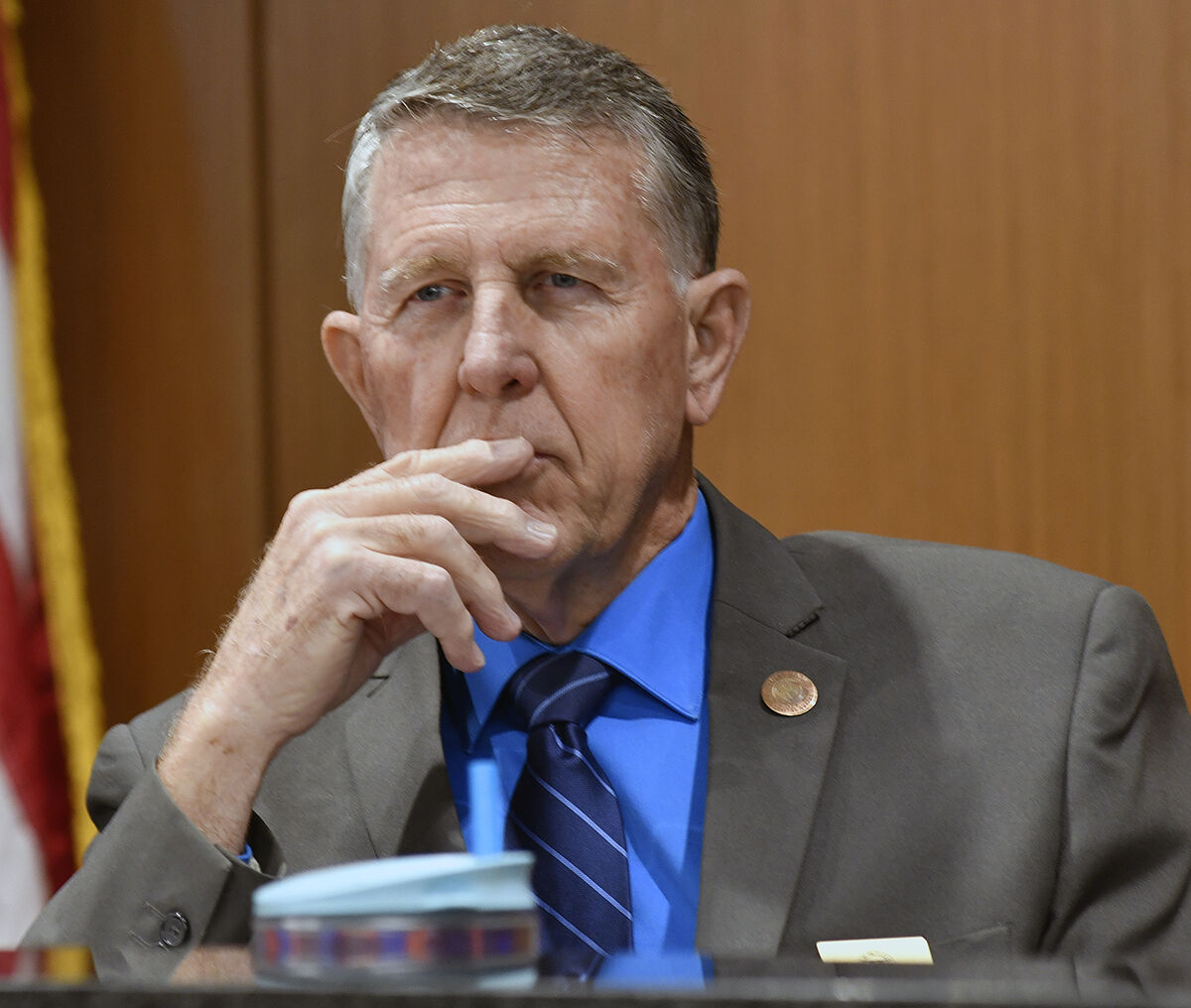
Farnsworth
It was a drastic proposal by Farnsworth, a Mesa Republican, who talked of it as commonsensical. Yet fellow committee member Sen. Catherine Miranda noticed somebody important missing in that hearing: The universities and the board of regents. They weren’t there to speak about it and had taken no formal position.
“I don’t blame them because if they go against this bill, their funding will be taken away,” said Miranda, a Phoenix Democrat. “That’s from Capitol Hill (in Washington D.C.) coming down into our states, this fear of DEI.”
This is the posture we’re seeing from Arizona university leaders take as they face threats from Trump and from his supporters at the capitol in Phoenix, including Farnsworth, a Mesa Republican. They’re not flashing defiance — they’re laying low, apparently hoping to avoid confrontation and to maintain their paltry state funding.

Arizona Daily Star columnist Tim Steller
Arizona ranks 46th nationwide for per-capita funding of higher education. That funding is down this year from the year before, and it could go even lower next year, if tax revenue comes in low, or if the GOP majority channels Trump’s disdain for universities toward them.
“The universities have long been fearful of the Legislature,” Sen. Priya Sundareshan, the Tucson Democrat and senate minority leader, told me Thursday. “It all stems from the fact that they’ve seen the Legislature use the power of the budget as a cudgel.”
U of A’s submission
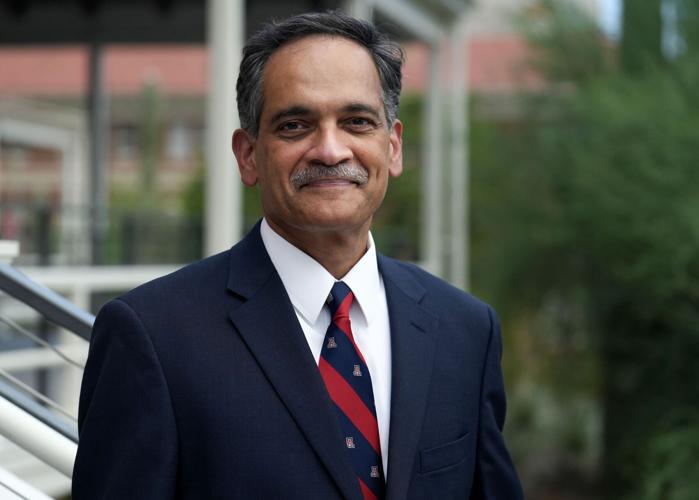
We saw Senate President Warren Petersen wave that cudgel in a tweet posted Wednesday. He posted and celebrated a submissive letter from the University of Arizona’s new president, in which Suresh Garimella listed the ways the university is eliminating diversity, equity, inclusion and accessibility efforts, answering Petersen’s request.

Garimella
“The University of Arizona recently sent a letter to me affirming their work to comply with President Trump’s Executive Order to restore merit-based opportunities,” Petersen said. “I appreciate this cooperation to ensure students and staff are not provided preferential treatment based on their skin color, national origin, religious preferences, their sex, or their sexuality.”
“All eyes are now on Arizona State University and Northern Arizona University. I look forward to hearing back on their progress to comply with the law.”
The president’s executive order is not a law, and his description of DEIA activities as countering “merit-based opportunities” is highly disputed. But that doesn’t mean people like Petersen aren’t treating the order as law. And there’s an implied threat in his calling out ASU and NAU. The budget hasn’t passed yet, and Republicans hold both houses.
Only the governor, Democrat Katie Hobbs, potentially stands in the way of a punitive cut in funding in the state budget, or the drastic threat from Farnsworth’s bill. It’s unclear how strong she’ll stand in budget negotiations — her office didn’t get back to me when I asked them about it.
UA spokesman Mitch Zak declined to discuss the university’s federal or state strategy but said in a written statement, “we work to build and maintain relationships that advance our land-grant mission and commitment to student success.”
He added, “Our job is to advance the mission, help drive investments to students and research, and navigate and influence the political landscapes that are constantly shifting.”
Long list of forbidden topics
Arizona’s universities are flawed institutions, as I’ve pointed out in many columns over the years. They waste money, they embrace intellectual fads, they come nowhere close to meeting the mandate in Arizona’s constitution that higher education be “as nearly free as possible.”
But their impact on the state is overwhelmingly positive. They attract brilliant scientific minds to the state, train many of Arizona’s medical professionals, and produce performers, writers and artists. They are hubs of cultural dynamism in a state that could otherwise be a backwater.
Last fall, I was waiting for somebody in the first floor of the main library, watching as knots of students worked together, many doing math problems or sketching out presentations on the available whiteboards. It was moving. They were into it.
This is an experience Sen. Farnsworth has apparently never had. He explained during that hearing how he got an associates degree from Mesa Community College in 1975, then returned this year to take a course at Rio Salado College in elementary education as he pursues a bachelor’s degree at the age of 73.
He said the textbook for his course, called “Multicultural Education in a Pluralistic Society,” was biased and divisive, degrading White Anglo-Saxon Protestant culture as a dominant and negative force in American culture.
This experience, he said, is why he is threatening to pull all state funding from any university or community college. The list of concepts that, if touched on in a university of course, would get hundreds of millions of dollars in state funding pulled, is long: critical theory, whiteness, systemic racism, institutional racism, anti-racism, microaggressions, systemic bias, implicit bias, unconscious bias, intersectionality, gender identity, social justice, cultural competence, allyship, race-based reparations, race-based equity, gender-based equity, race-based inclusion or gender-based inclusion.
I reached out to Farnsworth to find out where he got this list, but did not hear back. Suffice it to say, his bill is a drastic overreaction to a possibly objectionable textbook in his community college, and a radical restriction on freedom of speech and thought.
Atmosphere of disdain
Farnsworth’s bill is likely to pass, but it is also almost certainly going to be vetoed by Gov. Hobbs.
Still, it underscores an atmosphere of disdain for the universities that has been growing among Legislative Republicans. It’s part of a nationwide shift, in which Republicans have increasingly viewed the handful of politically radical students or professors as representative of the whole and have grown hostile to university education in general.
Last year, Sen. Anthony Kern referred to the state’s universities as “anti-American indoctrination camps.”
“The number of Republican lawmakers who have been champions of the universities is growing smaller,” said Sundareshan, the Senate minority leader. “There’s long been a push to say university education doesn’t even help or is not even a valuable thing.”

She, by the way, was born and raised in Tucson because her father came here to be a University of Arizona professor of electrical engineering. Sundareshan went on to get a bachelor’s degree in chemical engineering from the Massachusetts Institute of Technology, a law degree from the UA Law School, and a master’s degree in natural resources economics from the UA. This is the sort of person who ends up in Arizona because of the universities.
And yet, people like Farnsworth are making the decisions. He once supported freedom of speech on campus, voting in 2018 in favor of a bill, now a law, that proclaims “Students and faculty members have the freedom to discuss any problem that presents itself.” But now he's looking to limit that freedom.
It would be nice if the universities or board of regents would defend that spirit of free inquiry and their own value as institutions, rather than accepting premises such as the idea that their DEIA programs represented racial preferences that reward people of lesser merit. A rhetorical defense of the institutions and their practices is deserved.
But it’s also clear there’s danger in defiance. And that’s the message the University of Arizona seems to have taken most to heart.
Tim Steller is an opinion columnist for the Arizona Daily Star. A 25-year veteran of reporting and editing, he digs into issues and stories that matter in the Tucson area, reports the results and tells you his conclusions. David McCumber and Tim discuss the perks of being a columnist, Tim’s early journalism days and the ways he has seen a change in the Tucson area over the years through his reporting.

