


An environmental group wants to ban the use of dogs for certain kinds of hunting, calling it a threat to federally protected wildlife.
The way dogs are legally used in Arizona to pursue bears, mountain lions and other smaller animals, often in packs, can result in harms to ocelots and jaguars, the Tucson-based Center for Biological Diversity said in a new petition Monday.
Even if animals can escape injury by climbing trees, their lung capacity is outmatched by the dogs, the petition says. And Mexican gray wolves can’t escape up trees, it adds.

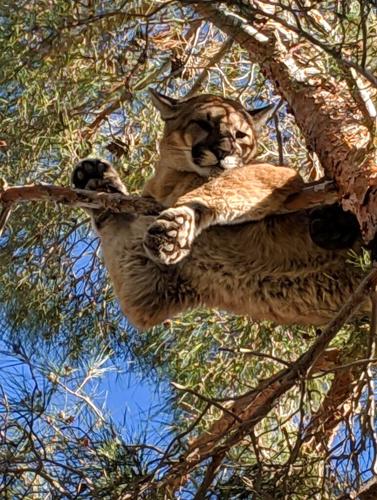
Even if animals can escape injury by climbing trees, their lung capacity is outmatched by that of hunting dogs, says a new petition to the Arizona Game and Fish Department seeking a change in hunting rules. (This file photo shows a mountain lion in a tree before it was rescued by California game officials.)
The request to the Arizona Department of Game and Fish also says dogs can put hikers and others at risk.
If none of that convinces the commissioners to alter the rules, the petitioners have something that might get their attention, given the agency’s history.
The center says the way hunters use technology to let dogs loose and then track them by satellite signals — versus staying within earshot of their dogs — is “unsporting and unethical.’’

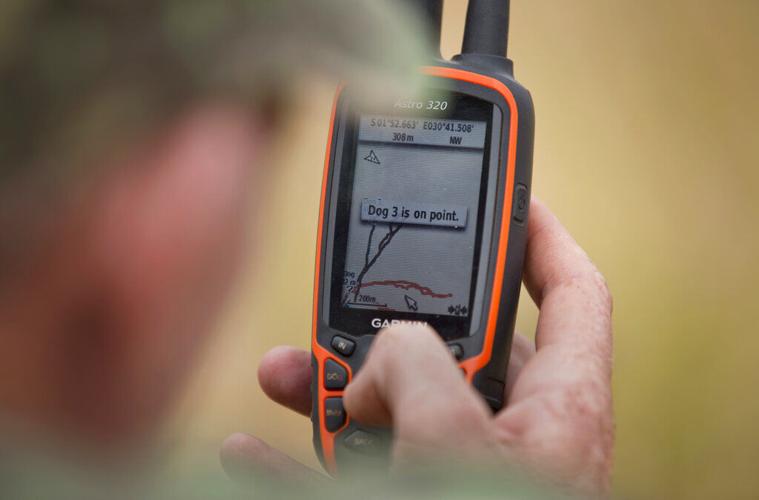
Monitoring the position of a hunting dog using a GPS receiver. The Tucson-bawed Center for Biological Diversity says the way hunters use technology to let dogs loose and then track them by satellite signals — versus staying within earshot of their dogs — is “unsporting and unethical.’’
That violates the commission’s own “fair chase doctrine,’’ described by the commission as “the ethical, sportsmanlike and lawful pursuit of taking free-range wildlife in a manner that does not give a hunter or an angler improper or unfair advantage,” the petition says.
The doctrine previously resulted in the commission banning the use of drones to locate wildlife for hunting. Also banned in Arizona are trail cameras that can send images to assist hunters to find wildlife.
The rules also prohibit what are known as “smart rifles’’ that do not fire when the trigger is pulled but wait until a laser-supported sighting system decides the target is in its sites.
The new petition submitted by Russ McSpadden and Colette Adkins of the Center for Biological Diversity say the same concerns about “fair chase’’ that led to those restrictions are present here.
In traditional hunting for animals such as bears and mountain lions, hunters find and identify tracks and send hounds to follow, a process that could take days of pursuit off of trails. Hunters would keep the dogs within earshot so they knew the progress.
What is happening now, the environmentalists say, is the use of radio telemetry and GPS collars that allow the dogs to roam free, tracked by hunters at a distance on phones or other hand-held devices. Then, when there are indications an animal has been spotted or cornered, the hunters can use their all-terrain vehicles to find the prey.
“Several states already prohibit the use of dogs while hunting bears and mountain lions as contrary to principles of ‘fair chase,’ ‘’ they wrote. “Indeed, trophy hunters’ use of packs of dogs — often in conjunction with technology like GPS trackers and a network of satellites orbiting the Earth — to kill wildlife for little more than bragging rights is unsportsmanlike.’’
Arizona already precludes the use of dogs to pursue certain other species that are legal to hunt, including deer, elk, bighorn sheep and javelina.
McSpadden and Adkins hope to force the commission to at least take a look at the issue — and soon.
They cite a state law that says any state agency, within 60 days of a petition to enact or amend a rule, must either reject the petition and state its reasons in writing or begin the process of making the rules.
The agency’s website says new or improved technologies and practices “can provide benefits to hunters and anglers by improving competency or increasing participation.’’
But certain things, it says, cross the line.
One, for example, is allowing a hunter to take wildlife without acquiring the necessary skills or competency. Also over the line is any technology or practice “that makes harvesting wildlife almost certain’’ or prevents the wildlife from eluding the hunter.
Another is technology or practice that allows a hunter to take wildlife “without being physically present and pursing wildlife in the field.’’
None of this would apply to the use of dogs while hunting ducks and other birds.

