

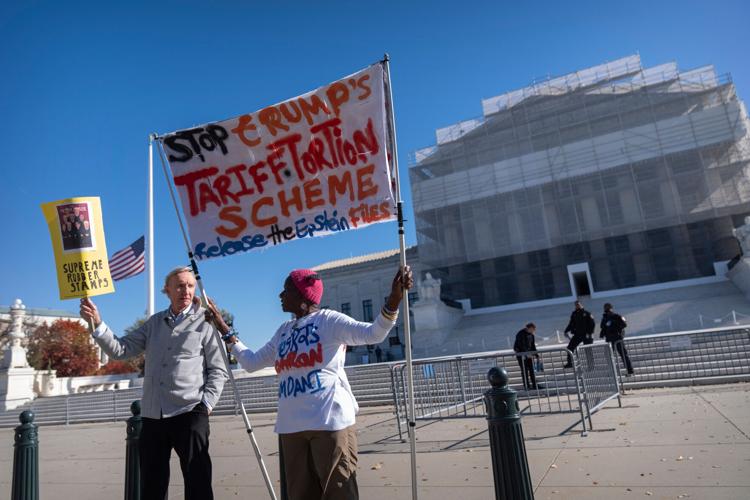

WASHINGTON — Key Supreme Court conservatives seemed skeptical Wednesday that President Donald Trump has the power to unilaterally impose far-reaching tariffs, potentially putting at risk a key part of his agenda in the biggest legal test yet of his unprecedented presidency.
The Republican administration is trying to defend the tariffs central to Trump's economic agenda after lower courts ruled the emergency law he invoked doesn't give him near-limitless power to set and change duties on imports.
The Constitution says Congress has the power to levy tariffs. The Trump administration argues that in emergency situations the president can regulate importation — and that includes tariffs.
Justice Amy Coney Barrett grilled the government on that point.
"Has there ever been another instance in which a statute has used that language to confer the power?" she asked.
Justice Neil Gorsuch also questioned whether Trump's position would hand too much congressional power to the president.
"Is the constitutional assignment of the taxing power to Congress, the power to reach into the pockets of the American people, just different?" he asked. "And it's been different since the founding?"
Questions from Chief Justice John Roberts also suggested he might not be convinced. With the court's three liberal-leaning justices seeming deeply dubious, the tariffs challengers could win by swaying two conservatives.
A decision in the case could take weeks or months.
Trump called the case one of the most important in the country's history and claimed a ruling against him would be catastrophic for the economy.
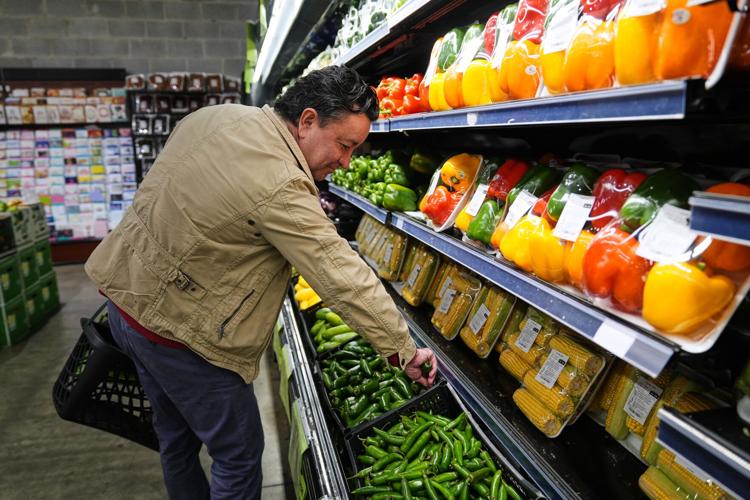
The challengers argue the 1977 emergency powers law Trump used doesn't even mention tariffs, and no president before used it to impose them. A collection of small businesses say the uncertainty is driving them to the brink of bankruptcy.
Widespread import taxes
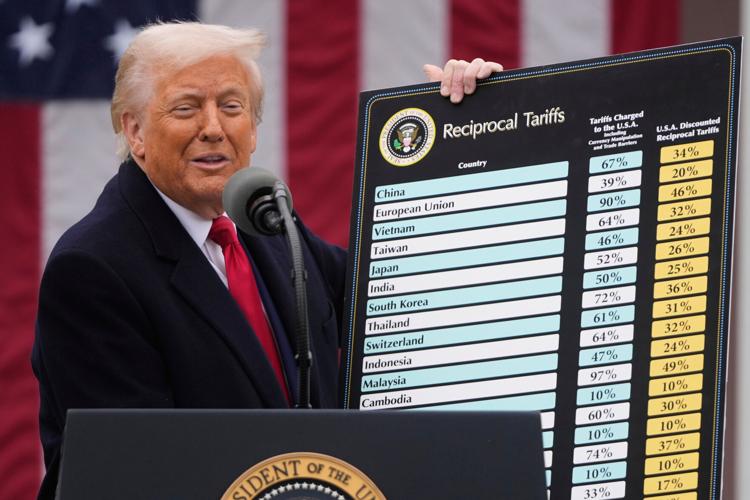
The case centers on two sets of tariffs. The first came in February on imports from Canada, China and Mexico after Trump declared a national emergency over drug trafficking. The second involves the sweeping "reciprocal" tariffs on most countries that Trump announced in April.
Multiple lawsuits were filed over the import taxes, and the court will hear suits filed by Democratic-leaning states and small businesses focused on everything from plumbing supplies to women's cycling apparel.
Lower courts struck down the bulk of Trump's tariffs as an illegal use of emergency power, but the nation's highest court may see it differently.
Trump helped shape the conservative majority court, naming three of the nine justices in his first term. The justices have so far been reluctant to check his extraordinary flex of executive power, handing him a series of wins on the court's emergency docket.
Still, those have been short-term orders — little of Trump's wide-ranging conservative agenda has been fully argued before the nation's highest court. That means the outcome could set the tone for wider legal pushback against his policies.
The justices were skeptical of executive power claims before, such as when then-President Joe Biden tried to forgive $400 billion in student loans under a different law dealing with national emergencies.
The Supreme Court found the law didn't clearly give the president the power to enact a program with such a big economic impact, a legal principle known as the major questions doctrine.
The government says the tariffs are different because they're a major part of his approach to foreign affairs, an area where the courts should not second-guess the president.
The challengers also want to channel the conservative justices' skepticism about whether the Constitution allows other parts of the government to use powers reserved for Congress, a concept known as the nondelegation doctrine. Trump's interpretation of the law could mean anyone who can "regulate" can also impose taxes, they say.
The Justice Department claims that legal principle is for governmental agencies, not for the president.
If he eventually loses at the high court, Trump could impose tariffs under other laws, but those have more limitations on the speed and severity with which he could act. The aftermath of a ruling against him also could be complicated if the government must issue refunds for the $195 billion in tariff revenue as of September.
The Trump administration won over four appeals court judges who found the 1977 International Emergency Economic Powers Act, or IEEPA, gives the president authority to regulate importation during emergencies without explicit limitations. In recent decades, Congress ceded some tariff authority to the president, and Trump made the most of the power vacuum.

