

WASHINGTON — The Federal Aviation Administration said Wednesday that it will take the extraordinary step of reducing air traffic by 10% across 40 "high-volume" markets beginning Friday morning to maintain travel safety as air traffic controllers exhibit signs of strain during the ongoing government shutdown.
The cutback stands to impact thousands of flights nationwide because the FAA directs more than 44,000 flights daily, including commercial passenger flights, cargo planes and private aircraft.
The agency didn't immediately identify which airports or cities will be affected but said the restrictions would remain in place as long as necessary.

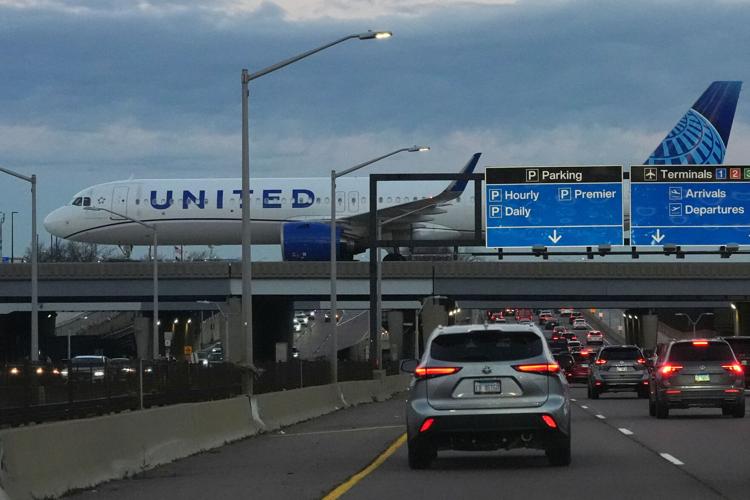
An United Airlines flight arrives at O'Hare International Airport in Chicago, Monday, Nov. 3, 2025. (AP Photo/Nam Y. Huh)
"I'm not aware in my 35-year history in the aviation market where we've had a situation where we're taking these kinds of measures," FAA Administrator Bryan Bedford said at a news conference.
Air traffic controllers have worked unpaid since the shutdown began Oct. 1, and most have been on duty six days a week while putting in mandatory overtime.
With some calling out of work due to frustration, taking second jobs or not having money for child care or gas, staffing shortages during some shifts have led to flight delays at a number of U.S. airports.


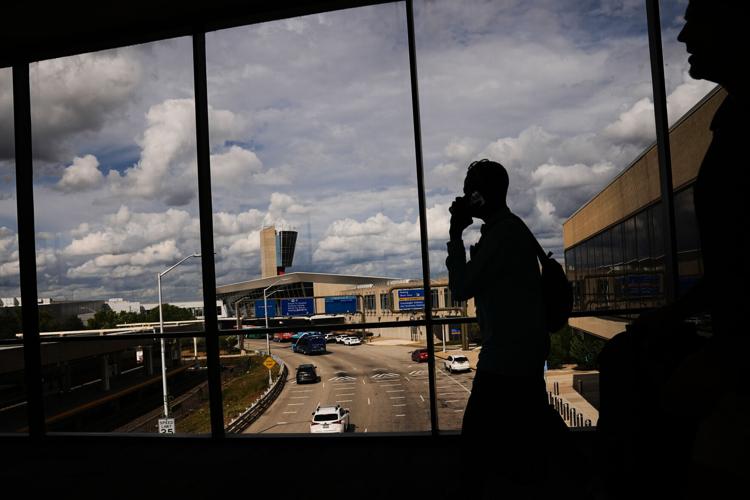
Passengers walk from a terminal at Philadelphia International Airport in Philadelphia, Tuesday, Oct. 7, 2025. (AP Photo/Matt Rourke)
Bedford, citing increased staffing pressures and safety reports indicating growing fatigue among air traffic controllers, said he and U.S. Transportation Secretary Sean Duffy did not want to wait until the situation reached a crisis point.
"We're not going to wait for a safety problem to truly manifest itself when the early indicators are telling us we can take action today to prevent things from deteriorating," Bedford said. "The system is extremely safe today and will be extremely safe tomorrow. If the pressures continue to build even after we take these measures, we'll come back and take additional measures."
He and Duffy said they would meet with airline executives later Wednesday to determine how to implement the reduction in flights before a list of the selected airports would be released sometime Thursday.

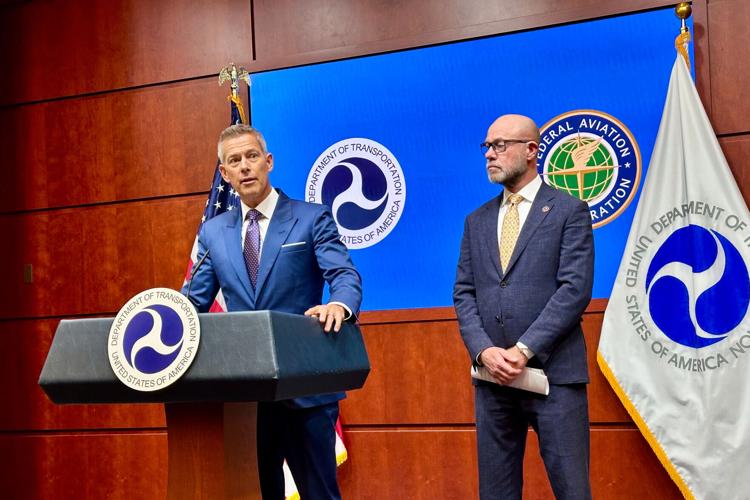
Transportation Secretary Sean Duffy, left, speaks at a news conference with FAA administrator Bryan Bedford to announce flight cancellations across the country because of the government shutdown Wednesday, Nov. 5, 2025 at the U.S. Department of Transportation headquarters in Washington. (AP Photo/Matthew Daly)
Airlines and passengers wait for information
The Associated Press sent requests for comment on the FAA's decision Wednesday to major U.S. airlines, including Delta, United and American Airlines.
Calls to the customer service hotlines at United and American were answered within a few minutes Wednesday afternoon, suggesting anxious passengers were not swamping the airlines with questions about the status of their upcoming flights.
Southwest Airlines said it was evaluating potential impacts to its flight schedule and would reach out as soon as possible to customers whose travel plans may be affected.

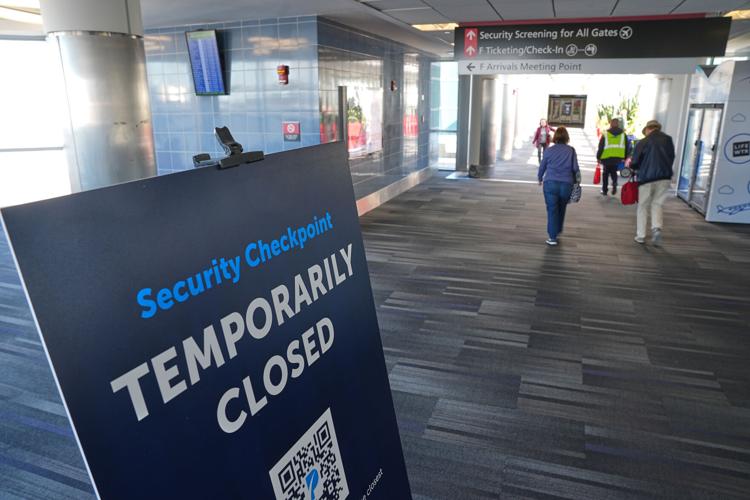
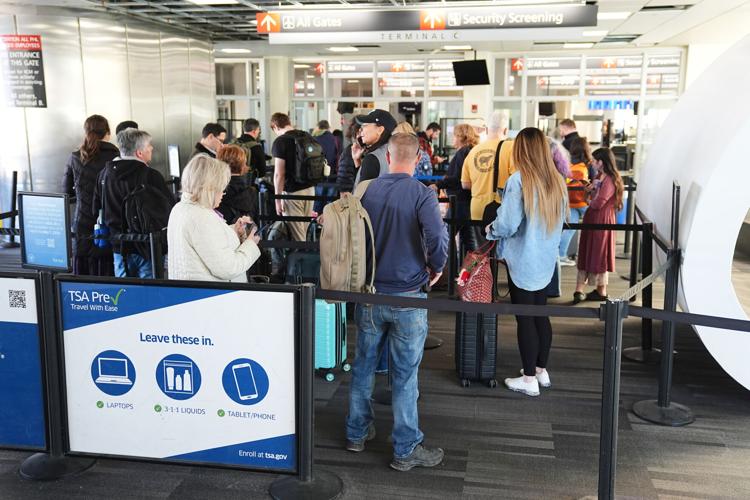
A sign is posted near a TSA screening area at Philadelphia International Airport in Philadelphia, Wednesday, Nov. 5, 2025. (AP Photo/Matt Rourke)
Airline industry analyst Henry Harteveldt, who is president of Atmosphere Research Group, said he thinks the government may have bungled this announcement by not meeting with airlines first and giving them more time to adjust schedules made months in advance.
"To tell airlines you've got 48 hours to rebuild your schedules at 90% of what you've got isn't much time, and it's going to result in a lot of chaos," he said. He added that the Trump administration may be using aviation safety "to force the two sides in Washington back to the negotiating table to resolve the shutdown."

AAA spokesperson Aixa Diaz advised travelers to watch for flight updates on the airline's app and airport websites. She also recommended allowing plenty of time at the airport before a scheduled flight.
"It's frustrating for travelers, because there's not much you can do. At the end of the day, you either fly or you don't," she said.
The cuts could represent as many as 1,800 flights and upward of 268,000 seats combined, according to an estimate by aviation analytics firm Cirium.
For example, O'Hare International Airport in Chicago could see 121 of its 1,212 flights currently scheduled for Friday cut if the FAA distributes the reductions equally among impacted airports, Cirium said.

Travelers stand in line in a TSA screening area at Philadelphia International Airport in Philadelphia, Wednesday, Nov. 5, 2025. (AP Photo/Matt Rourke)
Data shows worsening weekend staffing
The FAA regularly slows down or stops flights from taking off toward an airport for a number of reasons, including weather conditions, equipment failures and technical problems.
Staffing shortages also may lead to slowed or halted departures if other personnel can't fill in or another facility can't absorb some of the work load.
Last weekend saw some of the worst staffing shortages of the shutdown, which became the longest on record early Wednesday.

From Friday to Sunday evening, at least 39 different air traffic control facilities announced there was some potential for limited staffing, according to an Associated Press analysis of operations plans sent through the Air Traffic Control System Command Center system. The figure, which is likely an undercount, is well above the average for weekends before the shutdown
During weekend periods from Jan. 1 to Sept. 30, the average number of airport towers, regional centers overseeing multiple airports and facilities monitoring traffic at higher altitudes that announced the potential for staffing issues was 8.3, according to the AP analysis. During the five weekend periods since the shutdown began on Oct. 1, the average more than tripled to 26.2 facilities.

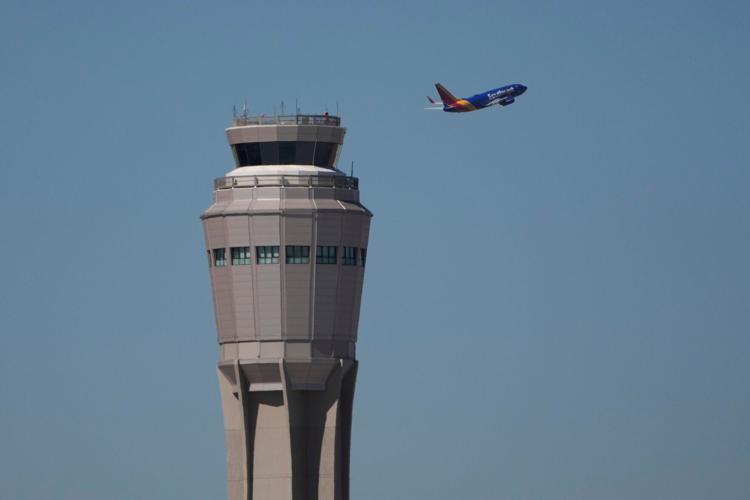
A plane takes off near the air traffic control tower at Harry Reid International Airport, Tuesday, Oct. 7, 2025, in Las Vegas. (AP Photo/John Locher)
Travel industry joins unions in urging shutdown's end
Major airlines, aviation unions and the wider travel industry urged Congress to end the shutdown.
Wednesday's announcement came on the heels of Duffy warning a day earlier that there could be chaos in the skies next week if the shutdown drags on long enough for air traffic controllers to miss their second full paychecks next Tuesday.
Duffy said the FAA wanted to take a proactive approach instead of reacting after a disaster. He pointed to all the questions that arose after the deadly midair collision in January between a commercial jet and a military helicopter near Ronald Reagan Washington National Airport about why FAA didn't recognize the risks and act sooner.
"We learned from that. And so now we look at data, and before it would become an issue, we try to assess the pressure and try to make moves before there could be adverse consequences," Duffy said. "And that's what's happening here today."
Monthlong government shutdown in photos: Disruptions, delays and divisions

Volunteer Betty McNeely, right, helps a man bag food items Oct. 28 at Project Feed, an emergency food pantry in Portland, Maine. With no endgame in sight, the U.S. government shutdown is expected to roll on for the unforeseeable future, injecting more uncertainty into an already precarious economy.

Brock Brooks, a disable Marine Corps veteran, cries Oct. 30 while describing the impending SNAP shutdowns while waiting in line to enter the food pantry service at Calvary Episcopal Church in Louisville, Ky. Funding for the Supplemental Nutrition Assistance Program, or SNAP, lapsed Saturday.

Volunteers prepare emergency food packages Oct. 28 at the Tarrant Area Food Bank in Fort Worth, Texas.

Tammy Norton, a furloughed federal employee of 16 years who currently works for the Internal Revenue Service, reacts with emotion Oct. 28 as she talks about running through her limited savings to support her family during the government shutdown, at a food distribution center for federal employees affected by the government shutdown in Dania Beach, Fla. The monthlong government shutdown halted routine federal operations, furloughed about 750,000 federal employees and left others working without pay.

Volunteer Joel Hernandez helps load a vehicle Oct. 27 during a food distribution targeting federal employee households affected by the federal shutdown as well as SNAP recipients in San Antonio.

A food and supplies bank is set up Oct. 17 at Harry Reid International Airport in Las Vegas, Nv.

House Minority Leader Hakeem Jeffries, D-N.Y., disputes a reporter's question Oct. 24 as he enters his office at the Capitol in Washington on day 24 of the government shutdown.

The Capitol is seen at nightfall Oct. 22, day 22 of a government shutdown, in Washington.

Sen. John Barrasso, R-Wyo., the Senate GOP whip, left, and Speaker of the House Mike Johnson, R-La., arrive for a news conference with top Republicans on the government shutdown Oct. 1 at the Capitol in Washington.

Air Traffic Controllers stand Oct. 28 outside Detroit Metropolitan Wayne County Airport in Romulus, Mich., distributing leaflets explaining how the federal government shutdown is affecting air travel. Airports have been scrambling with flight disruptions.

Travelers sit together and wait Oct. 2 at the Baltimore/Washington International Thurgood Marshall Airport in Baltimore.

TSA agent Sashene McLean, holding her 1-year-old daughter, comes from work to collect a donation of produce, meat and yogurt Oct. 28 at a food distribution center in Dania Beach, Fla., organized to assist federal employees missing paychecks during the government shutdown.

Senate Majority Leader John Thune, R-S.D., speaks to reporters Sept. 30 at the U.S. Capitol in Washington as the U.S. government was on the brink of the first federal government shutdown in almost seven years.

Speaker of the House Mike Johnson, R-La., and GOP leaders, from left, Rep. Lisa McClain, R-Mich., and Majority Whip Tom Emmer, R-Minn., blame the government shutdown on Democrats during an Oct. 2 news conference at the Capitol in Washington. Americans, meanwhile, are divided on who’s to blame.

Senate Minority Leader Chuck Schumer, D-N.Y., attends a Sept. 30 news conference about the government shutdown on Capitol Hill in Washington. Democrats seek an extension of expiring tax credits that helped millions of people afford health insurance, while Republicans say they won’t negotiate until the government is reopened.

