

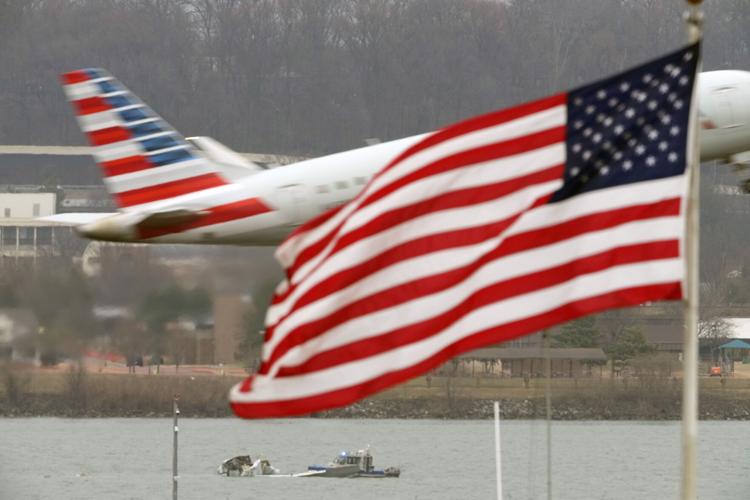
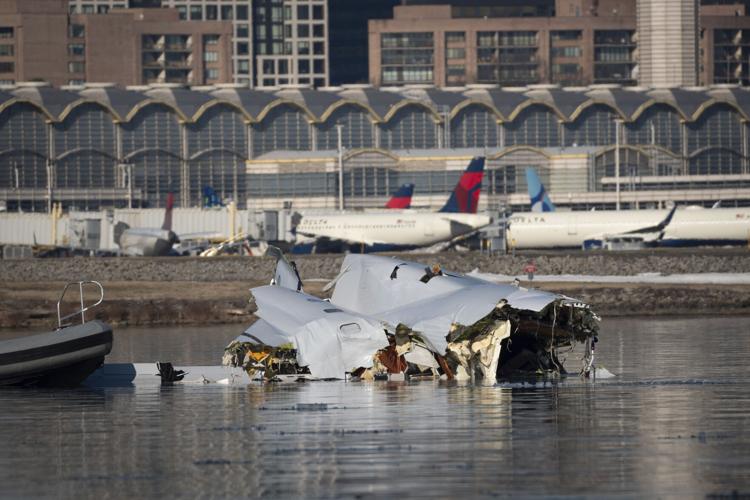
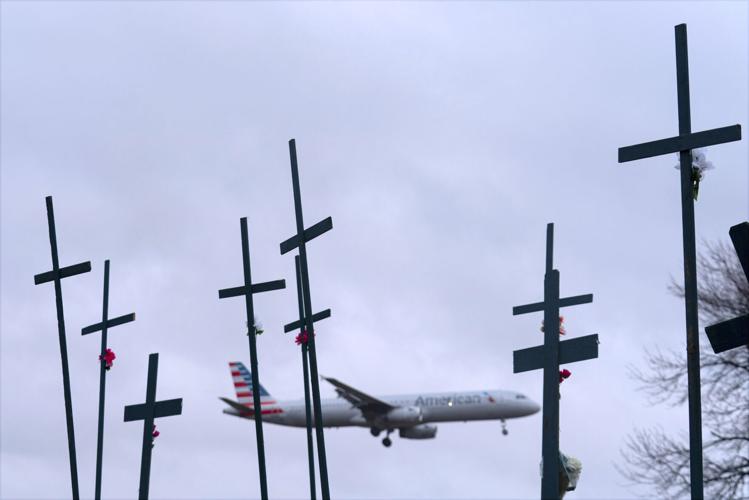
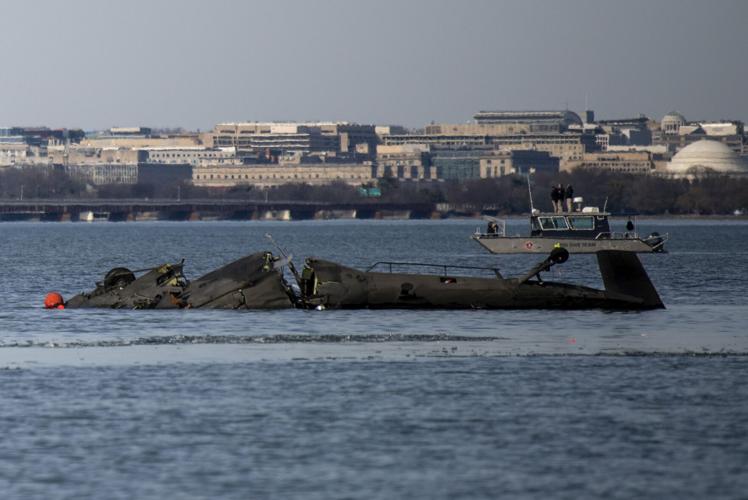
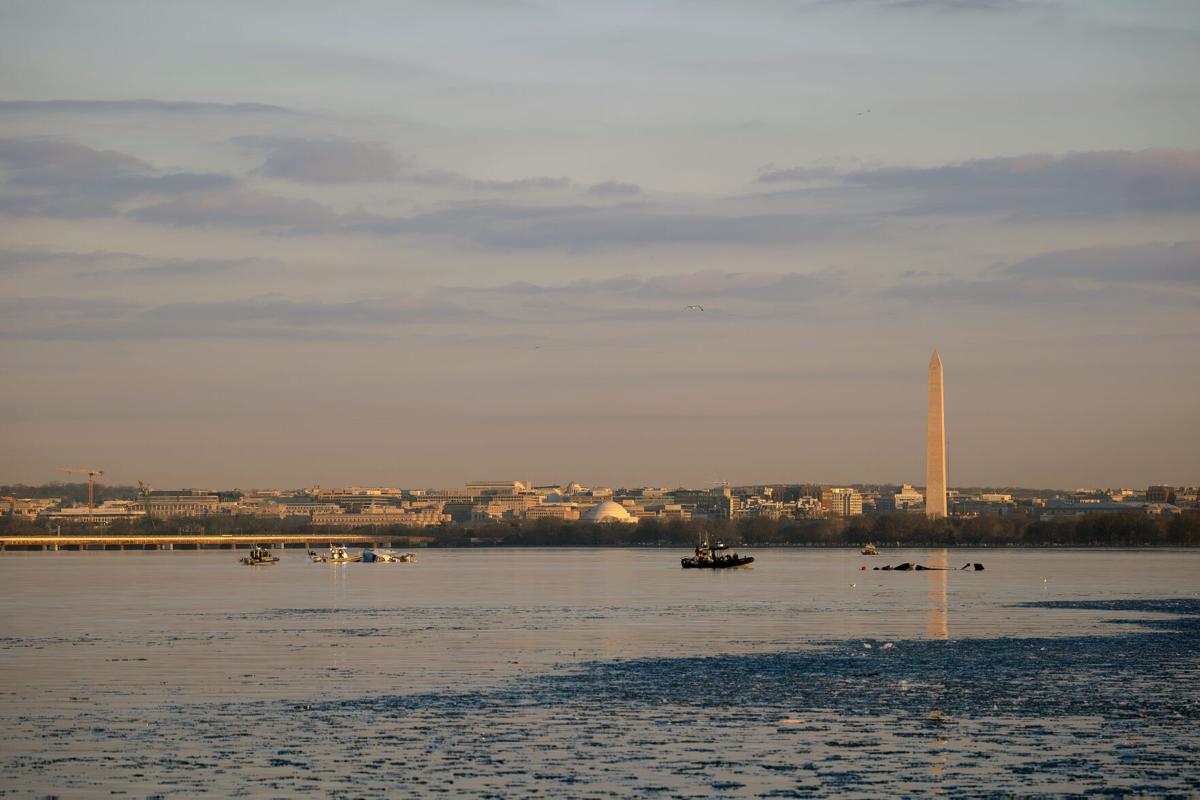
WASHINGTON — The airspace around Washington, D.C., is congested and complex — a combination aviation experts long worried could lead to catastrophe.
Those fears materialized Wednesday night when an American Airlines plane collided with a military helicopter, taking the lives of 67 people, including three soldiers and more than a dozen figure skaters.
Even in peak flying conditions, experts said, the airspace around Ronald Reagan Washington National Airport can challenge the most experienced pilots, who must navigate hundreds of other commercial planes, military aircraft and restricted areas around sensitive sites.
"This was a disaster waiting to happen," said Ross Aimer, a retired United Airlines captain and chief executive officer of Aero Consulting Experts. "Those of us who have been around a long time have been yelling into a vacuum that something like this would happen because our systems are stretched to extremes."
There was no immediate word on the cause of the collision, but officials said flight conditions were clear as the jet arrived from Wichita, Kansas. Investigators already are examining every aspect of the crash, including questions about why the Army Black Hawk helicopter was 100 feet above its permitted altitude and whether the air traffic control tower was properly staffed. A Federal Aviation Administration report obtained by The Associated Press described staffing levels as "not normal for the time of day and volume of traffic."
As authorities piece together the nation's deadliest U.S. airline crash since 2001, the tragedy raised new concerns about the specific dangers at Reagan National, which has seen a series of near-misses in recent years.
Commercial aircraft flying in and out of Reagan National have long had to contend with military helicopters traversing the same airspace within startling proximity at times.
"Even if everybody is doing what they're supposed to be doing, you've only got a few hundred feet separation between aircraft coming in to land and the many helicopters along that route," said Jim Brauchle, a former U.S. Air Force navigator and aviation attorney. "It doesn't leave a whole lot margin of error."
Pilots long warned of a "nightmare scenario" near the airport with commercial jetliners and military helicopters crossing paths, especially at night when the bright lights of the city can make seeing oncoming aircraft more difficult.
Just more than 24 hours before Wednesday's fatal collision, a different regional jet had to go around for a second chance at landing at Reagan National after it was advised about a military helicopter nearby, according to flight tracking sites and control logs. It landed safely minutes later.
Retired U.S. Army National Guard pilot Darrell Feller said the crash this week reminded him of an incident he experienced a decade ago when he was flying a military helicopter south along the Potomac River near Reagan National.
An air traffic controller advised him to be on the lookout for a jetliner landing on Runway 3-3, an approach that requires planes to fly directly over the route used by military and law enforcement helicopters transiting the nation's capital.
Feller was unable to pick out the oncoming jetliner against the lights of the city and cars on a nearby bridge. He immediately descended, skimming just 50 feet over the water to ensure the descending jetliner would pass over him.
"I could not see him. I lost him in the city lights," Feller, who retired from the Army in 2014, recounted. "It did scare me."
Feller's experience was eerily similar to what experts said may have happened with the crew of the Army helicopter Wednesday shortly before 9 p.m. as they flew south along the Potomac and collided with American Airlines Flight 5342 landing on Runway 3-3.
As the American Airlines jet approached the airport, air traffic controllers asked its pilots if they could land on Runway 3-3 rather than the longer — and busier — north-south runway. The jet's pilots altered their approach, heading over the east bank of the Potomac before heading back over the river to land on 3-3.
Less than 30 seconds before the crash, an air traffic controller asked the Army helicopter if it had the American Airlines plane in sight, and the military pilot responded that he did. The controller then instructed the Black Hawk to pass behind the jet. Seconds after that last transmission, the two aircraft collided in a fireball.
Feller, who served as an instructor pilot for the D.C. National Guard, said he had several rules for new pilots to avoid such collisions. He warned them to stay below the mandated 200-foot ceiling for helicopters. And he urged them to be on guard for planes landing on 3-3 because they could be difficult to spot.
Wednesday's crash was reminiscent of a deadly collision in 1949, when Washington's airspace was considerably less crowded. A passenger plane on final approach to what is now Reagan National collided with a military plane, plunging both aircraft to the Potomac River and killing 55 people. At the time, it was the deadliest air crash in the U.S.
Jack Schonely, a retired Los Angeles Police Department helicopter pilot, said he's been a passenger on helicopter rides through D.C. and was always struck by how complicated it seems for the pilots.
"You've got two large airports. You've got multiple restricted areas. You've got altitude restrictions. Routine restrictions, and a lot of air traffic," he said. "There's a lot going on in a tight area."
Officials also heavily restricted helicopter traffic around the airport, an official said, hours after President Donald Trump claimed in a social media post that the Army Black Hawk had been flying higher than its allowed limit.
The Federal Aviation Administration decided to indefinitely bar most helicopters from using the low-to-the-ground routes that run under or parallel to the airport’s flightpaths, an official told The Associated Press on Friday. The official spoke on the condition of anonymity.

