

DES MOINES, Iowa — Pessimism about the country's future rose in cities since last year, but rural America is more optimistic about what's ahead for the U.S., according to a new survey from the American Communities Project.
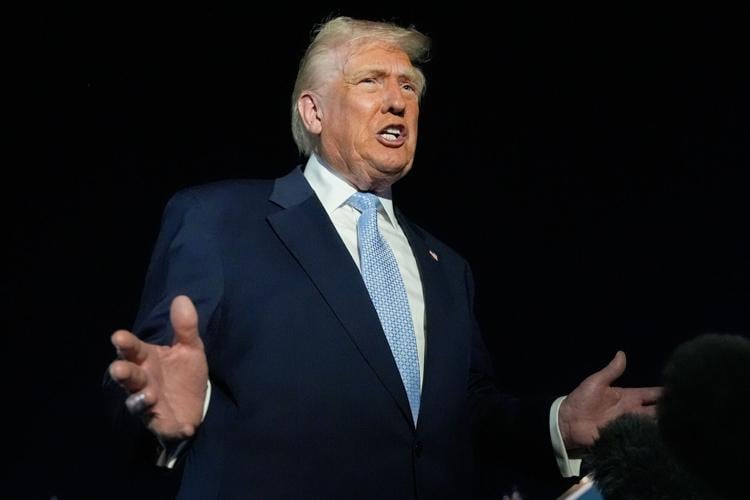
Despite President Donald Trump's claims that crime is out of control in big cities, residents of the nation's largest metropolitan centers are less likely to list crime and gun violence among the chief concerns facing their communities than they were a couple years ago.
Optimism about the future is also down from last year in areas with large Hispanic communities.
These are some of the snapshots from the new ACP/Ipsos survey, which offers a nuanced look at local concerns by breaking the nation's counties into community types, using data points like race, income, age and religious affiliation. The survey evaluated moods and priorities across the 15 different community types, such as heavily Hispanic areas, big cities and different kinds of rural communities.
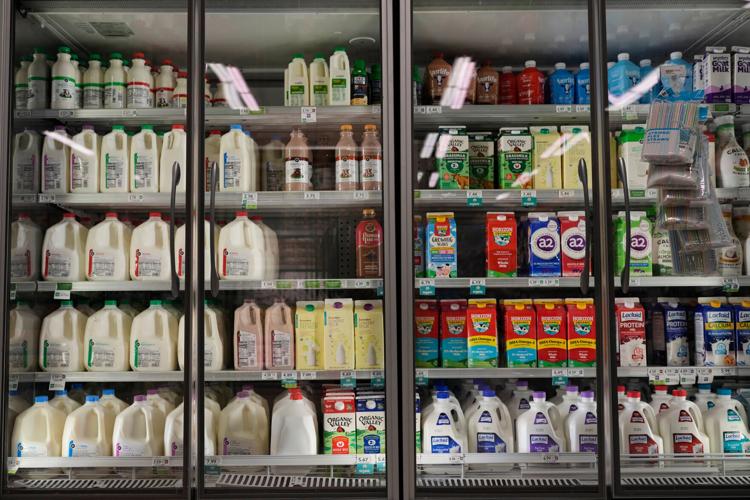
The common denominator across the communities? A gnawing worry about daily household costs.
"Concerns about inflation are across the board," said Dante Chinni, founder and director of ACP. "One thing that truly unites the country is economic angst."
Optimism in rural areas
Rural residents feel more upbeat about the country's trajectory — even though most aren't seeing Trump's promised economic revival.
The $15 price tag on a variety pack of Halloween candy at the Kroger supermarket last month struck Carl Gruber. Disabled and receiving federal food aid, the 42-year-old from Newark, Ohio, hardly was oblivious to lingering, high supermarket prices.
But Gruber, whose wife also is unable to work, is hopeful about the nation's future, primarily in the belief that prices will moderate as Trump suggests.
"Right now, the president is trying to get companies who moved their businesses out of the country to move them back," said Gruber, a Trump voter whose support has wavered over the federal shutdown that delayed his monthly food benefit. "So, maybe we'll start to see prices come down."
About 6 in 10 residents of Rural Middle America — Newark's classification in the survey — said they're hopeful about the country's future over the next few years, up from 43% in the 2024 ACP survey. Other communities, like heavily evangelical areas or working-class rural regions, also saw an uptick in optimism.
Kimmie Pace, a 33-year-old unemployed mother of four from a small town in northwest Georgia, said, "I have anxiety every time I go to the grocery store."
But she, too, is hopeful in Trump. "Trump's in charge, and I trust him, even if we're not seeing the benefits yet," she said.
Worried about the future
By contrast, the share of big-city residents who say they are hopeful about the nation's future shrunk, from 55% last year to 45% in the new survey.
Robert Engel of San Antonio — Texas' booming, second most-populous city — is worried about what's next for the U.S., though less for his generation than the next. The 61-year-old federal worker, whose employment was not interrupted by the government shutdown nor Trump's effort to reduce the federal workforce, is near retirement and feels financially stable.
A stable job market, health care availability and a fair economic environment for his adult children are his main priorities.
Recently, the inflation outlook worsened under Trump. Consumer prices in September increased at an annual rate of 3%, up from 2.3% in April, when the president first began to roll out substantial tariff increases that burdened the economy with uncertainty.
Engel's less-hopeful outlook for the country is broader. "It's not just the economy, but the state of democracy and polarization," Engel said. "It's a real worry. I try to be cautiously optimistic, but it's very, very hard."
Crime, gun violence
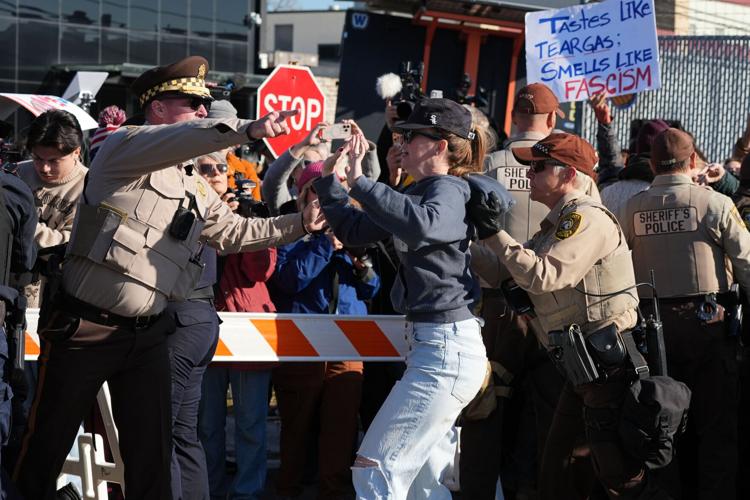
Trump deployed or threatened to deploy the National Guard to Chicago, New York, Seattle, Baltimore, San Francisco and Portland, Oregon, to fight what he claimed was runaway urban crime.
Data shows most violent crime in those places, and around the country, declined in recent years. That tracks with the poll, which found that residents of America's Big Cities and Middle Suburbs are less likely to list crime or gun violence among the top issues facing their communities than they were in 2023.
For Angel Gamboa, a retired municipal worker in Austin, Texas, Trump's claims don't ring true in the city of about 1 million people.
"I don't want to say it's overblown, because crime is a serious subject," Gamboa said. "But I feel like there's an agenda to scare Americans, and it's so unnecessary."
Instead, residents of Big Cities are more likely to say immigration and health care are important issues for their communities.
Big Cities are one of the community types where residents are most likely to say they've seen changes in immigration recently, with 65% saying they've seen a change in their community related to immigration over the past 12 months, compared with only about 4 in 10 residents of communities labeled in the survey as Evangelical Hubs or Rural Middle America.
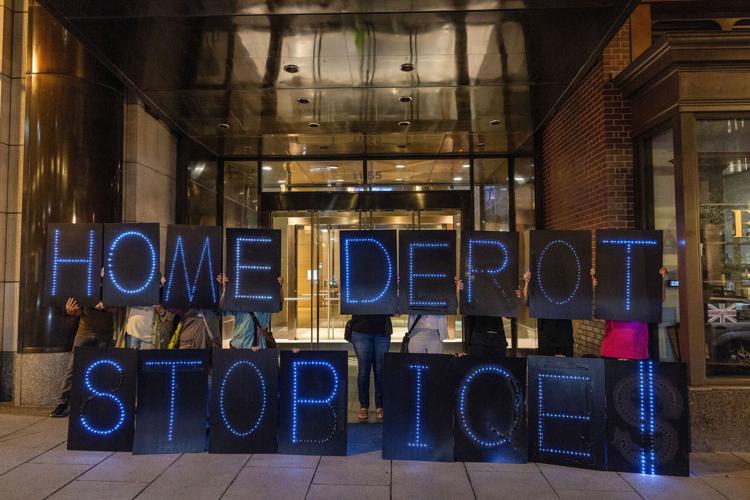
Gamboa says he has witnessed changes, notably outside an Austin Home Depot, where day laborers regularly would gather in the mornings to find work.
Not anymore, he said.
"Immigrants were not showing up there to commit crimes," Gamboa said. "They were showing up to help their families. But when ICE was in the parking lot, that's all it took to scatter people who were just trying to find a job."

