

SAN ANTONIO — Sandra Mosqueda watched with an amused smile as her 2-year-old son, Atreus, began sweeping the floor with a miniature mop.
Atreus is part of the inaugural class of infants and toddlers receiving free preschool in a citywide program in San Antonio, Texas.
It's something his mother doesn't take for granted. As a child, she wasn't able to start preschool this young. In the case of her two older boys — now in first grade and kindergarten — the free preschool set them up for success in elementary school.
The first five years of a child's life are among the most critical for their development. Those years lay a foundation and prepare them for kindergarten, often setting them up for success throughout school and beyond.
But immense disparities exist in whether parents across the country report their child as ready for kindergarten, new data from the National Survey for Children's Health shows.

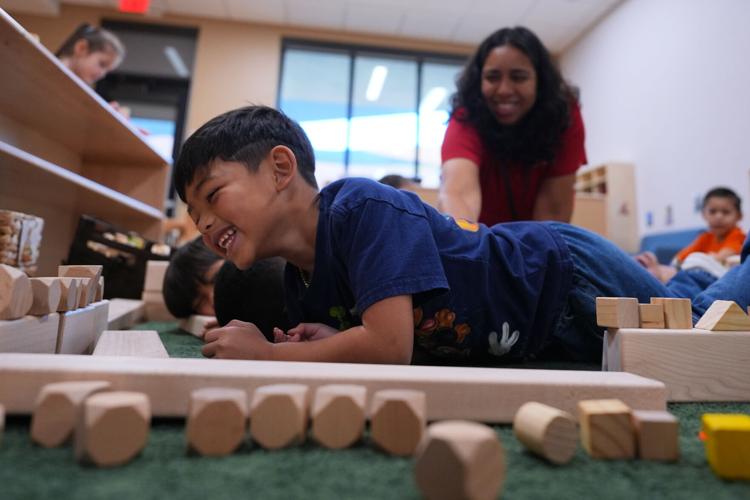
Teacher Deziree Arce, center, plays a game with her students in the Pre-K 4 SA program Oct. 9 in San Antonio.
Nationally, almost two-thirds of children were reported in the survey as on track for kindergarten, regardless of their families' income. However, the gap in kindergarten readiness is substantial when comparing reports from the poorest families and the wealthiest — about a 20% difference.
Administered by the U.S. Census Bureau, the federal survey offers a glimpse into school readiness by collecting responses annually from thousands of parents and guardians on their children's early learning, social-emotional development, self-regulation, motor development and health. The latest results were released in December.
Low-income children often have less access to experiences that boost school readiness, such as high-quality early learning opportunities. That isn't to say those kids haven't made gains. Over the past few years, the survey's portion of on-track children from families earning less than the federal poverty line — just under $32,000 for a family of four in 2024 — has trended upward nationwide by a few percentage points.
Some city and state programs are working to boost that improvement by expanding preschool opportunities for children from low-income families. The mission is even more urgent as parents juggle soaring child care costs and a widening affordability gap.
San Antonio's program, called Pre-K 4 SA, is a prime example. It's designed to serve low-income and working-class families throughout the city, offering 2,000 preschool seats for 3- and 4-year-olds — 80% of them free to families who qualify.

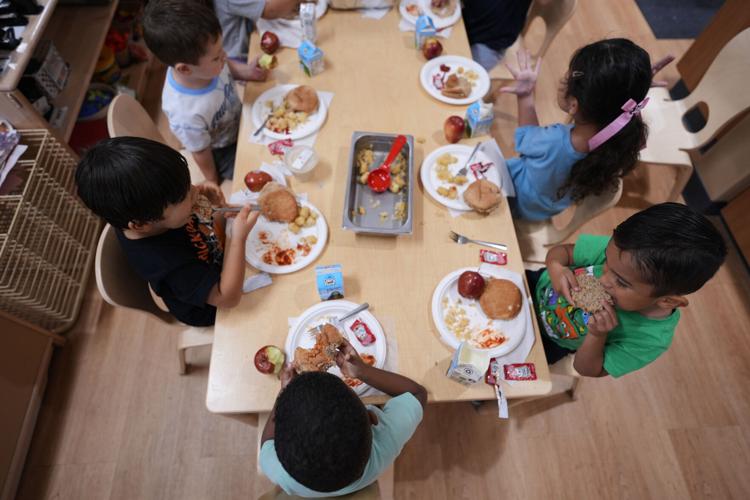
Students in the Pre-K 4 SA program eat a provided lunch Oct. 9 in San Antonio.
The program, which opened in 2013, is funded through the city's sales tax and expanded last year to include four infant and toddler classrooms in its new South Education Center. The preschools also offer an unusually broad mix of services, in recognition that poverty raises a complex blend of obstacles to kindergarten readiness.
Citywide early childhood programs have also emerged in recent years in Denver, New York, Boston, and Chicago, among others.
Students who completed Pre-K 4 SA scored higher than the state average on third grade math and reading, according to the Urban Education Institute at the University of Texas at San Antonio. Those outcomes contribute to what Sarah Baray, CEO of Pre-K 4 SA, views as a key success of the program: Children with the greatest needs receive the same quality education as kids from wealthier families.
"The quality is so high that even families who could afford to go anywhere try to get into our schools," Baray said.
High-quality education
Many experts agree that one of the best ways to boost school readiness is to ensure programs meet high-quality standards, such as smaller class sizes and child-to-staff ratios.
Pre-K 4 SA has implemented a "whole child" approach that develops a range of skills, including socioemotional learning. Baray said the program prepares children "not just (for) academic success, but life success."
Kids in Deziree Arce's class learn to count and recognize shapes just like other preschoolers. But the children also receive guidance from Arce on social-emotional skills to test out all day, whether it's consoling a crying classmate or resolving a conflict on who sits where at their classroom table.
"When I see kids that come from, like, where I came from, I'm giving them something that I never got," said Arce, who grew up in a low-income family and has taught at Pre-K 4 SA for nine years.

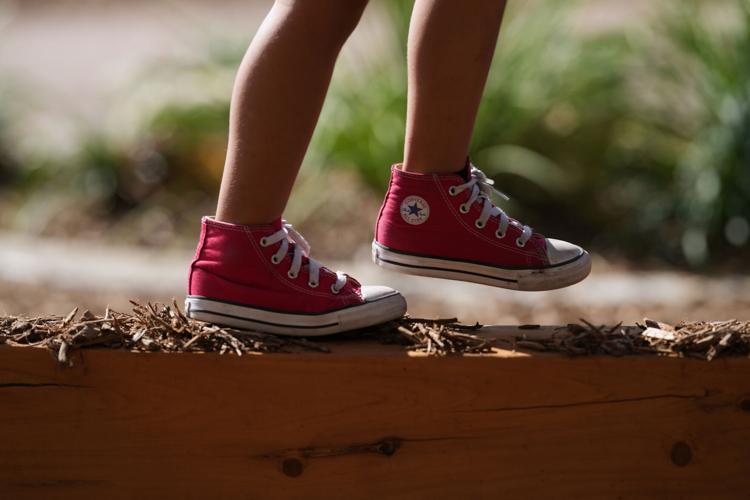
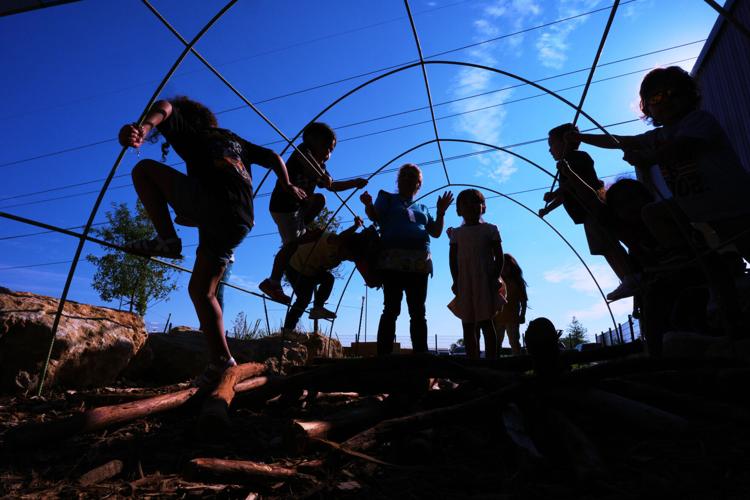
Pre-K students play on a playground Oct. 9 in San Antonio.
Pre-K 4 SA also intentionally incorporates opportunities for children to refine their motor skills. For lunch, the children in Arce's class pinched turkey burgers — provided by a local food bank — with tongs out of aluminum trays and onto their plates. Exploding ketchup packets were met with celebration, as some students opened them by themselves for the first time.
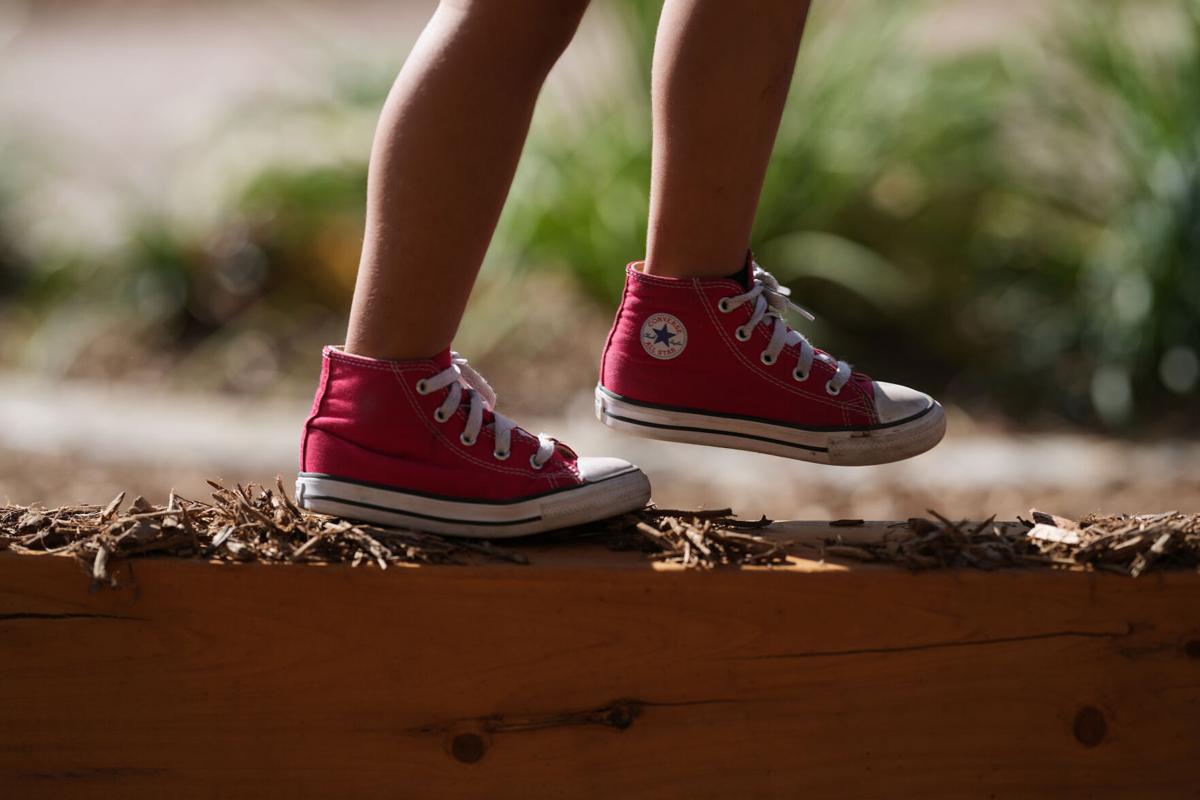
Outdoor play is another critical component to improving motor skills. Students spend an hour outside every day unless weather conditions are severe.
In an era of much screen time and time indoors, Pre-K 4 SA students are encouraged to engage in "risky play." That could mean racing tricycles around the perimeter of the playground, climbing up the slide or spraying water from a pump. Those experiences teach students their physical limits early, said Pre-K 4 SA Chief of Schools Tonda Brown.
More than 1,600 families were on Pre-K 4 SA's waitlist this school year, Baray said. To help wait-listed families, the program's enrollment team connects them with other local options, such as school district-run preschools or private centers partnered with Pre-K 4 SA.
Other cities distribute the demand across a wide variety of high-quality preschool programs by offering financial assistance to families.



