



NEW YORK — Since Robert F. Kennedy Jr. was sworn in to lead the U.S. Department of Health and Human Services one year ago, he has defended his upending of federal health policy by saying the changes will restore trust in America's public health agencies.
But as the longtime leader of the anti-vaccine movement scales back immunization guidance and dismisses scientists and advisers, he has clashed with top medical groups who say he is not following the science.
The confrontation is deepening confusion that surged during the COVID-19 pandemic. Surveys show trust in the agencies Kennedy leads is falling, not rising, as the country's health landscape undergoes dramatic change.

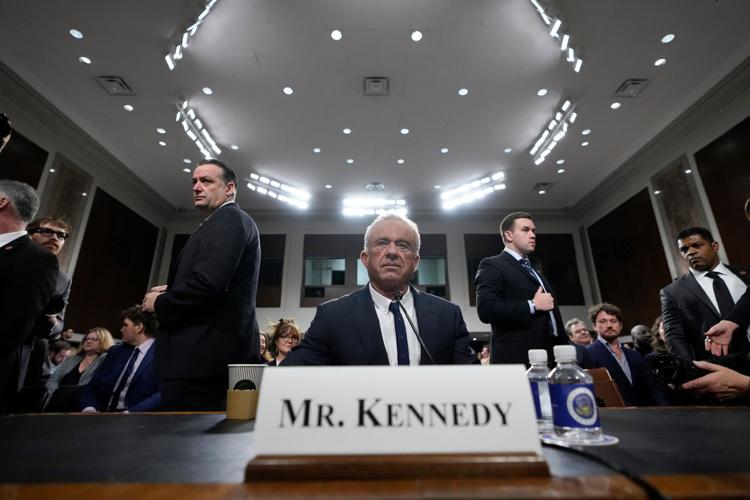
Robert F. Kennedy Jr., secretary of Health and Human Services, appears before the Senate Finance Committee on Jan. 29, 2025, for his confirmation hearing at the Capitol in Washington.
Kennedy says he aims to boost transparency to empower Americans to make their own health choices. Doctors counter that he is spreading false and unverified information that is causing major, perhaps irreversible, damage.
People once trusted health agencies regardless of party, and the government reported "the best of what science knows at this point," said Kathleen Hall Jamieson, director of the Annenberg Public Policy Center at the University of Pennsylvania.
"Now, you cannot confidently go to federal websites and know that," she said.

HHS spokesman Andrew Nixon said that trust had suffered during the Biden administration.
"Kennedy's mandate is to restore transparency, scientific rigor and accountability," he said.
New findings from the health care research nonprofit KFF show that 47% of Americans trust the U.S. Centers for Disease Control and Prevention "a great deal" or "a fair amount" to provide reliable vaccine information, down about 10 percentage points since the beginning of Trump's second term.

President Donald Trump speaks in the Roosevelt Room of the White House on Sept. 22 in Washington as Health and Human Services Secretary Robert F. Kennedy Jr. listens.
Trust among Democrats dropped 9 percentage points since September, to 55%, the survey found. Trust among Republicans and independents hasn't changed since September, but it has declined somewhat among both groups since the beginning of Trump's term.
Even among supporters of Kennedy's Make America Healthy Again movement, fewer than half say they trust agencies like the CDC and Food and Drug Administration "a lot" or "some" to make recommendations about childhood vaccine schedules.
Gallup surveys also show a drop in Americans who believe the CDC is doing a "good job," from 40% in 2024 to 31% last year.

Historically, federal scientific and public health agencies enjoyed strong ratings in opinion polls. The CDC for decades scored above many other government agencies in Gallup surveys asking whether they were doing a "good" or "excellent" job.
Two decades ago, more than 60% of Americans gave the CDC high marks, according to Gallup. But that number plummeted at the beginning of the COVID-19 pandemic, amid agency mistakes and guidance that some people didn't like.
In 2020, the percentage of Americans who believed the CDC was doing at least a "good" job fell to 40% and then leveled off for a few years.

Robert F. Kennedy Jr., secretary of Health and Human Services, appears before the Senate Finance Committee Jan. 29, 2025, for his confirmation hearing at the Capitol in Washington.
Part of Kennedy's pitch as health secretary has been restoring Americans' trust in public health.
"We're going to tell them what we know, we're going to tell them what we don't know, and we're going to tell them what we're researching and how we're doing it," Kennedy told senators about the CDC last September. "It's the only way to restore trust in the agency."
Kennedy has wielded the power of his office to take steps that diverge from medical consensus.
Last May, he announced COVID-19 vaccines were no longer recommended for healthy children and pregnant women, a move doctors called concerning and confusing.

In November, he directed the CDC to abandon its position that vaccines do not cause autism, without supplying new evidence. Earlier this year, the CDC reduced the number of vaccines recommended for every child, a decision medical groups said would undermine protections against a half-dozen diseases.
Kennedy also overhauled his department through canceled grants and mass layoffs. Last summer, he fired his CDC chief over vaccine policy disagreements.
Some have applauded the moves, but surveys suggest many Americans do not.
Shocked by Kennedy's dismantling of public health norms, professional medical groups have urged Americans not to follow new vaccine recommendations they say were adopted without public input or compelling evidence.
More than 200 public health and advocacy groups have urged Congress to investigate Kennedy's change to the vaccine schedule, while many Democratic-led states have created their own alliances to counter Kennedy's vaccine guidance.
"We see burgeoning confusion about which sources to trust and about which sources are real. That makes decision-making on an individual level much harder," said Dr. Megan Ranney, dean of the Yale School of Public Health.
She said she worried the confusion was contributing to the rise in diseases like whooping cough and measles, once largely eliminated in the U.S.
Surveys indicate growing public wavering over support for the measles-mumps-rubella vaccine. An August Annenberg survey found that 82% would be "very" or "somewhat" likely to recommend that an eligible child in their household get MMR vaccine, compared with 90% in November 2024.
___
AP writer Amelia Thomson DeVeaux in Washington contributed to this report.
What's in America's medicine cabinets? A look at what families buy
What's in America's medicine cabinets? A look at what families buy
Updated
From sniffles in the winter to sunburns in the summer, every season brings its own set of minor health concerns—and with them, a steady stream of over-the-counter (OTC) medications into the family medicine cabinet. But how much is too much? What are parents really keeping on hand, and how often do they actually use it?
In this article, SaveHealth takes a peek into America's medicine cabinets to understand what families are stocking, why they're stocking it, and what this means for both household safety and seasonal health preparedness.
A Cabinet Full of Comfort: The Average Family's OTC Inventory
According to a 2023 report from the Consumer Healthcare Products Association (CHPA), the average U.S. household spends around $442 annually on OTC medications. This translates into between 15 to 30 distinct products in the home at any given time. These include:
- Pain relievers (e.g., ibuprofen, acetaminophen)
- Allergy medications (antihistamines like loratadine or diphenhydramine)
- Cough and cold treatments (decongestants, throat lozenges, cough syrups)
- Digestive aids (antacids, laxatives, anti-diarrheals)
- Topicals (antibiotic ointments, hydrocortisone, anti-itch creams)
- First aid staples (bandages, antiseptics, burn gels)
- Sleep aids and supplements
Parents often maintain different versions of the same medication for different family members—such as chewables for kids and tablets for adults. In multigenerational households, the need for varied medications can further inflate the volume of stocked items.
Why We Over-Stock: Convenience, Safety, and the Fear of "What If"
1. Parental Preparedness
The instinct to prepare for every possible scenario drives parents to keep medications on hand, even if rarely used. A survey by the American Academy of Pediatrics found that 78% of parents keep a "'just in case" stash of fever reducers and cold medicines.
2. Seasonal Buying Patterns
Pharmacies and big-box retailers align their marketing strategies with seasonal illnesses. For instance:
- Spring: allergy meds, eye drops, nasal sprays
- Summer: burn relief, insect repellents, bandages
- Winter: cold/flu medications, vapor rubs, thermometers
3. Pandemic Habits
The COVID-19 pandemic reshaped consumer behavior. A 2021 McKinsey report found that 43% of Americans began stockpiling household and medical supplies, and many of these habits persisted even after lockdowns ended. This includes medications for flu-like symptoms, vitamins, and sanitizing products.
What's Actually Being Used?
Despite the abundance of medications, studies show that most families only use a fraction of what they store. The CHPA notes that fewer than 10 OTC products are used on a monthly basis by the average household. Seasonal use spikes are short-lived, meaning that many items expire before they are fully used.
Additionally, a 2022 report from Safe Kids Worldwide revealed that 67% of parents admitted to finding expired or unidentifiable medications during an annual clean-out. This not only represents financial waste but raises safety concerns around accidental ingestion or improper dosing.
The Risks of Overstocking
- Overstocking can feel like a safeguard, but it carries significant risks:
- Expired medications may lose effectiveness or cause adverse reactions.
- Medication mix-ups can occur, especially when different brands or generics look similar.
- Child safety risks increase when medications are not stored securely. According to the CDC, more than 50,000 children under 5 are seen in emergency departments annually due to accidental ingestion of medications.
- Wasted money from buying in bulk or buying redundantly, only to throw items away months or years later.
Building a Smarter Medicine Cabinet: Tips for Families
Here are steps to help families maintain a safe and efficient medicine cabinet:
- Inventory Regularly: Conduct a quarterly check to remove expired or unneeded items.
- Organize by Category: Use bins or labels to sort by symptom (e.g., pain relief, digestion) or age group.
- Match to the Season: Keep only relevant items at the forefront based on the time of year.
- Prioritize Safety: Use child-proof containers and store medications high up or locked away.
- Dispose Responsibly: Take advantage of local medication take-back programs or follow FDA disposal guidelines.
Expert Insight: What Pediatricians and Pharmacists Recommend
Pediatricians recommend keeping only essential medications that are age-appropriate and have clear dosage instructions. Pharmacists stress the importance of not combining multiple products that contain the same active ingredient, such as acetaminophen, which could lead to accidental overdose.
Final Thoughts: Less Is More, But Smart Is Best
A well-stocked medicine cabinet should reflect your family's specific health needs and seasonal lifestyle. It's not about having everything—it's about having what works, when you need it, and ensuring it's stored safely and responsibly.
As we enter allergy season and gear up for summer adventures, consider taking stock. A little organization now can mean faster relief later—and peace of mind all year long.

This story was produced by SaveHealth and reviewed and distributed by Stacker.

