

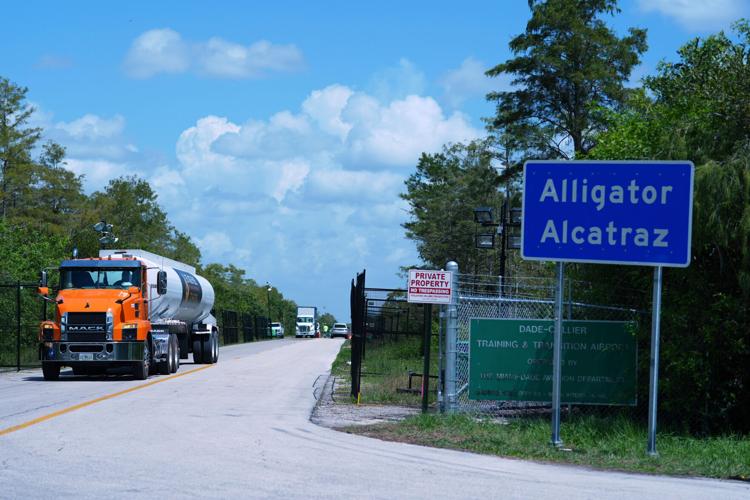
MIAMI — Felipe Hernandez Espinosa spent 45 days at "Alligator Alcatraz," an immigration holding center in Florida where detainees have reported worms in their food, toilets that don't flush and overflowing sewage. Mosquitoes and other insects are everywhere.
For the past five months, the 34-year-old asylum-seeker has been at an immigration detention camp at the Fort Bliss Army base in El Paso, Texas, where two migrants died in January and which has many of the same conditions as the Florida site, according to human rights groups. Hernandez said he asked to be returned to Nicaragua but was told he has to see a judge. After nearly seven months in detention, his hearing was scheduled for Feb. 26.
Prolonged detention has become more common in President Donald Trump's second term, at least partly because a new policy generally prohibits immigration judges from releasing detainees while their deportation cases wind through backlogged courts. Many, like Hernandez, are prepared to give up any efforts to stay in the United States.

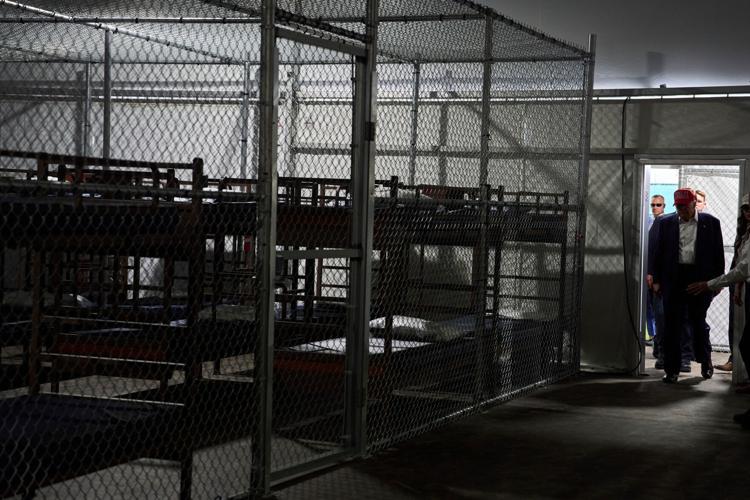
President Donald Trump tours "Alligator Alcatraz," a migrant detention facility at Dade-Collier Training and Transition facility on July 1 in Ochopee, Fla.
"I came to this country thinking they would help me, and I've been detained for six months without having committed a crime," Hernandez said in a phone interview from Fort Bliss.
The Supreme Court ruled in 2001 that Immigration and Customs Enforcement cannot hold immigrants indefinitely, finding that six months was a reasonable cap.
With the number of people in ICE detention topping 70,000 for the first time, 7,252 people had been in custody at least six months in mid-January, including 79 held for more than two years, according to agency data. That's more than double the 2,849 who were in ICE custody for at least six months in December 2024, the last full month of Joe Biden's presidency.

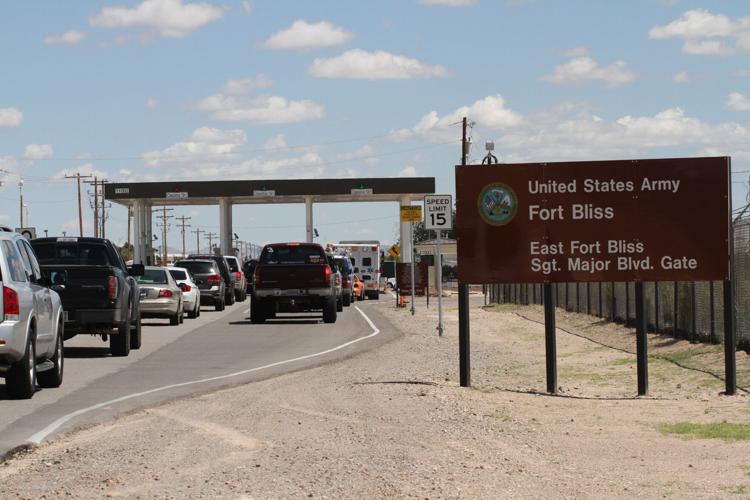
Cars wait to enter Fort Bliss in 2014 in El Paso, Texas.
The Trump administration is offering plane fare and $2,600 for people who leave the country voluntarily. Yet Hernandez and others are told they can't leave detention until seeing a judge.
Legal advisers warn that these are not isolated cases
The first three detainees that attorney Ana Alicia Huerta met on her monthly trip to an ICE detention center in McFarland, California, to offer free legal advice in January said they signed a form agreeing to leave the United States but were still waiting.
"All are telling me: 'I don't understand why I'm here. I'm ready to be deported,'" said Huerta, a senior attorney at the California Collaborative for Immigrant Justice.
In the past, Huerta said, she encountered cases like this once every three or four months.

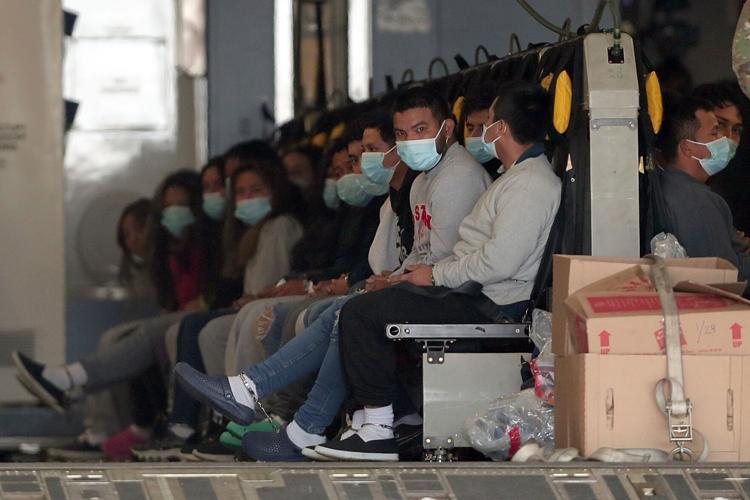
Migrants wearing face masks and shackles on their hands and feet sit on a military aircraft at Fort Bliss in El Paso, Texas, on Jan. 30, awaiting their deportation to Guatemala.
The Department of Homeland Security said its policies follow the law. It noted a court ruling that the administration can continue to detain immigrants without bond.
"The conditions are so poor and so bad that people say, 'I'm going to give up,'" said Sui Chung, executive director at Americans for Immigrant Justice.
The wait time may depend on the country. Deportations to Mexico are routine, but countries including Cuba, Nicaragua, Colombia and Venezuela have at times resisted accepting deportees.
Among those detained for months are people who have won protection under the United Nations Convention Against Torture, who cannot be deported to their home country but may be sent elsewhere.
In the past, those migrants were released and could get a work permit. Not anymore, said Sarah Houston, managing attorney at Immigrant Defenders Law Center, who has at least three clients with protection under the UN torture convention who have been in custody for more than six months.

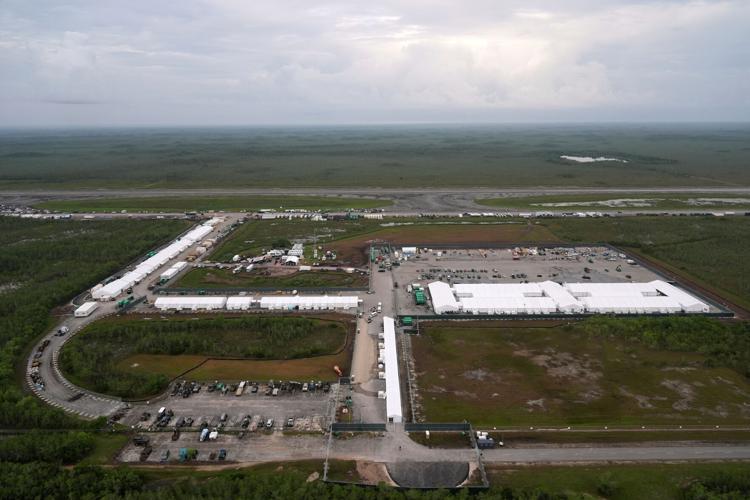
Work progresses on a new migrant detention facility dubbed "Alligator Alcatraz" at Dade-Collier Training and Transition facility in the Florida Everglades on July 4 in Ochopee, Fla.
The Nicaraguan who wants to be deported
Hernandez said he signed documents requesting to be returned to his country or Mexico at least five times. An Oct. 9 hearing was canceled without explanation. He waited months with no news, until early February, when he learned his new hearing date.
Hernandez was arrested in July on a lunch break from his job in Florida. His wife was detained with him, but a judge allowed her to return to Nicaragua without a formal deportation order on Aug. 28.
Both crossed the Mexican border in 2022 and requested asylum. Hernandez said he received death threats after participating in marches against co-presidents and spouses Daniel Ortega and Rosario Murillo.
If he returns, they plan to go to Panama or Spain because they fear for their lives in Nicaragua, he said.

A Mexican man detained for a year
Some detainees find relief in federal court.
A Mexican man detained in October 2024 in Florida was held for a year even though he won a protection under the UN torture convention in March 2025.
DHS could not comment on the Mexican man because he shared his story on condition of anonymity out of fear that it could damage his case.

Trucks come and go from the "Alligator Alcatraz" immigration detention center in the Florida Everglades on Aug. 28 in Collier County, Fla.
The 38-year-old man said he had lived illegally in the United States from age 10 until he was deported. In Mexico, he ran his own business, but in 2023 decided to return and illegally crossed the border into the United States. He said he was looking for safety after being threatened by drug cartels.
He found an attorney who filed a petition in federal court alleging he was being held illegally. He was freed in October 2025, seven months after a judge ordered his release.
But for Hernandez, the Nicaraguan asylum-seeker, desperation led him to request to be returned to the country he had fled.
"I've experienced a lot of trauma. It's very difficult," Hernandez said from Fort Bliss. "I'm always thinking about when I'm going to get out."

Photos: ICE killings spur protests in Minnesota and beyond

People gather for a protest against ICE outside the Bishop Henry Whipple Federal Building, Friday, Jan. 30, 2026, in Minneapolis. (AP Photo/Adam Gray)

A sign at a cannabis shop indicates it is closed for the general strike to support the state's immigrant community Friday, Jan. 30, 2026, in Portland, Maine. (AP Photo/Robert F. Bukaty)

Los Angeles police fire less lethal rounds at protesters in downtown Los Angeles on Friday, Jan. 30, 2026. (AP Photo/Jae C. Hong)

EDS NOTE: OBSCENITY - Demonstrators join hands to block off Congress Street near Granada as the speeches continue through to sunset for the ICE OUT demonstration, Jan. 30, 2026, Tucson, Ariz. (Kelly Presnell/Arizona Daily Star via AP)

EDS NOTE: OBSCENITY - People gather during a protest Friday, Jan. 30, 2026, in Minneapolis. (AP Photo/Alex Brandon)

People protest against U.S. Immigrations and Customs enforcement in Portland, Maine, Friday, Jan. 30, 2026. (AP Photo/Robert F. Bukaty)

Photos of Vice President JD Vance, left, and other members of the Trump administration dressed as clowns are seen during a protest Friday, Jan. 30, 2026, in Minneapolis. (AP Photo/Alex Brandon)

People gather near Los Angels City Hall, during a protest on Friday, Jan. 30, 2026. (AP Photo/Jae C. Hong)

People gather during a protest on Friday, Jan. 30, 2026, in Los Angeles. (AP Photo/Jae C. Hong)

People gather during a protest Friday, Jan. 30, 2026, in Minneapolis. (AP Photo/Adam Gray)

People fill the streets during a protest in Los Angeles on Friday, Jan. 30, 2026. (AP Photo/Jae C. Hong)

A protester's eyes are washed out after getting tear gassed during a scuffle between federal police at the Metropolitan Detention Center in downtown Los Angeles on Friday, Jan. 30, 2026. (AP Photo/Jae C. Hong)

Protesters throw trash at federal police blocking a loading dock at the Metropolitan Detention Center in downtown Los Angeles on Friday, Jan. 30,2026. (AP Photo/Jae C. Hong)

Protesters take cover from tear gas fired by federal police during clashes at the Metropolitan Detention Center in downtown Los Angeles on Friday, Jan. 30,2026. (AP Photo/Jae C. Hong)

Crockett High School student Alexandra Fulbright, 15, walks out of school in Austin, Texas, on Friday, Jan. 30, 2026, as part of a nationwide protest of the actions of U.S.(Jay Janner /Austin American-Statesman via AP)

People gather during a protest Friday, Jan. 30, 2026, in Minneapolis. (AP Photo/Alex Brandon)

EDS NOTE: OBSCENITY - People gather during a protest Friday, Jan. 30, 2026, in Minneapolis. (AP Photo/Alex Brandon)

EDS NOTE: OBSCENITY - People gather during a protest Friday, Jan. 30, 2026, in Minneapolis. (AP Photo/Alex Brandon)

A person yells at federal immigration officers, Saturday, Jan. 24, 2026, in Minneapolis. (AP Photo/Abbie Parr)

Law enforcement officers detain a demonstrator during a protest outside SpringHill Suites and Residence Inn by Marriott hotels on Monday, Jan. 26, 2026, in Maple Grove, Minn. (AP Photo/Adam Gray)

People inside a SpringHill Suites by Marriott hotel watch as law enforcement clash with protesters outside the hotel on Monday, Jan. 26, 2026, in Maple Grove, Minn. (AP Photo/Adam Gray)

Demonstrators hold signs during a rally against federal immigration enforcement at Federal Courthouse Plaza on Tuesday, Jan. 27, 2026, in Minneapolis. (AP Photo/Adam Gray)

People attend a vigil where Alex Pretti was shot and killed by federal immigration enforcement in Minneapolis, on Wednesday, Jan. 28, 2026. (AP Photo/Adam Gray)

People gather during a vigil where Alex Pretti was shot and killed by federal immigration enforcement in Minneapolis, on Wednesday, Jan. 28, 2026. (AP Photo/Adam Gray)

A person holds a picture during a vigil for Alex Pretti, who was shot and killed by federal immigration enforcement in Minneapolis, Wednesday, Jan. 28, 2026, in Henderson, Nev. (AP Photo/John Locher)

People participate in an anti-ICE rally Sunday, Jan. 25, 2026, in Minneapolis. (AP Photo/Jack Brook)

EDS NOTE: OBSCENITY - People protest against ICE (Immigration and Customs Enforcement) in downtown Minneapolis, Sunday, Jan. 25, 2026. (AP Photo/Adam Gray)

People protest against ICE (Immigration and Customs Enforcement) in downtown Minneapolis, Sunday, Jan. 25, 2026. (AP Photo/Adam Gray)

A federal agent points a weapon at a person outside a hotel during a noise demonstration protest in response to federal immigration enforcement operations in the city Sunday, Jan. 25, 2026, in Minneapolis. (AP Photo/Adam Gray)

Flares are seen as federal agents try to clear the demonstrators near a hotel, using tear gas during a noise demonstration protest in response to federal immigration enforcement operations in the city Sunday, Jan. 25, 2026, in Minneapolis. (AP Photo/Adam Gray)

Demonstrators make noise during a protest outside a SpringHill Suites and Residence Inn by Marriott hotels on Monday, Jan. 26, 2026, in Maple Grove, Minn. (AP Photo/Adam Gray)

A person holds a Minnesota state flag as federal immigration officers deploy tear gas Saturday, Jan. 24, 2026, in Minneapolis. (AP Photo/Abbie Parr)

People glance out of their window as federal immigration agents work on the scene in Minneapolis, Sunday, Jan. 25, 2026. (AP Photo/Adam Gray)

A person is pushed back by a federal agent working on the scene in Minneapolis, Sunday, Jan. 25, 2026. (AP Photo/Adam Gray)

A makeshift memorial is placed where Alex Pretti was fatally shot by a U.S. Border Patrol officer yesterday, in Minneapolis, Sunday, Jan. 25, 2026. (AP Photo/Adam Gray)

People participate in an anti-ICE rally Sunday, Jan. 25, 2026, in Minneapolis. (AP Photo/Jack Brook)

Federal immigration officers deploy tear gas at protesters after a shooting Saturday, Jan. 24, 2026, in Minneapolis. (AP Photo/Abbie Parr)

